Early and Later Vedic Ageप्रारंभिक और उत्तर वैदिक काल
General Knowledge · Visual study guide with full explanationsसामान्य ज्ञान · चित्रों और पूरे विवरण के साथ अध्ययन मार्गदर्शिका
How a cattle-centred tribal world slowly became an agricultural, territorial and more stratified societyपशुधन पर केंद्रित जनजातीय जीवन धीरे-धीरे खेती, क्षेत्र और बढ़ती सामाजिक असमानता वाले समाज में कैसे बदला
1. The Big Picture - One Age, Two Broad Stages1. बड़ी तस्वीर: एक काल के दो व्यापक चरण
Imagine two households: one measures its wealth mainly in cattle that can move with it; another depends increasingly on fields, stored grain and a settled village. This comparison helps us follow Vedic history. Communities whose ideas survive mainly in orally preserved Sanskrit texts gradually developed a stronger eastern and agricultural focus. Their social relations, government and religion changed too. These were uneven regional changes, not a complete replacement of herding by farming.दो परिवारों की कल्पना करें। एक अपनी संपत्ति मुख्यतः ऐसे पशुओं में गिनता है जिन्हें वह साथ ले जा सकता है। दूसरा खेत, जमा अनाज और स्थायी गाँव पर अधिक निर्भर होता जा रहा है। इस तुलना से वैदिक इतिहास समझ आता है। जिन समुदायों के विचार मुख्यतः मौखिक रूप से सुरक्षित संस्कृत ग्रंथों में मिलते हैं, उनका केंद्र धीरे-धीरे पूर्व और खेती की ओर बढ़ा। सामाजिक संबंध, शासन और धर्म भी बदले। यह अलग-अलग क्षेत्रों में अलग गति से हुआ; खेती ने पशुपालन को पूरी तरह समाप्त नहीं किया।
- Early / Rigvedic phase: c. 1500–1000 BCE; north-west and Sapta-Sindhu.प्रारंभिक / ऋग्वैदिक चरण: लगभग 1500–1000 ईसा-पूर्व; उत्तर-पश्चिम और सप्त-सिंधु।
- Later Vedic phase: c. 1000–600 BCE; Ganga-Yamuna doab, toward Kosala-Videha.उत्तर वैदिक चरण: लगभग 1000–600 ईसा-पूर्व; गंगा-यमुना दोआब से कोसल-विदेह की ओर।
- Herds: wealth can move with people.पशुधन: संपत्ति लोगों के साथ चल सकती है।
- Fields: land becomes increasingly important.खेत: भूमि का महत्व बढ़ता है।
- Surplus: contributions and tribute can grow.अधिशेष: योगदान और भेंट बढ़ सकती है।
- Officials: the chief’s authority becomes stronger.अधिकारी: मुखिया का अधिकार मजबूत होता है।
- Territory: jana increasingly develops toward janapada.क्षेत्र: जन से जनपद की ओर बढ़ता बदलाव।
Two kinds of wealthसंपत्ति के दो आधार
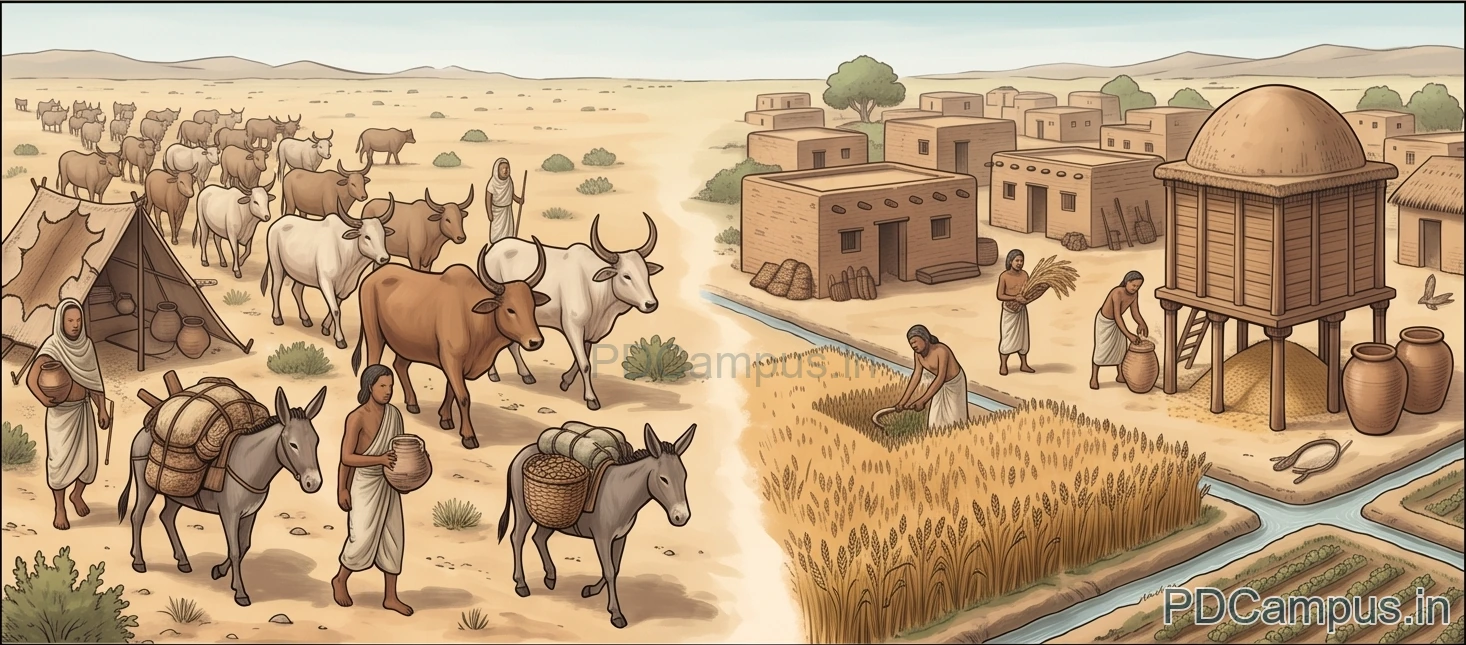
Terms needed before the comparisonतुलना से पहले जरूरी शब्द
Pastoral means centred on keeping herds; agrarian means centred on cultivation. Kinship is a relationship understood through family or shared descent. Stratification means unequal social layers in access to status, work, wealth or authority. A doab is land between two rivers, here the Ganga and Yamuna. A janapada is a territory associated with a people; mahajanapada means a larger major state or polity. c. means approximately; BCE means before the Common Era. The ranges 1500–1000 and 1000–600 BCE are teaching conventions, not precise boundaries for every text or region.पशुपालक का अर्थ झुंड पालने पर केंद्रित और कृषिप्रधान का अर्थ खेती पर केंद्रित है। नातेदारी परिवार या साझा वंश से समझा गया संबंध है। सामाजिक स्तरीकरण का मतलब हैसियत, काम, संपत्ति या अधिकार में असमान परतें बनना है। दोआब दो नदियों के बीच की भूमि है; यहाँ गंगा और यमुना के बीच का क्षेत्र। जनपद किसी जनसमूह से जुड़ा क्षेत्र है; महाजनपद बड़ा प्रमुख राज्य या राजनीतिक इकाई। c. का अर्थ लगभग और BCE का अर्थ सामान्य युग से पहले, यानी ईसा-पूर्व है। 1500–1000 और 1000–600 ईसा-पूर्व सामान्य शिक्षण सीमाएँ हैं; हर ग्रंथ या क्षेत्र की बिल्कुल निश्चित सीमाएँ नहीं।
Who were the "Aryans"?“आर्य” कौन थे
Not a biological raceजैविक नस्ल नहीं
Nineteenth-century writers wrongly turned “Aryan” into a biological racial label. Indo-Aryan is primarily a branch of languages within the Indo-Iranian family. In historical discussion it also refers, with care, to communities associated with early Vedic speech and cultural practices. A language category does not establish a biologically uniform people.उन्नीसवीं सदी के लेखकों ने “आर्य” को गलत ढंग से जैविक नस्ल का नाम बना दिया। इंडो-आर्यन मुख्यतः भारत-ईरानी भाषा-परिवार की एक शाखा है। इतिहास में इसका प्रयोग सावधानी के साथ शुरुआती वैदिक भाषा और सांस्कृतिक व्यवहार से जुड़े समुदायों के लिए भी होता है। भाषा की श्रेणी से जैविक रूप से एकसमान जनसमूह सिद्ध नहीं होता।
Evidence points to movementप्रमाण लोगों के आवागमन की ओर संकेत करते हैं
Comparative linguistics studies systematic relationships between languages. Ancient-DNA research documents movement of ancestry related to Bronze Age Steppe populations through Central Asia into South Asia during the second millennium BCE, followed by mixture with populations already living in the region. Together with linguistic and archaeological work, this supports migration and interaction; the evidence does not identify the language of every excavated person. The Steppe is a broad Eurasian grassland zone. DNA is genetic material; ancestry describes biological descent, not a fixed cultural identity.तुलनात्मक भाषाविज्ञान भाषाओं के व्यवस्थित संबंधों का अध्ययन करता है। प्राचीन डीएनए के शोध में दूसरी सहस्राब्दी ईसा-पूर्व के दौरान कांस्य युगीन स्तेपी आबादियों से संबंधित वंशावली का मध्य एशिया से दक्षिण एशिया तक पहुँचना और स्थानीय आबादियों से मिलना दिखता है। भाषाई और पुरातात्विक शोध के साथ यह प्रवास और संपर्क को समर्थन देता है। लेकिन इससे खुदाई में मिले हर व्यक्ति की बोली हुई भाषा नहीं पता चलती। स्तेपी यूरेशिया का विशाल घासभूमि क्षेत्र है। डीएनए आनुवंशिक सामग्री है; वंशावली जैविक वंश बताती है, कोई स्थिर सांस्कृतिक पहचान नहीं।
Not one sudden invasionएक ही अचानक आक्रमण नहीं
Evidence does not require one army arriving on one date and replacing everyone. Movement, interaction, borrowing and mixture unfolded over generations. "Pot," "gene" and "language" are different clues, not automatic identities.प्रमाण यह मानने को मजबूर नहीं करते कि एक सेना किसी एक तारीख को आई और उसने सबको बदल दिया। आवागमन, संपर्क, सीखना और मिश्रण कई पीढ़ियों में हुए। बर्तन, जीन और भाषा अलग तरह के प्रमाण हैं; वे अपने-आप एक ही पहचान नहीं बताते।
Careful language: A language can spread through migration, marriage, status, learning and cultural adoption. DNA shows ancestry, not the language spoken by one person. Archaeological objects show practices, not a ready-made ethnic label. This is why a simple "invader versus native" story is poor history. After c. 1900 BCE Harappan urban centres decline; many rural cultures continue. During the second millennium BCE new movements and interactions unfolded across Central and South Asia. c. 1500-1000 BCE Rigvedic hymns reflect an early north-western world. c. 1000-600 BCE later texts reflect eastward, agrarian change. c. 6th century BCE larger janapadas and mahajanapadas emerge.सावधान भाषा: भाषा प्रवास, विवाह, प्रतिष्ठा, सीखने और सांस्कृतिक अपनाव से फैल सकती है। डीएनए वंशावली बताता है, किसी एक व्यक्ति की भाषा नहीं। पुरातात्विक वस्तुएँ व्यवहार बताती हैं, तैयार जातीय पहचान नहीं। इसलिए केवल “आक्रमणकारी बनाम मूल निवासी” की कहानी कमजोर इतिहास है। लगभग 1900 ईसा-पूर्व के बाद हड़प्पाई नगरों का क्षय हुआ; कई ग्रामीण संस्कृतियाँ जारी रहीं। दूसरी सहस्राब्दी ईसा-पूर्व में मध्य और दक्षिण एशिया में नए आवागमन और संपर्क हुए। लगभग 1500–1000 ईसा-पूर्व के ऋग्वैदिक सूक्त शुरुआती उत्तर-पश्चिमी जीवन का संकेत देते हैं। लगभग 1000–600 ईसा-पूर्व के बाद के ग्रंथ पूर्व की ओर कृषिप्रधान बदलाव दिखाते हैं। लगभग छठी शताब्दी ईसा-पूर्व में बड़े जनपद और महाजनपद उभरते हैं।
Date note: These are broad educational ranges. Oral compositions can contain older and newer layers, so a text is not a diary written in a single year.तारीख की सावधानी: ये सामान्य शिक्षण समय-सीमाएँ हैं। मौखिक रचनाओं में पुराने और नए अंश हो सकते हैं। इसलिए ग्रंथ किसी एक वर्ष में लिखी डायरी नहीं है।
2. Vedic Texts and the Moving Geographical Horizon2. वैदिक ग्रंथ और बदलता भौगोलिक विस्तार
Veda comes from the root vid, "to know." The literature was preserved by highly disciplined oral recitation before it was written down. Sound, accent and sequence mattered.वेद शब्द विद् धातु से बना है, जिसका अर्थ जानना है। लिखे जाने से पहले यह साहित्य बहुत अनुशासित मौखिक पाठ से सुरक्षित रहा। ध्वनि, स्वर और क्रम महत्वपूर्ण थे।
Rigvedaऋग्वेद
The usual count is 1,028 hymns, called suktas, arranged in 10 books, called mandalas. The Rigveda is the oldest of the four Vedas and the main textual window into Early Vedic life. Many hymns praise deities, while also referring to cattle, conflict, families and chiefs. Its internal layers were composed over time.सामान्य गिनती में 1,028 सूक्त हैं, जो 10 मंडलों में व्यवस्थित हैं। सूक्त स्तुति-पदों का समूह और मंडल पुस्तक जैसा बड़ा भाग है। ऋग्वेद चारों वेदों में सबसे पुराना तथा प्रारंभिक वैदिक जीवन का मुख्य ग्रंथीय स्रोत है। बहुत-से सूक्त देवताओं की प्रशंसा करते हैं; उनमें पशुधन, संघर्ष, परिवार और मुखियाओं के संदर्भ भी हैं। इसके अलग अंश समय के साथ रचे गए।
Samavedaसामवेद
Verses, mostly drawn from the Rigveda, arranged for singing in ritual. Think: sama = melody.इसके अधिकांश पद ऋग्वेद से लिए गए हैं और अनुष्ठान में गाने के लिए व्यवस्थित किए गए हैं। याद रखें: साम का संबंध धुन और गायन से है।
Yajurvedaयजुर्वेद
Prose and verse formulas used while performing sacrifice. Its major textual traditions are Shukla (White) and Krishna (Black). A recension is a version transmitted by a particular school. In the Krishna tradition, mantras and explanatory material are mixed; the Shukla tradition separates them more clearly.यज्ञ करते समय बोले जाने वाले गद्य और पद्य मंत्र इसमें हैं। इसकी प्रमुख पाठ-परंपराएँ शुक्ल और कृष्ण हैं। पाठ-परंपरा किसी विशेष शाखा में सुरक्षित ग्रंथ का रूप है। कृष्ण परंपरा में मंत्र और व्याख्या मिले हुए हैं; शुक्ल परंपरा उन्हें अधिक स्पष्ट रूप से अलग रखती है।
Atharvavedaअथर्ववेद
Charms, healing, protection, household concerns, royal rites and reflections on life. It brings ordinary fears and hopes closer.मंत्र-प्रयोग, उपचार, सुरक्षा, घरेलू चिंताएँ, राजकीय अनुष्ठान और जीवन पर विचार। इससे रोज की आशंकाओं और आशाओं की झलक भी मिलती है।
Brahmanasब्राह्मण ग्रंथ
Brahmana texts give prose explanations of mantras and sacrifices. A mantra is a sacred utterance or verse used in recitation or ritual. Do not confuse these texts with the Brahmana social category.ब्राह्मण ग्रंथ मंत्रों और यज्ञों की गद्य में व्याख्या करते हैं। मंत्र पाठ या अनुष्ठान में प्रयुक्त पवित्र उच्चारण या पद है। इन ग्रंथों को ब्राह्मण सामाजिक वर्ग के साथ न मिलाएँ।
Aranyakasआरण्यक
Aranyakas are conventionally called “forest texts.” They explore ritual, symbolism and contemplation. They often connect Brahmana discussions with Upanishadic inquiry, but the categories overlap; not every work is a separate book with one uniform purpose.आरण्यकों को परंपरागत रूप से “वन-ग्रंथ” कहा जाता है। वे अनुष्ठान, प्रतीकों और चिंतन पर विचार करते हैं। अक्सर वे ब्राह्मण ग्रंथों की चर्चा को उपनिषदों के प्रश्नों से जोड़ते हैं, लेकिन ये श्रेणियाँ एक-दूसरे से मिलती भी हैं। हर रचना एक ही उद्देश्य वाली अलग पुस्तक नहीं है।
Upanishadsउपनिषद
The Upanishads explore self, reality, action and liberation. Vedanta literally means the “end” or concluding part of the Veda, and later also names philosophical traditions that interpret the Upanishads. The oldest Upanishads belong to the later Vedic intellectual setting; not every text called an Upanishad is that old.उपनिषद आत्मा, वास्तविकता, कर्म और मुक्ति पर विचार करते हैं। वेदांत का शाब्दिक अर्थ वेद का अंत या अंतिम भाग है; बाद में यह उपनिषदों की व्याख्या करने वाली दर्शन-परंपराओं का नाम भी बना। सबसे पुराने उपनिषद उत्तर वैदिक बौद्धिक परिवेश के हैं; उपनिषद कहलाने वाला हर ग्रंथ उतना पुराना नहीं है।
Shruti and Smriti: The Vedas with their Brahmanas, Aranyakas and Upanishads are classed as shruti , "that which is heard." Later remembered tradition is smriti . The epics and Dharmashastra literature are important, but they should not be read as word-for-word snapshots of 1500 BCE.श्रुति और स्मृति: वेद तथा उनसे जुड़े ब्राह्मण, आरण्यक और उपनिषद श्रुति, यानी “जो सुना गया”, में रखे जाते हैं। बाद की स्मरण की गई परंपरा स्मृति कहलाती है। महाकाव्य और धर्मशास्त्र महत्वपूर्ण हैं, लेकिन उन्हें 1500 ईसा-पूर्व का शब्दशः चित्र नहीं मानना चाहिए।
How an oral text survivedमौखिक ग्रंथ कैसे सुरक्षित रहा
A text can travel through voicesपाठ आवाजों के सहारे भी चलता है
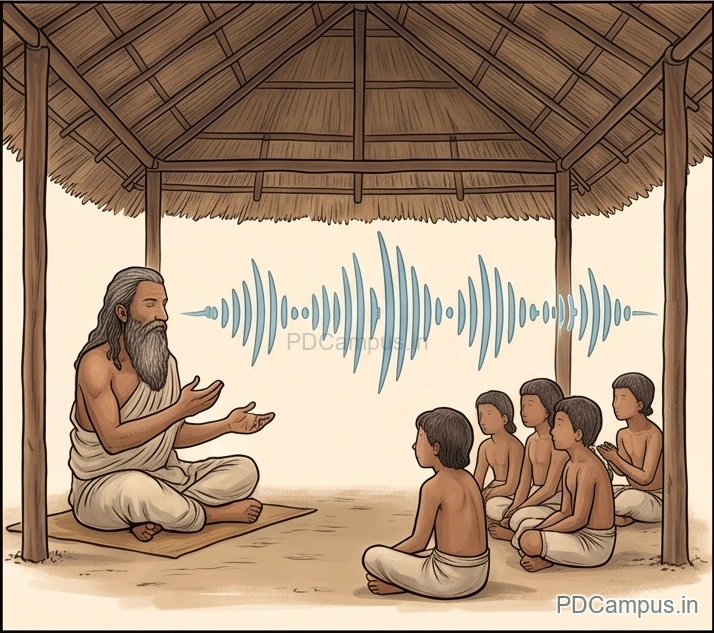
Preserving sound through repeated checkingबार-बार जाँचकर ध्वनि को सुरक्षित रखना
A teacher recited and the learner repeated, with close attention to sound, accent and order. Traditions used different recitation patterns to check the same words. This helps explain accurate transmission without assuming that every Vedic work was composed on one date. Oral composition, collection into a text, later revision, and the writing of a surviving manuscript are different events. Sanskrit here is Vedic Sanskrit, earlier than the standardised Classical Sanskrit familiar from later literature.शिक्षक पाठ करता था और विद्यार्थी दोहराता था। ध्वनि, स्वर और क्रम को ध्यान से सुधारा जाता था। एक ही शब्दों की जाँच के लिए अलग पाठ-पद्धतियाँ काम आती थीं। इससे सावधानीपूर्ण मौखिक संरक्षण समझ आता है, लेकिन यह नहीं मानना चाहिए कि सभी वैदिक रचनाएँ एक दिन बनीं। मौखिक रचना, उसका संकलन, बाद का संपादन और आज बची पांडुलिपि का लिखा जाना अलग घटनाएँ हैं। यहाँ भाषा वैदिक संस्कृत है, जो बाद के साहित्य की मानकीकृत शास्त्रीय संस्कृत से पुरानी है।
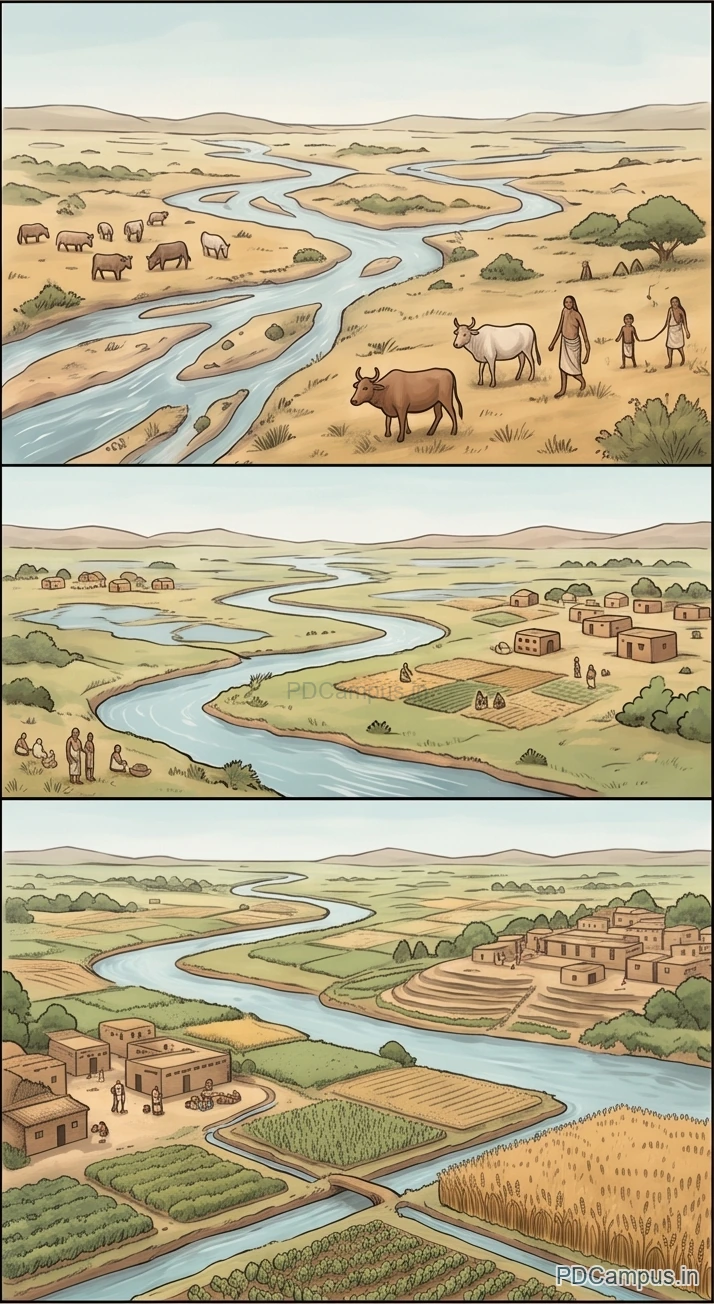
From seven rivers to the eastern plainsसात नदियों से पूर्वी मैदानों तक
1 Sapta-Sindhu land of seven rivers 2 Kuru-Panchala central Later Vedic zone 3 Kosala-Videha eastern expansion1 सप्त-सिंधु: सात नदियों का क्षेत्र। 2 कुरु-पांचाल: उत्तर वैदिक काल का प्रमुख क्षेत्र। 3 कोसल-विदेह: पूर्व की ओर विस्तार।
A common classroom seven-river list is Sindhu (Indus), Vitasta (Jhelum), Asikni (Chenab), Parushni (Ravi), Vipash (Beas), Shutudri (Sutlej) and Sarasvati. This is a conventional study list rather than a uniquely settled map for every occurrence of Sapta-Sindhu. Identifying the Vedic Sarasvati with a particular modern or ancient river system remains debated.सात नदियों की एक सामान्य शिक्षण सूची है: सिंधु, वितस्ता यानी झेलम, असिक्नी यानी चिनाब, परुष्णी यानी रावी, विपाश यानी ब्यास, शुतुद्रि यानी सतलुज और सरस्वती। यह पढ़ाई की प्रचलित सूची है; सप्त-सिंधु के हर उल्लेख का एकमात्र निश्चित मानचित्र नहीं। वैदिक सरस्वती की किसी खास वर्तमान या प्राचीन नदी-तंत्र से पहचान पर मतभेद हैं।
The Early Vedic world lay mainly in the north-west up to the Yamuna. Later literature shows a stronger centre in the Ganga-Yamuna doab and movement toward eastern Uttar Pradesh and north Bihar.प्रारंभिक वैदिक जीवन का मुख्य क्षेत्र उत्तर-पश्चिम से यमुना तक था। बाद का साहित्य गंगा-यमुना दोआब में अधिक मजबूत केंद्र और पूर्वी उत्तर प्रदेश तथा उत्तरी बिहार की ओर बढ़ता विस्तार दिखाता है।
Map caution: Rivers shift, ancient names are not always easy to identify, and cultural zones do not behave like modern state boundaries.मानचित्र की सावधानी: नदियाँ रास्ता बदलती हैं, पुराने नामों की पहचान हमेशा आसान नहीं होती, और सांस्कृतिक क्षेत्र आज की राज्य-सीमाओं की तरह नहीं चलते।
From north-western to eastern centresउत्तर-पश्चिम से पूर्वी केंद्रों की ओर
3. The Early Vedic World - Herd, Household and Assembly3. प्रारंभिक वैदिक जीवन: पशुधन, घर और सभा
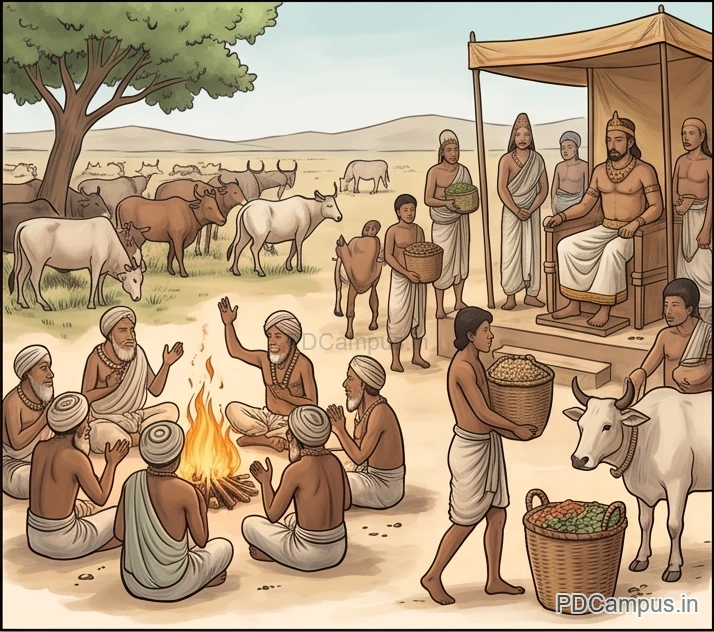
Picture a settlement where cattle are movable wealth, families belong to wider kin groups, the chief leads in danger, and important matters are spoken about in assemblies.ऐसी बस्ती की कल्पना करें जहाँ पशुधन चल संपत्ति है, परिवार बड़े नातेदारी समूहों से जुड़े हैं, खतरे में मुखिया नेतृत्व करता है और महत्वपूर्ण विषयों पर सामूहिक चर्चा होती है।
Economy: why the cow appears everywhereअर्थव्यवस्था: गाय के उल्लेख इतने अधिक क्यों हैं
Pastoral centreपशुपालन का मुख्य स्थान
Cattle rearing was central in the Rigvedic picture. Communities also kept sheep, goats and horses. Animals had different roles: dairy and other animal products, food, hides, transport, traction and prestige. Do not assume every listed animal served every role.ऋग्वैदिक चित्र में गोपालन महत्वपूर्ण था। समुदाय भेड़, बकरी और घोड़े भी रखते थे। अलग पशुओं के अलग काम थे: दूध और दूसरे पशु-उत्पाद, भोजन, खाल, परिवहन, खींचने का काम और प्रतिष्ठा। यह न मानें कि सूची का हर पशु इन सभी कामों में प्रयुक्त होता था।
Word cluesशब्दों से मिलने वाले संकेत
Go means cow; gomat describes someone rich in cattle. Gaveshana means searching for cows; related cattle-search vocabulary can be used in contexts of conflict. Duhitri means daughter and is traditionally explained through a link with milking. Word origins are useful clues, but they do not prove that every daughter had one fixed occupation.गो का अर्थ गाय है; गोमत उस व्यक्ति को बताता है जिसके पास बहुत पशुधन हो। गवेषणा गायों की खोज है; गायों की खोज से जुड़ी शब्दावली संघर्ष के संदर्भ में भी मिलती है। दुहितृ का अर्थ बेटी है और इसकी पारंपरिक व्याख्या दूध दुहने से जोड़ी जाती है। शब्दों की उत्पत्ति उपयोगी संकेत है, लेकिन उससे हर बेटी का एक निश्चित पेशा सिद्ध नहीं होता।
Farming existedखेती भी मौजूद थी
It was supplementary, not absent. Yava often means barley or cereal. The text gives much more space to herds than to fields.खेती सहायक थी, अनुपस्थित नहीं। यव का अर्थ अक्सर जौ या अनाज होता है। ग्रंथों में खेतों की तुलना में पशुधन को अधिक जगह मिलती है।
Skilled workकुशल काम
Carpentry, chariot-making, weaving, leatherwork, hunting and metalwork supported daily life. Takshan was a carpenter; rathakara made chariots.बढ़ईगीरी, रथ बनाना, बुनाई, चमड़े का काम, शिकार और धातु-कार्य रोज के जीवन में उपयोगी थे। तक्षन् बढ़ई और रथकार रथ बनाने वाला था।
Exchangeविनिमय
Barter was common. Cattle measured value and formed prestigious gifts. Nishka in early contexts is better understood as a gold ornament/value object, not a proven minted coin.वस्तुओं के बदले वस्तुएँ देना सामान्य था। पशुधन मूल्य मापने और प्रतिष्ठित दान में काम आता था। शुरुआती संदर्भों में निष्क को सोने का आभूषण या मूल्यवान वस्तु समझना अधिक ठीक है; उसे प्रमाणित ढला हुआ सिक्का नहीं मानना चाहिए।
War and wealthयुद्ध और संपत्ति
Cattle raids and booty mattered. Chiefs and priests could receive larger shares, beginning unequal accumulation inside the tribe.पशुधन छीनने के आक्रमण और युद्ध में मिली संपत्ति महत्वपूर्ण थे। मुखिया और पुरोहित को बड़ा हिस्सा मिल सकता था, जिससे समुदाय के भीतर संपत्ति का असमान जमाव बढ़ता था।
Social building blocksसमाज के समूह
Kula: family or household. Grama: a group or settlement; its meaning changes with context. Vis: people or a wider kin grouping. Jana: a people or tribe. These words describe related social groupings, but they should not be forced into one unchanging administrative ladder.कुल: परिवार या गृहस्थी। ग्राम: समूह या बस्ती; अर्थ संदर्भ के साथ बदलता है। विश्: लोग या बड़ा नातेदारी समूह। जन: जनसमूह या जनजाति। ये शब्द संबंधित सामाजिक समूह बताते हैं, लेकिन इन्हें एक अपरिवर्तनीय प्रशासनिक सीढ़ी में नहीं बाँधना चाहिए।
Family and occupationपरिवार और पेशा
Households were patriarchal, meaning that men generally held stronger authority and descent was commonly traced through men. Occupations were not yet described through a fully rigid birth-based caste order. Rigveda 9.112.3 speaks of a poet, a physician father and a mother grinding grain. It illustrates varied work within one family; one verse cannot prove complete social equality.परिवार पितृसत्तात्मक थे, यानी पुरुषों के पास सामान्यतः अधिक अधिकार था और वंश प्रायः पुरुष-रेखा से जोड़ा जाता था। पेशों को अभी पूरी तरह कठोर जन्म-आधारित जाति-व्यवस्था में नहीं बताया गया था। ऋग्वेद 9.112.3 में कवि, वैद्य पिता और अनाज पीसती माँ का उल्लेख है। यह एक परिवार में अलग कामों का उदाहरण है; एक पद से पूरी सामाजिक समानता सिद्ध नहीं होती।
Women - neither slogan nor silenceस्त्रियाँ: सामान्यीकरण से बचें
Some passages and later traditions suggest adult marriage, a measure of choice in marriage, women associated with learning and participation in collective life. Textbook accounts also mention sabha and samiti participation, but its extent and membership cannot be reconstructed as universal rights. Society remained male-centred; evidence gives ideals and selected examples, not an identical experience for every woman.कुछ अंश और बाद की परंपराएँ वयस्क विवाह, विवाह में कुछ चुनाव, शिक्षा से जुड़ी स्त्रियों और सामूहिक जीवन में भागीदारी के संकेत देती हैं। पाठ्यपुस्तकें सभा और समिति में भागीदारी का भी उल्लेख करती हैं, लेकिन उसका विस्तार और सदस्यता सार्वभौमिक अधिकारों के रूप में तय नहीं किए जा सकते। समाज पुरुष-प्रधान रहा; प्रमाण आदर्श और चुनिंदा उदाहरण देते हैं, हर स्त्री का समान अनुभव नहीं।
Polity: a chief checked by collective bodiesराजव्यवस्था: सामूहिक संस्थाओं के बीच मुखिया
- The rajan protected people and cattle and led in war; he was closer to a tribal chief than a later territorial emperor.राजन् लोगों और पशुधन की रक्षा करता तथा युद्ध में नेतृत्व देता था। वह बाद के क्षेत्रीय सम्राट से अधिक जनजातीय मुखिया जैसा था।
- Sabha and samiti were collective bodies associated with discussion and ritual life. They could constrain the chief, but their exact membership and functions are not identical to modern democratic institutions. Vidatha, gana and parishad are other collective terms whose usage varies across texts and periods. Topics could include war, distribution of booty, justice and ritual; this is a source-based summary, not a modern constitutional division of powers.सभा और समिति चर्चा तथा अनुष्ठानिक जीवन से जुड़ी सामूहिक संस्थाएँ थीं। वे मुखिया की शक्ति को सीमित कर सकती थीं, लेकिन उनकी सदस्यता और काम आधुनिक लोकतांत्रिक संस्थाओं जैसे नहीं थे। विदथ, गण और परिषद दूसरे सामूहिक शब्द हैं, जिनका उपयोग ग्रंथ और काल के अनुसार बदलता है। विषयों में युद्ध, युद्ध-लाभ का बँटवारा, न्याय और अनुष्ठान शामिल हो सकते थे; यह स्रोतों पर आधारित सार है, आधुनिक संविधान जैसा शक्तियों का विभाजन नहीं।
- Introductory diagrams often distinguish a smaller sabha from a wider samiti. Use this as a learning shorthand: their exact composition and powers varied or remain uncertain.प्रारंभिक रेखाचित्र अक्सर सभा को छोटी परिषद और समिति को व्यापक सभा बताते हैं। इसे सीखने का संक्षिप्त संकेत मानें; उनकी ठीक सदस्यता और शक्तियाँ बदलती थीं या अनिश्चित हैं।
- Chiefship was not governed everywhere by a fixed rule of primogeniture, inheritance by the eldest child or son. War forces could be mobilised when needed; the Rigvedic picture is not that of a large permanent standing army.मुखियापन हर जगह ज्येष्ठाधिकार, यानी सबसे बड़ी संतान या पुत्र को उत्तराधिकार, के तय नियम से नहीं चलता था। जरूरत पर योद्धा जुटाए जा सकते थे। ऋग्वैदिक चित्र किसी बड़ी स्थायी सेना का नहीं है।
- Bali was largely a voluntary or occasional contribution. No regular tax collector is visible in the Rigveda.बलि मुख्यतः स्वैच्छिक या अवसर के अनुसार योगदान थी। ऋग्वेद में नियमित कर-संग्रह अधिकारी स्पष्ट नहीं मिलता।
From assembly and herd to dues and territoryसभा-पशुधन से उपज-अंश और क्षेत्र तक
Religion: nature, need and sacred fireधर्म: प्रकृति, आवश्यकताएँ और पवित्र अग्नि
Indraइंद्र
In Rigvedic hymns, Indra is a thunderbolt-bearing warrior associated with rain and is the most frequently praised deity. Such praise reflects the importance of conflict, cattle and weather in the poetic world of the hymns.ऋग्वैदिक सूक्तों में इंद्र वज्रधारी योद्धा और वर्षा से जुड़े देवता हैं; उनकी स्तुति सबसे अधिक है। यह प्रशंसा सूक्तों के काव्य-जगत में संघर्ष, पशुधन और मौसम के महत्व को दर्शाती है।
Agniअग्नि
Agni represents the fire of home and sacrifice. The hymns describe him as a messenger carrying offerings between humans and deities.अग्नि घर और यज्ञ की आग का प्रतिनिधित्व करते हैं। सूक्त उन्हें मनुष्यों और देवताओं के बीच आहुति पहुँचाने वाला दूत बताते हैं।
Varunaवरुण
Varuna is associated with guarding rita, the cosmic and moral order: the idea that the world and human conduct should follow an underlying order.वरुण ऋत की रक्षा से जुड़े हैं। ऋत ब्रह्मांडीय और नैतिक व्यवस्था का विचार है: संसार और मानव आचरण किसी मूल व्यवस्था के अनुसार चलें।
Othersअन्य देवता
Soma (plant/drink and deity), Pushan (roads, herds and cattle), Surya, Maruts, Mitra; goddesses include Ushas, Sarasvati and Prithvi.सोम: पौधा या पेय और देवता। पूषन: रास्ते, झुंड और पशुधन। सूर्य, मरुत और मित्र भी महत्वपूर्ण हैं। देवियों में उषा, सरस्वती और पृथ्वी शामिल हैं।
Worship pattern: hymns, prayers and yajna sought cattle, children, rain, long life and victory. Offerings passed through fire. The Vedic evidence does not show temple buildings or image worship as the central form of this period. Battle of Ten Kings: The Rigveda describes Sudas of the Bharatas defeating a confederacy, a group of allied communities, near the Parushni (Ravi). It is useful evidence for inter-tribal conflict, but poetic praise should not be treated like a modern military report.उपासना: सूक्त, प्रार्थना और यज्ञ में पशुधन, संतान, वर्षा, लंबी आयु और विजय की कामना की जाती थी। अग्नि में आहुति दी जाती थी। इस काल के वैदिक प्रमाण मंदिरों और मूर्ति-पूजा को मुख्य उपासना-पद्धति के रूप में नहीं दिखाते। दशराज्ञ युद्ध: ऋग्वेद में भरतों के सुदास द्वारा परुष्णी, यानी रावी, के पास कई सहयोगी समुदायों के एक संघ को हराने का वर्णन है। यह जनसमूहों के संघर्ष का उपयोगी प्रमाण है, लेकिन काव्यात्मक प्रशंसा को आधुनिक सैन्य रिपोर्ट न मानें।
How to read a praise hymnप्रशंसा के सूक्त को कैसे पढ़ें
A hymn praising a chief’s cattle gifts supports the importance of cattle, patronage and prestige. It does not tell us the average wealth of every household. A priestly text prescribing a sacrifice records a ritual ideal; it does not prove that all families performed that ceremony. Compare the text’s purpose with settlement remains, animal bones, crops and tools before describing everyday life.मुखिया के गोदान की प्रशंसा करने वाला सूक्त पशुधन, संरक्षण और प्रतिष्ठा का महत्व बताता है। उससे हर परिवार की औसत संपत्ति नहीं निकलती। कोई पुरोहितीय ग्रंथ यज्ञ का नियम देता है तो वह अनुष्ठान का आदर्श बताता है; इससे यह सिद्ध नहीं होता कि हर परिवार वही यज्ञ करता था। रोज का जीवन बताने से पहले ग्रंथ के उद्देश्य को बस्तियों, पशु-हड्डियों, फसलों और औजारों के प्रमाणों से मिलाएँ।
4. The Later Vedic Transformation - Field, Iron and Territory4. उत्तर वैदिक बदलाव: खेत, लोहा और क्षेत्र
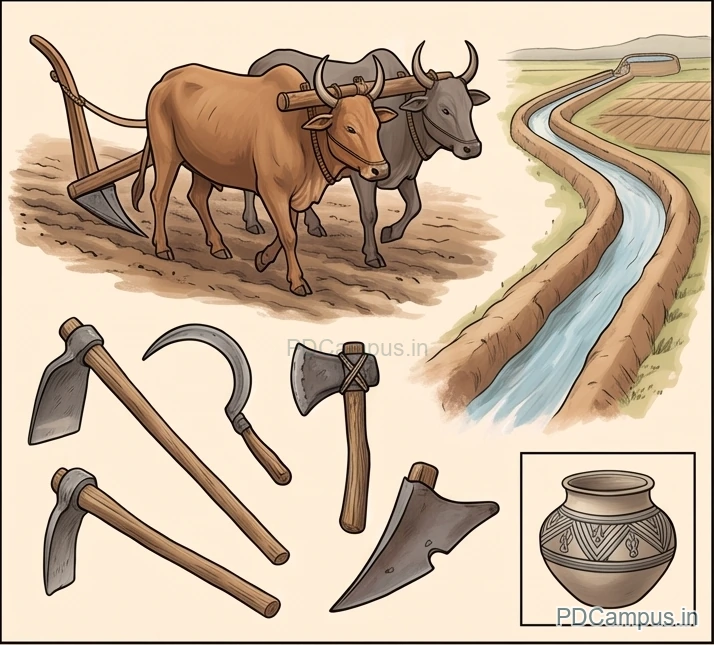
More settled agriculture could yield food beyond immediate household needs and strengthen claims over land. This surplus could support chiefs, priests, artisans and officials. But harvests varied, and sharing or collecting surplus depended on social power. Farming, political organisation, exchange and ritual reinforced one another; no single invention explains the whole change.अधिक स्थायी खेती से परिवार की तत्काल जरूरत से अधिक भोजन मिल सकता था और भूमि पर दावे मजबूत हो सकते थे। यह अधिशेष मुखियाओं, पुरोहितों, शिल्पियों और अधिकारियों को सहारा दे सकता था। लेकिन फसलें बदलती थीं और अधिशेष बाँटना या जुटाना सामाजिक शक्ति पर निर्भर था। खेती, राजनीतिक संगठन, विनिमय और अनुष्ठान एक-दूसरे को प्रभावित करते थे; एक आविष्कार पूरे बदलाव को नहीं समझाता।
Agriculture becomes centralखेती केंद्रीय बनती है
Texts describe heavy ploughs drawn by teams of six or eight oxen, buffalo used for wet ground, and knowledge of seasons, manure and water management. These descriptions suggest varied agricultural practices; they do not show that every village had the same plough or an extensive irrigation system.ग्रंथ छह या आठ बैलों के दल से भारी हल खींचकर जुताई, गीली जमीन के लिए भैंस और ऋतु, खाद तथा पानी के प्रबंधन की जानकारी बताते हैं। इससे खेती के विविध तरीकों का संकेत मिलता है; यह नहीं कि हर गाँव में एक जैसा हल या बड़ा सिंचाई-तंत्र था।
More cropsफसलों की विविधता
Along with barley came stronger evidence for rice, wheat, pulses, lentils, millet, sugarcane and sesame (tila), valued for oil and ritual.जौ के साथ चावल, गेहूँ, दलहन, मसूर, मोटे अनाज, गन्ने और तिल के अधिक स्पष्ट प्रमाण मिलते हैं। तिल तेल और अनुष्ठान में उपयोगी था।
Iron vocabularyलोहे से जुड़ी शब्दावली
Ayas means metal and cannot automatically be translated as iron in every passage. In early contexts it is often interpreted as copper or bronze. Later shyama ayas or krishna ayas, “dark/black metal,” is generally understood as iron.अयस का अर्थ धातु है; हर अंश में इसका अनुवाद लोहा नहीं कर सकते। शुरुआती संदर्भों में इसे प्रायः ताँबा या काँसा समझा जाता है। बाद के श्याम अयस या कृष्ण अयस, यानी काली धातु, को सामान्यतः लोहा माना जाता है।
Forest and soilवन और मिट्टी
Iron axes and ploughshares could make some clearing and cultivation more effective where they were available. The timing and scale of agricultural iron use varied; archaeological evidence must establish which tools were actually used. Woodland change and agricultural expansion also involved labour, fire, water, crops and existing tools. Iron was an aid, not the single switch that created agriculture.जहाँ लोहे की कुल्हाड़ियाँ और हल के फाल उपलब्ध थे, वे कुछ सफाई और खेती के काम अधिक प्रभावी बना सकते थे। कृषि में लोहे के प्रयोग का समय और विस्तार अलग-अलग था; वास्तव में कौन-से औजार चले, यह पुरातत्त्व से जाँचना होगा। वन में बदलाव और खेती के फैलाव में श्रम, आग, पानी, फसलें तथा पहले के औजार भी काम आए। लोहा सहायक था, खेती शुरू करने वाला अकेला कारण नहीं।
PGW settlementsचित्रित धूसर मृद्भांड वाली बस्तियाँ
Painted Grey Ware (PGW) is fine grey pottery often painted with dark designs. Sites such as Hastinapur, Atranjikhera, Ahichchhatra and Kaushambi help trace settlement in the upper Ganga region and neighbouring areas. Their occupational histories are not identical, and a later town need not already have been a city in its PGW phase.चित्रित धूसर मृद्भांड, यानी PGW, धूसर रंग के महीन बर्तन हैं जिन पर अक्सर गहरे रंग के चित्र बने होते हैं। हस्तिनापुर, अतरंजीखेड़ा, अहिच्छत्र और कौशांबी जैसे स्थल ऊपरी गंगा क्षेत्र और आसपास की बसावट समझने में मदद करते हैं। उनका बसावट-इतिहास समान नहीं है। बाद में नगर बना कोई स्थल अपने PGW चरण में भी नगर रहा हो, यह जरूरी नहीं।
Do not overclaimप्रमाण से अधिक दावा न करें
PGW is a pottery tradition, not a label stamped "Vedic people." Text and archaeology overlap in time and region, but one cannot mechanically identify every pot-user.PGW बर्तनों की परंपरा है, उस पर “वैदिक लोग” की पहचान नहीं लिखी है। ग्रंथ और पुरातत्त्व समय तथा क्षेत्र में मिल सकते हैं, लेकिन हर बर्तन इस्तेमाल करने वाले की पहचान सीधे नहीं की जा सकती।
Agricultural change needs more than metalखेती में बदलाव के लिए केवल धातु काफी नहीं
Society becomes more layeredसमाज में परतें बढ़ती हैं
Varna hardensवर्ण का ढाँचा अधिक स्पष्ट होता है
Texts state a fourfold varna hierarchy more explicitly. Brahmanas were associated with priestly learning, Kshatriyas with rule and warfare, Vaishyas with production and contributions, and Shudras with service and increasing ritual exclusions. These are normative classifications—statements of how society ought to be ordered—not a census of every occupation. Varna is not identical to the many later jatis, or birth-based social communities. The Vaishya category included cultivators, herders, traders and artisans in such textbook summaries. Brahmanical prescriptions excluded Shudras from upanayana, the initiation associated with Vedic study, while the three higher varnas were called dvija, twice-born. This describes a discriminatory textual norm, not proof that every community followed an identical rule.ग्रंथ चार वर्णों का क्रम अधिक स्पष्ट रूप से बताते हैं। ब्राह्मण पुरोहितीय शिक्षा, क्षत्रिय शासन और युद्ध, वैश्य उत्पादन तथा योगदान, और शूद्र सेवा तथा बढ़ते अनुष्ठानिक बहिष्कार से जोड़े गए। ये नियम बताने वाले वर्गीकरण हैं: समाज कैसा होना चाहिए, इसका आदर्श; हर पेशे की जनगणना नहीं। वर्ण बाद की अनेक जन्म-आधारित जातियों के बिल्कुल समान नहीं है। ऐसे पाठ्यपुस्तकीय सार में वैश्य वर्ग के अंतर्गत कृषक, पशुपालक, व्यापारी और शिल्पी आते हैं। ब्राह्मणीय नियमों ने शूद्रों को वैदिक अध्ययन से जुड़े उपनयन संस्कार से बाहर रखा; तीन उच्च वर्ण द्विज, यानी दो बार जन्मे, कहलाए। यह भेदभावपूर्ण ग्रंथीय नियम का वर्णन है, हर समुदाय में एक जैसा नियम होने का प्रमाण नहीं।
Gotra and familyगोत्र और परिवार
Larger joint families appear. Gotra linked people to a claimed common ancestor and discouraged marriage within the same gotra.बड़े संयुक्त परिवार दिखाई देते हैं। गोत्र लोगों को एक माने गए साझा पूर्वज से जोड़ता था और एक ही गोत्र में विवाह से रोकता था।
Ashrama ideaआश्रम का विचार
Ashrama means an order or way of life. Brahmacharya is studentship, grihastha household life, vanaprastha forest retirement and sannyasa renunciation. Some classroom summaries describe three early orders with renunciation added later. The historical development is more complex: early formulations could present alternative adult vocations, while the familiar sequence of four successive life stages was systematised later. Do not assume everyone in 1000 BCE followed it.आश्रम का अर्थ जीवन का एक मार्ग या व्यवस्था है। ब्रह्मचर्य विद्यार्थी-जीवन, गृहस्थ परिवार-जीवन, वानप्रस्थ वन की ओर निवृत्ति और संन्यास त्याग है। कुछ पाठ्यपुस्तकें पहले तीन और बाद में संन्यास जुड़ने का सरल क्रम देती हैं। ऐतिहासिक विकास अधिक जटिल है: शुरुआती रूप वयस्क जीवन के वैकल्पिक मार्ग हो सकते थे; एक के बाद एक आने वाले चार चरणों का परिचित क्रम बाद में व्यवस्थित हुआ। यह न मानें कि 1000 ईसा-पूर्व में सभी लोग उसे अपनाते थे।
Women in the sources: Later texts show stronger restrictions on public participation, inheritance and learning than the earlier picture. Yet change was gradual and uneven. Do not imagine every woman, region or century had one identical experience.स्रोतों में स्त्रियाँ: बाद के ग्रंथ पहले के चित्र की तुलना में सार्वजनिक भागीदारी, उत्तराधिकार और शिक्षा पर अधिक रोक दिखाते हैं। फिर भी बदलाव धीरे और असमान रूप से हुआ। हर स्त्री, क्षेत्र और शताब्दी का एक ही अनुभव नहीं था।
From chief to territorial rulerमुखिया से क्षेत्रीय शासक की ओर
| Featureविशेषता | Early Vedic tendencyप्रारंभिक वैदिक प्रवृत्ति | Later Vedic tendencyउत्तर वैदिक प्रवृत्ति |
|---|---|---|
| Political baseराजनीतिक आधार | Jana: kin-based peopleजन: नातेदारी पर आधारित लोग | Janapada: people connected increasingly with territoryजनपद: क्षेत्र से बढ़ता जुड़ाव |
| Rajanराजन् | Protector and war leader; succession not firmly hereditaryरक्षक और युद्ध-नेता; उत्तराधिकार पूरी तरह तय नहीं | Chiefship increasingly hereditary and sacred; coronation strengthens authorityबढ़ती वंशानुगत और पवित्र सत्ता; अभिषेक से अधिकार मजबूत |
| Assembliesसभाएँ | Sabha and samiti actively discuss common affairsसभा और समिति में सामूहिक विषयों पर चर्चा | Assemblies weaken as officials and the chief take more functionsअधिकारियों और मुखिया के काम बढ़ने पर सभाएँ कमजोर |
| Armyसेना | Temporary mobilisation of tribesmenजरूरत पर जनजातीय योद्धाओं को जुटाना | Military organisation develops with stronger rulers; do not assume a large permanent standing armyमजबूत शासकों के साथ सैन्य संगठन बढ़ता है; बड़ी स्थायी सेना न मानें |
| Revenueराजस्व | Bali mostly occasional/voluntaryबलि अधिकतर अवसर के अनुसार या स्वैच्छिक | Bali becomes more regular; bhaga (share of produce) and shulka (dues/toll) appearबलि अधिक नियमित; भाग यानी उपज का हिस्सा और शुल्क यानी देय राशि / मार्ग-कर |
| Power supportशक्ति के आधार | Kin, assemblies, purohita (priest-adviser) and warriorsनातेदारी, सभाएँ, पुरोहित यानी धार्मिक सलाहकार और योद्धा | Brahmana-Kshatriya alliance, ritual, surplus, officers and territoryब्राह्मण-क्षत्रिय सहयोग, अनुष्ठान, अधिशेष, अधिकारी और क्षेत्र |
Religion changes with material lifeभौतिक जीवन के साथ धर्म में बदलाव
Elaborate yajnasविस्तृत यज्ञ
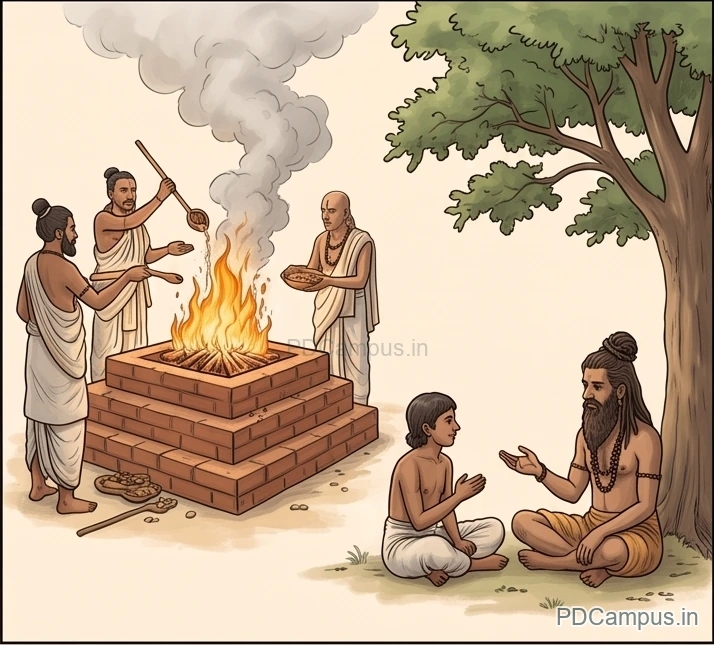
Rajasuya consecrated royal authority, meaning it ritually established the ruler’s status. Vajapeya was a prestige sacrifice involving a chariot race; it was not restricted in all traditions to kings. Ashvamedha, the horse sacrifice, asserted sovereignty or paramount rule. Dana means a gift and dakshina a ritual fee or offering to officiants. Large ceremonies moved wealth toward ritual specialists and supported claims to political authority.राजसूय राजकीय अधिकार की अनुष्ठानिक स्थापना करता था। वाजपेय प्रतिष्ठा का यज्ञ था जिसमें रथ-दौड़ शामिल थी; हर परंपरा में वह केवल राजाओं तक सीमित नहीं था। अश्वमेध, यानी अश्व-यज्ञ, सर्वोच्च शासन का दावा करता था। दान उपहार और दक्षिणा अनुष्ठान कराने वालों को दिया गया पारिश्रमिक या भेंट है। बड़े समारोहों से धन अनुष्ठान-विशेषज्ञों तक पहुँचता था और राजनीतिक अधिकार के दावों को सहारा मिलता था।
New emphasisनया जोर
Prajapati, Vishnu and Rudra received greater emphasis in later Vedic traditions. These developments should not be equated with all their later Puranic forms or with the familiar full avatara system of Vishnu. Ritual continued alongside growing inquiry into knowledge, conduct and the self.बाद की वैदिक परंपराओं में प्रजापति, विष्णु और रुद्र पर अधिक जोर मिलता है। इन्हें उनके सभी बाद के पुराणिक रूपों या विष्णु की पूरी परिचित अवतार-व्यवस्था के समान न मानें। ज्ञान, आचरण और आत्मा पर बढ़ते प्रश्नों के साथ अनुष्ठान भी जारी रहे।
Large rituals required wealth and animals. Some thinkers asked whether outer ritual was enough; Upanishadic discussions explored knowledge and conduct. Karma links deeds with consequences, and moksha means release from rebirth. Bridge to the next age: By around the sixth century BCE, agrarian surplus, territories, hierarchy, taxation and larger settlements prepared the ground for janapadas, mahajanapadas, cities and new religious debates.बड़े अनुष्ठान: धन और पशु। प्रश्न: क्या बाहरी अनुष्ठान पर्याप्त है? उपनिषदों का चिंतन: ज्ञान और आचरण। कर्म: कार्यों के फल। मोक्ष: पुनर्जन्म से मुक्ति। अगले काल की कड़ी: लगभग छठी शताब्दी ईसा-पूर्व तक कृषि-अधिशेष, क्षेत्र, ऊँच-नीच, कर और बड़ी बस्तियों ने जनपदों, महाजनपदों, नगरों और नई धार्मिक बहसों की जमीन तैयार की।
Ritual and philosophical inquiry coexistअनुष्ठान और दार्शनिक चिंतन साथ
The questions behind the Upanishadsउपनिषदों के पीछे के सवाल
Atman refers to the self; Brahman to ultimate reality in many Upanishadic discussions. Their relationship is a central question, but different texts and later schools explain it differently. Brahman, the philosophical concept, is not the same as a Brahmana priest or a Brahmana ritual text. Karma is action and its consequences; samsara the cycle of rebirth; moksha liberation from that cycle. These are philosophical and religious ideas discussed in the sources, not archaeological measurements. Upanishadic inquiry did not simply erase ritual.आत्मन् का अर्थ स्व या आत्मा है। कई उपनिषदों में ब्रह्म परम वास्तविकता का विचार है। दोनों का संबंध प्रमुख प्रश्न है, लेकिन ग्रंथ और बाद के दर्शन इसे अलग तरह से समझाते हैं। दार्शनिक ब्रह्म, ब्राह्मण पुरोहित और ब्राह्मण ग्रंथ एक चीज नहीं हैं। कर्म का अर्थ कार्य और उसका फल, संसार का अर्थ पुनर्जन्म का चक्र और मोक्ष उस चक्र से मुक्ति है। ये स्रोतों में चर्चित दार्शनिक और धार्मिक विचार हैं, पुरातात्विक माप नहीं। उपनिषदों के चिंतन ने अनुष्ठान को एकदम समाप्त नहीं किया।
5. Rapid Revision - The Whole Change in One View5. त्वरित दोहराव: पूरा बदलाव एक नजर में
Read the table as a comparison of tendencies. Changes in migration, land, farming, surplus and political power were connected, but no row applied equally to every community.तालिका को प्रवृत्तियों की तुलना के रूप में पढ़ें। प्रवास, भूमि, खेती, अधिशेष और राजनीतिक शक्ति के बदलाव जुड़े थे, लेकिन कोई पंक्ति हर समुदाय पर समान रूप से लागू नहीं थी।
Master comparison tableमुख्य तुलना तालिका
| Areaपक्ष | Early Vedic, c. 1500-1000 BCEप्रारंभिक वैदिक, लगभग 1500–1000 ईसा-पूर्व | Later Vedic, c. 1000-600 BCEउत्तर वैदिक, लगभग 1000–600 ईसा-पूर्व |
|---|---|---|
| Main sourceमुख्य स्रोत | Rigveda, especially its earlier layersऋग्वेद, खासकर उसके पुराने अंश | Other Vedas, Brahmanas, Aranyakas and early Upanishadsदूसरे वेद, ब्राह्मण, आरण्यक और शुरुआती उपनिषद |
| Geographyभूगोल | Sapta-Sindhu and north-west up to Yamunaसप्त-सिंधु और उत्तर-पश्चिम से यमुना तक | Ganga-Yamuna doab; Kuru-Panchala; toward Kosala-Videhaगंगा-यमुना दोआब, कुरु-पांचाल, कोसल-विदेह की ओर |
| Economyअर्थव्यवस्था | Cattle-centred pastoralism; limited farming; barterपशुधन पर केंद्रित पशुपालन; सीमित खेती; वस्तु-विनिमय | Agriculture central; more crops, iron, surplus, craft and exchangeखेती केंद्रीय; अधिक फसलें, लोहा, अधिशेष, शिल्प और विनिमय |
| Settlementबसावट | Smaller and more mobile/tribal settlementsछोटी और अधिक गतिशील / जनजातीय बस्तियाँ | Larger settled villages; PGW sites; beginnings of town-like centresबड़े स्थायी गाँव, PGW स्थल और कस्बेनुमा केंद्रों की शुरुआत |
| Political unitराजनीतिक इकाई | Jana based mainly on kinshipजन, मुख्यतः नातेदारी पर आधारित | Territorial janapada takes shapeक्षेत्रीय जनपद का आकार लेना |
| Chiefमुखिया | Rajan protects jana and cattle; assemblies matterराजन् जन और पशुधन का रक्षक; सभाएँ महत्वपूर्ण | Hereditary tendency, coronation ritual, officials and stronger duesवंशानुगत प्रवृत्ति, अभिषेक, अधिकारी और मजबूत वसूली |
| Societyसमाज | Less sharply divided; occupations more flexibleअंतर कम स्पष्ट; पेशों में अधिक लचीलापन | Four-varna prescriptions sharpen; gotra develops; life-order ideas emerge over timeचार वर्णों के नियम अधिक स्पष्ट; गोत्र का विकास; समय के साथ जीवन-मार्गों के विचार |
| Womenस्त्रियाँ | Some women appear in learning and collective-life traditions; households remain patriarchalकुछ स्त्रियाँ शिक्षा और सामूहिक जीवन की परंपराओं में दिखती हैं; परिवार पितृसत्तात्मक | Public and ritual restrictions grow, though experience variesसार्वजनिक और अनुष्ठानिक रोक बढ़ती है; अनुभव अलग-अलग |
| Religionधर्म | Indra, Agni, Varuna, Soma; nature-linked hymns and simpler yajnaइंद्र, अग्नि, वरुण, सोम; प्रकृति से जुड़े सूक्त और अपेक्षाकृत सरल यज्ञ | Prajapati, Vishnu, Rudra rise; royal yajnas grow; Upanishadic questioningप्रजापति, विष्णु, रुद्र पर जोर; राजकीय यज्ञ और उपनिषदों के प्रश्न |
| Contributionsयोगदान | Bali largely voluntary/occasionalबलि अधिकतर स्वैच्छिक या अवसर के अनुसार | Bali more regular; bhaga and shulka support ruler and officersबलि अधिक नियमित; भाग और शुल्क से शासक-अधिकारियों को सहारा |
Text keyग्रंथों की कुंजी
- Rig = praise hymnsऋक् = स्तुति के सूक्त
- Sama = songसाम = गायन
- Yajur = ritual formulaयजुष् = यज्ञ के मंत्र
- Atharva = charms/lifeअथर्व = मंत्र-प्रयोग और जीवन
- Brahmana = ritual explanationब्राह्मण = अनुष्ठान की व्याख्या
- Upanishad = philosophyउपनिषद = दार्शनिक चिंतन
Early keyप्रारंभिक काल की कुंजी
- Sapta-Sindhuसप्त-सिंधु
- Cattle wealthपशुधन की संपत्ति
- Janaजन
- Rajanराजन्
- Sabha + samitiसभा और समिति
- Indra + Agniइंद्र और अग्नि
Later keyउत्तर वैदिक काल की कुंजी
- Ganga doabगंगा दोआब
- Agriculture + ironखेती और लोहा
- PGW growthPGW बस्तियों का बढ़ना
- Janapadaजनपद
- Varna hardensवर्ण का मजबूत ढाँचा
- Royal yajnasराजकीय यज्ञ
Philosophy keyदर्शन की कुंजी
- Rita = cosmic orderऋत = ब्रह्मांडीय व्यवस्था
- Karma = action/consequenceकर्म = कार्य और फल
- Samsara = rebirth cycleसंसार = पुनर्जन्म का चक्र
- Moksha = releaseमोक्ष = मुक्ति
- Vedanta = Veda's endवेदांत = वेद का अंतिम भाग
High-density associationsजरूरी संबंध एक जगह
Terms and peopleशब्द और व्यक्ति
- Rajan — chiefराजन् — मुखिया
- Purohita — priest-adviserपुरोहित — धार्मिक सलाहकार
- Senani — war leaderसेनानी — युद्ध-नेता
- Gramani — group or village headग्रामणी — समूह या गाँव का प्रधान
- Kulapa — family or household headकुलप — परिवार या गृहसमूह का प्रधान
- Takshan — carpenterतक्षन् — बढ़ई
- Rathakara — chariot makerरथकार — रथ बनाने वाला
Places and objectsस्थान और वस्तुएँ
- Parushni — Battle of Ten Kingsपरुष्णी — दशराज्ञ युद्ध
- Kuru-Panchala — Later Vedic heartlandकुरु-पांचाल — उत्तर वैदिक प्रमुख क्षेत्र
- Kosala-Videha — eastern spreadकोसल-विदेह — पूर्व की ओर विस्तार
- PGW — Painted Grey WarePGW — चित्रित धूसर मृद्भांड
- Shyama/krishna ayas — ironश्याम / कृष्ण अयस — लोहा
Dues and ritualsदेय राशि और अनुष्ठान
- Bali — contribution or tributeबलि — योगदान या भेंट
- Bhaga — share of produceभाग — उपज का हिस्सा
- Shulka — dues or tollशुल्क — देय राशि या मार्ग-कर
- Rajasuya — royal consecrationराजसूय — राजकीय अभिषेक
- Ashvamedha — sovereignty ritualअश्वमेध — सर्वोच्च सत्ता का अनुष्ठान
- Vajapeya — prestige rite, including royal contextsवाजपेय — प्रतिष्ठा का अनुष्ठान, राजकीय संदर्भों में भी
Change chain: C-F-I-S-Tबदलाव की शृंखला: पशुधन से क्षेत्र तक
Cattle - Fields - Iron - Surplus - Territory.पशुधन → खेत → लोहा → अधिशेष → क्षेत्र।
The links affect economy, hierarchy, ritual, dues and kingship. This is a memory chain, not proof that cattle disappeared, iron arrived everywhere together, or one step automatically caused the next.ये संबंध अर्थव्यवस्था, सामाजिक क्रम, अनुष्ठान, देय राशि और राजसत्ता पर असर डालते हैं। यह याद रखने की शृंखला है; यह प्रमाण नहीं कि पशुधन समाप्त हुआ, लोहा हर जगह साथ पहुँचा या एक कदम से अगला अपने-आप आया।
Four Vedas: R-S-Y-Aचार वेद: ऋक्, साम, यजुष् और अथर्व
Read - Sing - Yajna - Ailment.पढ़ना → गाना → यज्ञ → रोग-चिंता।
Rig praises; Sama sings; Yajur performs sacrifice; Atharva includes healing and daily concerns.ऋग्वेद स्तुति करता है; सामवेद गायन से जुड़ा है; यजुर्वेद यज्ञ-विधि से; अथर्ववेद में उपचार और रोज की चिंताएँ भी हैं।
Final careful facts: "Aryan" is not a race; migration was not one simple invasion; oral texts have layers; PGW does not automatically equal one ethnic people; iron aided change but was not the only cause; early society was less stratified, not perfectly equal; and Later Vedic changes unfolded unevenly across regions.अंतिम सावधान तथ्य: “आर्य” नस्ल नहीं है; प्रवास एक सरल आक्रमण नहीं था; मौखिक ग्रंथों में कई परतें हैं; PGW अपने-आप एक जातीय समुदाय नहीं बताता; लोहे ने मदद की लेकिन वह अकेला कारण नहीं था; शुरुआती समाज कम विभाजित था, पूरी तरह समान नहीं; और उत्तर वैदिक बदलाव क्षेत्रों में असमान गति से हुए।
The Vedic Age becomes easy when you follow one living chain: livelihood changes society, society changes power, and power reshapes ideas.वैदिक काल को समझने की मुख्य कड़ी है: आजीविका समाज को प्रभावित करती है, समाज सत्ता को, और सत्ता विचारों को नया रूप देती है।