Jainism and Other Shramana Traditionsजैन धर्म और अन्य श्रमण परंपराएँ
General Knowledge · Visual study guide with full explanationsसामान्य ज्ञान · चित्रों और पूरे विवरण के साथ अध्ययन मार्गदर्शिका
The disciplined path of non-violence, many-sided truth and freedom from karmic bondageअहिंसा, सत्य के अनेक पक्ष और कर्म-बंधन से मुक्ति का अनुशासित मार्ग
1. The Big Picture - Building a Ford across the River of Rebirth1. व्यापक विचार — जन्म-मृत्यु की नदी पार करने का मार्ग
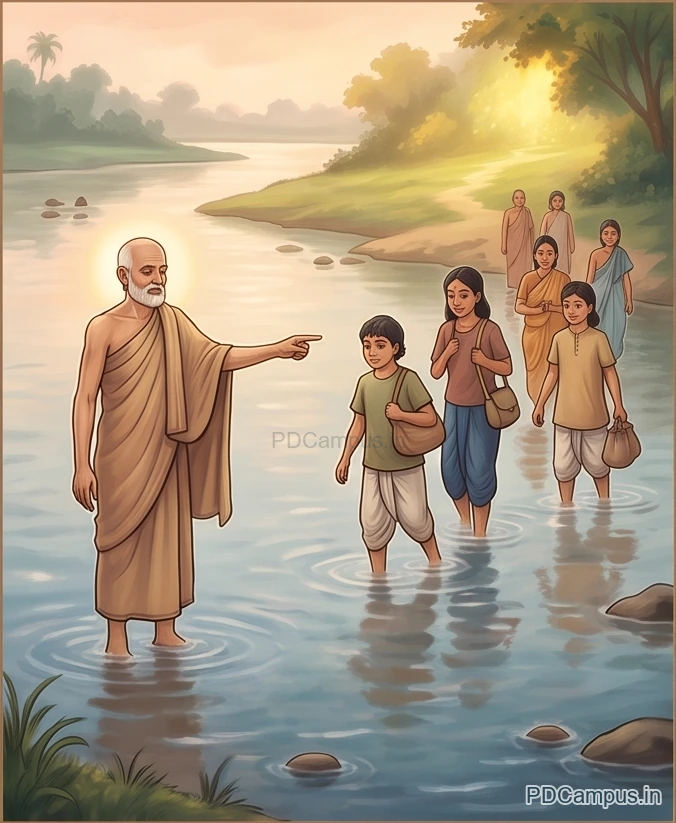
Imagine crossing a river at a shallow, safe place: a ford. A Tirthankara is a “ford-maker,” a teacher who shows the way across. In Jain thought, the river represents samsara, the cycle of birth and death. The crossing represents liberation through right vision, right knowledge and disciplined conduct. This is a teaching analogy, not a literal river journey.नदी में एक उथली, सुरक्षित जगह से पार जाने की कल्पना करें। तीर्थंकर का अर्थ ऐसा मार्ग दिखाने वाला शिक्षक है। जैन विचार में नदी संसार, यानी जन्म-मृत्यु के चक्र का रूपक है। पार जाना सम्यक दर्शन, सम्यक ज्ञान और अनुशासित आचरण से मुक्ति का संकेत है। यह समझाने का उदाहरण है, किसी वास्तविक नदी-यात्रा का विवरण नहीं।
A crossing is a teaching metaphorपार जाना शिक्षा का रूपक है
Jinaजिन
A Jina is a spiritual conqueror of anger, pride, deceit, greed and attachment. The conquest is inward, rather than conquest of land. Jain means a follower of the Jinas.जिन क्रोध, मान, माया, लोभ और आसक्ति पर आध्यात्मिक विजय पाने वाला है। यहाँ जीत भीतर के विकारों पर है, भूमि पर नहीं। जिनों के अनुयायी को जैन कहा जाता है।
Shramanaश्रमण
Shramana means a striver or renouncer. In the first millennium BCE, groups of renouncers questioned sacrifice and inherited ritual authority and explored different accounts of life, action and freedom. They did not all accept the same ideas about karma or rebirth.श्रमण का अर्थ साधना में प्रयास करने वाला या गृहस्थ जीवन त्यागने वाला है। पहली सहस्राब्दी ईसा-पूर्व में श्रमण समूहों ने यज्ञ और वंशानुगत अनुष्ठानिक अधिकार पर प्रश्न उठाए तथा जीवन, कर्म और मुक्ति की अलग व्याख्याएँ दीं। सभी के कर्म या पुनर्जन्म संबंधी विचार एक जैसे नहीं थे।
A renouncer leaves ordinary household obligations for a disciplined religious life. Asceticism means training through restraint and austerity. Laity are followers who remain householders. A doctrine is a teaching, not automatically an independently demonstrated fact. Towns, trade, patrons and debate helped sustain this varied intellectual world; no single economic change created all its ideas.संन्यासी या श्रमण अनुशासित धार्मिक जीवन के लिए सामान्य गृहस्थ जिम्मेदारियाँ छोड़ता है। तपस्वी जीवन में संयम और तप से साधना की जाती है। गृहस्थ अनुयायी घर-परिवार के जीवन में रहते हुए धर्म का पालन करते हैं। कोई सिद्धांत किसी परंपरा की शिक्षा है; वह अपने आप स्वतंत्र रूप से सिद्ध तथ्य नहीं हो जाता। नगरों, व्यापार, आश्रयदाताओं और वाद-विवाद ने इस विविध वैचारिक संसार को सहारा दिया; किसी एक आर्थिक बदलाव ने सारे विचार पैदा नहीं किए।
Mahavira's placeमहावीर का स्थान
Jain tradition understands Mahavira as the 24th Tirthankara of the present descending half-cycle in our world-region, and as a major organiser of an existing path. Calling him the first founder loses that distinction.जैन परंपरा महावीर को हमारे विश्व-क्षेत्र के वर्तमान अवसर्पिणी अर्धचक्र का 24वाँ तीर्थंकर और पहले से मौजूद मार्ग का प्रमुख संगठक मानती है। उन्हें पहला संस्थापक कहने से यह अंतर खो जाता है।
- Jiva: a living soul in Jain thought.जीव: जैन विचार में जीवित आत्मा।
- Asrava: activity opens the way for karmic inflow.आस्रव: क्रिया से कर्म के प्रवेश का मार्ग खुलता है।
- Bandha: karmic matter becomes bound to the soul.बंध: कर्म-पदार्थ आत्मा से बँधता है।
- Restraint and austerity stop inflow and shed karma.संयम और तप नए प्रवाह को रोकते और कर्म को हटाते हैं।
- Moksha: complete freedom from karmic bondage.मोक्ष: कर्म-बंधन से पूर्ण मुक्ति।
- Jainism, Buddhism and Ajivika thought belong to a wider Shramana setting. Calling them only reforms within Hinduism hides their independent institutions and rejection of Vedic supremacy; treating Indian traditions as isolated also hides centuries of interaction.जैन, बौद्ध और आजीवक विचार व्यापक श्रमण परिवेश का हिस्सा हैं। उन्हें केवल हिंदू धर्म के भीतर के सुधार कहने से उनकी स्वतंत्र संस्थाएँ और वेदों की सर्वोच्चता का अस्वीकार छिप जाते हैं; भारतीय परंपराओं को पूरी तरह अलग मानने से सदियों का आपसी संवाद भी छिप जाता है।
2. Learn from Zero - Tirthankaras, Parshvanatha and Mahavira2. शुरुआत से समझें — तीर्थंकर, पार्श्वनाथ और महावीर
Jain cosmology describes vast repeating cycles of time. The familiar list of twenty-four belongs to the present descending half-cycle in the Bharata region; it is not a total for all cosmic time. Historical evidence for the later teachers is stronger than for the earliest sacred figures. Religious importance and historical documentation are different questions.जैन ब्रह्मांड-विचार में समय बहुत बड़े दोहराते चक्रों में चलता है। चौबीस तीर्थंकरों की परिचित सूची भरत क्षेत्र के वर्तमान अवसर्पिणी, यानी क्रमशः अवनति वाले अर्धचक्र की है; यह पूरे ब्रह्मांडीय समय की कुल संख्या नहीं। बाद के शिक्षकों के लिए ऐतिहासिक प्रमाण शुरुआती पूज्य व्यक्तित्वों की तुलना में अधिक मजबूत हैं। धार्मिक महत्व और ऐतिहासिक दस्तावेज दो अलग प्रश्न हैं।
All twenty-four Tirthankaras - the complete name railचौबीस तीर्थंकरों की पूरी नाम-सूची
| No.क्रम | Tirthankaraतीर्थंकर | No.क्रम | Tirthankaraतीर्थंकर | No.क्रम | Tirthankaraतीर्थंकर |
|---|---|---|---|---|---|
| 11 | Rishabhanatha / Adinathaऋषभनाथ / आदिनाथ | 99 | Pushpadanta / Suvidhinathaपुष्पदंत / सुविधिनाथ | 1717 | Kunthunathaकुंथुनाथ |
| 22 | Ajitanathaअजितनाथ | 1010 | Shitalanathaशीतलनाथ | 1818 | Aranathaअरनाथ |
| 33 | Sambhavanathaसंभवनाथ | 1111 | Shreyansanathaश्रेयांसनाथ | 1919 | Mallinathaमल्लिनाथ |
| 44 | Abhinandananathaअभिनंदननाथ | 1212 | Vasupujyaवासुपूज्य | 2020 | Munisuvratanathaमुनिसुव्रतनाथ |
| 55 | Sumatinathaसुमतिनाथ | 1313 | Vimalanathaविमलनाथ | 2121 | Naminathaनमिनाथ |
| 66 | Padmaprabhaपद्मप्रभ | 1414 | Anantanathaअनंतनाथ | 2222 | Neminatha / Arishtanemiनेमिनाथ / अरिष्टनेमि |
| 77 | Suparshvanathaसुपार्श्वनाथ | 1515 | Dharmanathaधर्मनाथ | 2323 | Parshvanathaपार्श्वनाथ |
| 88 | Chandraprabhaचंद्रप्रभ | 1616 | Shantinathaशांतिनाथ | 2424 | Mahaviraमहावीर |
Rishabhanathaऋषभनाथ
First Tirthankara of the present cycle, also called Adinatha. Jain tradition links him with the beginnings of organised skills and social life. Emblem: bull.वर्तमान चक्र के पहले तीर्थंकर, जिन्हें आदिनाथ भी कहते हैं। जैन परंपरा उन्हें संगठित कौशल और सामाजिक जीवन की शुरुआत से जोड़ती है। उनका पहचान-चिह्न बैल है।
Parshvanathaपार्श्वनाथ
Parshvanatha is the 23rd Tirthankara. Many historians accept a probable historical teacher behind the tradition, but his precise dates and biography remain uncertain. Jain tradition associates him with four restraints: non-violence, truth, non-stealing and non-possession.पार्श्वनाथ 23वें तीर्थंकर हैं। कई इतिहासकार इस परंपरा के पीछे किसी वास्तविक ऐतिहासिक शिक्षक की संभावना स्वीकार करते हैं, लेकिन उनकी सटीक तिथियाँ और जीवन-विवरण अनिश्चित हैं। जैन परंपरा उन्हें चार संयमों से जोड़ती है: अहिंसा, सत्य, अस्तेय और अपरिग्रह।
Mahaviraमहावीर
Mahavira is the 24th Tirthankara. In Jain accounts, he strengthened the community and made celibacy an explicit fifth vow. Buddhist Pali texts refer to him as Nigantha Nataputta, a useful example of evidence from a neighbouring tradition.महावीर 24वें तीर्थंकर हैं। जैन वृत्तांतों के अनुसार उन्होंने समुदाय को मजबूत किया और ब्रह्मचर्य को स्पष्ट पाँचवें व्रत के रूप में रखा। बौद्ध पालि ग्रंथों में उनका नाम निगंठ नातपुत्त मिलता है; यह पड़ोसी परंपरा से मिलने वाले प्रमाण का उपयोगी उदाहरण है।
Mahavira's life - from Vardhamana to Jinaमहावीर का जीवन — वर्धमान से जिन तक
- Birth: traditionally at Kundagrama near Vaishali, in the Jnatrika/Naya Kshatriya clan.जन्म: परंपरा के अनुसार वैशाली के निकट कुंडग्राम में, ज्ञातृक/नाय क्षत्रिय कुल में।
- Family: Siddhartha and Trishala are named as his parents in tradition. Accounts of his household life differ by sect.परिवार: परंपरा में सिद्धार्थ और त्रिशला उनके माता-पिता हैं। गृहस्थ जीवन के वृत्तांत संप्रदायों में अलग हैं।
- Renunciation: traditionally around age 30, followed by rigorous ascetic practice.गृहत्याग: परंपरागत रूप से लगभग 30 वर्ष की आयु में; इसके बाद कठोर तपस्वी जीवन।
- Kevala-jnana: complete knowledge, traditionally after about 12 years of striving.केवलज्ञान: संपूर्ण ज्ञान; परंपरा के अनुसार लगभग 12 वर्ष की साधना के बाद।
- Teaching and community: travels and teaches, organising monks, nuns and lay followers.उपदेश और समुदाय: यात्रा करते हुए शिक्षा दी तथा साधु, साध्वी और गृहस्थ अनुयायियों को संगठित किया।
- Pavapuri: the traditional place of his nirvana, or final liberation.पावापुरी: उनके निर्वाण, यानी अंतिम मुक्ति का पारंपरिक स्थल।
Vardhamanaवर्धमान
His personal name, Vardhamana, is traditionally understood as “growing” or “prospering.”उनका निजी नाम वर्धमान है, जिसका परंपरागत अर्थ बढ़ने या समृद्ध होने वाला है।
Mahaviraमहावीर
Mahavira means “Great Hero,” a title associated with spiritual courage and mastery.महावीर का अर्थ महान वीर है; यह आध्यात्मिक साहस और आत्मविजय से जुड़ी उपाधि है।
Jinaजिन
Jina means conqueror of inner passions; Jain is the related name for a follower.जिन का अर्थ भीतर के विकारों पर विजय पाने वाला है; उसके अनुयायी के लिए संबंधित नाम जैन है।
Kevalinकेवली
One who possesses kevala-jnana, complete or perfect knowledge.वह जो केवलज्ञान, यानी पूर्ण या संपूर्ण ज्ञान प्राप्त कर चुका हो।
Shvetambara tradition commonly gives Mahavira’s life as 599–527 BCE. Jain traditions and modern historical reconstructions differ; some place him roughly a century later. The broad 6th–5th century BCE setting and his near-contemporaneity with the Buddha are safer than an exact uncontested birth date. Traditional accounts often portray him as older than the Buddha. The ages and places in the life sequence are traditional biography, not contemporary documentary records.श्वेतांबर परंपरा में महावीर का जीवनकाल सामान्यतः 599–527 ईसा-पूर्व माना जाता है। जैन परंपराओं और आधुनिक ऐतिहासिक पुनर्निर्माणों में अंतर हैं; कुछ उन्हें लगभग एक शताब्दी बाद रखते हैं। किसी एक निर्विवाद जन्मतिथि की तुलना में 6वीं–5वीं शताब्दी ईसा-पूर्व का व्यापक परिवेश और बुद्ध के लगभग समकालीन होना अधिक सावधान आधार हैं। पारंपरिक वृत्तांत अक्सर उन्हें बुद्ध से आयु में बड़ा बताते हैं। जीवन-क्रम की आयु और स्थान पारंपरिक जीवनी के विवरण हैं, समकालीन दस्तावेज नहीं।
3. Complete Knowledge and Data Bank - The Path, Reality and Community3. पूरा विषय — मार्ग, वास्तविकता और समुदाय
In Jain teaching, no creator removes a person’s karma. Activity and passions (kashayas), such as anger, pride, deceit and greed, bind the soul to subtle karmic matter; knowledge, restraint and the shedding of karma lead toward freedom. These are religious and philosophical claims. Jain karmic matter should not be presented as a substance measured by modern physics.जैन शिक्षा में कोई सृष्टिकर्ता व्यक्ति के कर्म नहीं हटाता। क्रिया और कषाय, यानी क्रोध, मान, माया और लोभ जैसे विकार, आत्मा को सूक्ष्म कर्म-पदार्थ से बाँधते हैं; ज्ञान, संयम और कर्म का क्षय मुक्ति की ओर ले जाते हैं। ये धार्मिक और दार्शनिक मान्यताएँ हैं। जैन कर्म-पदार्थ को आधुनिक भौतिकी में मापे गए पदार्थ की तरह नहीं प्रस्तुत करना चाहिए।
Triratna - three jewels that must work togetherत्रिरत्न — तीन रत्न साथ काम करते हैं
Right visionसम्यक दर्शन
Samyak darshana is right vision or faith: an appropriate understanding and acceptance of reality as taught by the Jinas. It is not the same thing as physical eyesight. Knowledge and conduct must accompany it; the Three Jewels are a combined path.सम्यक दर्शन का अर्थ जिनों के बताए यथार्थ की उचित समझ और स्वीकृति है। इसे सही दृष्टि या श्रद्धा भी कहते हैं; यह आँख से देखने की शक्ति नहीं है। इसके साथ ज्ञान और आचरण जरूरी हैं; त्रिरत्न एक संयुक्त मार्ग है।
Right knowledgeसम्यक ज्ञान
Samyak jnana means right knowledge: understanding living and non-living reality without error. Jain accounts distinguish ordinary and higher forms of knowledge, culminating in kevala-jnana, complete knowledge.सम्यक ज्ञान का अर्थ जीव और अजीव यथार्थ को बिना भ्रम के समझना है। जैन वृत्तांत सामान्य और उच्चतर ज्ञान के रूपों में अंतर करते हैं, जिनकी चरम अवस्था केवलज्ञान, यानी पूर्ण ज्ञान है।
Right conductसम्यक चारित्र
Samyak charitra is right conduct: living the teaching through vows, restraint, watchfulness, meditation and austerity. In Jain doctrine these practices stop new karmic inflow and help shed existing bondage.सम्यक चारित्र का अर्थ व्रत, संयम, सावधानी, ध्यान और तप के माध्यम से शिक्षा को जीवन में उतारना है। जैन सिद्धांत में ये अभ्यास नए कर्म-प्रवाह को रोकते और पुराने बंधन को हटाने में मदद करते हैं।
Five vows - one promise becomes five daily disciplinesपाँच व्रत — रोज के जीवन के पाँच अनुशासन
| Vowव्रत | Monastic mahavrata - great vowसंन्यासी का महाव्रत — व्यापक पालन | Lay anuvrata - limited vowगृहस्थ का अणुव्रत — सीमित पालन | Simple meaningसरल अर्थ |
|---|---|---|---|
| Ahimsaअहिंसा | Extreme care in movement, food, speech and thought to avoid harm to any living being.चलने, खाने, बोलने और सोचने में बहुत सावधानी, ताकि किसी जीव को हानि न हो। | Avoid intentional violence and reduce harm within household duties.जानबूझकर हिंसा से बचना और गृहस्थ जिम्मेदारियों में हानि कम करना। | Life exists in more forms than the eye notices.जीवन उन रूपों में भी है जिन्हें आँख नहीं देखती। |
| Satyaसत्य | Truthful speech that also avoids causing harm.सच बोलना और उससे हानि पहुँचाने से भी बचना। | No lies, fraud, false witness or cruel misuse of truth.झूठ, धोखाधड़ी, झूठी गवाही और सत्य का क्रूर दुरुपयोग नहीं। | Truth and non-violence must cooperate.सत्य और अहिंसा साथ चलें। |
| Asteyaअस्तेय | Take nothing not freely and properly given.जो वस्तु स्वेच्छा और उचित तरीके से न दी गई हो, उसे न लेना। | No theft, cheating, under-weighing or dishonest gain.चोरी, ठगी, कम तौलना या बेईमानी से लाभ नहीं। | Consent matters.सहमति महत्वपूर्ण है। |
| Brahmacharyaब्रह्मचर्य | Complete celibacy in body and mind.शरीर और मन से पूर्ण ब्रह्मचर्य। | Faithfulness and disciplined sexual conduct.निष्ठा और संयमित यौन आचरण। | Desire must not rule conduct.इच्छा आचरण पर हावी न हो। |
| Aparigrahaअपरिग्रह | Renounce property, attachment and accumulation.संपत्ति, आसक्ति और संचय का त्याग। | Place limits on possessions and greed; practise generosity.संपत्ति और लोभ की सीमा रखना; दानशीलता का अभ्यास। | Owning less is not enough; loosen inner attachment.केवल कम वस्तुएँ रखना काफी नहीं; भीतर की आसक्ति भी ढीली करें। |
Care in ordinary actionsरोज के कामों में सावधानी
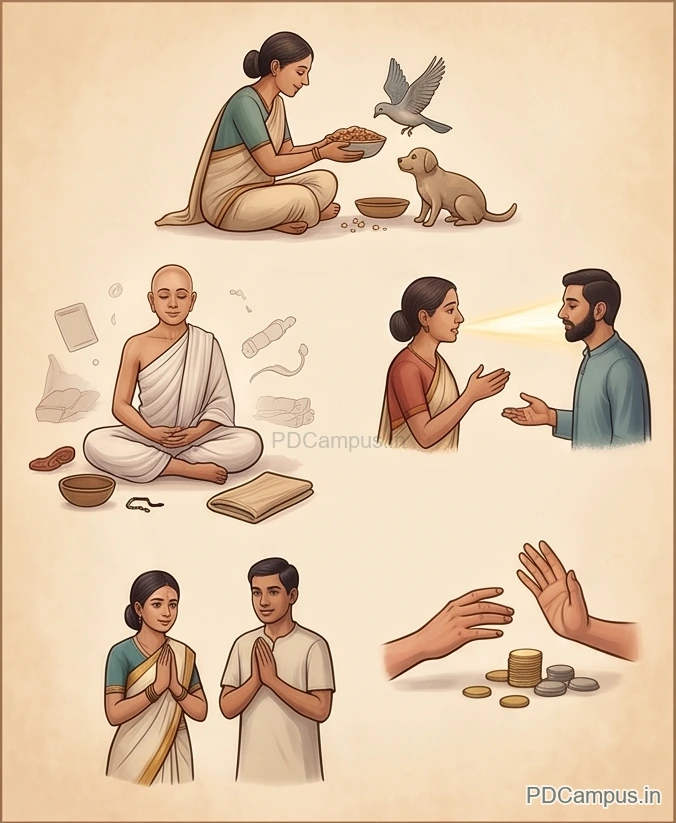
Parshvanatha and the vow count: his tradition is associated with four restraints. Mahavira made brahmacharya explicit as a fifth. Some Jain explanations understand chastity as already contained within non-possession; the point is development and clarification, not contradiction.पार्श्वनाथ और व्रतों की संख्या: उनकी परंपरा चार संयमों से जुड़ी है। महावीर ने ब्रह्मचर्य को स्पष्ट पाँचवाँ व्रत बनाया। कुछ जैन व्याख्याएँ संयमित यौन आचरण को अपरिग्रह में पहले से शामिल मानती हैं; यह विकास और स्पष्टीकरण का प्रश्न है, केवल विरोध का नहीं।
What exists? Jiva and five kinds of ajivaक्या अस्तित्व में है? जीव और अजीव के पाँच प्रकार
| Dravyaद्रव्य | Meaning within Jain philosophyजैन दर्शन में अर्थ |
|---|---|
| Jivaजीव | Living, conscious soulचेतन, जीवित आत्मा |
| Pudgalaपुद्गल | Matter, including subtle karmic matterपदार्थ; सूक्ष्म कर्म-पदार्थ भी इसमें |
| Dharmaधर्म | Medium that permits motionगति में सहायक माध्यम |
| Adharmaअधर्म | Medium that permits restठहराव में सहायक माध्यम |
| Akashaआकाश | Space that accommodates substancesद्रव्यों को स्थान देने वाला विस्तार |
| Kalaकाल | Time, associated with change and successionसमय; परिवर्तन और क्रम से संबंधित |
Dravya means a fundamental substance. The last five are ajiva, or non-living reality; not all ajiva is physical matter. Dharma and adharma here do not mean virtue and sin, and they do not force things to move or stop. The familiar six-substance presentation distinguishes time from the five extended substances; Jain authors differ in their detailed analysis of time.द्रव्य का अर्थ मूल अस्तित्व या मूल पदार्थ है। अंतिम पाँच अजीव, यानी अचेतन अस्तित्व हैं; हर अजीव भौतिक पदार्थ नहीं है। यहाँ धर्म और अधर्म का अर्थ पुण्य-पाप नहीं है, और वे वस्तुओं को जबरन चलाते या रोकते नहीं हैं। प्रचलित छह-द्रव्य वर्गीकरण में काल को बाकी पाँच विस्तृत द्रव्यों से अलग समझा जाता है; समय की विस्तृत व्याख्या पर जैन लेखकों में मतभेद हैं।
Every jiva mattersहर जीव का महत्व
Jain classifications range from one-sensed beings, including plants and earth-, water-, fire- and air-bodied life, to five-sensed beings. This religious classification explains the wide reach of ahimsa. It is not identical to modern biological taxonomy.जैन वर्गीकरण एकेंद्रिय जीवों से लेकर पाँच इंद्रियों वाले जीवों तक जाता है। एकेंद्रिय में वनस्पति और पृथ्वी-, जल-, अग्नि- तथा वायु-कायिक जीव शामिल हैं। यह धार्मिक वर्गीकरण अहिंसा का व्यापक दायरा समझाता है; यह आधुनिक जीवविज्ञान के वर्गीकरण के समान नहीं है।
No creator requiredसृष्टिकर्ता की आवश्यकता नहीं
In Jain thought, the universe has no beginning and no creator. Celestial beings exist within the cosmos but do not create it or erase another being’s karma. An embodied omniscient Jina can teach; after final liberation a siddha is a perfected, disembodied soul, not a creator god.जैन विचार में ब्रह्मांड अनादि है और उसका कोई सृष्टिकर्ता नहीं है। देवता ब्रह्मांड के भीतर हैं, लेकिन वे इसे बनाते या दूसरे जीव के कर्म मिटाते नहीं हैं। शरीरधारी सर्वज्ञ जिन उपदेश दे सकता है; अंतिम मुक्ति के बाद सिद्ध पूर्ण, शरीररहित आत्मा है, सृष्टिकर्ता देवता नहीं।
Siddhaसिद्ध
Jain cosmology holds that a soul freed from all karmic matter reaches the upper limit of the inhabited cosmos, associated with siddhashila. Such a siddha possesses infinite knowledge, perception, bliss and energy. This is a religious account of liberation, not a measured location in physical astronomy.जैन ब्रह्मांड-विचार के अनुसार सभी कर्म-पदार्थ से मुक्त आत्मा लोक की ऊपरी सीमा तक पहुँचती है, जिसे सिद्धशिला से जोड़ा जाता है। ऐसे सिद्ध में अनंत ज्ञान, दर्शन, सुख और शक्ति होते हैं। यह मुक्ति का धार्मिक विवरण है, खगोल विज्ञान में मापा गया स्थान नहीं।
Seven tattvas - the full mechanics of bondage and releaseसात तत्त्व — बंधन और मुक्ति की पूरी प्रक्रिया
Inflow, bondage, stopping and sheddingप्रवाह, बंधन, रोकना और हटाना

| Tattvaतत्त्व | Question it answersकिस प्रश्न का उत्तर है? |
|---|---|
| Jivaजीव | Who is bound? The soul.बंधन किसका है? आत्मा का। |
| Ajivaअजीव | What is non-soul? Includes karmic matter.आत्मा से अलग क्या है? इसमें कर्म-पदार्थ भी है। |
| Asravaआस्रव | How does karma enter? Inflow.कर्म कैसे आता है? उसका प्रवाह। |
| Bandhaबंध | What binds the soul? Karmic bondage.आत्मा को क्या बाँधता है? कर्म का बंधन। |
| Samvaraसंवर | How is new inflow stopped? Restraint.नया प्रवाह कैसे रुकता है? संयम से। |
| Nirjaraनिर्जरा | How is existing karma removed? Shedding.जमा कर्म कैसे हटता है? उसके क्षय से। |
| Mokshaमोक्ष | What is complete release? Freedom from all karma.पूर्ण मुक्ति क्या है? सभी कर्मों से छुटकारा। |
A tattva is a fundamental truth or category used to explain bondage and liberation. The seven-tattva list answers a different question from the six-dravya list. Nine-tattva presentations count punya, merit, and papa, demerit, separately. Even beneficial karma remains within the cycle of rebirth; complete liberation goes beyond karmic bondage.तत्त्व बंधन और मुक्ति समझाने वाला मूल सत्य या वर्ग है। सात तत्त्वों की सूची और छह द्रव्यों की सूची अलग प्रश्नों का उत्तर देती हैं। नौ तत्त्वों की सूची में पुण्य और पाप अलग गिने जाते हैं। शुभ कर्म भी पुनर्जन्म के चक्र से जुड़ा है; पूर्ण मुक्ति कर्म-बंधन से आगे की स्थिति है।
Anekantavada - reality has many genuine aspectsअनेकांतवाद — वास्तविकता के अनेक पक्ष
Anekantavadaअनेकांतवाद
Non-one-sidedness: a real thing can have many aspects. One description may be true from one standpoint but incomplete if treated as the whole truth.एकांगी दृष्टि से बचना: किसी वास्तविक वस्तु के कई पक्ष हो सकते हैं। कोई वर्णन एक दृष्टिकोण से सही होते हुए भी अधूरा हो सकता है, यदि उसे पूरा सत्य मान लिया जाए।
Nayavadaनयवाद
A naya is a standpoint or partial angle of description. It reminds us to ask: from which purpose, time, place or aspect is this statement made?नय का अर्थ किसी वर्णन का दृष्टिकोण या आंशिक पक्ष है। यह पूछना सिखाता है कि कथन किस उद्देश्य, समय, स्थान या पहलू से किया गया है।
Syadvadaस्याद्वाद
Syat means “in a certain respect” or “from a particular standpoint.” Syadvada qualifies a statement so that a partial truth is not treated as an unconditional whole. Its sevenfold formulation is called saptabhangi.स्यात् का अर्थ किसी विशेष अपेक्षा से या खास दृष्टिकोण से है। स्याद्वाद कथन की शर्त स्पष्ट करता है, ताकि आंशिक सत्य को बिना शर्त पूरा सत्य न मान लिया जाए। इसके सात रूपों वाली पद्धति को सप्तभंगी कहते हैं।
Syadvada does not mean that anything can be true. A claim needs a valid standpoint and appropriate conditions. The aim is disciplined description, not careless relativism or permission to accept a contradiction in the same respect.स्याद्वाद का अर्थ यह नहीं कि कोई भी बात सत्य हो सकती है। दावे के लिए मान्य दृष्टिकोण और उचित शर्तें चाहिए। लक्ष्य अनुशासित वर्णन है, लापरवाह सापेक्षवाद या एक ही अपेक्षा में विरोधी बातों को स्वीकार करने की छूट नहीं।
A partial view needs a conditionअधूरे दृष्टिकोण को शर्त चाहिए
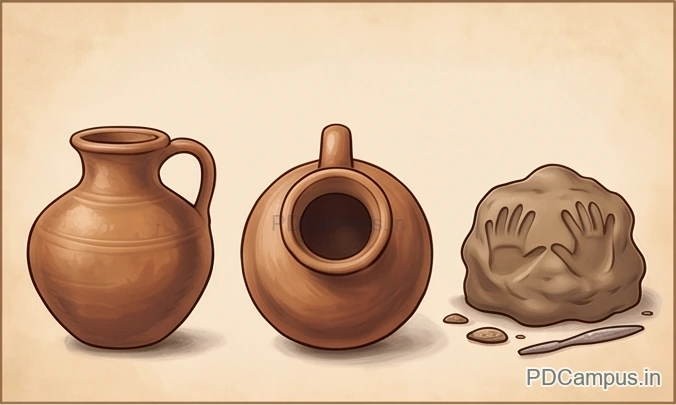
Consider a clay pot: it exists as a pot now, but did not exist in that form before it was made. The different statements need time and form specified; they are not “exists” and “does not exist” in the same sense at once. The traditional sevenfold scheme considers qualified affirmation, denial, both successively, indescribability, and combinations of the first three with indescribability. Here “indescribable” concerns the limits of a single expression. The story of observers feeling an elephant’s tail, side and trunk likewise illustrates incomplete viewpoints, not proof that every mistaken observation is true.मिट्टी के घड़े को लें: वह अभी घड़े के रूप में है, लेकिन बनने से पहले उस रूप में नहीं था। दोनों कथनों में समय और रूप स्पष्ट करना जरूरी है; एक ही अर्थ में एक ही समय पर होना और न होना नहीं कहा जा रहा। परंपरागत सातभंगी में शर्त सहित होना, न होना, क्रम से दोनों, अवक्तव्य होना, तथा पहले तीन के अवक्तव्य के साथ मेल आते हैं। यहाँ अवक्तव्य का संबंध एक कथन में सब पक्ष कहने की सीमा से है। हाथी की पूँछ, बगल और सूँड़ छूकर उसे जानने वालों की कथा भी अधूरे दृष्टिकोण समझाती है; इससे हर गलत अनुभव सत्य नहीं हो जाता।
The fourfold communityचार अंगों वाला समुदाय
- Sadhus: monks.साधु: पुरुष मुनि।
- Sadhvis: nuns.साध्वी: महिला संन्यासी।
- Shravakas: male lay followers.श्रावक: पुरुष गृहस्थ अनुयायी।
- Shravikas: female lay followers.श्राविका: महिला गृहस्थ अनुयायी।
- Sangha can mean the whole fourfold community or, in a narrower context, the monastic order.संघ का अर्थ पूरे चार अंगों वाला समुदाय या किसी संकुचित संदर्भ में केवल साधु-साध्वियों का समुदाय हो सकता है।
Three guptisतीन गुप्तियाँ
Control of mind, speech and body. Inner intention, spoken word and physical action all create moral consequences.मन, वचन और शरीर का संयम। भीतर की मंशा, बोले गए शब्द और शारीरिक कर्म, सभी के नैतिक परिणाम होते हैं।
Five samitisपाँच समितियाँ
Carefulness in walking, speaking, receiving food, handling objects and disposing waste. Ahimsa becomes minute daily attention.चलने, बोलने, भोजन ग्रहण करने, वस्तुएँ उठाने-रखने और मल-मूत्र आदि के निस्तारण में सावधानी। इस तरह अहिंसा रोज के छोटे-छोटे कामों में ध्यान बनती है।
Sallekhanaसल्लेखना
Sallekhana is described in Jain texts as an end-of-life observance of detachment, involving a final fast under religious discipline. Jain authors distinguish it from a death sought through passion or despair. This is a description of a religious doctrine, not a general duty, an instruction to fast, or a conclusion about modern medical or legal classifications.जैन ग्रंथ सल्लेखना को जीवन के अंत में अनासक्ति का धार्मिक अनुशासन बताते हैं, जिसमें अंतिम उपवास शामिल है। जैन लेखक इसे आवेश या निराशा से चाही गई मृत्यु से अलग समझाते हैं। यह धार्मिक सिद्धांत का विवरण है; सामान्य कर्तव्य, उपवास करने का निर्देश या आधुनिक चिकित्सा अथवा कानून के वर्गीकरण पर निष्कर्ष नहीं।
4. Visual Learning Atlas - Councils, Sects, Texts, Heritage and the Wider Shramana World4. अध्ययन-परिचय — वाचनाएँ, संप्रदाय, ग्रंथ, विरासत और व्यापक श्रमण संसार
The Jain community preserved teachings orally, moved with trade and political networks, and developed different monastic lineages. Its councils, canons and sects are remembered differently, so we learn the tradition and its limits together.जैन समुदाय ने शिक्षाओं को मौखिक रूप में सुरक्षित रखा, व्यापार और राजनीतिक संपर्कों के साथ विभिन्न क्षेत्रों में पहुँचा तथा अलग संन्यासी परंपराएँ विकसित कीं। उसकी वाचनाओं, आगमों और संप्रदायों की स्मृतियाँ अलग हैं; इसलिए परंपरा और उसकी सीमाएँ साथ पढ़ें।
Council rail - how one oral teaching became different scriptural memoriesवाचनाओं का क्रम — मौखिक शिक्षा और अलग ग्रंथ-परंपराएँ
- Pataliputra: traditional recitation associated with Sthulabhadra, conventionally placed around the late 4th–3rd century BCE; accounts connect it with arranging the Angas.पाटलिपुत्र: स्थूलभद्र से जुड़ी पारंपरिक वाचना, जिसे सामान्यतः लगभग 4वीं शताब्दी के उत्तरार्ध–3वीं शताब्दी ईसा-पूर्व में रखा जाता है; वृत्तांत इसे अंगों को व्यवस्थित करने से जोड़ते हैं।
- Mathura: a later recitation tradition associated with Skandila; commonly placed around the 4th century CE.मथुरा: स्कंदिल से जुड़ी बाद की वाचना-परंपरा; सामान्यतः लगभग 4वीं शताब्दी ईस्वी में रखी जाती है।
- Valabhi: more than one recitation is remembered; the final Shvetambara redaction is associated with Devarddhi-gani Kshamashramana in the 5th century CE.वलभी: एक से अधिक वाचनाओं का उल्लेख मिलता है; अंतिम श्वेतांबर संपादन 5वीं शताब्दी ईस्वी में देवर्धिगणि क्षमाश्रमण से जोड़ा जाता है।
- The original twelve-Anga scheme includes a lost twelfth Anga. Eleven survive in the received Shvetambara tradition; canon counts differ among its subsects.मूल बारह अंगों की योजना में बारहवाँ अंग लुप्त है। प्राप्त श्वेतांबर परंपरा में ग्यारह अंग बचे हैं; उसकी उपपरंपराओं में मान्य ग्रंथों की कुल संख्या अलग है।
Accounts of famine, Bhadrabahu’s southward migration and the Pataliputra recitation are Jain traditions with varying dates and details. The received Shvetambara canon was redacted at Valabhi; Digambaras do not accept it as the surviving original canon. Redaction means collecting, arranging and editing material, not necessarily composing it all at that meeting.अकाल, भद्रबाहु की दक्षिण यात्रा और पाटलिपुत्र वाचना जैन परंपराओं के वृत्तांत हैं; उनकी तिथियाँ और विवरण अलग मिलते हैं। प्राप्त श्वेतांबर आगम-संग्रह का संपादन वलभी में हुआ; दिगंबर इसे बचा हुआ मूल आगम-संग्रह नहीं मानते। संपादन का अर्थ सामग्री एकत्र करना, व्यवस्थित करना और पाठ तैयार करना है; जरूरी नहीं कि पूरी रचना उसी बैठक में हुई हो।
Shvetambara and Digambara - agreement first, differences secondश्वेतांबर और दिगंबर — समानताएँ और अंतर
| Pointबिंदु | Shvetambaraश्वेतांबर | Digambaraदिगंबर | Common groundसाझा आधार |
|---|---|---|---|
| Monastic clothingसंन्यासियों के वस्त्र | White robes are permitted and required by the tradition.परंपरा में सफेद वस्त्र स्वीकार्य और आवश्यक हैं। | Complete non-possession is ideally shown by nudity for advanced male monks; nuns wear robes.उच्च अवस्था के पुरुष मुनियों के लिए निर्वस्त्रता पूर्ण अपरिग्रह का आदर्श है; साध्वियाँ वस्त्र पहनती हैं। | Renunciation, discipline and non-attachment.त्याग, अनुशासन और अनासक्ति। |
| Canonमान्य ग्रंथ-संग्रह | Accepts the Agamas preserved and finally redacted at Valabhi.वलभी में सुरक्षित और अंतिम रूप से संपादित आगम स्वीकारते हैं। | Holds original Angas/Purvas lost; relies on early authoritative treatises such as Shatkhandagama and Kasayapahuda.मूल अंग/पूर्व लुप्त मानते हैं; षट्खंडागम और कसायपाहुड जैसे शुरुआती प्रामाणिक ग्रंथों पर निर्भर करते हैं। | Mahavira's path, karma doctrine and many later works.महावीर का मार्ग, कर्म सिद्धांत और कई बाद के ग्रंथ। |
| Women and liberationमहिलाएँ और मुक्ति | A woman can attain liberation; the 19th Tirthankara Mallinatha is remembered as female.महिला मुक्ति पा सकती है; 19वें तीर्थंकर मल्लिनाथ को स्त्री माना जाता है। | A rebirth in a male body is required for final liberation; Mallinatha is male.अंतिम मुक्ति के लिए पुरुष शरीर में पुनर्जन्म आवश्यक माना जाता है; मल्लिनाथ पुरुष हैं। | Large and important orders of nuns exist.साध्वियों के बड़े और महत्वपूर्ण समुदाय हैं। |
| Kevalin and foodकेवली और भोजन | An omniscient embodied kevalin may continue to take food.शरीरधारी सर्वज्ञ केवली भोजन लेते रह सकते हैं। | A kevalin no longer requires food.केवली को भोजन की आवश्यकता नहीं रहती। | Kevala-jnana is perfect knowledge.केवलज्ञान पूर्ण ज्ञान है। |
| Imagesप्रतिमाएँ | Among image-worshipping Shvetambaras, images may be clothed, ornamented and shown with open eyes. Other Shvetambara traditions reject image worship.मूर्तिपूजक श्वेतांबरों में प्रतिमाएँ वस्त्र, आभूषण और खुली आँखों वाली हो सकती हैं। दूसरे श्वेतांबर समूह मूर्ति-पूजा नहीं करते। | Images are normally nude, unornamented and inward-looking.प्रतिमाएँ सामान्यतः निर्वस्त्र, अलंकरणरहित और अंतर्मुखी होती हैं। | Where images are used, Tirthankaras appear seated in meditation or standing in kayotsarga; emblems help identify them.जहाँ प्रतिमाएँ हैं, तीर्थंकर बैठी ध्यान-मुद्रा या खड़ी कायोत्सर्ग मुद्रा में दिखते हैं; चिह्न पहचान में मदद करते हैं। |
Four parts of one communityएक समुदाय के चार अंग
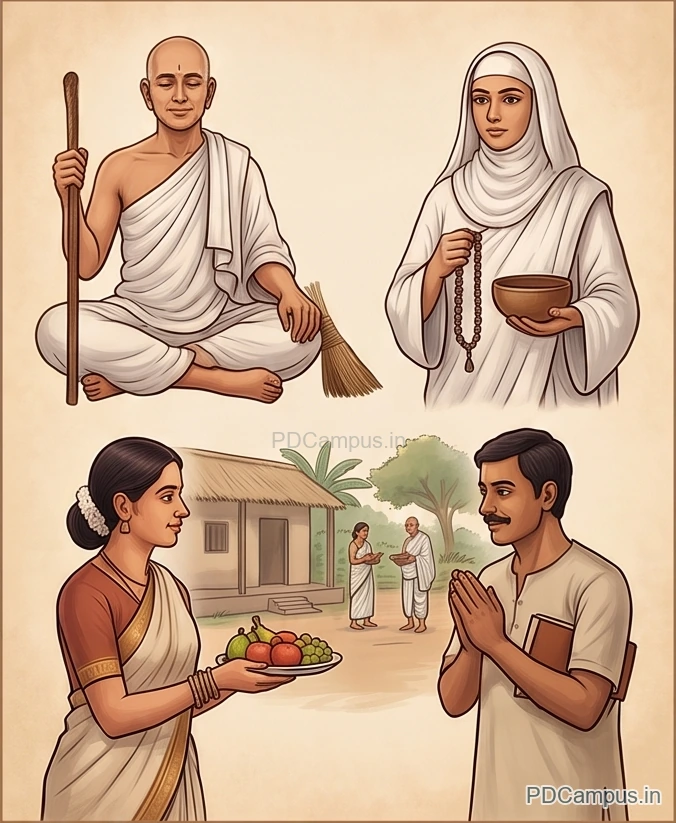
Shvetambara means white-clad; Digambara means sky-clad. Within Shvetambara Jainism, Murtipujakas worship images, while Sthanakavasis and Shvetambara Terapanthis reject image worship. Digambara traditions include Bisapantha, Digambara Terapantha and Taranapantha, among others. The two Terapanths are separate historical traditions. Kayotsarga is meditation associated with detachment from the body. It can be practised standing or sitting; the standing form is familiar in Jina images. A sect comparison describes traditional doctrines, not the personal belief of every Jain.श्वेतांबर का अर्थ सफेद वस्त्र धारण करने वाला और दिगंबर का अर्थ दिशाओं को वस्त्र मानने वाला है। श्वेतांबरों में मूर्तिपूजक प्रतिमाओं की पूजा करते हैं; स्थानकवासी और श्वेतांबर तेरापंथी मूर्ति-पूजा नहीं करते। दिगंबर परंपराओं में बीसपंथ, दिगंबर तेरापंथ और तारणपंथ सहित कई समूह हैं। दोनों तेरापंथ अलग ऐतिहासिक परंपराएँ हैं। कायोत्सर्ग शरीर से अनासक्ति का ध्यान है। यह खड़े होकर या बैठकर किया जा सकता है; जिन प्रतिमाओं में इसका खड़ा रूप परिचित है। संप्रदायों की तुलना पारंपरिक सिद्धांत बताती है, हर जैन व्यक्ति की निजी मान्यता नहीं।
Scripture shelf - language is part of the historyग्रंथों की सूची — भाषा भी इतिहास का हिस्सा है
| Textग्रंथ | Author or traditionलेखक या परंपरा | What to rememberक्या याद रखें |
|---|---|---|
| Acharanga Sutraआचारांग सूत्र | Shvetambara Agamaश्वेतांबर आगम | Early monastic conduct, austerity and ahimsa; important source for Mahavira traditions.आरंभिक मुनि-आचरण, तप और अहिंसा; महावीर संबंधी परंपराओं का महत्वपूर्ण स्रोत। |
| Sutrakritangaसूत्रकृतांग | Shvetambara Agamaश्वेतांबर आगम | Jain doctrine and engagement with rival views.जैन सिद्धांत और विरोधी विचारों के साथ संवाद। |
| Bhagavati Sutraभगवती सूत्र | Shvetambara Agamaश्वेतांबर आगम | Large question-answer text on doctrine, teachers, geography and cosmology.सिद्धांत, शिक्षक, भूगोल और ब्रह्मांड-विचार पर बड़ा प्रश्नोत्तर ग्रंथ। |
| Kalpa Sutraकल्पसूत्र | Traditionally attributed to Bhadrabahuपरंपरागत रूप से भद्रबाहु की रचना माना जाता है | Lives of Tirthankaras and monastic lineages; publicly read during Paryushana.तीर्थंकरों के जीवन और मुनि-परंपराएँ; पर्युषण में सार्वजनिक पाठ। |
| Shatkhandagamaषट्खंडागम | Pushpadanta and Bhutabali; Digambaraपुष्पदंत और भूतबलि; दिगंबर | Major early work on karma, preserved in the south.कर्म पर प्रमुख शुरुआती ग्रंथ, जो दक्षिण में सुरक्षित रहा। |
| Kasayapahudaकसायपाहुड | Gunadhara; Digambaraगुणधर; दिगंबर | Treatise on passions that bind the soul.आत्मा को बाँधने वाले कषायों पर ग्रंथ। |
| Samayasaraसमयसार | Kundakundaकुंदकुंद | Influential Digambara work on the pure self and standpoint.शुद्ध आत्मा और दृष्टिकोण पर प्रभावशाली दिगंबर ग्रंथ। |
| Tattvartha Sutraतत्त्वार्थसूत्र | Umasvati/Umasvamiउमास्वाति/उमास्वामी | Systematic Sanskrit philosophy respected by both main sects, though commentarial readings differ.व्यवस्थित संस्कृत दर्शन, जिसे दोनों मुख्य संप्रदाय सम्मान देते हैं; भाष्यों की व्याख्याएँ अलग हैं। |
| Paumachariyaपउमचरिय | Vimalasuriविमलसूरि | Early Jain retelling of the Rama story in Prakrit.प्राकृत में रामकथा का आरंभिक जैन रूपांतरण। |
| Works of Hemachandraहेमचंद्र की रचनाएँ | 12th-century Shvetambara scholar12वीं शताब्दी के श्वेतांबर विद्वान | Grammar, history, yoga and lives of great persons; linked with Chaulukya Gujarat.व्याकरण, इतिहास, योग और महापुरुषों के जीवन; गुजरात के चालुक्य/चौलुक्य राजवंश से संबंध। |
Agama means an authoritative received teaching; Angas are a major group within the Shvetambara canon. Ardhamagadhi is an important Prakrit language of that canon. Prakrit names a group of Middle Indo-Aryan languages, not one language spoken everywhere. Jain authors also wrote in Sanskrit, Apabhramsha, Kannada, Tamil, Gujarati and other regional languages. A later manuscript proves the transmission of a text; its copying date is not automatically the text’s composition date. The canon includes Upangas and other collections besides the Angas. Jain Puranas also narrate the lives of teachers and exemplary heroes.आगम का अर्थ परंपरा से प्राप्त प्रामाणिक शिक्षा है; अंग श्वेतांबर आगम-संग्रह का प्रमुख वर्ग हैं। अर्धमागधी उस संग्रह की महत्वपूर्ण प्राकृत भाषा है। प्राकृत मध्य इंडो-आर्य भाषाओं का समूह है, हर जगह बोली जाने वाली एक ही भाषा नहीं। जैन लेखकों ने संस्कृत, अपभ्रंश, कन्नड़, तमिल, गुजराती और दूसरी क्षेत्रीय भाषाओं में भी लिखा। बाद की पांडुलिपि पाठ के संचरण का प्रमाण है; उसकी नकल की तिथि अपने आप मूल रचना की तिथि नहीं होती। आगम-संग्रह में अंगों के अलावा उपांग और दूसरे ग्रंथ-समूह भी हैं। जैन पुराणों में शिक्षकों और आदर्श नायकों के जीवन की कथाएँ भी मिलती हैं।
Spread and heritage mapप्रसार और विरासत के क्षेत्र
Eastपूर्व
Pavapuri and Rajgir in Bihar; Udayagiri-Khandagiri caves in Odisha. Kharavela's Hathigumpha inscription belongs to a strong Kalinga context.बिहार में पावापुरी और राजगीर; ओडिशा में उदयगिरि-खंडगिरि की गुफाएँ। खारवेल का हाथीगुम्फा अभिलेख कलिंग के महत्वपूर्ण ऐतिहासिक परिवेश से जुड़ा है।
North + Westउत्तर और पश्चिम
Mathura's Kankali Tila; Shatrunjaya-Palitana and Girnar in Gujarat; Dilwara at Mount Abu and Ranakpur in Rajasthan; Jain temples at Khajuraho.मथुरा का कंकाली टीला; गुजरात में शत्रुंजय-पालीताना और गिरनार; राजस्थान में माउंट आबू के दिलवाड़ा तथा रणकपुर; खजुराहो के जैन मंदिर।
Deccan + Southदक्कन और दक्षिण
Shravanabelagola, Karkala and Moodabidri in Karnataka, and Jain caves at Ellora in Maharashtra, show an enduring western and southern presence. Patrons included rulers and elites under the Western Gangas, Rashtrakutas, Chalukyas and Hoysalas. Patronage varied by ruler, place and period.कर्नाटक में श्रवणबेलगोला, कारकल और मूडबिद्री तथा महाराष्ट्र में एलोरा की जैन गुफाएँ पश्चिम और दक्षिण में दीर्घ उपस्थिति दिखाती हैं। पश्चिमी गंग, राष्ट्रकूट, चालुक्य और होयसल काल के शासक तथा प्रभावशाली लोग आश्रयदाताओं में थे। संरक्षण शासक, स्थान और काल के अनुसार बदलता था।
The original heritage overview also includes Ujjain and Gwalior in central India. Khajuraho belongs to present-day Madhya Pradesh. These places, temples and caves represent many different centuries; they should not all be placed in Mahavira’s lifetime or treated as evidence of one continuous empire.मूल विरासत-परिचय में मध्य भारत के उज्जैन और ग्वालियर भी हैं। खजुराहो आज के मध्य प्रदेश में है। ये स्थल, मंदिर और गुफाएँ कई अलग सदियों से जुड़े हैं; सबको महावीर के जीवनकाल या एक निरंतर साम्राज्य का प्रमाण न मानें।
Gomateshwaraगोमटेश्वर
The giant Bahubali image at Shravanabelagola was commissioned by Ganga minister Chavundaraya around 981 CE. The Mahamastakabhisheka is its great anointing ceremony.श्रवणबेलगोला की विशाल बाहुबली प्रतिमा गंग मंत्री चामुंडराय ने लगभग 981 ईस्वी में बनवाई। महामस्तकाभिषेक इसका बड़ा अभिषेक-अनुष्ठान है।
Chandragupta Maurya connection: Jain tradition says Chandragupta accompanied Bhadrabahu south during a famine and ended his life at Shravanabelagola. This is an important community memory, but the full story is not confirmed by contemporary Mauryan records.चंद्रगुप्त मौर्य से संबंध: जैन परंपरा के अनुसार चंद्रगुप्त अकाल के समय भद्रबाहु के साथ दक्षिण गए और श्रवणबेलगोला में जीवन समाप्त किया। यह महत्वपूर्ण सामुदायिक स्मृति है, लेकिन पूरी कथा समकालीन मौर्य अभिलेखों से पुष्ट नहीं है।
The Jain emblem - a whole philosophy in one compact graphicजैन प्रतीक — एक आकृति में कई विचार
The widely used Jain emblem combines several meanings. Its outline evokes the lower, middle and upper worlds of Jain cosmology. A crescent and dot at the top indicate the realm of liberated souls; three dots represent the Three Jewels. The raised hand calls for restraint and ahimsa; its wheel is commonly shown with 24 spokes recalling the Tirthankaras. Many versions also include the traditional auspicious svastika, whose four arms represent four states of rebirth. These are religious symbols, not a scientific diagram of the universe.प्रचलित जैन प्रतीक में कई अर्थ जुड़े हैं। बाहरी आकृति जैन ब्रह्मांड के अधोलोक, मध्यलोक और ऊर्ध्वलोक का संकेत देती है। ऊपर अर्धचंद्र और बिंदु मुक्त आत्माओं के क्षेत्र तथा तीन बिंदु त्रिरत्न को दर्शाते हैं। उठी हथेली संयम और अहिंसा का संदेश देती है; उसके चक्र की 24 तीलियाँ सामान्यतः तीर्थंकरों की याद दिलाती हैं। कई रूपों में पारंपरिक मंगल-चिह्न स्वस्तिक भी होता है, जिसकी चार भुजाएँ पुनर्जन्म की चार गतियाँ दर्शाती हैं। ये धार्मिक प्रतीक हैं, ब्रह्मांड का वैज्ञानिक चित्र नहीं।
Other Shramana teachers - not all renouncers gave the same answerअन्य श्रमण शिक्षक — सभी ने एक ही उत्तर नहीं दिया
| Teacher or streamशिक्षक या धारा | Core idea in surviving reportsबचे हुए वृत्तांतों में प्रमुख विचार | Evidence cautionप्रमाण की सीमा |
|---|---|---|
| Makkhali Gosala / Ajivikasमक्खलि गोसाल / आजीवक | Niyati, a strict order or destiny, governs the course of beings; human effort cannot change the fixed cosmic sequence. Ajivikas practised severe asceticism.नियति, यानी निश्चित व्यवस्था या भाग्य, जीवों का क्रम चलाती है; मानवीय प्रयास निर्धारित ब्रह्मांडीय क्रम नहीं बदल सकता। आजीवक कठोर तप करते थे। | Their own canon is lost. Buddhist and Jain opponents preserve most descriptions, so hostile framing must be allowed for.उनका अपना आगम-संग्रह लुप्त है। अधिकतर विवरण बौद्ध और जैन विरोधियों से मिलते हैं, इसलिए विरोधी दृष्टिकोण का ध्यान रखें। |
| Purana Kassapaपूरण कस्सप | Associated in Buddhist texts with akriyavada: actions do not possess moral efficacy in the expected karmic sense.बौद्ध ग्रंथ उन्हें अक्रियावाद से जोड़ते हैं: कर्मों में अपेक्षित कर्म-फल के अर्थ में नैतिक प्रभावशीलता नहीं होती। | Known chiefly through rival textual classification.मुख्यतः प्रतिद्वंद्वी ग्रंथों के वर्गीकरण से ज्ञात। |
| Ajita Kesakambalaअजित केशकंबल | Materialist or annihilationist view: the person dissolves at death; sacrifice, afterlife and karmic reward are rejected.भौतिकवादी या उच्छेदवादी विचार: मृत्यु पर व्यक्ति का अंत होता है; यज्ञ, परलोक और कर्म के पुरस्कार का निषेध। | Often linked with materialist currents, but should not automatically be equated with every later Charvaka doctrine.भौतिकवादी धाराओं से जोड़े जाते हैं, लेकिन उन्हें बाद के हर चार्वाक सिद्धांत के समान न मानें। |
| Pakudha Kaccayanaपकुध कच्चायन | Seven eternal elements or substances - earth, water, fire, air, pleasure, pain and life/soul - do not truly affect one another.सात शाश्वत तत्त्व या द्रव्य—पृथ्वी, जल, अग्नि, वायु, सुख, दुःख और जीवन/आत्मा—वास्तव में एक-दूसरे को प्रभावित नहीं करते। | Surviving account is short and filtered through Buddhist sources.उपलब्ध विवरण छोटा है और बौद्ध स्रोत के माध्यम से मिलता है। |
| Sanjaya Belatthiputtaसंजय बेलट्ठिपुत्त | Radical suspension of judgement; avoids firm yes-or-no answers to major metaphysical questions.निर्णय को स्थगित रखने की प्रबल प्रवृत्ति; बड़े तात्त्विक प्रश्नों पर निश्चित हाँ या नहीं से बचते हैं। | “Sceptic” is a useful label, not a complete surviving self-description.संशयवादी उपयोगी परिचय है, उनका पूरा बचा हुआ आत्म-वर्णन नहीं। |
| Lokayata / Charvaka currentsलोकायत / चार्वाक धाराएँ | Materialist criticism of scripture, ritual, afterlife and inference beyond reliable experience; perception receives special importance.ग्रंथ-प्रामाण्य, अनुष्ठान, परलोक और विश्वसनीय अनुभव से आगे के अनुमान की भौतिकवादी आलोचना; प्रत्यक्ष अनुभव को विशेष महत्व। | Original works are mostly lost; later opponents are major sources and different materialist voices should not be flattened into one founder story.मूल रचनाएँ अधिकतर लुप्त हैं; बाद के विरोधी प्रमुख स्रोत हैं। अलग भौतिकवादी मतों को एक संस्थापक की एक ही कथा में न समेटें। |
Ajivika patronageआजीवकों को राजकीय संरक्षण
Dedicatory inscriptions record Ashoka’s gifts of polished rock-cut caves at Barabar and Dasharatha’s gifts at nearby Nagarjuni to the Ajivikas. Dasharatha is traditionally identified as Ashoka’s grandson. These inscriptions directly support royal patronage; they do not by themselves explain all Ajivika doctrine or prove that every cave in the complex had the same dedication.दान-अभिलेख अशोक द्वारा बराबर की चट्टान काटकर बनी चमकदार पालिश वाली गुफाएँ और दशरथ द्वारा पास की नागार्जुनी पहाड़ियों में आजीवकों को गुफाएँ देने का उल्लेख करते हैं। दशरथ को परंपरागत रूप से अशोक का पौत्र माना जाता है। अभिलेख सीधे राजकीय संरक्षण की पुष्टि करते हैं; वे अपने आप पूरे आजीवक सिद्धांत नहीं बताते, न यह सिद्ध करते हैं कि परिसर की हर गुफा का दान एक जैसा था।
Text, inscription and monumentग्रंथ, अभिलेख और स्मारक
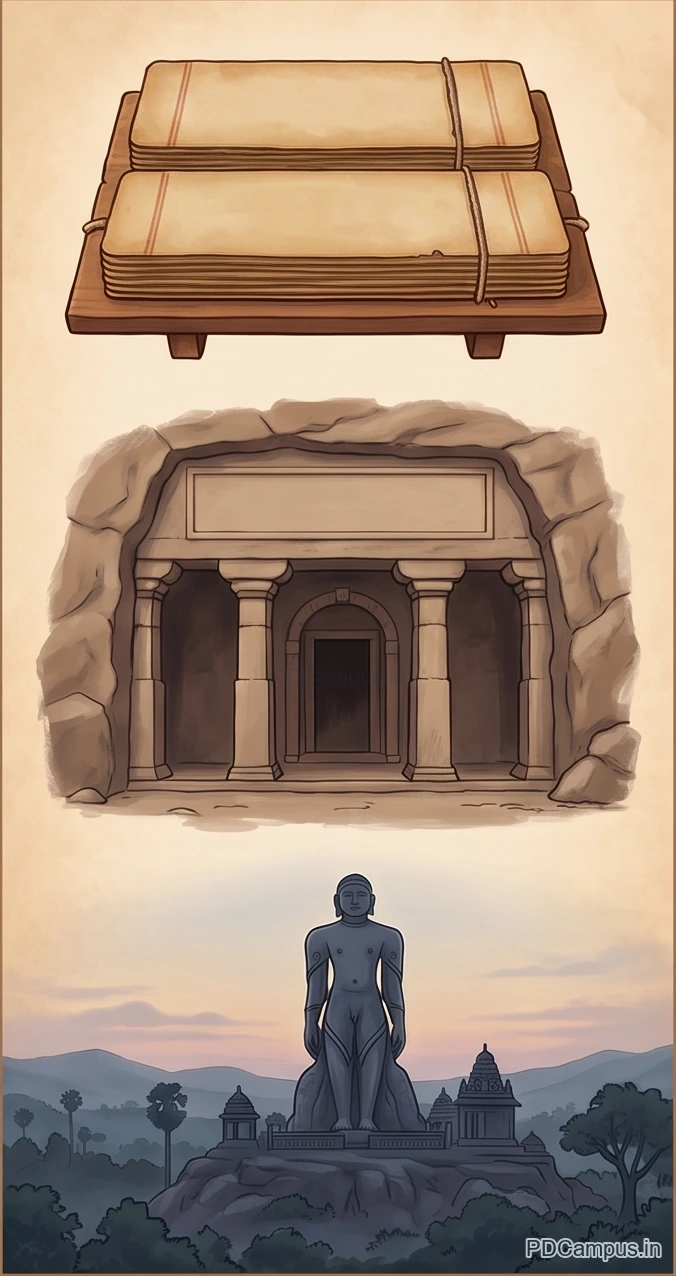
Why Ajivikas fadedआजीवकों का इतिहास धुँधला क्यों पड़ता है?
Evidence for the Ajivikas becomes sparse in northern India after the Mauryan period. Later southern references are important, but whether every later name identifies the same continuous community is debated. Lost texts and uneven evidence prevent a simple story of disappearance on one date.मौर्य काल के बाद उत्तर भारत में आजीवकों के प्रमाण विरल हो जाते हैं। दक्षिण के बाद के उल्लेख महत्वपूर्ण हैं, लेकिन क्या हर बाद का नाम उसी निरंतर समुदाय का है, इस पर बहस है। लुप्त ग्रंथ और असमान प्रमाण किसी एक तारीख पर उनके समाप्त हो जाने की सरल कहानी नहीं बनने देते।
Jainism and Buddhism - close neighbours, different maps of realityजैन और बौद्ध धर्म — निकट परिवेश, वास्तविकता की अलग व्याख्याएँ
| Questionप्रश्न | Jain answerजैन दृष्टि | Buddhist answerबौद्ध दृष्टि | Shared groundसाझा आधार |
|---|---|---|---|
| Teacherशिक्षक | Mahavira is 24th Tirthankara in an ancient recurring line.महावीर बार-बार आने वाली प्राचीन परंपरा के 24वें तीर्थंकर हैं। | Gautama is the Buddha of this historical dispensation.गौतम इस ऐतिहासिक धर्म-काल के बुद्ध हैं। | Both belong to the broad 6th–5th century BCE Shramana setting; exact life dates are debated.दोनों व्यापक 6वीं–5वीं शताब्दी ईसा-पूर्व के श्रमण परिवेश से जुड़े हैं; सटीक जीवन-तिथियों पर मतभेद हैं। |
| Selfआत्मा | Countless eternal individual jivas or souls exist.असंख्य शाश्वत व्यक्तिगत जीव या आत्माएँ हैं। | Anatta: body and mental processes are not a permanent, independent self; this does not mean that ethical responsibility is denied.अनत्ता: शरीर और मानसिक प्रक्रियाएँ स्थायी, स्वतंत्र आत्मा नहीं हैं; इसका अर्थ नैतिक जिम्मेदारी का निषेध नहीं। | Both explain continued rebirth, but they do not posit the same enduring subject of rebirth.दोनों पुनर्जन्म की व्याख्या करते हैं, लेकिन जन्मों के बीच एक ही तरह का स्थायी जीव नहीं मानते। |
| Karmaकर्म | Subtle material karma attaches to the soul through activity and passion.क्रिया और कषाय से सूक्ष्म कर्म-पदार्थ आत्मा से जुड़ता है। | Karma centres on intention and its conditioned effects.कर्म का केंद्र मंशा और उसके शर्तों पर निर्भर प्रभाव हैं। | Conduct and mental states matter in both; their explanations of karma differ.दोनों में आचरण और मानसिक अवस्थाएँ महत्वपूर्ण हैं; कर्म की व्याख्या अलग है। |
| Practiceअभ्यास | Triratna, five vows, strict restraint and austerity.त्रिरत्न, पाँच व्रत, कठोर संयम और तप। | Four Truths, Eightfold Path and Middle Way.चार आर्य सत्य, अष्टांगिक मार्ग और मध्यम मार्ग। | Ethics, meditation, renunciation and self-discipline.नैतिकता, ध्यान, त्याग और आत्म-अनुशासन। |
| Asceticismतपस्वी जीवन | Very rigorous ascetic practice is central to full monastic liberation.पूर्ण मुनि-मुक्ति में बहुत कठोर तपस्वी अभ्यास केंद्रीय है। | Rejects both sensual indulgence and self-mortification as extremes.इंद्रिय-भोग में डूबने और शरीर को यातना देने, दोनों अतियों का निषेध। | Monastic orders depend on lay support.संन्यासी समुदाय गृहस्थों के सहयोग पर निर्भर हैं। |
| Ahimsaअहिंसा | Extends minutely to one-sensed and microscopic forms of life.एकेंद्रिय और सूक्ष्म जीवों तक अत्यंत सूक्ष्म सावधानी। | Non-harming is fundamental but monastic rules operate differently.अहानि मूलभूत है, लेकिन संन्यासी नियम अलग तरीके से काम करते हैं। | Compassion and avoidance of killing.करुणा और प्राण-हत्या से बचना। |
| Creator godसृष्टिकर्ता ईश्वर | No creator; eternal universe and perfected liberated souls.सृष्टिकर्ता नहीं; अनादि ब्रह्मांड और पूर्ण मुक्त आत्माएँ। | A creator is not needed to explain dependent arising and liberation.प्रतीत्यसमुत्पाद और मुक्ति समझाने के लिए सृष्टिकर्ता आवश्यक नहीं। | Freedom comes through practice, not divine pardon.मुक्ति अभ्यास से है, दैवी क्षमादान से नहीं। |
| Language and textsभाषा और ग्रंथ | Agamas and treatises in Prakrits, Sanskrit and regional languages.प्राकृतों, संस्कृत और क्षेत्रीय भाषाओं में आगम तथा अन्य ग्रंथ। | Pali Tipitaka plus Sanskrit, Chinese and Tibetan canons.पालि त्रिपिटक के साथ संस्कृत, चीनी और तिब्बती ग्रंथ-संग्रह। | Used languages wider than elite Vedic ritual speech.अभिजात वैदिक अनुष्ठान की भाषा से आगे की भाषाओं का उपयोग। |
| Goalलक्ष्य | Moksha: soul free of all karma, residing as a siddha.मोक्ष: सभी कर्मों से मुक्त आत्मा का सिद्ध होना। | Nirvana: ending greed, hatred, delusion and rebirth's fuel.निर्वाण: लोभ, द्वेष, मोह और पुनर्जन्म को बनाए रखने वाले कारणों का अंत। | Release from samsara.संसार से मुक्ति। |
In the Buddhist columns, anatta means not-self, and dependent arising means that experiences arise through conditions. The Four Noble Truths concern suffering, its origin, its cessation and the path; the Eightfold Path develops understanding, ethics and meditation. Jainism also gives intention and mental passions importance, and Buddhism also demands rigorous discipline. Therefore “Jains only care about outward acts” and “Buddhists reject all austerity” are both misleading. The comparison gives broad classical tendencies, not every school or period.बौद्ध स्तंभों में अनत्ता का अर्थ अनात्म है और प्रतीत्यसमुत्पाद का अर्थ स्थितियों के आधार पर अनुभवों का उत्पन्न होना है। चार आर्य सत्य दुःख, उसके कारण, उसके निरोध और मार्ग से जुड़े हैं; अष्टांगिक मार्ग समझ, नैतिकता और ध्यान को विकसित करता है। जैन धर्म में भी मंशा और मन के कषाय महत्वपूर्ण हैं, और बौद्ध धर्म में भी कठोर अनुशासन है। इसलिए जैन केवल बाहरी कर्म देखते हैं या बौद्ध हर तपस्या को नकारते हैं, दोनों बातें भ्रामक हैं। यह तुलना व्यापक शास्त्रीय प्रवृत्तियाँ बताती है, हर मत या काल नहीं।
5. Rapid Revision Data - Teachers, Doctrine, Texts and Places in One View5. तेजी से दोहराएँ — शिक्षक, सिद्धांत, ग्रंथ और स्थल
Say the whole chapter in one breath: Mahavira, the 24th Tirthankara, taught the Triratna and five vows so that jiva could stop karmic inflow, shed bondage and reach moksha; the community later preserved different canons and sects inside a much wider Shramana world.पूरे अध्याय का सूत्र: 24वें तीर्थंकर महावीर का मार्ग त्रिरत्न और पाँच व्रतों से जीव को कर्म-प्रवाह रोकने, बंधन हटाने और मोक्ष की ओर बढ़ने की शिक्षा देता है। व्यापक श्रमण संसार में जैन समुदाय ने आगे चलकर अलग ग्रंथ-संग्रह और संप्रदाय सुरक्षित रखे।
Four teachersचार शिक्षक
- 1 Rishabhanatha - bull1 ऋषभनाथ — बैल
- 22 Neminatha - conch22 नेमिनाथ — शंख
- 23 Parshvanatha - serpent23 पार्श्वनाथ — सर्प
- 24 Mahavira - lion24 महावीर — सिंह
Three jewelsतीन रत्न
- Right visionसम्यक दर्शन
- Right knowledgeसम्यक ज्ञान
- Right conductसम्यक चारित्र
- Together lead to mokshaतीनों साथ मोक्ष की ओर ले जाते हैं
Five vowsपाँच व्रत
- Ahimsaअहिंसा
- Satyaसत्य
- Asteyaअस्तेय
- Brahmacharyaब्रह्मचर्य
- Aparigrahaअपरिग्रह
Seven tattvasसात तत्त्व
- Jiva + ajivaजीव + अजीव
- Asrava + bandhaआस्रव + बंध
- Samvara + nirjaraसंवर + निर्जरा
- Mokshaमोक्ष
| If you see...यह संकेत मिले तो… | Connect it to...इससे जोड़ें… | Do not mix it with...इससे अलग समझें… |
|---|---|---|
| Adinatha / bullआदिनाथ / बैल | Rishabhanatha, first Tirthankara.ऋषभनाथ, पहले तीर्थंकर। | Mahavira is the 24th, not first.महावीर 24वें हैं, पहले नहीं। |
| Four vows / serpent hoodचार व्रत / सर्प-फण | Parshvanatha, 23rd Tirthankara.पार्श्वनाथ, 23वें तीर्थंकर। | Mahavira's explicit five-vow formulation.महावीर का स्पष्ट पाँच-व्रत रूप। |
| Nigantha Nataputtaनिगंठ नातपुत्त | Mahavira's name in Buddhist Pali sources.बौद्ध पालि स्रोतों में महावीर का नाम। | Gautama Buddha.गौतम बुद्ध। |
| Kundagrama / Pavapuriकुंडग्राम / पावापुरी | Mahavira's traditional birth / nirvana places.महावीर के पारंपरिक जन्म / निर्वाण स्थल। | Lumbini / Kushinagar belong to the Buddha.लुंबिनी / कुशीनगर बुद्ध से संबंधित हैं। |
| Mahavrata / anuvrataमहाव्रत / अणुव्रत | Great monastic vow / limited lay vow.संन्यासी का व्यापक व्रत / गृहस्थ का सीमित व्रत। | Do not assume different ethical aims: the principle is shared, while intensity differs.नैतिक उद्देश्य अलग नहीं; सिद्धांत साझा है, पालन की व्यापकता अलग। |
| Jiva / ajivaजीव / अजीव | Living soul / non-living substances.जीवित आत्मा / अचेतन द्रव्य। | Buddhist anatta.बौद्ध अनत्ता। |
| Anekanta / naya / syatअनेकांत / नय / स्यात् | Many-sided reality / standpoint / conditional assertion.बहुपक्षीय वास्तविकता / दृष्टिकोण / शर्त सहित कथन। | Not “every statement is equally true.”हर कथन समान रूप से सत्य नहीं। |
| Asrava / samvara / nirjaraआस्रव / संवर / निर्जरा | Karmic inflow / stopping inflow / shedding karma.कर्म-प्रवाह / उसका रुकना / कर्म का हटना। | Bandha is bondage; moksha is release.बंध कर्म-बंधन है; मोक्ष मुक्ति है। |
| Pataliputra / Valabhiपाटलिपुत्र / वलभी | Jain council and canon-preservation traditions.जैन वाचना और ग्रंथ-संरक्षण की परंपराएँ। | Jain and Buddhist councils have distinct histories; a shared city name does not identify one council.जैन और बौद्ध परिषदों के इतिहास अलग हैं; साझा नगर-नाम से एक ही परिषद सिद्ध नहीं होती। |
| White-clad / sky-cladश्वेत वस्त्र / दिशारूपी वस्त्र | Shvetambara / Digambara.श्वेतांबर / दिगंबर। | Both share core Jain doctrine.दोनों में मूल जैन सिद्धांत साझा हैं। |
| Angas / Agamasअंग / आगम | Shvetambara canonical collection.श्वेतांबर मान्य ग्रंथ-संग्रह। | Digambara view that the original canon was lost.दिगंबर मत में मूल ग्रंथ-संग्रह लुप्त है। |
| Shatkhandagamaषट्खंडागम | Pushpadanta and Bhutabali; Digambara karma text.पुष्पदंत और भूतबलि; दिगंबर कर्म-ग्रंथ। | Tattvartha Sutra is respected across sects.तत्त्वार्थसूत्र का सम्मान संप्रदायों के पार है। |
| Chavundaraya / Bahubaliचामुंडराय / बाहुबली | Gomateshwara statue at Shravanabelagola, c. 981 CE.श्रवणबेलगोला की गोमटेश्वर प्रतिमा, लगभग 981 ईस्वी। | Bahubali is a liberated hero, not one of the 24 Tirthankaras.बाहुबली मुक्त महापुरुष हैं, 24 तीर्थंकरों में से एक नहीं। |
| Niyati / Barabar cavesनियति / बराबर की गुफाएँ | Ajivika determinism / Mauryan donations.आजीवक नियतिवाद / मौर्य दान। | Jain karma allows effort to stop and shed bondage.जैन कर्म-सिद्धांत में प्रयास से प्रवाह रोकना और बंधन हटाना संभव है। |
Vows: A-S-A-B-Aपाँच व्रतों का क्रम
A-S-A-B-A links the five names in order. Learn each vow’s meaning as well as its initial.नीचे पाँच व्रत क्रम से दिए गए हैं। हर नाम के साथ उसका अर्थ भी सीखें।
Ahimsa - Satya - Asteya - Brahmacharya - Aparigraha.अहिंसा — सत्य — अस्तेय — ब्रह्मचर्य — अपरिग्रह।
Karma mechanicsकर्म की प्रक्रिया
In-Bind, Stop-Shed, Free.आना-बँधना, रोकना-हटाना, मुक्त होना।
Asrava - Bandha; Samvara - Nirjara; Moksha.आस्रव — बंध; संवर — निर्जरा; मोक्ष।
Texts: A-S-B-K-Tपाँच ग्रंथों की स्मृति-सूची
A-S-B-K-T links five text titles. It is a memory order, not their chronological sequence.नीचे पाँच ग्रंथ-नामों को याद रखने का क्रम है, उनकी रचना का कालक्रम नहीं।
Acharanga - Shatkhandagama - Bhagavati - Kalpa - Tattvartha.आचारांग — षट्खंडागम — भगवती — कल्प — तत्त्वार्थ।
Final accuracy strip: Mahavira is the 24th teacher, not the first founder in Jain tradition; exact dates are disputed; Parshvanatha's four-vow link is traditional; dharma/adharma in the dravya list mean media of motion/rest; syadvada is conditional truth, not careless relativism; sects share more than they divide; Shvetambara and Digambara canon histories differ; the Chandragupta-Bhadrabahu journey is Jain tradition; and Ajivika doctrine is reconstructed mainly from rivals and inscriptions because its own canon is lost.अंतिम सावधानियाँ: जैन परंपरा में महावीर 24वें शिक्षक हैं, पहले संस्थापक नहीं; सटीक तिथियाँ विवादित हैं; पार्श्वनाथ और चार व्रतों का संबंध पारंपरिक है; द्रव्य-सूची में धर्म/अधर्म गति/ठहराव के माध्यम हैं; स्याद्वाद शर्त सहित सत्य है, लापरवाह सापेक्षवाद नहीं; संप्रदायों में अंतर के साथ व्यापक साझा आधार भी है; श्वेतांबर और दिगंबर ग्रंथ-इतिहास अलग हैं; चंद्रगुप्त-भद्रबाहु यात्रा जैन परंपरा है; आजीवक विचार मुख्यतः विरोधियों और अभिलेखों से पुनर्निर्मित होते हैं क्योंकि उनका अपना ग्रंथ-संग्रह लुप्त है।
The lesson connects care for living beings with care in making claims. This is an explanatory comparison: ahimsa and many-sided reasoning are related Jain commitments, but they are not interchangeable doctrines.यह पाठ जीवों के प्रति सावधानी को दावे करते समय सावधानी से जोड़ता है। यह समझाने की तुलना है: अहिंसा और बहुपक्षीय चिंतन संबंधित जैन प्रतिबद्धताएँ हैं, लेकिन एक-दूसरे की जगह इस्तेमाल होने वाले सिद्धांत नहीं।