Mauryan Empireमौर्य साम्राज्य
General Knowledge · Visual study guide with full explanationsसामान्य ज्ञान · चित्रों और पूरे विवरण के साथ अध्ययन मार्गदर्शिका
From Chandragupta's unification to Ashoka's voice carved in stoneचंद्रगुप्त के एकीकरण से पत्थर पर अंकित अशोक की आवाज तक
1. The Big Picture - One Empire, Many Kinds of Evidence1. बड़ी तस्वीर: एक साम्राज्य, अनेक प्रकार के प्रमाण
Imagine trying to hear a king who lived more than 2,200 years ago. We cannot ask him a question. We listen through stone inscriptions, ruined cities, coins and books. The Mauryas matter because they built the first empire to join most of the Indian subcontinent under one ruling house, and Ashoka left messages in his own age.कल्पना करें कि हमें 2,200 वर्ष से भी पहले के राजा की बात सुननी है। हम उससे सवाल नहीं पूछ सकते। शिलालेख, नगरों के अवशेष, सिक्के और ग्रंथ हमें उसके समय को समझने में सहायता करते हैं। मौर्यों का महत्व यह है कि उन्होंने भारतीय उपमहाद्वीप के अधिकांश भाग को एक राजवंश के अधीन जोड़ने वाला पहला साम्राज्य बनाया; अशोक ने अपने ही समय में संदेश अंकित करवाए।
Empireसाम्राज्य
An empire is a very large political area containing many regions and peoples under one supreme ruling power. Mauryan control was strongest near its core and looser at distant edges.साम्राज्य बहुत बड़ा राजनीतिक क्षेत्र होता है जिसमें अनेक प्रदेश और समुदाय एक सर्वोच्च शासक सत्ता के अधीन होते हैं। मौर्य नियंत्रण केंद्रीय क्षेत्र के पास अधिक मजबूत और दूरस्थ सीमांतों पर अपेक्षाकृत ढीला था।
Dhammaधम्म
Ashoka's Dhamma was a public code of good conduct: respect, restraint, kindness and harmony. It was influenced by his Buddhist commitment, but it was not simply a list of Buddhist doctrines.अशोक का धम्म अच्छे सार्वजनिक आचरण की संहिता था: सम्मान, संयम, दया और मेल-जोल। उस पर अशोक की बौद्ध प्रतिबद्धता का प्रभाव था, लेकिन वह केवल बौद्ध सिद्धांतों की सूची नहीं था।
Edictराजकीय आदेश या अभिलेख
An edict is an official public order or message. Ashoka placed words on rocks and pillars so officials, travellers and communities could hear the king's policy.राजा का आधिकारिक सार्वजनिक आदेश या संदेश अभिलेख के रूप में अंकित किया जा सकता था। अशोक ने चट्टानों और स्तंभों पर संदेश लिखवाए ताकि अधिकारी, यात्री और समुदाय राजा की नीति सुन और समझ सकें।
How do we know? Give the evidence the right jobहमें कैसे पता चलता है? हर प्रमाण का सही उपयोग करें
Edicts: closest voiceअभिलेख: उसी समय की राजकीय आवाज
They date to Ashoka's reign. Yet they are public policy messages, not a complete diary of the empire.ये अशोक के शासनकाल के हैं। फिर भी ये सार्वजनिक नीति के संदेश हैं, पूरे साम्राज्य की दैनिक घटनाओं का संपूर्ण विवरण नहीं।
Arthashastra: a modelअर्थशास्त्र: शासन का आदर्श प्रतिरूप
Traditionally linked to Kautilya. The surviving text grew in layers, so it must not be copied straight into Mauryan reality.परंपरा इसे कौटिल्य से जोड़ती है। उपलब्ध ग्रंथ कई परतों में विकसित हुआ, इसलिए इसमें लिखी हर व्यवस्था को सीधे मौर्यकाल की वास्तविकता नहीं मानना चाहिए।
Indica: fragmentsइंडिका: बाद के उद्धरणों में बचे अंश
Megasthenes visited Chandragupta's court, but his book is lost. Later authors quote pieces, sometimes with exaggeration.मेगस्थनीज चंद्रगुप्त के दरबार में आया था, लेकिन उसकी मूल पुस्तक उपलब्ध नहीं है। बाद के लेखक उसके अंश उद्धृत करते हैं; उनमें कहीं-कहीं अतिशयोक्ति भी है।
Traditions: precious, carefulपरंपराएँ: महत्वपूर्ण, पर सावधानी जरूरी
Buddhist and Jain stories preserve memories. Label miracles, motives and final-life accounts as traditions when proof is later.बौद्ध और जैन कथाएँ ऐतिहासिक स्मृतियाँ सुरक्षित रखती हैं। जब प्रमाण बाद के हों, तब चमत्कारों, निजी उद्देश्यों और अंतिम जीवन की कथाओं को परंपरा के रूप में पहचानें।
The accuracy rule: A source can be useful without being perfect. Ask: Who made it? When? For whom? Why? Contemporary inscriptions are strongest for Ashoka's public claims; archaeology tests material life; later texts fill gaps but require caution.सटीकता का नियम: कोई स्रोत अपूर्ण होकर भी उपयोगी हो सकता है। पूछें—किसने बनाया, कब, किसके लिए और क्यों? समकालीन अभिलेख अशोक के सार्वजनिक दावों के सबसे सीधे प्रमाण हैं; पुरातत्व भौतिक जीवन की जाँच करता है; बाद के ग्रंथ खाली स्थान भरते हैं, लेकिन सावधानी माँगते हैं।
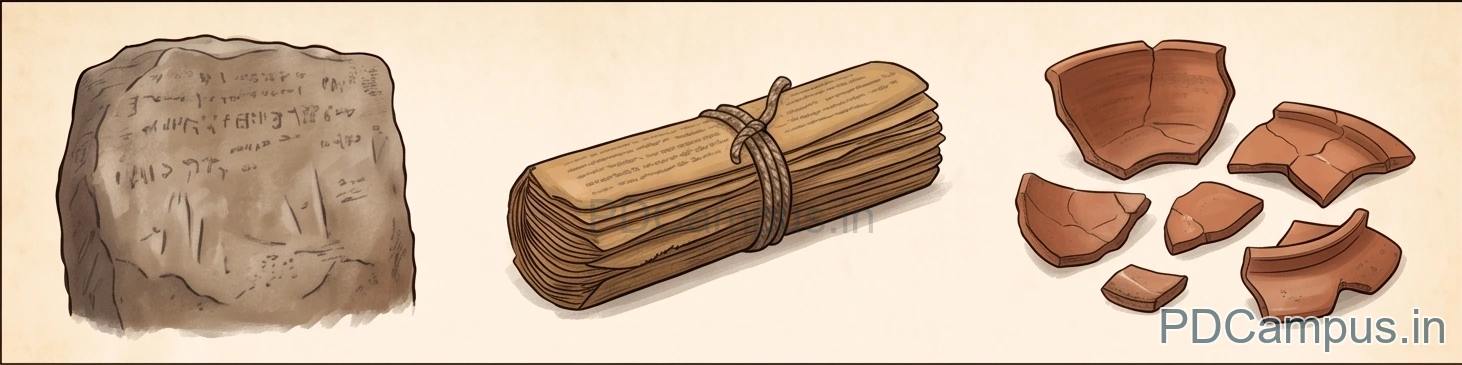
Use four kinds of evidence together: Ashokan inscriptions for contemporary royal messages; archaeology for cities, pillars, caves, pottery, coins and routes; Puranic, Buddhist and Jain texts for remembered histories; and Greek reports for outside observations. A palm-leaf illustration represents a textual tradition, not a surviving original Mauryan manuscript.चार प्रकार के प्रमाण साथ पढ़ें: समकालीन राजकीय संदेशों के लिए अशोक के अभिलेख; नगर, स्तंभ, गुफा, मृद्भांड, सिक्के और मार्गों के लिए पुरातत्व; स्मृत इतिहास के लिए पुराण, बौद्ध और जैन ग्रंथ; बाहरी अवलोकन के लिए यूनानी विवरण। ताड़पत्र का चित्र ग्रंथीय परंपरा का प्रतीक है, बची हुई मूल मौर्य पांडुलिपि नहीं।
Read different evidence togetherअलग प्रमाण साथ पढ़ें
2. Learn from Zero - The Ruler Rail and the Making of the Empire2. शुरुआत से समझें: शासकों का क्रम और साम्राज्य का निर्माण
The story begins in Magadha. Chandragupta created and expanded the imperial frame. Bindusara maintained it; substantial Deccan expansion is often attributed to him, but direct evidence is limited. Ashoka inherited imperial power, fought Kalinga and then proclaimed a preference for conquest through good conduct over conquest by war.कहानी मगध से शुरू होती है। चंद्रगुप्त ने साम्राज्य का ढाँचा बनाया और बढ़ाया। बिंदुसार ने उसे बनाए रखा; दक्कन के बड़े विस्तार का श्रेय अक्सर उसे दिया जाता है, लेकिन प्रत्यक्ष प्रमाण सीमित हैं। अशोक को यह साम्राज्य मिला। उसने कलिंग युद्ध के बाद युद्ध-विजय की अपेक्षा अच्छे आचरण से विजय को प्राथमिकता देने की घोषणा की।
| Ruler or eventशासक या घटना | Approximate conventional dateप्रचलित अनुमानित तिथि | Evidence cautionप्रमाण की सावधानी |
|---|---|---|
| Chandraguptaचंद्रगुप्त | c. 321–297 BCEलगभग 321–297 ईसा-पूर्व | Foundation and reign endpoints vary slightly across chronologies.स्थापना और शासन की अंतिम तिथियाँ अलग कालक्रमों में थोड़ी बदलती हैं। |
| Bindusaraबिंदुसार | c. 297–273 BCEलगभग 297–273 ईसा-पूर्व | Some chronologies place the end around 272 BCE.कुछ कालक्रम अंत लगभग 272 ईसा-पूर्व रखते हैं। |
| Ashokaअशोक | c. 273/268–232 BCEलगभग 273/268–232 ईसा-पूर्व | Accession and coronation may be counted separately.सिंहासनारोहण और राज्याभिषेक अलग गिने जा सकते हैं। |
| Kalinga warकलिंग युद्ध | Eighth year after consecration; conventionally c. 261 BCEअभिषेक के बाद आठवाँ वर्ष; प्रचलित तिथि लगभग 261 ईसा-पूर्व | Rock Edict XIII supplies the regnal reference; the BCE conversion depends on chronology.प्रमुख शिलालेख XIII राजकीय वर्ष बताता है; ईसा-पूर्व में परिवर्तन कालक्रम पर निर्भर है। |
| Later Mauryasबाद के मौर्य | Until c. 185 BCEलगभग 185 ईसा-पूर्व तक | Succession was complicated; later literary tradition says Pushyamitra killed Brihadratha and established Shunga rule.उत्तराधिकार जटिल था; बाद की साहित्यिक परंपरा में पुष्यमित्र द्वारा बृहद्रथ की हत्या और शुंग शासन की स्थापना है। |
Chandragupta Mauryaचंद्रगुप्त मौर्य
- Overthrew the Nanda power of Magadha, traditionally with the guidance of Chanakya or Kautilya.मगध की नंद सत्ता को पराजित किया; परंपरा इसमें चाणक्य या कौटिल्य के मार्गदर्शन का उल्लेख करती है।
- Gained north-western lands during the struggles that followed Alexander's invasion.सिकंदर के आक्रमण के बाद हुए संघर्षों में उत्तर-पश्चिमी क्षेत्रों पर नियंत्रण बढ़ाया।
- Fought Seleucus I Nicator around 305 BCE. A settlement transferred territories and brought Seleucus 500 war elephants; diplomatic and marriage-alliance details vary by source.लगभग 305 ईसा-पूर्व में सेल्यूकस प्रथम निकेटर से युद्ध हुआ। समझौते में क्षेत्र हस्तांतरित हुए और सेल्यूकस को 500 युद्ध-हाथी मिले; कूटनीतिक और वैवाहिक समझौते के विवरण स्रोतों के अनुसार अलग हैं।
- Megasthenes came as a Seleucid ambassador to his court.मेगस्थनीज सेल्यूकस के राजदूत के रूप में उसके दरबार में आया।
- Jain tradition links his final years with Bhadrabahu and Shravanabelagola. This is later community memory, not contemporary proof.जैन परंपरा उसके अंतिम वर्षों को भद्रबाहु और श्रवणबेलगोला से जोड़ती है। यह बाद की सामुदायिक स्मृति है, समकालीन प्रमाण नहीं।
Bindusaraबिंदुसार
- Son and successor of Chandragupta.चंद्रगुप्त का पुत्र और उत्तराधिकारी।
- Greek writers render a title/name as Amitrochates, commonly connected with Sanskrit Amitraghata, "slayer of foes".यूनानी लेखकों का नाम या उपाधि अमित्रोकेटीज प्रायः संस्कृत अमित्रघात से जोड़ा जाता है, जिसका अर्थ शत्रुओं का संहारक है।
- Maintained diplomatic contact with Hellenistic rulers, rulers of the Greek cultural world after Alexander; Deimachus is linked with his court.सिकंदर के बाद के यूनानी सांस्कृतिक संसार के हेलेनिस्टिक शासकों से राजनयिक संपर्क बनाए रखा; डाइमेकस का नाम उसके दरबार से जुड़ा है।
- Much Deccan expansion is often assigned to him, but direct evidence is thin.दक्कन के बड़े विस्तार का श्रेय प्रायः उसे दिया जाता है, लेकिन प्रत्यक्ष प्रमाण कम हैं।
- Traditions connect princes with unrest at Taxila; details differ.परंपराएँ राजकुमारों को तक्षशिला के असंतोष से जोड़ती हैं; विवरण एक जैसे नहीं हैं।
Ashokaअशोक
- Most inscriptions call him Devanampiya Piyadasi: Devanampiya means “Beloved of the Gods”; Piyadasi is variously translated as “pleasant to behold” or “he who looks with affection”.अधिकांश अभिलेख उसे देवानंपिय पियदसि कहते हैं। देवानंपिय का अर्थ देवताओं का प्रिय है; पियदसि का अनुवाद देखने में प्रिय या स्नेह से देखने वाला भी किया जाता है।
- Minor Rock Edicts at places such as Maski help connect Piyadasi with the name Ashoka.मास्की जैसे स्थलों के लघु शिलालेख पियदसि को अशोक नाम से जोड़ने में सहायता करते हैं।
- His accession and formal coronation may have been separated; chronology around 273/268 BCE is conventional.सिंहासनारोहण और औपचारिक राज्याभिषेक अलग समय पर हुए हो सकते हैं; लगभग 273/268 ईसा-पूर्व का कालक्रम प्रचलित है।
- He was personally committed to Buddhism, yet framed Dhamma as shared civic ethics.व्यक्तिगत रूप से बौद्ध धर्म के प्रति प्रतिबद्ध था, पर धम्म को साझा सार्वजनिक नैतिकता के रूप में प्रस्तुत किया।
- Died around 232 BCE. The later succession is uncertain.लगभग 232 ईसा-पूर्व में मृत्यु हुई। बाद के उत्तराधिकार का क्रम अनिश्चित है।
Imperial centres and regions: read the geography cautiouslyसाम्राज्य के केंद्र और प्रदेश: भूगोल सावधानी से पढ़ें
- Pataliputra: imperial capital in the Magadha–middle Ganga core.पाटलिपुत्र: मगध और मध्य गंगा के केंद्रीय क्षेत्र में साम्राज्य की राजधानी।
- Taxila: north-western provincial centre.तक्षशिला: उत्तर-पश्चिम का प्रांतीय केंद्र।
- Ujjain (Ujjayini): western provincial centre.उज्जैन या उज्जयिनी: पश्चिम का प्रांतीय केंद्र।
- Tosali: eastern centre associated with Kalinga.तोसली: कलिंग से जुड़ा पूर्वी केंद्र।
- Suvarnagiri: southern provincial centre associated with Deccan routes and resources.सुवर्णगिरि: दक्कन के मार्गों और संसाधनों से जुड़ा दक्षिणी प्रांतीय केंद्र।
- Kandahar: Greek and Aramaic inscriptional evidence in the Afghan–Gandhara region.कंधार: अफगान–गांधार क्षेत्र में यूनानी और अरामाइक अभिलेखीय प्रमाण।
- Girnar: western rock edicts.गिरनार: पश्चिमी क्षेत्र के शिलालेख।
- Dhauli and Jaugada: Kalinga edict sites.धौली और जौगढ़: कलिंग के अभिलेख-स्थल।
- The far Tamil south remained beyond direct Mauryan rule. Named regions and centres do not imply modern borders or equally intensive control everywhere.सुदूर तमिल दक्षिण प्रत्यक्ष मौर्य शासन के बाहर था। प्रदेशों और केंद्रों के नाम आधुनिक सीमाओं या हर जगह समान नियंत्रण का संकेत नहीं हैं।
Kalinga changed the message of kingshipकलिंग ने राजसत्ता का संदेश बदला
Rock Edict XIII gives striking numbers: 100,000 killed, 150,000 deported, and many times that number dead. They are a royal inscription's figures, not a modern census. Their main purpose is to show the scale of suffering and Ashoka's stated remorse. Ashoka did not abolish the army or become completely passive. He continued to rule an empire, maintain officials and warn forest peoples that he still had power to punish. His change was a declared preference for persuasion, restraint and Dhamma-vijaya, not the disappearance of government force. The edict also stresses the suffering of people separated from their relatives.प्रमुख शिलालेख XIII में बड़े आँकड़े दिए गए हैं: 100,000 मारे गए, 150,000 निर्वासित किए गए और इससे कई गुना लोग मरे। ये राजकीय अभिलेख के आँकड़े हैं, आधुनिक जनगणना के नहीं। इनका मुख्य उद्देश्य पीड़ा की व्यापकता और अशोक का घोषित पश्चात्ताप बताना है। अशोक ने सेना समाप्त नहीं की और पूरी तरह निष्क्रिय नहीं हुआ। वह साम्राज्य चलाता रहा, अधिकारी रखे और वनवासी समुदायों को दंड देने की अपनी शक्ति की चेतावनी भी दी। बदलाव समझाने, संयम और धम्म-विजय को दी गई घोषित प्राथमिकता में था; शासन की दंड-शक्ति समाप्त नहीं हुई थी। अभिलेख अपने संबंधियों से बिछुड़े लोगों की पीड़ा पर भी बल देता है।
3. Complete Knowledge and Data Bank - How the Mauryan State Worked3. पूरा ज्ञान-भंडार: मौर्य राज्य कैसे चलता था
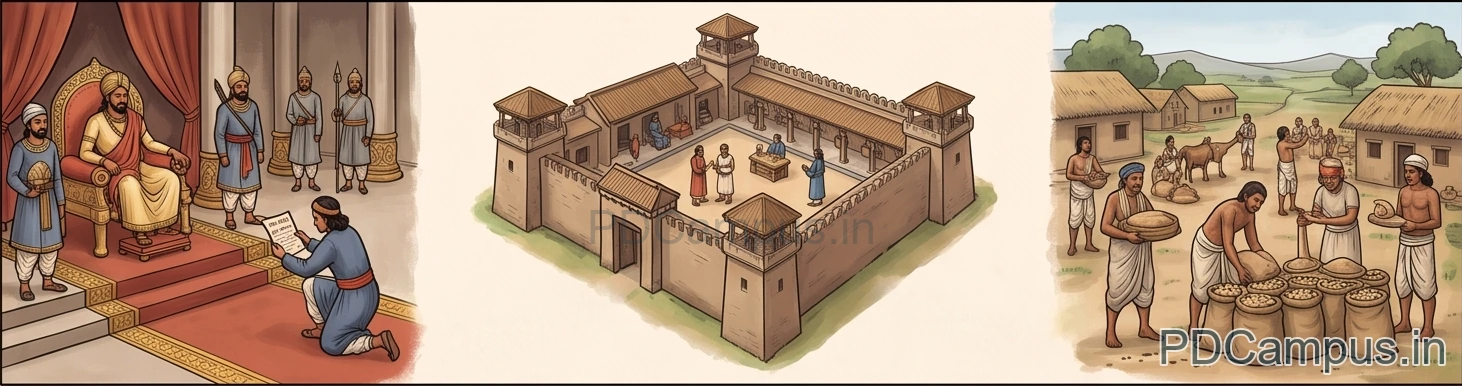
Think of the empire as a large tree. The king was the trunk, officers were branches, provinces were large limbs, and towns and villages were leaves. But the tree was not equally thick everywhere: direct control was strongest in the core and adjusted to local conditions at the edges.साम्राज्य को बड़े वृक्ष की तरह समझें। राजा तना, अधिकारी शाखाएँ, प्रांत बड़ी डालियाँ और नगर तथा गाँव पत्ते थे। लेकिन वृक्ष हर जगह एक जैसा घना नहीं था: केंद्र में प्रत्यक्ष नियंत्रण अधिक था और सीमांतों पर स्थानीय परिस्थितियों के अनुसार बदलता था।
At the centreकेंद्र में
The king decided policy with ministers and senior officials. Mahamatras handled major duties. Textual models name many adhyakshas, or departmental superintendents, for treasury, mines, commerce, weights, forests and more.राजा मंत्रियों और वरिष्ठ अधिकारियों के साथ नीति तय करता था। महामात्र बड़े दायित्व सँभालते थे। ग्रंथीय प्रतिरूप कोष, खानों, व्यापार, तौल, वनों और दूसरे विभागों के अनेक अध्यक्षों का उल्लेख करते हैं।
In provincesप्रांतों में
Royal princes called kumara or aryaputra could govern major provincial centres. Provincial councils and mahamatras connected the capital with large regions.कुमार या आर्यपुत्र कहे जाने वाले राजकुमार बड़े प्रांतीय केंद्रों का शासन सँभाल सकते थे। प्रांतीय परिषदें और महामात्र राजधानी को बड़े क्षेत्रों से जोड़ते थे।
In districts and villagesजिलों और गाँवों में
Ashokan edicts name pradeshikas, rajukas and yuktas. The Arthashastra also describes officers such as sthanika and gopa; the village head was the gramika.अशोक के अभिलेख प्रादेशिक, राजुक और युक्त नामक अधिकारियों का उल्लेख करते हैं। अर्थशास्त्र में स्थानिक और गोप जैसे अधिकारी भी हैं; गाँव का प्रमुख ग्रामिक था।
One empire, three practical zonesएक साम्राज्य, व्यवहार में तीन प्रकार के क्षेत्र
- Core: Magadha and Pataliputra, with relatively intensive royal control.केंद्रीय क्षेत्र: मगध और पाटलिपुत्र में अपेक्षाकृत गहन राजकीय नियंत्रण।
- Major centres and corridors: provinces, roads and officials connected important regions; the southern routes served resources including mines.प्रमुख केंद्र और संपर्क-मार्ग: प्रांत, सड़कें और अधिकारी महत्वपूर्ण क्षेत्रों को जोड़ते थे; दक्षिणी मार्ग खानों जैसे संसाधनों तक पहुँचाते थे।
- Periphery: some local rulers and communities experienced a looser reach of imperial power. Distance, terrain, resources and earlier political traditions mattered. These three zones are a modern explanatory model, not three uniform legal provinces.सीमांत: कुछ स्थानीय शासकों और समुदायों तक साम्राज्य की पकड़ ढीली थी। दूरी, भू-आकृति, संसाधन और पुरानी राजनीतिक परंपराएँ महत्वपूर्ण थीं। ये तीन क्षेत्र आधुनिक व्याख्यात्मक प्रतिरूप हैं, तीन समान कानूनी प्रांत नहीं।
| Office / unitपद या इकाई | Simple meaningसरल अर्थ | What to rememberक्या याद रखें | Source cautionस्रोत की सावधानी |
|---|---|---|---|
| Mantrin / Mantriparishadमंत्री / मंत्रिपरिषद | Minister / council of ministers.मंत्री या मंत्रियों की परिषद। | Advised the king on policy, war, finance and administration.नीति, युद्ध, वित्त और प्रशासन पर राजा को सलाह। | Best known through normative texts; actual membership varied.मुख्य जानकारी आदर्श नियम बताने वाले ग्रंथों से; वास्तविक सदस्यता बदल सकती थी। |
| Samahartaसमाहर्ता | Chief collector of revenue.मुख्य राजस्व संग्राहक। | Gathered income and supervised assessment.आय एकत्र करना और आकलन की देखरेख। | Arthashastra terminology.अर्थशास्त्र की शब्दावली। |
| Sannidhataसन्निधाता | Treasurer or keeper of stores.कोषाध्यक्ष या भंडार-रक्षक। | Managed treasury and state warehouses.कोष और राजकीय भंडारों का प्रबंध। | Arthashastra terminology.अर्थशास्त्र की शब्दावली। |
| Senapatiसेनापति | Commander of the army.सेना का प्रमुख। | Led armed forces under royal authority.राजकीय अधिकार के अधीन सशस्त्र बलों का नेतृत्व। | General ancient title, not uniquely Mauryan.सामान्य प्राचीन पद; केवल मौर्यों का नहीं। |
| Purohitaपुरोहित | Royal priest and counsellor.राजकीय पुजारी और सलाहकार। | Linked ritual, counsel and royal legitimacy.अनुष्ठान, परामर्श और राजकीय वैधता को जोड़ना। | Role could overlap with other advisers.दूसरे सलाहकारों से दायित्व मिल सकते थे। |
| Adhyakshaअध्यक्ष | Superintendent.विभागीय अधीक्षक। | Departments for mines, trade, armoury, forests, weights, ships and more.खान, व्यापार, शस्त्रागार, वन, तौल, जहाज और अन्य विभाग। | The full list is a statecraft model, not a surviving staff register.पूरी सूची शासन का प्रतिरूप है, सुरक्षित कर्मचारी-पंजी नहीं। |
| Rajukaराजुक | Rural/district officer.ग्रामीण या जिला अधिकारी। | Ashoka gave rajukas responsibility in justice and welfare.अशोक ने न्याय और कल्याण के दायित्व दिए। | Meaning and exact territorial scale are debated.शब्द का अर्थ और निश्चित क्षेत्रीय स्तर विवादित हैं। |
| Pradeshikaप्रादेशिक | Regional/district officer.क्षेत्रीय या जिला अधिकारी। | Joined inspection tours and administrative reporting.निरीक्षण यात्राएँ और प्रशासनिक सूचना। | Known from Ashokan orders.अशोक के आदेशों से ज्ञात। |
| Yuktaयुक्त | Subordinate/recording officer.अधीनस्थ या लेखा अधिकारी। | Accounts, orders and tours.हिसाब, आदेश और निरीक्षण यात्राएँ। | Functions varied by context.संदर्भ के अनुसार काम बदलते थे। |
| Dhamma-mahamatraधम्म-महामात्र | High officer for Dhamma.धम्म के लिए उच्च अधिकारी। | Created by Ashoka; worked for welfare and relations among communities.अशोक द्वारा नियुक्त; कल्याण और समुदायों के संबंधों पर कार्य। | Not simply a Buddhist missionary post.केवल बौद्ध धर्म-प्रचारक का पद नहीं। |
Court, province and villageदरबार, प्रांत और गाँव
Economy - how food, goods and revenue movedअर्थव्यवस्था: भोजन, वस्तुएँ और राजस्व का प्रवाह
Agriculture firstकृषि का प्रमुख स्थान
Most people farmed. Land revenue was the state's largest base. Bhaga, a share of produce, is often given as one-sixth in normative texts, but rates could change. Sita referred to crown or state-managed land in the Arthashastra.अधिकांश लोग खेती करते थे। भूमि से मिलने वाला राजस्व राज्य की आय का सबसे बड़ा आधार था। उपज के हिस्से को भाग कहते थे; आदर्श नियम बताने वाले ग्रंथों में यह अक्सर छठा हिस्सा है, पर दर बदल सकती थी। अर्थशास्त्र में सीता राजकीय या राज्य द्वारा संचालित भूमि से संबंधित शब्द है।
Many kinds of incomeआय के अनेक स्रोत
Terms include bali and kara for dues or taxes, and shulka for customs or tolls. Forests, mines, salt, metals, liquor, fines, market controls and state property could also bring income.बलि और कर उपकर या करों से जुड़े शब्द हैं; शुल्क चुंगी या मार्ग-कर के लिए आता है। वन, खानें, नमक, धातुएँ, मदिरा, जुर्माने, बाजार-नियंत्रण और राज्य की संपत्ति भी आय दे सकते थे।
Exchange and routesविनिमय और मार्ग
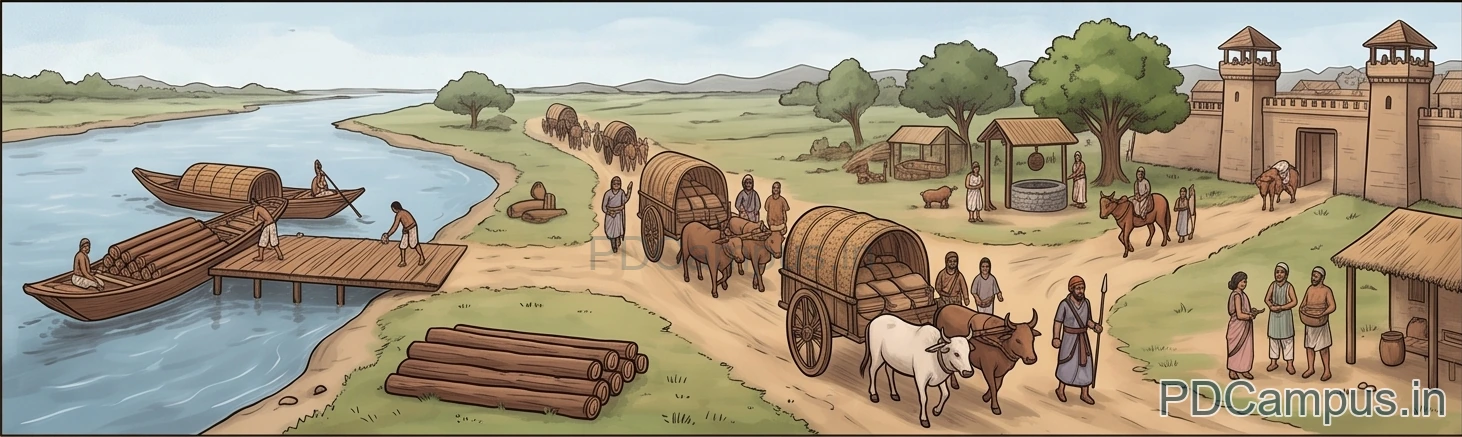
Punch-marked silver coins, often called karshapanas, circulated alongside barter and payments in kind. The Uttarapatha linked the north-west to the Ganga plain; Dakshinapatha connected northern India with the Deccan.आहत चाँदी के सिक्के, जिन्हें अक्सर कार्षापण कहा जाता है, वस्तु-विनिमय और वस्तुओं में भुगतान के साथ चलते थे। उत्तरापथ उत्तर-पश्चिम को गंगा मैदान से जोड़ता था; दक्षिणापथ उत्तर भारत को दक्कन से जोड़ता था।
The original economy diagram also links grain and cattle from farms, mines and forests, craftspeople’s guilds and workshops, trade routes and coins, taxes and tolls, and the treasury and public works. Think of connected activities, not a claim that every workshop was state-owned or that one tax rate covered the whole empire.मूल आर्थिक चित्र खेतों के अनाज और पशुधन, खानों और वनों, शिल्पियों की श्रेणियों और कार्यशालाओं, व्यापार-मार्गों और सिक्कों, कर और चुंगी तथा कोष और सार्वजनिक कार्यों को जोड़ता है। इन्हें परस्पर जुड़ी गतिविधियों की तरह समझें; हर कार्यशाला राजकीय थी या पूरे साम्राज्य में एक कर-दर थी, ऐसा दावा नहीं है।
Irrigation clue: The later Junagadh inscription of Rudradaman says Pushyagupta, a provincial governor under Chandragupta Maurya, built the Sudarshana lake in Saurashtra. It is later evidence remembering a Mauryan public work, not an Ashokan edict.सिंचाई का प्रमाण: रुद्रदामन का बाद का जूनागढ़ अभिलेख कहता है कि चंद्रगुप्त मौर्य के प्रांतीय राज्यपाल पुष्यगुप्त ने सौराष्ट्र में सुदर्शन झील बनवाई। यह मौर्यकालीन सार्वजनिक कार्य को याद करने वाला बाद का प्रमाण है, अशोक का शिलालेख नहीं।
Goods and communicationवस्तुएँ और संचार
The army - four main fighting arms, supported by a large systemसेना: चार प्रमुख युद्ध-अंग और बड़ी सहायक व्यवस्था
Military organisationसैनिक संगठन
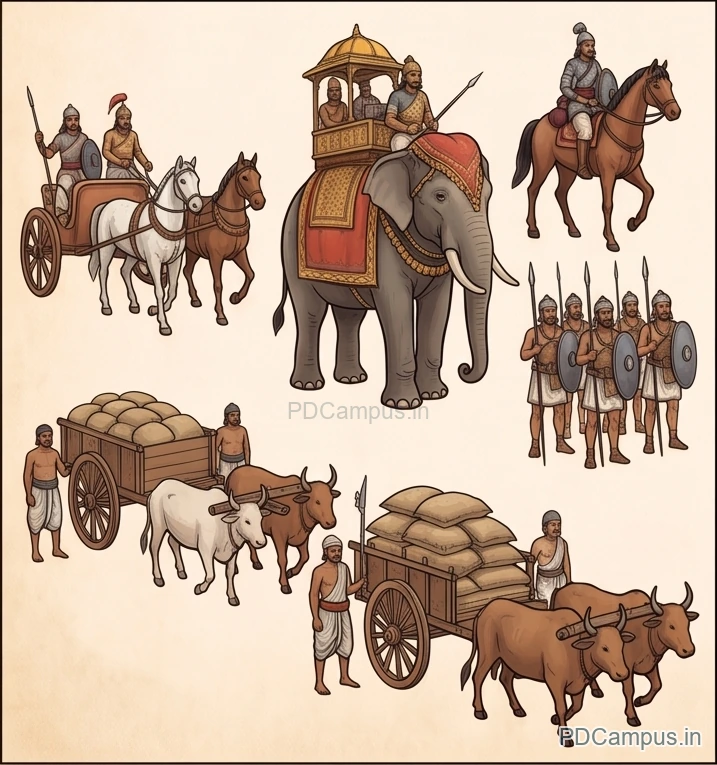
The caturanga army contained infantry, cavalry, chariots and elephants. Forts, armouries, roads, transport, spies, scouts and a possible river/naval arm supported operations. The senapati was the high commander.चतुरंग सेना में पैदल सैनिक, घुड़सवार, रथ और हाथी शामिल थे। दुर्ग, शस्त्रागार, सड़कें, परिवहन, गुप्तचर, टोही और संभावित नदी या नौसैनिक व्यवस्था युद्ध-कार्य में सहायता करते थे। सेनापति उच्च सैन्य प्रमुख था।
Numbers and six boards: Later Greek writers preserve claims of a huge army and six committees of five members for military affairs. These are valuable fragments of Megasthenes, but exact totals and a perfectly fixed committee chart should not be treated as independently verified facts.संख्या और छह समितियाँ: बाद के यूनानी लेखक विशाल सेना तथा सैनिक मामलों के लिए पाँच-पाँच सदस्यों की छह समितियों के दावे सुरक्षित रखते हैं। ये मेगस्थनीज के महत्वपूर्ण अंश हैं, लेकिन निश्चित सैन्य संख्या और बिल्कुल स्थिर समिति-व्यवस्था को स्वतंत्र रूप से सत्यापित तथ्य नहीं मानना चाहिए।
- The Greek account describes six military groups, each of five: naval matters; transport and provisions; infantry; cavalry; chariots; and elephants.यूनानी विवरण में पाँच-पाँच सदस्यों के छह सैनिक समूह हैं: नौसैनिक काम; परिवहन और रसद; पैदल सेना; घुड़सवार; रथ; और हाथी।
- This reported administrative grouping includes support work. It is different from caturanga, the four fighting arms: infantry, cavalry, chariots and elephants.इस वर्णित प्रशासनिक वर्गीकरण में सहायक कार्य भी हैं। यह चतुरंग से अलग है, जिसके चार युद्ध-अंग पैदल सेना, घुड़सवार, रथ और हाथी हैं।
An army required suppliesसेना को रसद भी चाहिए थी
Arthashastra - seven limbs of a strong stateअर्थशास्त्र: सशक्त राज्य के सात अंग
| State limbराज्य का अंग | Meaningअर्थ |
|---|---|
| Swaminस्वामी | Rulerशासक |
| Amatyaअमात्य | Ministers and officialsमंत्री और अधिकारी |
| Janapadaजनपद | Territory and peopleभूमि और लोग |
| Durgaदुर्ग | Fortified centre or fortगढ़युक्त केंद्र या किला |
| Koshaकोष | Treasuryखजाना |
| Dandaदंड | Coercive force, especially the armyबल-प्रयोग की शक्ति, विशेषकर सेना |
| Mitraमित्र | Allyसहयोगी राज्य या शासक |
Author and textलेखक और ग्रंथ
The text names Kautilya and Vishnugupta; tradition identifies him with Chanakya, Chandragupta’s adviser. The surviving Sanskrit work has 15 books. R. Shamasastry brought a manuscript to modern scholarly attention in 1905, published the Sanskrit edition in 1909 and an English translation in 1915. These modern publication dates do not settle the dates of the text’s different ancient layers.ग्रंथ में कौटिल्य और विष्णुगुप्त नाम आते हैं; परंपरा इन्हें चंद्रगुप्त के सलाहकार चाणक्य से जोड़ती है। उपलब्ध संस्कृत ग्रंथ में 15 अधिकरण हैं। आर. शामशास्त्री ने 1905 में एक पांडुलिपि को आधुनिक विद्वानों के ध्यान में लाया, 1909 में संस्कृत संस्करण और 1915 में अंग्रेजी अनुवाद प्रकाशित किया। इन आधुनिक प्रकाशन-तिथियों से ग्रंथ की अलग प्राचीन परतों की तिथियाँ तय नहीं होतीं।
Foreign policyविदेश नीति
The mandala imagines a circle of kingdoms. Six policy choices include peace, war, neutrality, marching, seeking protection and a dual policy. Four familiar methods are sama, dana, bheda and danda.मंडल में राज्यों के वृत्त की कल्पना है। छह नीतियों में संधि, युद्ध, तटस्थ रहना, अभियान करना, आश्रय लेना और दोहरी नीति शामिल हैं। चार परिचित उपाय साम, दान, भेद और दंड हैं।
| Groupसमूह | Terms and meaningsशब्द और अर्थ |
|---|---|
| Six policiesछह नीतियाँ | Sandhi: peace or treaty; vigraha: hostility or war; asana: remaining quiet; yana: marching; samshraya: seeking protection; dvaidhibhava: peace with one power while confronting another.संधि: समझौता; विग्रह: शत्रुता या युद्ध; आसन: शांत रहना; यान: अभियान; संश्रय: संरक्षण लेना; द्वैधीभाव: एक शक्ति से शांति रखते हुए दूसरी का सामना करना। |
| Four methodsचार उपाय | Sama: conciliation; dana: gifts or inducements; bheda: creating division; danda: coercion or force.साम: समझाना; दान: उपहार या प्रलोभन; भेद: फूट उत्पन्न करना; दंड: बल या बाध्यकारी शक्ति। |
| How to read themकैसे पढ़ें | These are choices in a statecraft model, not a list of six documented Mauryan campaigns.ये शासनशास्त्र के प्रतिरूप में विकल्प हैं, छह प्रमाणित मौर्य अभियानों की सूची नहीं। |
Use it carefullyसावधानी से उपयोग करें
The Arthashastra teaches an idealised and practical science of rule. Scholars see layers composed or revised over a long period. It illuminates Mauryan possibilities but is not a stenographic record of one king's office.अर्थशास्त्र शासन का आदर्श और व्यावहारिक शास्त्र सिखाता है। विद्वान इसमें लंबे समय में लिखी या संशोधित परतें देखते हैं। यह मौर्य व्यवस्था की संभावनाएँ समझाता है, किसी एक राजा के कार्यालय की शब्दशः कार्यवाही नहीं।
4. Visual learning: inscriptions, Dhamma and Mauryan art4. दृश्य-अध्ययन: अभिलेख, धम्म और मौर्य कला
Ashoka made the landscape speak. Rocks stood beside routes and settlements. Tall pillars rose at important places. Local officials read or explained the messages. Different scripts carried the same broad wish: govern with care and help people practise good conduct.अशोक ने भू-दृश्य को संदेश का माध्यम बनाया। रास्तों और बस्तियों के पास चट्टानों पर लेख अंकित हुए। महत्वपूर्ण स्थानों पर ऊँचे स्तंभ खड़े हुए। स्थानीय अधिकारी संदेश पढ़ते या समझाते थे। अलग लिपियों में व्यापक उद्देश्य समान था: देखभाल के साथ शासन और अच्छे आचरण को बढ़ावा देना।
Languageभाषा
Most edicts use forms of Prakrit, Middle Indo-Aryan language forms associated with everyday speech rather than elite classical Sanskrit. Middle Indo-Aryan names a stage of language development, not the geography of central India. North-western versions use local forms, and Afghan texts include Greek and Aramaic.अधिकांश अभिलेख प्राकृत के रूपों में हैं—बोलचाल से जुड़े मध्य इंडो-आर्य भाषिक रूप, न कि अभिजात शास्त्रीय संस्कृत। यहाँ मध्य इंडो-आर्य भाषा-विकास का चरण है, मध्य भारत का भौगोलिक नाम नहीं। उत्तर-पश्चिमी पाठ स्थानीय रूपों का उपयोग करते हैं और अफगान क्षेत्र के लेखों में यूनानी तथा अरामाइक भी हैं।
Scriptलिपि
Brahmi was used across most regions and normally runs left to right. Kharosthi in the north-west normally runs right to left. James Prinsep's 1837 breakthrough helped modern scholars read Brahmi.अधिकांश क्षेत्रों में ब्राह्मी प्रयुक्त हुई, जो सामान्यतः बाएँ से दाएँ लिखी जाती है। उत्तर-पश्चिम की खरोष्ठी सामान्यतः दाएँ से बाएँ चलती है। 1837 में जेम्स प्रिंसेप की महत्वपूर्ण सफलता ने आधुनिक विद्वानों को ब्राह्मी पढ़ने में सहायता दी।
Name clueनाम पहचानने का संकेत
Most edicts say Devanampiya Piyadasi. Minor Rock Edicts at Maski, Gujarra and a few other sites link this title with the personal name Ashoka.अधिकांश अभिलेख देवानंपिय पियदसि कहते हैं। मास्की, गुर्जरा और कुछ अन्य स्थलों के लघु शिलालेख इस उपाधि को अशोक के व्यक्तिगत नाम से जोड़ते हैं।
| Site groupस्थल-समूह | Present regional locationवर्तमान क्षेत्रीय स्थिति | Learning linkअध्ययन-संबंध |
|---|---|---|
| Shahbazgarhi and Mansehraशाहबाजगढ़ी और मानसेहरा | Pakistanपाकिस्तान | Kharosthi Major Rock Edicts.खरोष्ठी में प्रमुख शिलालेख। |
| Kalsiकालसी | Uttarakhand, Indiaउत्तराखंड, भारत | Brahmi Major Rock Edicts.ब्राह्मी में प्रमुख शिलालेख। |
| Girnarगिरनार | Gujarat, Indiaगुजरात, भारत | Ashokan rock edicts; later Rudradaman inscription is separate.अशोक के शिलालेख; बाद का रुद्रदामन अभिलेख अलग है। |
| Topra and Meerutटोपरा और मेरठ | Haryana and Uttar Pradesh origins; pillars later moved to Delhiमूल स्थल हरियाणा और उत्तर प्रदेश; स्तंभ बाद में दिल्ली ले जाए गए | Major Pillar Edicts; Delhi location is not the original setting.प्रमुख स्तंभलेख; दिल्ली वर्तमान स्थिति है, मूल स्थल नहीं। |
| Sarnathसारनाथ | Uttar Pradesh, Indiaउत्तर प्रदेश, भारत | Lion capital and Sangha-related pillar inscription.सिंहशीर्ष और संघ-संबंधी स्तंभलेख। |
| Dhauli and Jaugadaधौली और जौगढ़ | Odisha, Indiaओडिशा, भारत | Kalinga rock edicts and Separate Kalinga messages.कलिंग के शिलालेख और पृथक कलिंग संदेश। |
| Maski and Brahmagiriमास्की और ब्रह्मगिरि | Karnataka, Indiaकर्नाटक, भारत | Minor Rock Edicts.लघु शिलालेख। |
| Soparaसोपारा | Maharashtra, Indiaमहाराष्ट्र, भारत | Fragments of Major Rock Edicts.प्रमुख शिलालेखों के खंड। |
| Erragudi (Yerragudi)एर्रगुडी या येर्रगुडी | Andhra Pradesh, Indiaआंध्र प्रदेश, भारत | Major and Minor Rock Edicts.प्रमुख और लघु शिलालेख। |
| Lauriya and Rampurvaलौरिया और रामपुरवा | Bihar, Indiaबिहार, भारत | Ashokan pillars; distinguish Lauriya-Araraj from Lauriya-Nandangarh.अशोक स्तंभ; लौरिया-अरेराज और लौरिया-नंदनगढ़ को अलग पहचानें। |
| Lumbini and Nigali Sagarलुंबिनी और निगाली सागर | Nepalनेपाल | Pilgrimage-related pillar inscriptions.तीर्थयात्रा-संबंधी स्तंभलेख। |
| Kandaharकंधार | Afghanistanअफगानिस्तान | Greek and Aramaic inscriptional evidence.यूनानी और अरामाइक अभिलेखीय प्रमाण। |
Edict families - where the message changes shapeअभिलेखों के समूह: संदेश के अलग रूप
- Major Rock Edicts: fourteen conventional numbered themes on broad public policy, cut on natural rock surfaces.प्रमुख शिलालेख: प्राकृतिक चट्टानों पर व्यापक सार्वजनिक नीति के चौदह प्रचलित क्रमांकित विषय।
- Minor Rock Edicts: shorter, locally varied messages, sometimes revealing personal religious commitment.लघु शिलालेख: छोटे, स्थानीय रूप से भिन्न संदेश; कभी व्यक्तिगत धार्मिक प्रतिबद्धता बताते हैं।
- Major Pillar Edicts: seven conventional numbered texts associated with later Dhamma instructions on polished shafts.प्रमुख स्तंभलेख: पालिशदार स्तंभदंडों पर बाद के धम्म-निर्देशों से जुड़े सात प्रचलित क्रमांकित लेख।
- Special records concern particular places or issues: Kalinga administration, cave donations, a queen’s gifts, Sangha unity and royal pilgrimages. Not every site contains every edict; wording, order and preservation vary.विशेष अभिलेख किसी स्थान या विषय से जुड़े हैं: कलिंग प्रशासन, गुफा-दान, रानी के दान, संघ की एकता और राजकीय तीर्थयात्राएँ। हर स्थल पर हर अभिलेख नहीं है; शब्दावली, क्रम और संरक्षण बदलते हैं।
| Major Rock Edictप्रमुख शिलालेख | Main idea in plain Englishसरल भाषा में मुख्य विचार | Memory wordस्मृति-शब्द |
|---|---|---|
| II | Prohibits animal sacrifice and restricts certain festive gatherings; reports reductions in slaughter for the royal kitchen.पशु-बलि का निषेध और कुछ उत्सवी सभाओं पर रोक; राजकीय रसोई के लिए पशु-वध में कमी का उल्लेख। | Animalsपशु |
| IIII | Medical treatment for humans and animals; medicinal herbs, wells and trees where possible.मनुष्यों और पशुओं की चिकित्सा; जहाँ संभव हो औषधीय पौधे, कुएँ और वृक्ष। | Healthस्वास्थ्य |
| IIIIII | Officials should tour every five years and teach respect for parents, generosity and restraint.अधिकारियों की हर पाँच वर्ष पर यात्रा; माता-पिता का सम्मान, उदारता और संयम का उपदेश। | Toursयात्राएँ |
| IVIV | Claims growth in restraint and respect; contrasts the sound of the drum with the sound of Dhamma.संयम और सम्मान बढ़ने का दावा; नगाड़े की ध्वनि की तुलना धम्म की ध्वनि से करता है। | Changeबदलाव |
| VV | Appointment of Dhamma-mahamatras for welfare and moral concern across groups.अलग समूहों के कल्याण और नैतिक हित के लिए धम्म-महामात्रों की नियुक्ति। | Officersअधिकारी |
| VIVI | Reports may reach the king at all times; hard work for people's welfare is the ruler's duty.हर समय राजा तक सूचना पहुँच सकती है; प्रजा के कल्याण के लिए परिश्रम शासक का दायित्व। | Accessपहुँच |
| VIIVII | Different religious communities should live everywhere in self-control and purity.अलग धार्मिक समुदाय हर जगह आत्मसंयम और पवित्रता के साथ रहें। | Coexistसहअस्तित्व |
| VIIIVIII | Replaces royal pleasure tours with Dhamma journeys, meetings, gifts and teaching.राजकीय मनोरंजन-यात्राओं की जगह धम्म-यात्राएँ, मुलाकातें, दान और शिक्षा। | Journeyधम्म-यात्रा |
| IXIX | Questions empty ceremonies; values kindness to servants, respect and generosity.खोखले अनुष्ठानों पर सवाल; सेवकों के प्रति दया, सम्मान और उदारता का महत्व। | Ritualअनुष्ठान |
| XX | Fame and glory matter only if they help people practise Dhamma.यश तभी मूल्यवान है जब वह लोगों के धम्म-आचरण में सहायक हो। | Fameयश |
| XIXI | The gift of Dhamma and relationships shaped by Dhamma are the best gifts.धम्म का दान और धम्म से बने संबंध श्रेष्ठ दान हैं। | Giftदान |
| XIIXII | Honour other sects; control speech; learn from one another instead of praising only one's own group.दूसरे संप्रदायों का सम्मान, वाणी का संयम और केवल अपना गुणगान करने के बजाय एक-दूसरे से सीखना। | Toleranceसहिष्णुता |
| XIIIXIII | Kalinga suffering, remorse and the preference for Dhamma-vijaya.कलिंग की पीड़ा, पश्चात्ताप और धम्म-विजय की प्राथमिकता। | Kalingaकलिंग |
| XIVXIV | Explains that inscriptions are short, long and repeated differently according to place.अभिलेख स्थल के अनुसार छोटे, लंबे और अलग तरह से दोहराए गए हैं। | Versionsपाठांतर |
Seven Pillar Edictsसात प्रमुख स्तंभलेख
- I: Dhamma guides protection, government and happiness; officials should practise it and encourage others.I: धम्म के अनुसार रक्षा, शासन और सुख का प्रयास; अधिकारियों को उसका आचरण करके दूसरों को प्रोत्साहित करना चाहिए।
- II: Dhamma means few sins, many good deeds, compassion, generosity, truth and purity.II: धम्म में कम बुराइयाँ, अधिक अच्छे कार्य, करुणा, उदारता, सत्य और पवित्रता शामिल हैं।
- III: Look honestly at your own faults.III: अपनी कमियों को ईमानदारी से पहचानें।
- IV: Rajukas receive authority; justice should be confident and humane.IV: राजुकों को अधिकार; न्याय में आत्मविश्वास और मानवीयता हो।
- V: Lists animals protected from killing and sets restrictions.V: हत्या से सुरक्षित पशुओं की सूची और प्रतिबंध।
- VI: Explains earlier and current Dhamma instructions.VI: पहले तथा वर्तमान धम्म-निर्देशों का विवरण।
- VII: Summarises welfare works, officers, gifts and progress in Dhamma. Rules and persuasion both matter; persuasion is given greater weight.VII: कल्याणकारी कार्यों, अधिकारियों, दान और धम्म की प्रगति का सार। नियम और समझाना दोनों महत्वपूर्ण हैं; समझाने को अधिक महत्व मिलता है।
Special messagesविशेष संदेश
- Separate Kalinga Edicts: patient and impartial administration; subjects are treated like the king's children.पृथक कलिंग शिलालेख: धैर्यपूर्ण और निष्पक्ष प्रशासन; प्रजा को राजा की संतान जैसा माना गया है।
- Bhabru/Bairat Edict: recommends Buddhist teachings.भाब्रू या बैराट अभिलेख: बौद्ध शिक्षाओं के अध्ययन की अनुशंसा।
- Rummindei: records Ashoka's visit to Lumbini and tax concession.रुम्मिनदेई: अशोक की लुंबिनी यात्रा और कर-रियायत।
- Nigali Sagar: enlargement of Kanakamuni Buddha's stupa and royal visit.निगाली सागर: कनकमुनि बुद्ध के स्तूप का विस्तार और राजकीय यात्रा।
- Schism Edicts: protect unity of the Buddhist Sangha.संघभेद अभिलेख: बौद्ध संघ की एकता की रक्षा।
- Barabar cave inscriptions: Ashoka’s donations to Ajivikas; Dasharatha’s nearby Nagarjuni cave donations are a related but separate group.बराबर गुफा-अभिलेख: आजीवकों को अशोक के दान; पास के नागार्जुनी में दशरथ के गुफा-दान संबंधित, पर अलग समूह हैं।
The Queen’s Edict orders that the donations of the second queen, Karuvaki, mother of Tivara, be credited to her. It is a specific donor record, not one of the fourteen Major Rock Edicts.रानी का अभिलेख आदेश देता है कि तीवर की माता, द्वितीय रानी कारुवाकी के दान उन्हीं के नाम दर्ज किए जाएँ। यह एक दाता का विशेष अभिलेख है, चौदह प्रमुख शिलालेखों में से कोई नहीं।
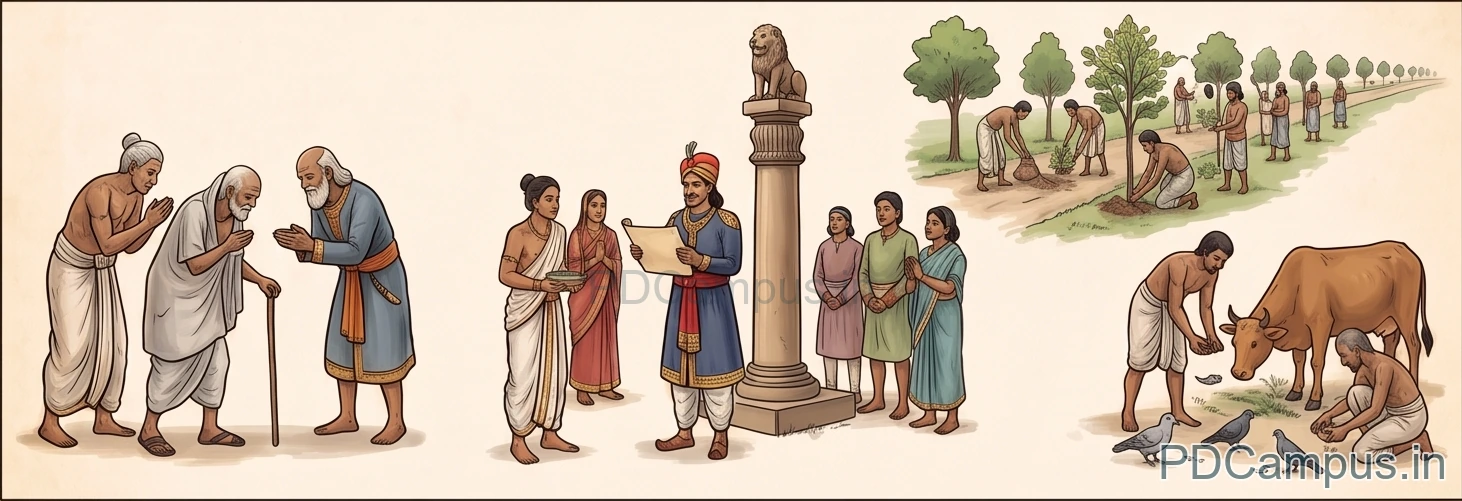
Dhamma - a wheel of everyday behaviourधम्म: रोजमर्रा के व्यवहार का चक्र
Dhamma is not a new religion and not the same as the Buddha's full Eightfold Path. It is Ashoka's broad moral policy for a diverse empire. His Buddhist identity appears elsewhere, but the public Dhamma vocabulary was designed to be shared by householders, ascetics and different communities.धम्म नया धर्म नहीं था और न ही बुद्ध के पूरे अष्टांगिक मार्ग का दूसरा नाम। यह विविध समुदायों वाले साम्राज्य के लिए अशोक की व्यापक नैतिक नीति थी। उसकी बौद्ध पहचान अन्यत्र दिखती है, लेकिन सार्वजनिक धम्म की भाषा गृहस्थों, संन्यासियों और अलग समुदायों द्वारा साझा किए जाने के लिए थी।
- Parents and elders: respect and obedience.माता-पिता और बड़े: सम्मान तथा आज्ञापालन।
- Religious communities: listen to and respect others.धार्मिक समुदाय: दूसरों को सुनना और सम्मान देना।
- Servants and workers: fair and humane conduct.सेवक और कामगार: न्यायपूर्ण तथा मानवीय व्यवहार।
- Living beings: reduce killing and cruelty.जीव: हत्या और क्रूरता कम करना।
- Self-control: truthfulness, purity and moderation.आत्मसंयम: सत्य, पवित्रता और मर्यादा।
- Giving and welfare: generosity and care. These are the source diagram’s six learning groups, not a claim that Ashoka proclaimed a fixed sixfold religious path.दान और कल्याण: उदारता तथा देखभाल। ये मूल चित्र के छह अध्ययन-समूह हैं, अशोक द्वारा घोषित कोई निश्चित छह-अंगी धार्मिक मार्ग नहीं।
Public messages and daily conductसार्वजनिक संदेश और दैनिक आचरण
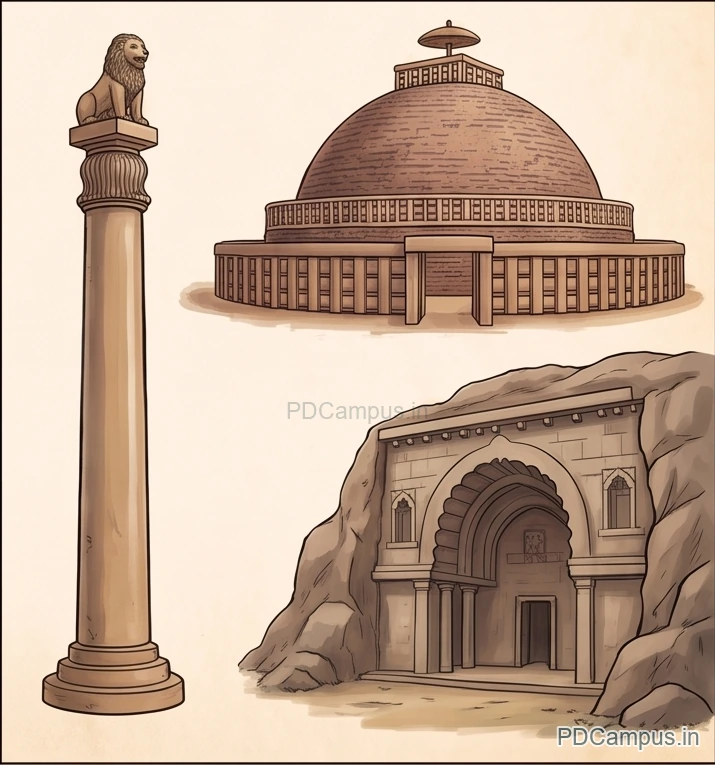
Mauryan art and architecture - stone turns into state languageमौर्य कला और वास्तुकला: पत्थर बना राज्य का माध्यम
Pillarsस्तंभ
Monolithic sandstone shafts, finely polished and topped by animal capitals. Famous capitals include Sarnath lions, Rampurva bull and lion, and Sankisa elephant.एक ही पत्थर से बने बलुआ-पत्थर के स्तंभदंड, बारीक पालिश और ऊपर पशु-शीर्ष। प्रसिद्ध उदाहरणों में सारनाथ के सिंह, रामपुरवा के वृषभ और सिंह तथा संकिसा का हाथी शामिल हैं।
A pillar shaft is a single, gently tapering stone column; an inscription may be cut on it. A capital is the sculpted top. The Sarnath capital has four back-to-back lions above an abacus with animals and wheels, supported by an inverted lotus or bell form. Its Chunar sandstone is a specific material identification; not every pillar has the same capital.स्तंभदंड एक पत्थर का बना, ऊपर की ओर धीरे-धीरे पतला होता स्तंभ है; उस पर अभिलेख अंकित हो सकता है। उसका मूर्तिकला वाला ऊपरी भाग शीर्ष कहलाता है। सारनाथ के शीर्ष में पशुओं और चक्रों वाली चौकी के ऊपर पीठ से पीठ लगाए चार सिंह हैं; नीचे उलटे कमल या घंटाकार भाग का सहारा है। उसका चुनार का बलुआ-पत्थर एक विशिष्ट सामग्री-पहचान है; हर स्तंभ का शीर्ष एक जैसा नहीं।
Stupasस्तूप
Ashoka is traditionally linked with many stupas. At Sanchi, an Ashokan brick core and pillar came first; the large stone casing and decorated gateways belong mainly to later periods.परंपरा अशोक को अनेक स्तूपों से जोड़ती है। साँची में अशोककालीन ईंटों का मूल स्तूप और स्तंभ पहले बने; बड़ा पत्थर का आवरण तथा सजे हुए तोरण मुख्यतः बाद के काल के हैं।
Barabar cavesबराबर की गुफाएँ
Rock-cut caves such as Sudama at Barabar have highly polished interiors and curved chambers. Ashoka’s inscriptions record donations at Barabar to Ajivikas; Dasharatha’s donations belong to the nearby Nagarjuni group. Their echoing rock-cut interiors are an engineering landmark. Do not assign every cave or decorated entrance to the same donor.बराबर की सुदामा जैसी चट्टान काटकर बनी गुफाओं में अत्यधिक पालिश वाले भीतर के भाग और घुमावदार कक्ष हैं। अशोक के अभिलेख बराबर में आजीवकों को दान दर्ज करते हैं; दशरथ के दान पास के नागार्जुनी समूह में हैं। गूँज पैदा करने वाले ये शैल-कक्ष अभियांत्रिकी की महत्वपूर्ण उपलब्धि हैं। हर गुफा या सजावटी प्रवेश-द्वार को एक ही दाता से न जोड़ें।
Pataliputraपाटलिपुत्र
Kumrahar preserves traces of a great pillared hall; Bulandibagh revealed timber palisade remains. Wood remained important even while stone acquired imperial prestige.कुम्हरार में बड़े स्तंभयुक्त सभागार के अवशेष हैं; बुलंदीबाग में लकड़ी की घेराबंदी के अवशेष मिले। पत्थर की राजकीय प्रतिष्ठा बढ़ने के बाद भी लकड़ी महत्वपूर्ण रही।
Different uses of dressed stoneतराशे हुए पत्थर के अलग उपयोग
National-symbol connection: India adopted the Sarnath Lion Capital as the State Emblem on 26 January 1950. The visible emblem shows three lions; the fourth is behind. The abacus wheel inspired the 24-spoke Ashoka Chakra on the national flag. Satyameva Jayate below the emblem comes from the Mundaka Upanishad, not from Ashoka's edicts.राष्ट्रीय प्रतीकों से संबंध: भारत ने 26 जनवरी 1950 को सारनाथ सिंहशीर्ष पर आधारित राजचिह्न अपनाया। सामने तीन सिंह दिखते हैं, चौथा पीछे है। सिंहशीर्ष की चौकी के चक्र से राष्ट्रीय ध्वज के 24 तीलियों वाले अशोक चक्र का रूप लिया गया। राजचिह्न के नीचे सत्यमेव जयते मुण्डक उपनिषद से है, अशोक के अभिलेखों से नहीं।
Why did the empire break apart?साम्राज्य क्यों बिखरा?
No single-cause story is proven. Weak successors, distance, regional autonomy, financial pressure and frontier change probably interacted. It is too simple to say "Ashoka became non-violent, so the empire fell". A single Brahmanical reaction theory is also not enough to explain a large, uneven process.एकमात्र कारण वाला विवरण सिद्ध नहीं है। कमजोर उत्तराधिकारी, दूरी, क्षेत्रीय स्वायत्तता, आर्थिक दबाव और सीमांत बदलाव शायद साथ काम कर रहे थे। केवल यह कहना पर्याप्त नहीं कि अशोक अहिंसक हुआ इसलिए साम्राज्य गिर गया। केवल ब्राह्मणीय प्रतिक्रिया का सिद्धांत भी इतने बड़े और असमान बदलाव को नहीं समझाता।
The original break-up diagram names short or disputed reigns, slow communication over great distances, growing provincial or local power, possible fiscal strain from army and administration, and north-western losses. The last event in its sequence is Pushyamitra’s coup against Brihadratha around 185 BCE. Separate a later literary account of that coup from historians’ debated explanations of the longer decline.मूल विघटन-चित्र में छोटे या विवादित शासनकाल, लंबी दूरियों पर धीमा संचार, बढ़ती प्रांतीय या स्थानीय शक्ति, सेना और प्रशासन से संभावित वित्तीय दबाव तथा उत्तर-पश्चिमी हानियाँ हैं। उसके क्रम की अंतिम घटना लगभग 185 ईसा-पूर्व में बृहद्रथ के विरुद्ध पुष्यमित्र का सत्ता-पलट है। इस घटना की बाद की साहित्यिक कथा को लंबे पतन की विवादित ऐतिहासिक व्याख्याओं से अलग रखें।
5. Rapid Revision Data - The Whole Empire in One View5. त्वरित पुनरावृत्ति: पूरा साम्राज्य एक नजर में
Say the story aloud: Chandragupta built the imperial frame; Bindusara maintained it, although his precise conquests are uncertain; Ashoka made Kalinga’s suffering central to his public Dhamma policy; and later rulers could not hold the enormous, varied empire together.कहानी दोहराएँ: चंद्रगुप्त ने साम्राज्य का ढाँचा बनाया; बिंदुसार ने उसे बनाए रखा, हालाँकि उसकी विजयों का सटीक विवरण प्रमाणित नहीं है; अशोक ने कलिंग की पीड़ा को अपनी सार्वजनिक धम्म-नीति का केंद्र बनाया; बाद के शासक विशाल और विविध साम्राज्य को साथ नहीं रख सके।
Rulersशासक
- Chandragupta: founderचंद्रगुप्त: संस्थापक
- Bindusara: Amitrochatesबिंदुसार: अमित्रोकेटीज
- Ashoka: Piyadasiअशोक: पियदसि
- Brihadratha: last Mauryaबृहद्रथ: अंतिम मौर्य
Capitalsराजधानी और प्रांतीय केंद्र
- Centre: Pataliputraकेंद्र: पाटलिपुत्र
- NW: Taxilaउत्तर-पश्चिम: तक्षशिला
- West: Ujjainपश्चिम: उज्जैन
- East: Tosaliपूर्व: तोसली
- South: Suvarnagiriदक्षिण: सुवर्णगिरि
State limbsराज्य के अंग
- Swamin + amatyaस्वामी और अमात्य
- Janapada + durgaजनपद और दुर्ग
- Kosha + dandaकोष और दंड
- Mitraमित्र
Edict scriptsअभिलेखों की भाषाएँ और लिपियाँ
- Brahmi: script used in most regionsब्राह्मी: अधिकांश क्षेत्रों में प्रयुक्त लिपि
- Kharosthi: script used in the north-westखरोष्ठी: उत्तर-पश्चिम में प्रयुक्त लिपि
- Greek and Aramaic: languages and writing traditions in Afghanistanयूनानी और अरामाइक: अफगान क्षेत्र की भाषाएँ तथा लेखन-परंपराएँ
- Prakrit: language forms used in most edicts; language is not the same as scriptप्राकृत: अधिकांश अभिलेखों की भाषाओं के रूप; भाषा और लिपि अलग बातें हैं
| If you see...यह संकेत मिले तो… | Connect it to...इससे जोड़ें… | Do not confuse it with...इससे भ्रमित न हों… |
|---|---|---|
| Chanakya / Kautilyaचाणक्य / कौटिल्य | Chandragupta tradition; Arthashastra.चंद्रगुप्त की परंपरा; अर्थशास्त्र। | Surviving text is layered, not a daily court file.उपलब्ध ग्रंथ कई परतों में विकसित हुआ, दैनिक दरबारी फाइल नहीं। |
| Megasthenes / Indicaमेगस्थनीज / इंडिका | Greek envoy at Chandragupta's court.चंद्रगुप्त के दरबार में यूनानी राजदूत। | Indica survives only in later quotations.इंडिका केवल बाद के उद्धरणों में बची है। |
| Seleucus Iसेल्यूकस प्रथम | Settlement with Chandragupta; territories and 500 elephants.चंद्रगुप्त से समझौता; क्षेत्र और 500 हाथी। | Alexander had died before the Mauryan-Seleucid war.मौर्य–सेल्यूकस युद्ध से पहले सिकंदर की मृत्यु हो चुकी थी। |
| Amitrochatesअमित्रोकेटीज | Greek rendering associated with Bindusara.बिंदुसार से जुड़ा यूनानी रूप। | Piyadasi is Ashoka's inscriptional title.पियदसि अशोक की अभिलेखीय उपाधि है। |
| Devanampiya Piyadasiदेवानंपिय पियदसि | Ashoka in most edicts.अधिकांश अभिलेखों में अशोक। | "Ashoka" appears only in a smaller set of inscriptions.अशोक नाम थोड़े अभिलेखों में मिलता है। |
| Rock Edict XIIIप्रमुख शिलालेख XIII | Kalinga war, suffering, remorse, Dhamma-vijaya.कलिंग युद्ध, पीड़ा, पश्चात्ताप, धम्म-विजय। | Separate Kalinga Edicts focus on administration.पृथक कलिंग शिलालेखों का मुख्य विषय प्रशासन है। |
| Rock Edict XIIप्रमुख शिलालेख XII | Religious restraint, listening and respect.धार्मिक संयम, सुनना और सम्मान। | Not forced conversion to Buddhism.जबरन बौद्ध धर्म अपनाना नहीं। |
| Rock Edict Vप्रमुख शिलालेख V | Dhamma-mahamatras.धम्म-महामात्र। | Not ordinary military commanders.सामान्य सैनिक सेनानायक नहीं। |
| Rummindeiरुम्मिनदेई | Lumbini visit and tax concession.लुंबिनी यात्रा और कर-रियायत। | Bhabru recommends Buddhist texts.भाब्रू बौद्ध ग्रंथों की अनुशंसा करता है। |
| Maskiमास्की | Minor Rock Edict naming Ashoka.अशोक नाम वाला लघु शिलालेख। | Shahbazgarhi is famous for Kharosthi Major Rock Edicts.शाहबाजगढ़ी खरोष्ठी के प्रमुख शिलालेखों के लिए प्रसिद्ध है। |
| Barabarबराबर | Polished caves donated to Ajivikas.आजीवकों को दान की गई पालिशदार गुफाएँ। | Sanchi is a Buddhist stupa complex.साँची बौद्ध स्तूप-समूह है। |
| Sarnath Lion Capitalसारनाथ सिंहशीर्ष | India's State Emblem; wheel link to flag.भारत का राजचिह्न; चक्र का ध्वज से संबंध। | Satyameva Jayate is from Mundaka Upanishad.सत्यमेव जयते मुण्डक उपनिषद से है। |
| Samaharta / Sannidhataसमाहर्ता / सन्निधाता | Revenue collector / treasurer.राजस्व संग्राहक / कोषाध्यक्ष। | Rajuka is a district/rural officer in Ashokan use.अशोक के प्रयोग में राजुक ग्रामीण या जिला अधिकारी है। |
| Bhaga / shulkaभाग / शुल्क | Produce share / customs or toll.उपज का हिस्सा / चुंगी या मार्ग-कर। | Rates were not necessarily uniform everywhere.दरें हर जगह समान होना आवश्यक नहीं। |
| Saptangaसप्तांग | Seven limbs of the state.राज्य के सात अंग। | Caturanga means four arms of the army.चतुरंग सेना के चार अंग हैं। |
| Pushyagupta / Sudarshanaपुष्यगुप्त / सुदर्शन | Mauryan governor and lake in later Junagadh record.बाद के जूनागढ़ लेख में मौर्य राज्यपाल और झील। | Pushyamitra ended Mauryan rule much later.पुष्यमित्र ने बहुत बाद में मौर्य शासन समाप्त किया। |
Rulers: a sequence to rememberशासक: क्रम याद रखें
Build the empire; maintain it; address its people.साम्राज्य बनाना, बनाए रखना और प्रजा को संदेश देना।
Chandragupta created the imperial frame; Bindusara maintained it; Ashoka addressed the empire through inscriptions. This memory aid is not evidence for undocumented conquests.चंद्रगुप्त ने साम्राज्य का ढाँचा बनाया, बिंदुसार ने उसे बनाए रखा और अशोक ने अभिलेखों से प्रजा को संदेश दिया। यह स्मृति-सहायक है, अप्रमाणित विजयों का प्रमाण नहीं।
State revenue: collection and custodyराजस्व: संग्रह और संरक्षण
Revenue is collected and then kept in the treasury.राजस्व इकट्ठा करके कोष में रखा जाता है।
Samaharta collects; Sannidhata keeps.समाहर्ता संग्रह करता है; सन्निधाता सुरक्षित रखता है।
Scripts: remember the regionsलिपियाँ: क्षेत्र याद रखें
Match each writing system to its principal region.प्रत्येक लेखन-पद्धति को उसके प्रमुख क्षेत्र से जोड़ें।
Brahmi most; Kharosthi north-west; Greek-Aramaic Afghanistan.अधिकांश क्षेत्रों में ब्राह्मी; उत्तर-पश्चिम में खरोष्ठी; अफगान क्षेत्र में यूनानी और अरामाइक।
Final accuracy strip: Mauryan dates are approximate; the empire was not equally centralised everywhere; the Arthashastra is layered; Indica survives in fragments; Bindusara's Deccan conquests are not fully documented; Ashoka's Dhamma was broader than Buddhist doctrine; Kalinga remorse did not abolish state force; edict wording varies by site; Sanchi's great stone additions are later than Ashoka; and decline had several causes, not one.अंतिम सटीकता-सूत्र: मौर्य तिथियाँ अनुमानित हैं; साम्राज्य हर जगह समान रूप से केंद्रीकृत नहीं था; अर्थशास्त्र कई परतों का ग्रंथ है; इंडिका अंशों में बची है; बिंदुसार की दक्कन-विजयें पूरी तरह प्रमाणित नहीं हैं; अशोक का धम्म बौद्ध सिद्धांतों से व्यापक था; कलिंग का पश्चात्ताप राज्य की दंड-शक्ति का अंत नहीं था; अभिलेखों के पाठ स्थल के अनुसार बदलते हैं; साँची के बड़े पाषाण-विस्तार अशोक के बाद के हैं; पतन के कई कारण थे।
The Mauryan achievement was not only a large map. It was a new scale of administration, exchange and public communication across a diverse subcontinent.मौर्य उपलब्धि केवल बड़ा नक्शा नहीं थी। वह विविध उपमहाद्वीप में प्रशासन, विनिमय और सार्वजनिक संचार का नया विस्तार थी।