Post-Mauryan India and Foreign Contactsमौर्योत्तर भारत और बाहरी संपर्क
General Knowledge · Visual study guide with full explanationsसामान्य ज्ञान · चित्रों और पूरे विवरण के साथ अध्ययन मार्गदर्शिका
Regional kingdoms, moving peoples and the trade roads that connected India with the wider worldक्षेत्रीय राज्य, लोगों का आवागमन और भारत को व्यापक संसार से जोड़ने वाले व्यापारिक मार्ग
1. The Big Picture - The Empire Ended, the Connections Did Not1. व्यापक तस्वीर: साम्राज्य का अंत हुआ, संपर्क बने रहे
When Mauryan rule ended around 185 BCE, political power became more regional. Shunga, Kanva and Satavahana rulers, new northwestern ruling houses, merchant towns and religious centres formed an overlapping political landscape. Roads and sea lanes continued to connect regions, although security and prosperity varied by place and time.लगभग 185 ईसा-पूर्व में मौर्य शासन समाप्त होने पर राजनीतिक शक्ति अधिक क्षेत्रीय हो गई। शुंग, कण्व और सातवाहन शासक, उत्तर-पश्चिम के नए राजवंश, व्यापारी नगर और धार्मिक केंद्र एक-दूसरे से जुड़े राजनीतिक संसार का हिस्सा थे। स्थल और समुद्री मार्ग क्षेत्रों को जोड़ते रहे, हालाँकि सुरक्षा और समृद्धि स्थान तथा समय के अनुसार बदलती थी।
Regionalisationक्षेत्रीयकरण
Regionalisation means political power becomes organised around several regions instead of one subcontinental empire. It does not mean isolation: rulers, merchants, monks and artists kept crossing boundaries.क्षेत्रीयकरण का अर्थ है कि राजनीतिक शक्ति एक उपमहाद्वीपीय साम्राज्य के बजाय कई क्षेत्रों के आसपास संगठित हो। इसका अर्थ अलग-थलग पड़ना नहीं है: शासक, व्यापारी, भिक्षु और कलाकार सीमाएँ पार करते रहे।
Foreign-origin rulersबाहर से आए शासक समूह
Indo-Greeks, Shakas, Pahlavas and Kushanas entered from the north-west. They did not remain outside spectators. They ruled Indian communities, used Indian titles and scripts, donated to local religions and became part of Indian history.हिंद-यूनानी, शक, पहलव और कुषाण उत्तर-पश्चिम से आए। वे बाहर खड़े दर्शक नहीं बने रहे। उन्होंने भारतीय समुदायों पर शासन किया, भारतीय उपाधियों और लिपियों का उपयोग किया, स्थानीय धर्मों को दान दिया और भारतीय इतिहास का हिस्सा बने।
Cultural exchangeसांस्कृतिक आदान-प्रदान
Exchange is a two-way process. A Greek-style portrait could appear beside Kharosthi writing; an Iranian deity could share a Kushan coin series with Shiva or Buddha; Indian Buddhism could travel towards Central Asia and China.आदान-प्रदान दोनों दिशाओं में होता है। यूनानी शैली के चित्र के साथ खरोष्ठी लेख मिल सकता था; कुषाण सिक्कों की श्रृंखला में ईरानी देवताओं के साथ शिव या बुद्ध दिख सकते थे; भारतीय बौद्ध धर्म मध्य एशिया और चीन की ओर फैल सकता था।
Evidence desk - this period is often rebuilt from small piecesस्रोतों की पड़ताल: छोटे प्रमाणों से इस काल की तस्वीर बनती है
Numismaticsमुद्राशास्त्र
The study of coins. Coins are especially important because some north-western kings are known mainly through their changing coin sequences.सिक्कों का अध्ययन मुद्राशास्त्र कहलाता है। सिक्के विशेष रूप से महत्वपूर्ण हैं, क्योंकि उत्तर-पश्चिम के कुछ राजाओं की जानकारी मुख्यतः उनके सिक्कों के बदलते क्रम से मिलती है।
Epigraphyअभिलेखविद्या
Epigraphy studies inscriptions: writing cut, engraved or otherwise placed on durable objects. A named or dated inscription can connect a ruler, place, donor, language and religious institution. Its date may depend on identifying an era, and royal praise must be compared with other evidence.अभिलेखविद्या टिकाऊ वस्तुओं पर काटकर, उकेरकर या अन्य तरीके से लिखे लेखों का अध्ययन है। नाम या तिथि वाला अभिलेख शासक, स्थान, दाता, भाषा और धार्मिक संस्था के बीच संबंध बता सकता है। तारीख समझने के लिए संवत की पहचान जरूरी हो सकती है, और राजकीय प्रशंसा की तुलना दूसरे प्रमाणों से करनी चाहिए।
Kshatrapaक्षत्रप
A satrap or provincial ruler, an Iranian-derived title used by Shaka houses. A Mahakshatrapa was a great satrap.क्षत्रप प्रांतीय शासक की ईरानी मूल की उपाधि थी, जिसे शक राजवंशों ने अपनाया। महाक्षत्रप का अर्थ महान क्षत्रप था।
Yavanaयवन
Originally linked with Ionians or Greeks. In Indian sources it could refer to Greeks and sometimes more broadly to western foreigners.यह शब्द मूलतः आयोनियाई लोगों या यूनानियों से जुड़ा था। भारतीय स्रोतों में यह यूनानियों और कभी व्यापक अर्थ में पश्चिम से आए लोगों के लिए प्रयुक्त हुआ।
Coins, inscriptions and objectsसिक्के, अभिलेख और वस्तुएँ
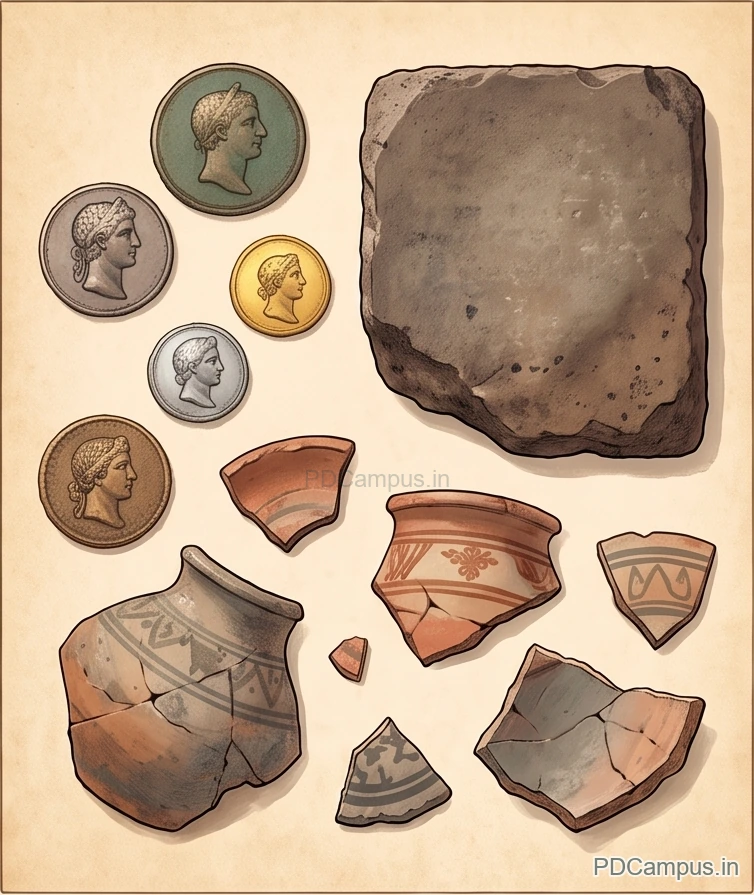
A dynasty is a ruling family or line. An era counts years from an agreed starting point; it is not the same as a king’s reign. An inscription records a claim or act, while archaeology studies material remains in context. Compare coins, inscriptions, literary works and excavated places. Puranas contain religious and dynastic traditions; the Periplus is a first-century CE trading account; Chinese histories help reconstruct Central Asian movements. These sources answer different questions.राजवंश शासकों का परिवार या क्रम है। संवत किसी निश्चित आरंभ से वर्ष गिनता है; वह राजा के शासनकाल के समान नहीं है। अभिलेख कोई दावा या कार्य दर्ज करता है, जबकि पुरातत्त्व अवशेषों को उनके संदर्भ में पढ़ता है। सिक्कों, अभिलेखों, ग्रंथों और उत्खनित स्थलों की तुलना करें। पुराणों में धार्मिक और राजवंशीय परंपराएँ हैं; पेरिप्लस पहली शताब्दी ईस्वी का व्यापार-विवरण है; चीनी इतिहास मध्य एशिया की गतिविधियाँ समझने में सहायक हैं। ये स्रोत अलग प्रश्नों के उत्तर देते हैं।
The label “dark age” hides the evidence. Political geography was complicated, yet coins, towns, religious institutions, sculpture and long-distance exchange give us a rich history. This does not imply uninterrupted growth or equal prosperity in every region.इस काल को ‘अंधकार युग’ कहना उपलब्ध प्रमाणों को छिपा देता है। राजनीतिक भूगोल जटिल था, फिर भी सिक्के, नगर, धार्मिक संस्थाएँ, मूर्तिकला और दूरस्थ व्यापार समृद्ध ऐतिहासिक जानकारी देते हैं। इसका अर्थ हर क्षेत्र में लगातार वृद्धि या समान समृद्धि नहीं है।
2. Learn from Zero - Parallel Dynasties, Not One Straight Line2. शुरुआत से समझें: राजवंश साथ-साथ भी थे
These rulers did not wait politely for one another to finish. Several dynasties overlapped in different regions. Read the chronology in lanes: Gangetic-central India, north-west and Deccan.इन राजवंशों का शासन हमेशा एक के समाप्त होने के बाद दूसरे का आरंभ होने जैसा नहीं था। अलग क्षेत्रों में कई राजवंश एक ही समय सक्रिय थे। कालक्रम को गंगा-मध्य भारत, उत्तर-पश्चिम और दक्कन की अलग धाराओं में पढ़ें।
Date honesty: Exact beginnings, endings and overlaps differ among Puranic lists, inscriptions and coin sequences. The rail shows useful historical ranges, not a perfectly settled calendar.तिथियों की सावधानी: पुराणों की सूचियों, अभिलेखों और सिक्कों के क्रम से मिलने वाली शुरुआत, अंत और समकालीनता की तारीखें अलग हो सकती हैं। कालरेखा उपयोगी व्यापक अवधि दिखाती है, पूरी तरह निर्विवाद कैलेंडर नहीं।
| Powerशक्ति | Broad teaching rangeअध्ययन के लिए व्यापक अवधि | How to use itइसे कैसे पढ़ें |
|---|---|---|
| Shungasशुंग | c.185–73 BCEलगभग 185–73 ईसा-पूर्व | Conventional range from reconstructed dynastic chronologyपुनर्निर्मित राजवंशीय कालक्रम की प्रचलित सीमा |
| Kanvasकण्व | c.73–28 BCEलगभग 73–28 ईसा-पूर्व | Traditional short line; authority and end debatedपरंपरा की छोटी वंश-श्रृंखला; अधिकार और अंत पर मतभेद |
| Indo-Greeksहिंद-यूनानी | Mainly 2nd–1st centuries BCEमुख्यतः दूसरी–पहली शताब्दी ईसा-पूर्व | Many overlapping rulers and local sequencesकई समकालीन शासक और स्थानीय क्रम |
| Shakas and Pahlavasशक और पहलव | Prominent from late centuries BCE into early CE centuriesईसा-पूर्व की अंतिम सदियों से शुरुआती ईस्वी सदियों में प्रमुख | Western Kshatrapas continued beyond the initial northwestern phaseपश्चिमी क्षत्रप शुरुआती उत्तर-पश्चिमी चरण से आगे भी रहे |
| Kushanasकुषाण | Main imperial phase c.1st–3rd centuries CEमुख्य साम्राज्यकाल लगभग पहली–तीसरी शताब्दी ईस्वी | Later Kushan-related powers also existedबाद में कुषाण-संबंधी शक्तियाँ भी रहीं |
| Satavahanasसातवाहन | Often broadly c.1st century BCE–early 3rd century CEअक्सर मोटे तौर पर पहली शताब्दी ईसा-पूर्व–आरंभिक तीसरी शताब्दी ईस्वी | Earlier beginnings and individual reign dates remain debatedइससे पहले की शुरुआत और व्यक्तिगत शासनकाल पर बहस है |
Regions, routes and changing political powerप्रदेश, मार्ग और बदलती राजनीतिक शक्ति
Bactria lay north of the Hindu Kush, largely across northern Afghanistan and neighbouring areas. Routes through the Kabul region reached Taxila and other South Asian networks. Gandhara, Vidisha, Mathura, western satrap territories and Paithan belong to different political zones. Use modern place names to locate them, not to project today’s national borders backwards. The lesson’s c.200 BCE–300 CE window is a broad frame, not the life span of every kingdom.बैक्ट्रिया हिंदूकुश के उत्तर में, मुख्यतः उत्तरी अफगानिस्तान और आसपास के क्षेत्रों में था। काबुल क्षेत्र से रास्ते तक्षशिला और दक्षिण एशिया के अन्य मार्गों तक पहुँचते थे। गांधार, विदिशा, मथुरा, पश्चिमी क्षत्रपों के क्षेत्र और पैठण अलग राजनीतिक क्षेत्रों में थे। आज के नाम स्थान पहचानने में मदद करते हैं; आज की राष्ट्रीय सीमाएँ अतीत पर न थोपें। पाठ की लगभग 200 ईसा-पूर्व–300 ईस्वी सीमा व्यापक रूपरेखा है, हर राज्य की पूरी आयु नहीं।
Shungas and Kanvas - power after the Mauryasशुंग और कण्व: मौर्यों के बाद की सत्ता
Shunga dynastyशुंग राजवंश
- According to historical tradition, Mauryan general Pushyamitra killed Brihadratha and founded the Shunga dynasty around 185 BCE.ऐतिहासिक परंपरा के अनुसार मौर्य सेनापति पुष्यमित्र ने बृहद्रथ की हत्या करके लगभग 185 ईसा-पूर्व में शुंग राजवंश स्थापित किया।
- The core lay in the middle Ganga region and central India; Pataliputra and Vidisha were important.मुख्य क्षेत्र मध्य गंगा घाटी और मध्य भारत में था; पाटलिपुत्र तथा विदिशा महत्वपूर्ण थे।
- Pushyamitra is associated with Ashvamedha, the royal horse sacrifice. Patanjali’s grammatical commentary Mahabhashya and Kalidasa’s much later play Malavikagnimitram offer different kinds of literary evidence; neither should be treated as a complete court chronicle.पुष्यमित्र का संबंध अश्वमेध, यानी राजकीय अश्व-यज्ञ, से जोड़ा जाता है। पतंजलि का व्याकरण-संबंधी महाभाष्य और बहुत बाद में लिखा कालिदास का नाटक मालविकाग्निमित्रम् अलग तरह के साहित्यिक प्रमाण देते हैं; दोनों में से कोई पूरा दरबारी इतिहास नहीं है।
- Indo-Greek pressure reached places such as Saketa and Madhyamika in literary references.साहित्यिक उल्लेखों में हिंद-यूनानी दबाव साकेत और माध्यमिका जैसे स्थानों तक पहुँचता दिखाई देता है।
- Bharhut and the enlargement of Sanchi show continued Buddhist artistic activity in the Shunga period. This argues against universal destruction, but does not by itself disprove every later persecution story or prove that a Shunga king funded every monument.भरहुत और साँची का विस्तार दिखाते हैं कि शुंग काल में बौद्ध कलात्मक गतिविधियाँ जारी थीं। यह सर्वत्र विनाश के दावे के विरुद्ध प्रमाण है, लेकिन इससे हर बाद की उत्पीड़न-कथा गलत या हर स्मारक शुंग राजा के खर्च पर बना हुआ सिद्ध नहीं होता।
Kanva dynastyकण्व राजवंश
- Vasudeva Kanva replaced the last Shunga, Devabhuti, around 73 BCE according to Puranic tradition.पौराणिक परंपरा के अनुसार वासुदेव कण्व ने लगभग 73 ईसा-पूर्व में अंतिम शुंग देवभूति का स्थान लिया।
- Four rulers are usually listed: Vasudeva, Bhumimitra, Narayana and Susarman.सामान्यतः चार शासक गिनाए जाते हैं: वासुदेव, भूमिमित्र, नारायण और सुशर्मन।
- Their effective authority was probably narrow and centred in parts of the middle Ganga valley.उनका वास्तविक अधिकार संभवतः सीमित था और मध्य गंगा घाटी के कुछ भागों में केंद्रित था।
- Puranic accounts say an Andhra or Satavahana power ended the line around 28 BCE, but the actor and exact date are debated.पौराणिक वृत्तांतों के अनुसार लगभग 28 ईसा-पूर्व में किसी आंध्र या सातवाहन शक्ति ने इस वंश का अंत किया; लेकिन संबंधित शासक और सटीक तारीख पर मतभेद हैं।
- Shunga, Kanva, Satavahana and north-western houses overlapped; one did not simply rule all India after another.शुंग, कण्व, सातवाहन और उत्तर-पश्चिमी राजवंश समकालीन भी थे; वे बारी-बारी से पूरे भारत पर शासन करने वाली एक सीधी श्रृंखला नहीं थे।
Indo-Greeks - rulers whose coins help write their historyहिंद-यूनानी: जिनका इतिहास लिखने में सिक्के मदद करते हैं
Demetriusडेमेट्रियस
A Greco-Bactrian ruler associated with expansion across the Hindu Kush into the north-west in the early second century BCE. Which conquests belong to Demetrius I or namesakes is debated.यूनानी-बैक्ट्रियाई शासक, जिसे दूसरी शताब्दी ईसा-पूर्व के आरंभ में हिंदूकुश पार करके उत्तर-पश्चिम की ओर विस्तार से जोड़ा जाता है। कौन-सी विजय डेमेट्रियस प्रथम की थी और कौन उसी नाम के दूसरे शासकों की, यह विवादित है।
Menander / Milindaमिनांडर / मिलिंद
Probably ruled in the mid-second century BCE over a large north-western realm, with Sagala usually identified near Sialkot. The Buddhist Milindapanho presents questions between King Milinda and monk Nagasena; it is a literary-philosophical dialogue, not a court transcript.संभवतः दूसरी शताब्दी ईसा-पूर्व के मध्य में एक बड़े उत्तर-पश्चिमी राज्य पर शासन किया। उसकी नगरी सागल की पहचान सामान्यतः सियालकोट के पास की जाती है। बौद्ध ग्रंथ मिलिंदपञ्हो राजा मिलिंद और भिक्षु नागसेन के प्रश्नोत्तर प्रस्तुत करता है; यह साहित्यिक-दार्शनिक संवाद है, दरबार की शब्दशः कार्यवाही नहीं।
Antialcidasएंटियाल्किडास
Heliodorus was sent by the Indo-Greek king Antialcidas to the court of Bhagabhadra. At Besnagar near Vidisha he erected a Garuda pillar in honour of Vasudeva. The inscription identifies him as a Bhagavata, a devotee of Vasudeva. The pillar was dedicated to the deity, not to Bhagabhadra; it records both diplomacy and religious affiliation.हिंद-यूनानी राजा एंटियाल्किडास ने हेलियोडोरस को भागभद्र के दरबार में भेजा था। विदिशा के पास बेसनगर में उसने वासुदेव के सम्मान में गरुड़ स्तंभ स्थापित किया। अभिलेख उसे भागवत, अर्थात वासुदेव का भक्त, बताता है। स्तंभ देवता को समर्पित था, भागभद्र को नहीं; इसमें राजनयिक संपर्क और धार्मिक आस्था दोनों दर्ज हैं।
Indo-Greek coinage is noted for named rulers, royal portraits, weight standards and bilingual legends. Many Indian issues combine Greek with Prakrit written in Kharosthi. Not every issue follows that pattern: Greek-only and Brahmi-bearing types also exist. Coins help order rulers whose full written histories are lost.हिंद-यूनानी सिक्कों की विशेषताएँ शासकों के नाम, राजकीय चेहरे, वजन के मानक और द्विभाषी लेख हैं। भारत में जारी अनेक सिक्कों पर यूनानी के साथ खरोष्ठी लिपि में प्राकृत मिलती है। हर सिक्का ऐसा नहीं है: केवल यूनानी तथा ब्राह्मी वाले प्रकार भी हैं। जिन शासकों का पूरा लिखित इतिहास नहीं बचा, उनके क्रम को समझने में सिक्के सहायक हैं।
Movement across regionsक्षेत्रों के बीच आवागमन
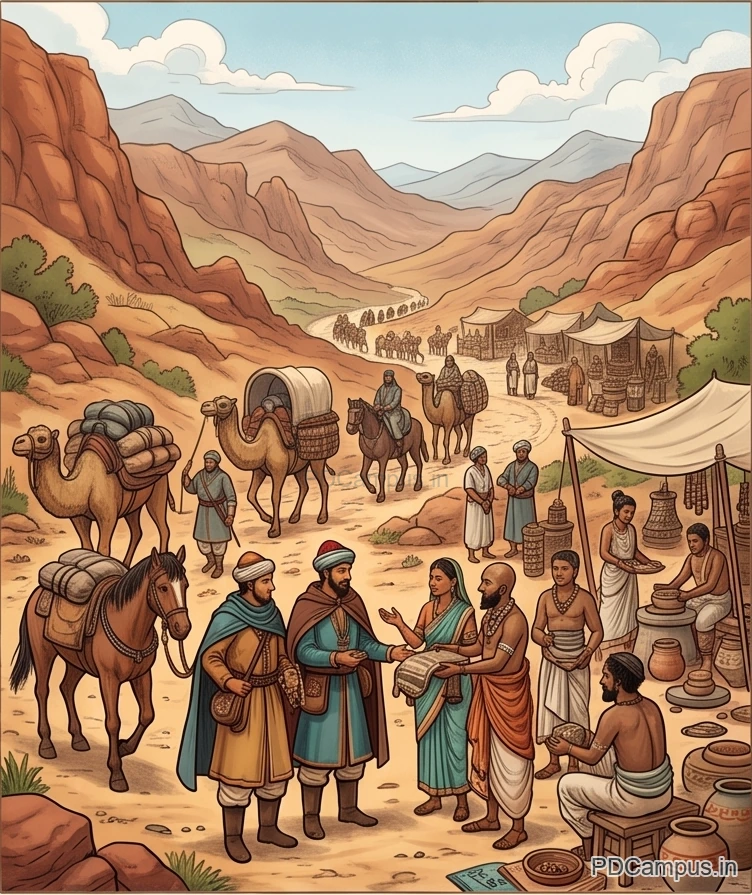
The obverse is the main face of a coin; the reverse is its other side. A legend is the writing on it, not a myth. Portraits, deities, titles, metal and weight all supply clues. Square and round forms occur. Brahmi and Kharosthi are scripts; Greek, Prakrit and Bactrian are languages. Some Agathocles issues use Brahmi, an important exception to a simple Greek–Kharosthi rule. On many portrait issues the ruler appears on the obverse and a deity or symbol on the reverse; this is a common pattern, not an absolute rule.सिक्के का मुख्य मुख अग्रभाग और दूसरा मुख पृष्ठभाग कहलाता है। सिक्के पर लिखे शब्द लेख हैं; अंग्रेजी में यहाँ legend का अर्थ कथा नहीं। चित्र, देवता, उपाधि, धातु और वजन सभी संकेत देते हैं। चौकोर और गोल दोनों रूप मिलते हैं। ब्राह्मी और खरोष्ठी लिपियाँ हैं; यूनानी, प्राकृत और बैक्ट्रियाई भाषाएँ हैं। अगाथोक्लीज के कुछ सिक्कों पर ब्राह्मी है; इसलिए यूनानी–खरोष्ठी का नियम हर सिक्के पर नहीं लगाएँ। चित्र वाले अनेक सिक्कों के अग्रभाग पर शासक और पृष्ठभाग पर देवता या प्रतीक होता है; यह सामान्य रूप है, बिना अपवाद का नियम नहीं।
Shakas and Pahlavas - satraps, inscriptions and western routesशक और पहलव: क्षत्रप, अभिलेख और पश्चिमी मार्ग
Shaka beginningsशकों की शुरुआत
Shakas were Iranian-speaking steppe groups pushed south and west by Central Asian movements. Maues and Azes are prominent north-western names. Multiple branches mean there is no single neat Shaka dynasty rail.शक ईरानी भाषाएँ बोलने वाले घासभूमि के समूह थे, जिन्हें मध्य एशिया की गतिविधियों ने दक्षिण और पश्चिम की ओर बढ़ाया। मोग या माउएस और अज़ेस उत्तर-पश्चिम के प्रमुख नाम हैं। कई शाखाएँ होने के कारण एक ही साफ-सुथरी शक वंशावली बनाना संभव नहीं है।
Indo-Parthiansहिंद-पार्थियन
Gondophares ruled parts of Afghanistan and north-western India in the first century CE. The Christian Acts of Thomas connects Saint Thomas with a King Gondophares, but the text is later; the historical meeting cannot be treated as certain.गोंडोफर्नीज ने पहली शताब्दी ईस्वी में अफगानिस्तान और उत्तर-पश्चिमी भारत के कुछ भागों पर शासन किया। ईसाई ग्रंथ थॉमस के कृत्य संत थॉमस को गोंडोफर्नीज नामक राजा से जोड़ता है, लेकिन ग्रंथ बाद का है; उनकी ऐतिहासिक मुलाकात को निश्चित नहीं माना जा सकता।
The Takht-i-Bahi inscription is a dated record naming Gondophares, whereas the Acts of Thomas is a later religious narrative. These sources do not have equal evidential weight for a particular meeting. A date written in an ancient era must be converted before comparing it with BCE/CE years.तख्त-ए-बाही अभिलेख गोंडोफर्नीज का नाम लेने वाला दिनांकित स्रोत है; थॉमस के कृत्य बाद का धार्मिक आख्यान है। किसी खास मुलाकात के लिए दोनों स्रोतों का प्रमाण-मूल्य समान नहीं है। प्राचीन संवत में लिखी तारीख को ईसा-पूर्व/ईस्वी वर्ष से तुलना से पहले बदलना पड़ता है।
Western Kshatrapasपश्चिमी क्षत्रप
Nahapana of the Kshaharata line competed with Satavahana power. Chastana founded the Kardamaka line, to which Rudradaman I belonged. Rudradaman’s Junagadh inscription, conventionally dated around 150 CE, records the repair of the Sudarshana reservoir under his authority. It is a landmark long royal record in literary Sanskrit, not the first occurrence of Sanskrit in any inscription.क्षहरात वंश के नहपान का सातवाहनों से संघर्ष हुआ। चष्टन ने कार्दमक वंश स्थापित किया, जिससे रुद्रदामन प्रथम संबंधित था। रुद्रदामन का जूनागढ़ अभिलेख, जिसकी प्रचलित तिथि लगभग 150 ईस्वी है, उसके अधिकार में सुदर्शन जलाशय की मरम्मत दर्ज करता है। यह साहित्यिक संस्कृत का महत्वपूर्ण लंबा राजकीय लेख है, किसी भी अभिलेख में संस्कृत का सर्वप्रथम प्रयोग नहीं।
Era warning: "Shaka" names a people and also an era beginning in 78 CE. The calendar era was used widely later, but it should not automatically be credited to Kanishka. Modern Kushan chronology usually places Kanishka I's year one around 127/128 CE.संवत की सावधानी: ‘शक’ एक जनसमूह का नाम भी है और 78 ईस्वी से आरंभ होने वाले संवत का भी। यह संवत बाद में व्यापक रूप से इस्तेमाल हुआ, लेकिन इसे अपने-आप कनिष्क की स्थापना न मानें। आधुनिक कुषाण कालक्रम में कनिष्क प्रथम का पहला वर्ष सामान्यतः लगभग 127/128 ईस्वी रखा जाता है।
3. Complete Knowledge and Data Bank - Kushanas and Satavahanas3. विस्तृत जानकारी: कुषाण और सातवाहन
Two large powers made exchange easier across different zones. The Kushanas joined Central Asia, Afghanistan and northern India. The Satavahanas linked Deccan interiors with western and eastern ports.दो बड़ी शक्तियों ने अलग क्षेत्रों के बीच संपर्क सुगम बनाया। कुषाणों ने मध्य एशिया, अफगानिस्तान और उत्तरी भारत को जोड़ा। सातवाहनों ने दक्कन के भीतरी भागों को पश्चिमी तथा पूर्वी बंदरगाहों से जोड़ा।
Kushana ruler rail - a Central Asian lineage becomes an Indian empireकुषाण शासकों का क्रम: मध्य एशियाई वंश से भारतीय साम्राज्य तक
- Kujula Kadphises: the early unifier, commonly placed around the middle and later 1st century CE.कुजुल कडफिसेस: आरंभिक एकीकरण करने वाला शासक; सामान्यतः पहली शताब्दी ईस्वी के मध्य और बाद के भाग में रखा जाता है।
- Vima Taktu: Kanishka’s grandfather in the Rabatak genealogy; often associated with Soter Megas (“Great Saviour”) coinage, whose attribution has been debated.विम तक्तु: रबातक वंशावली में कनिष्क का पितामह; अक्सर सोटर मेगस, यानी महान रक्षक, सिक्कों से जोड़ा जाता है, लेकिन उनके जारीकर्ता पर बहस हुई है।
- Vima Kadphises: Kanishka’s father; major gold issues and Shiva-associated coin imagery. One widely used chronology places him c.113–127 CE.विम कडफिसेस: कनिष्क का पिता; बड़ी स्वर्ण-मुद्राएँ और शिव-संबंधी अंकन। एक प्रचलित कालक्रम उसे लगभग 113–127 ईस्वी में रखता है।
- Kanishka I: year one commonly placed around 127/128 CE; extensive patronage and imperial claims.कनिष्क प्रथम: प्रथम वर्ष सामान्यतः लगभग 127/128 ईस्वी; व्यापक संरक्षण और साम्राज्य-संबंधी दावे।
- Huvishka and then Vasudeva I: later major rulers; Indian centres became increasingly prominent. This is a selected ruler sequence, not a list of every claimant.हुविष्क और फिर वासुदेव प्रथम: बाद के प्रमुख शासक; भारतीय केंद्रों का महत्व बढ़ा। यह चुने हुए शासकों का क्रम है, हर दावेदार की सूची नहीं।
Origin and geographyउत्पत्ति और भूगोल
The Kushanas were one branch of the Yuezhi confederation known from Chinese histories. They rose in Bactria, crossed the Hindu Kush and built power from Central Asia and Afghanistan into the Indus and Ganga regions. Purushapura, present Peshawar, and Mathura were major centres; Begram was an important Afghan node.चीनी इतिहासों में वर्णित यूएझी संघ की एक शाखा कुषाण थी। वे बैक्ट्रिया में उभरे, हिंदूकुश पार किया और मध्य एशिया तथा अफगानिस्तान से सिंधु और गंगा क्षेत्रों तक सत्ता बढ़ाई। पुरुषपुर, आज का पेशावर, और मथुरा प्रमुख केंद्र थे; बेग्राम अफगान क्षेत्र का महत्वपूर्ण संपर्क-केंद्र था।
Kanishka's reignकनिष्क का शासन
The Rabatak inscription records Kanishka’s year one, his ancestors and claims about northern Indian cities. A date around 127/128 CE for the start of his era is widely used in current scholarship, supported by evidence beyond this inscription. Rabatak does not itself give a date in the Common Era. The older identification with 78 CE is disputed.रबातक अभिलेख कनिष्क का पहला वर्ष, उसके पूर्वज और उत्तरी भारतीय नगरों के बारे में दावे दर्ज करता है। उसके संवत की शुरुआत लगभग 127/128 ईस्वी मानना आज के शोध में प्रचलित है; इसका आधार इस अभिलेख से बाहर के प्रमाण भी हैं। रबातक स्वयं ईस्वी संवत की तारीख नहीं देता। 78 ईस्वी से जोड़ने वाला पुराना मत विवादित है।
Religious rangeधार्मिक विविधता
Kanishka supported Buddhism, and tradition associates him with a Sarvastivada council in Kashmir. Kushan coins also show Iranian, Greek and Indian deities. This was not a one-religion state, and Mahayana was not invented in one royal meeting. Sarvastivada was an early Buddhist school; Mahayana denotes a broad range of Buddhist traditions emphasising the bodhisattva path, the resolve to seek Buddhahood for the benefit of beings.कनिष्क ने बौद्ध धर्म को संरक्षण दिया; परंपरा उसे कश्मीर में सर्वास्तिवादियों की संगीति से जोड़ती है। कुषाण सिक्कों पर ईरानी, यूनानी और भारतीय देवता भी हैं। यह केवल एक धर्म वाला राज्य नहीं था, और महायान का जन्म किसी एक राजकीय बैठक में नहीं हुआ। सर्वास्तिवाद एक आरंभिक बौद्ध मत था। महायान उन व्यापक बौद्ध परंपराओं का नाम है जो बोधिसत्त्व-मार्ग, यानी प्राणियों के हित में बुद्धत्व पाने के संकल्प, पर बल देती हैं।
| Kushan clueकुषाण संबंधी संकेत | Exact connectionसटीक संबंध | Why it mattersमहत्व | Cautionसावधानी |
|---|---|---|---|
| Rabatak inscriptionरबातक अभिलेख | Bactrian in Greek script; Kanishka's genealogy, era and claimed cities.यूनानी लिपि में बैक्ट्रियाई; कनिष्क की वंशावली, संवत और अधीनता के दावे वाले नगर। | Reordered early Kushan history.आरंभिक कुषाण इतिहास के क्रम को समझने में बदलाव आया। | Royal claim and damaged text require scholarly reconstruction.राजकीय दावा और क्षतिग्रस्त पाठ विद्वानों की व्याख्या माँगते हैं। |
| Devaputraदेवपुत्र | "Son of God," a Kushan royal title with Central Asian and imperial resonances.‘देवता का पुत्र’: मध्य एशियाई और साम्राज्यगत संदर्भों वाली कुषाण उपाधि। | Shows a new kingship vocabulary.राजसत्ता की नई शब्दावली दिखाती है। | Not the same as later European divine-right theory.यह बाद का यूरोपीय राजाओं के दैवी अधिकार का सिद्धांत नहीं है। |
| Gold coinageस्वर्ण-मुद्राएँ | Vima Kadphises and later rulers issued abundant gold coins.विम कडफिसेस और बाद के शासकों ने बड़ी संख्या में सोने के सिक्के जारी किए। | Long-distance exchange, royal payments and prestige.दूरस्थ व्यापार, राजकीय भुगतान और प्रतिष्ठा। | Gold coins alone do not prove every village used gold money.सोने के सिक्कों से हर गाँव में सोने की मुद्रा चलना सिद्ध नहीं होता। |
| Bactrian languageबैक्ट्रियाई भाषा | Iranian language written in adapted Greek script.बदली हुई यूनानी लिपि में लिखी ईरानी भाषा। | Replaced Greek on much Kushan coinage under Kanishka.कनिष्क के समय अनेक कुषाण सिक्कों पर इसने यूनानी का स्थान लिया। | Indian records also use Prakrit written in Brahmi or Kharosthi: language and script are different categories.भारतीय अभिलेखों में ब्राह्मी या खरोष्ठी में प्राकृत भी है: भाषा और लिपि अलग हैं। |
| Purushapuraपुरुषपुर | Peshawar region, royal and Buddhist centre.पेशावर क्षेत्र का राजकीय और बौद्ध केंद्र। | Gateway between Gandhara and Central Asia.गांधार और मध्य एशिया के बीच प्रवेश-द्वार। | Mathura was another major imperial centre.मथुरा भी प्रमुख साम्राज्यिक केंद्र था। |
| Ashvaghosha / Charakaअश्वघोष / चरक | Often linked by tradition to Kanishka's court.परंपरा अक्सर उन्हें कनिष्क के दरबार से जोड़ती है। | Literature and medicine flourished in the wider era.व्यापक काल में साहित्य और चिकित्सा का विकास हुआ। | These traditional court associations are unevenly supported; the surviving Charaka Samhita has a long textual history.इन दरबारी संबंधों के प्रमाण समान रूप से मजबूत नहीं हैं; उपलब्ध चरक संहिता का लंबा पाठ-इतिहास है। |
Satavahana ruler rail - Deccan power across several centuriesसातवाहन शासकों का क्रम: कई सदियों तक दक्कन की सत्ता
- Simuka: founder in traditional lists.सिमुक: पारंपरिक सूचियों का संस्थापक।
- Early Satakarnis: Satakarni I and Queen Naganika are associated with the Nanaghat inscriptional setting and royal sacrifices.आरंभिक सातकर्णि: सातकर्णि प्रथम और रानी नागनिका नाणेघाट के अभिलेखीय परिवेश तथा राजकीय यज्ञों से जुड़े हैं।
- Hala: traditional association with Gatha Saptashati.हाल: गाथा सप्तशती से पारंपरिक संबंध।
- Gautamiputra Satakarni: victory over Nahapana; often placed in the early 2nd century CE in textbook chronologies, although coin-based schemes differ.गौतमीपुत्र सातकर्णि: नहपान पर विजय; पाठ्यपुस्तकों के कालक्रम में अक्सर आरंभिक दूसरी शताब्दी ईस्वी में रखा जाता है, लेकिन सिक्कों पर आधारित कालक्रम अलग हैं।
- Vasisthiputra Pulumavi: a major successor associated with eastern reach.वासिष्ठीपुत्र पुलुमावि: पूर्वी विस्तार से जुड़ा प्रमुख उत्तराधिकारी।
- Yajna Sri Satakarni: later ruler known for ship-type coins. The sequence selects prominent rulers and leaves out intervening names.यज्ञश्री सातकर्णि: जहाज-अंकित सिक्कों के लिए प्रसिद्ध बाद का शासक। इस क्रम में प्रमुख नाम चुने गए हैं; बीच के कुछ शासक शामिल नहीं हैं।
Identity and capitalsपहचान और राजधानियाँ
Puranas call them Andhras or Andhra-Bhrityas; inscriptions use Satavahana or Satakarni names. Their main western capital was Pratishthana, modern Paithan. Their reach shifted between Maharashtra, Telangana, Andhra, Madhya Pradesh and nearby regions. Amaravati-Dhanyakataka became a major eastern centre.पुराण इन्हें आंध्र या आंध्रभृत्य कहते हैं; अभिलेखों में सातवाहन या सातकर्णि नाम मिलते हैं। पश्चिम की मुख्य राजधानी प्रतिष्ठान, आज का पैठण, थी। उनका प्रभाव महाराष्ट्र, तेलंगाना, आंध्र, मध्य प्रदेश और आसपास के क्षेत्रों में बदलता रहा। अमरावती-धान्यकटक महत्वपूर्ण पूर्वी केंद्र बना।
Gautamiputra Satakarniगौतमीपुत्र सातकर्णि
The Nasik eulogy issued by Gautami Balashri praises her son Gautamiputra Satakarni as a destroyer of Shakas, Yavanas and Pahlavas. Coins of Nahapana overstruck by Gautamiputra support a transfer of power; they do not prove that every claim in the royal praise is literal. Dates assigned to these rulers vary across chronologies.गौतमी बलश्री की नासिक प्रशस्ति अपने पुत्र गौतमीपुत्र सातकर्णि को शक, यवन और पहलवों का विनाशक बताती है। नहपान के सिक्कों पर गौतमीपुत्र का पुनरंकन सत्ता-परिवर्तन का प्रमाण है; इससे राजकीय प्रशंसा का हर दावा अक्षरशः सही सिद्ध नहीं होता। अलग कालक्रम इन शासकों की अलग तारीखें देते हैं।
Names and societyनाम और समाज
Gautamiputra and Vasisthiputra identify rulers through their mothers’ gotra names. A gotra is a lineage category in Brahmanical tradition. Such names are matronymics, names formed through the mother. They show the importance of maternal identity without proving matriarchy, a system in which women hold the main political authority, or exclusively female-line succession.गौतमीपुत्र और वासिष्ठीपुत्र नाम माताओं के गोत्र के माध्यम से शासकों की पहचान बताते हैं। गोत्र ब्राह्मणीय परंपरा की एक वंश-श्रेणी है। ऐसे नाम मातृनाम, यानी माता के माध्यम से बने नाम, हैं। इनसे मातृ-पहचान का महत्व पता चलता है; मातृसत्ता, अर्थात स्त्रियों के हाथ में मुख्य राजनीतिक अधिकार, या केवल स्त्री-वंश से उत्तराधिकार सिद्ध नहीं होता।
Satavahana administration - a regional state with local power holdersसातवाहन प्रशासन: स्थानीय शक्तियों वाला क्षेत्रीय राज्य
| Termशब्द | Meaning and limitअर्थ और सीमा |
|---|---|
| Rajanराजन् | King at the centre of royal authorityराजकीय अधिकार का केंद्र, राजा |
| Amatya / mahasenapatiअमात्य / महासेनापति | Minister / major commander; titles do not prove one uniform office everywhereमंत्री / प्रमुख सेनापति; उपाधि से हर जगह समान पद सिद्ध नहीं होता |
| Aharaआहार | Administrative district or revenue unitप्रशासनिक जिला या राजस्व इकाई |
| Maharathi / mahabhojaमहारथी / महाभोज | Powerful regional elites, sometimes linked by marriage or service to rulersप्रभावशाली क्षेत्रीय अभिजन; कभी विवाह या सेवा से शासकों से जुड़े |
| Towns and villagesनगर और गाँव | Guilds, substantial householders and local headmen supported production and local organisationश्रेणियाँ, संपन्न गृहस्थ और स्थानीय मुखिया उत्पादन तथा स्थानीय व्यवस्था में भाग लेते थे |
| Revenue and supportराजस्व और सहायता | Land income, tolls, gifts and service; practice varied by area and recordभूमि-आय, मार्ग-शुल्क, दान और सेवा; व्यवहार क्षेत्र और अभिलेख के अनुसार बदलता था |
Languageभाषा
Most royal and donor inscriptions use Prakrit in Brahmi script. This is a major contrast with Rudradaman's long Sanskrit Junagadh inscription.अधिकांश राजकीय और दान-संबंधी अभिलेख ब्राह्मी लिपि में प्राकृत का उपयोग करते हैं। यह रुद्रदामन के लंबे संस्कृत जूनागढ़ अभिलेख से महत्वपूर्ण अंतर है।
Economyअर्थव्यवस्था
Agriculture, craft towns, mines, forest products, inland markets and coastal trade. Coins used lead, copper, potin and some silver; ship designs appear on later issues.खेती, शिल्प-नगर, खदानें, वन-उत्पाद, भीतरी बाजार और तटीय व्यापार अर्थव्यवस्था के अंग थे। सिक्कों में सीसा, ताँबा, पोटिन और कुछ चाँदी प्रयुक्त हुई; बाद के सिक्कों पर जहाज भी मिलते हैं।
Potin is a copper-based alloy, commonly containing tin and lead. Alloy means a mixture of metals or a metal with other elements. A ship design suggests maritime connections, but does not reveal the size of a navy or prove who owned a particular ship.पोटिन ताँबे पर आधारित मिश्रधातु है, जिसमें सामान्यतः टिन और सीसा होते हैं। मिश्रधातु धातुओं या धातु तथा दूसरे तत्वों का मिश्रण है। जहाज का अंकन समुद्री संबंध का संकेत देता है; उससे नौसेना का आकार या किसी जहाज का मालिक सिद्ध नहीं होता।
Religionधर्म
Rulers performed Brahmanical sacrifices and supported Brahmanas, while royal women, merchants and officials also donated caves and facilities to Buddhist monks.शासकों ने ब्राह्मणीय यज्ञ किए और ब्राह्मणों को संरक्षण दिया। साथ ही राजपरिवार की स्त्रियों, व्यापारियों और अधिकारियों ने बौद्ध भिक्षुओं के लिए गुफाओं तथा सुविधाओं का दान किया।
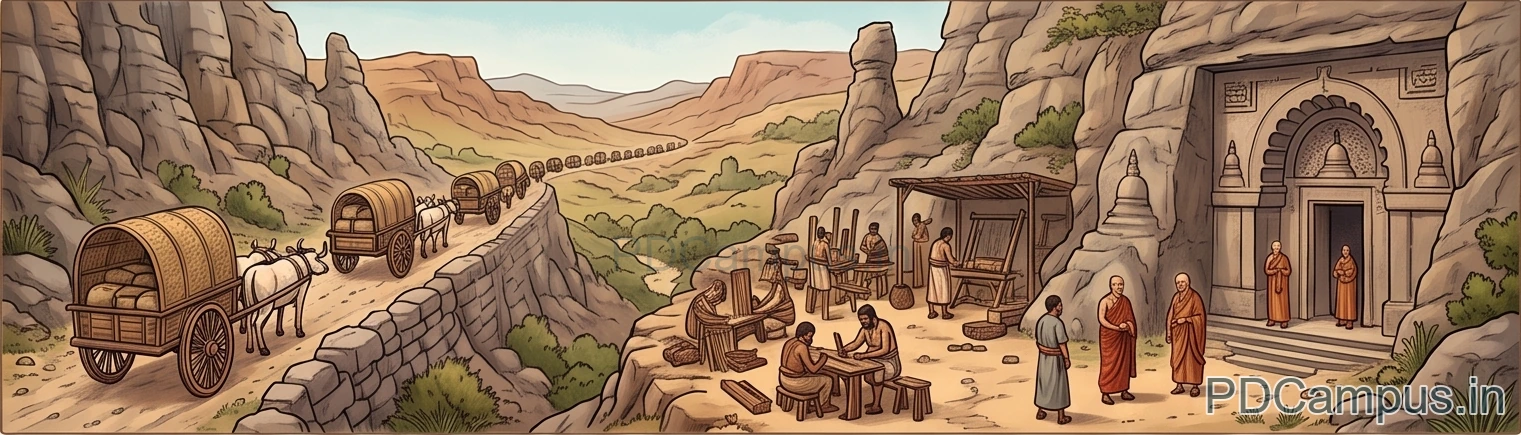
Routes through the Deccanदक्कन के मार्ग
Literatureसाहित्य
Gatha Saptashati, a Prakrit anthology of short love poems, is traditionally linked with King Hala. The surviving collection grew through transmission.गाथा सप्तशती प्राकृत की छोटी प्रेम-कविताओं का संकलन है, जिसे परंपरा राजा हाल से जोड़ती है। उपलब्ध संग्रह का विस्तार पीढ़ी-दर-पीढ़ी प्रसारण के दौरान हुआ।
| Powerशक्ति | Main zoneमुख्य क्षेत्र | Key rulersप्रमुख शासक | Strongest evidenceमुख्य प्रमाण | Enduring featureदीर्घकालीन विशेषता |
|---|---|---|---|---|
| Shungaशुंग | Middle Ganga + central Indiaमध्य गंगा और मध्य भारत | Pushyamitra, Agnimitra, Bhagabhadraपुष्यमित्र, अग्निमित्र, भागभद्र | Puranas, Mahabhashya, Ayodhya record, monumentsपुराण, महाभाष्य, अयोध्या अभिलेख, स्मारक | Bharhut-Sanchi phase; sacrifice and regional monarchyभरहुत-साँची का चरण; यज्ञ और क्षेत्रीय राजसत्ता |
| Kanvaकण्व | Narrow Ganga coreगंगा क्षेत्र का सीमित केंद्रीय भाग | Vasudeva to Susarmanवासुदेव से सुशर्मन | Puranic lists and limited material recordपौराणिक सूचियाँ और सीमित भौतिक प्रमाण | Brief successor line amid regional statesक्षेत्रीय राज्यों के बीच छोटी उत्तराधिकारी वंश-श्रृंखला |
| Indo-Greekहिंद-यूनानी | Afghanistan, Pakistan, north-west Indiaअफगानिस्तान, पाकिस्तान, उत्तर-पश्चिमी भारत | Demetrius, Menander, Antialcidasडेमेट्रियस, मिनांडर, एंटियाल्किडास | Bilingual coins, classical references, Heliodorus pillarद्विभाषी सिक्के, यूनानी-रोमन उल्लेख, हेलियोडोरस स्तंभ | Portrait coinage and Greek-Indian interactionशासकों के चित्र वाले सिक्के और यूनानी-भारतीय संपर्क |
| Shakaशक | North-west and western Indiaउत्तर-पश्चिम और पश्चिमी भारत | Maues, Azes, Nahapana, Chastana, Rudradamanमोग, अज़ेस, नहपान, चष्टन, रुद्रदामन | Coins and inscriptionsसिक्के और अभिलेख | Satrap titles, western trade, Sanskrit recordक्षत्रप उपाधियाँ, पश्चिमी व्यापार, संस्कृत अभिलेख |
| Indo-Parthianहिंद-पार्थियन | Afghanistan and north-westअफगानिस्तान और उत्तर-पश्चिम | Gondopharesगोंडोफर्नीज | Coins and Takht-i-Bahi inscriptionसिक्के और तख्त-ए-बाही अभिलेख | Iranian-linked kingship in the contact zoneसंपर्क-क्षेत्र में ईरानी संबंधों वाली राजसत्ता |
| Kushanaकुषाण | Central Asia to north Indiaमध्य एशिया से उत्तर भारत | Kujula, Vima line, Kanishka, Huvishka, Vasudevaकुजुल, विम वंश, कनिष्क, हुविष्क, वासुदेव | Rabatak and other inscriptions, gold/copper coins, artरबातक तथा अन्य अभिलेख, सोने-ताँबे के सिक्के, कला | Silk Road bridge, many deities, Gandhara-Mathuraरेशम मार्ग का संपर्क, अनेक देवता, गांधार-मथुरा |
| Satavahanaसातवाहन | Deccan and central Indian zonesदक्कन और मध्य भारतीय क्षेत्र | Simuka, Satakarnis, Hala, Gautamiputra, Pulumavi, Yajna Sriसिमुक, सातकर्णि शासक, हाल, गौतमीपुत्र, पुलुमावि, यज्ञश्री | Nanaghat-Nasik inscriptions, coins, caves, Puranasनाणेघाट-नासिक अभिलेख, सिक्के, गुफाएँ, पुराण | Deccan integration, ports, Prakrit donationsदक्कन का जुड़ाव, बंदरगाह, प्राकृत में दान-लेख |
Political labels are not ethnic boxes. A ruler of Shaka or Kushana origin could use Greek-derived coin forms, Iranian titles, Bactrian language, Indian scripts and local religious symbols at the same time. Identities changed through rule, marriage, service, trade and worship.राजनीतिक नामों को स्थिर जातीय खाँचों में न रखें। शक या कुषाण मूल का शासक एक साथ यूनानी मूल के सिक्का-रूप, ईरानी उपाधियाँ, बैक्ट्रियाई भाषा, भारतीय लिपियाँ और स्थानीय धार्मिक प्रतीक अपना सकता था। शासन, विवाह, सेवा, व्यापार और उपासना के साथ पहचान बदलती थी।
4. Visual Learning Atlas - Routes, Coins, Art and Cultural Exchange4. दृश्य अध्ययन: मार्ग, सिक्के, कला और सांस्कृतिक आदान-प्रदान
Trade routes were not thin lines carrying only goods. They carried coin designs, scripts, stories, sculpture styles, monks, sailors, medical knowledge and religious images. Monasteries near busy roads could offer resting places and attracted donations.व्यापारिक मार्ग केवल सामान ढोने वाली रेखाएँ नहीं थे। उनसे सिक्कों के रूप, लिपियाँ, कथाएँ, मूर्तिकला की शैलियाँ, भिक्षु, नाविक, चिकित्सा-ज्ञान और धार्मिक प्रतिमाएँ भी पहुँचती थीं। व्यस्त रास्तों के पास मठ विश्राम-स्थल बन सकते थे और उन्हें दान मिलता था।
The land-and-sea networkस्थल और समुद्री मार्गों का जाल
- 1. Uttarapatha: route networks linking Taxila, Mathura and Ganga cities.1. उत्तरापथ: तक्षशिला, मथुरा और गंगा के नगरों को जोड़ने वाले मार्ग।
- 2. Dakshinapatha: a family of routes connecting northern India with the Deccan.2. दक्षिणापथ: उत्तरी भारत को दक्कन से जोड़ने वाले कई रास्ते।
- 3. Bharukachchha: modern Bharuch, a major western port called Barygaza in the Periplus.3. भरुकच्छ: आज का भरूच; पेरिप्लस में बेरिगाजा नाम का प्रमुख पश्चिमी बंदरगाह।
- 4. Sopara and Kalyan: western coastal outlets.4. सोपारा और कल्याण: पश्चिमी तट के निकास-केंद्र।
- 5. Paithan and Tagara: inland markets; Tagara is usually identified with Ter.5. पैठण और तगर: भीतरी बाजार; तगर की पहचान सामान्यतः तेर से की जाती है।
- 6. Tamralipti: an eastern sea gateway in present West Bengal.6. ताम्रलिप्ति: आज के पश्चिम बंगाल में पूर्वी समुद्री प्रवेश-द्वार।
- 7. Arikamedu: a southeastern trading site near present Puducherry.7. अरिकमेडु: आज के पुडुचेरी के पास दक्षिण-पूर्वी व्यापारिक स्थल।
- 8. Monsoon sailing: navigators used seasonal winds to time ocean crossings.8. मानसूनी नौचालन: नाविक मौसमी हवाओं के अनुसार समुद्र पार करने का समय चुनते थे।
What moved? Goods went both waysक्या आता-जाता था? सामान दोनों दिशाओं में जाता था
| Movementआवागमन | Examples and qualificationउदाहरण और सावधानी |
|---|---|
| Exports from Indian portsभारतीय बंदरगाहों से निर्यात | Cotton textiles, pepper and aromatics, ivory, tortoiseshell, pearls, gems, beads, dyes, iron and steel; goods and quantities differed by port.सूती वस्त्र, काली मिर्च और सुगंधित पदार्थ, हाथीदाँत, कछुए का कवच, मोती, रत्न, मनके, रंग, लोहा और इस्पात; सामान और मात्रा बंदरगाह के अनुसार अलग थे। |
| Imports into Indian portsभारतीय बंदरगाहों में आयात | Gold and silver, wine in transport jars, coral, glassware, fine pottery and other luxury goods.सोना-चाँदी, ढुलाई के मर्तबानों में मदिरा, मूँगा, काँच की वस्तुएँ, महीन मृद्भांड और अन्य विलास-वस्तुएँ। |
| People in tradeव्यापार में मनुष्य | Some ancient accounts also describe enslaved people among traded persons or royal supplies. This was coercive human exploitation, not merely another luxury product.कुछ प्राचीन वृत्तांतों में दास बनाए गए लोगों की खरीद-बिक्री या राजकीय आपूर्ति भी आती है। यह मनुष्यों का बलपूर्वक शोषण था, केवल एक और विलास-वस्तु नहीं। |
| Organisationव्यवस्था | Ports, caravans, guilds, storage, toll collection and credit linked market towns and religious establishments.बंदरगाह, कारवाँ, श्रेणियाँ, भंडारण, शुल्क-संग्रह और ऋण बाजार-नगरों तथा धार्मिक संस्थाओं को जोड़ते थे। |
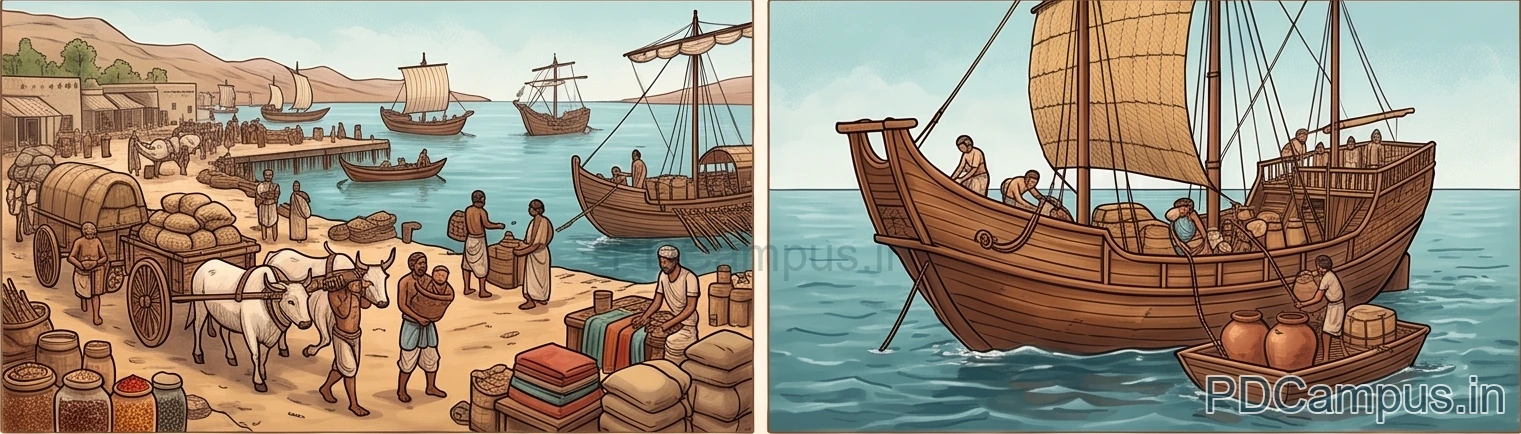
Ujjain and Pataliputra also appear in the broader inland network. Bactria connected to Central Asian routes, western ports to the Red Sea and Mediterranean, and eastern and southern routes to Southeast Asia. These were intersecting routes used in different periods, not one road or one traveller’s itinerary. The Periplus names Barygaza, Pathana and Tagara and lists specific imports and exports; its geographic reports also contain errors.व्यापक स्थलीय संपर्कों में उज्जैन और पाटलिपुत्र भी थे। बैक्ट्रिया मध्य एशियाई मार्गों, पश्चिमी बंदरगाह लाल सागर और भूमध्यसागर, तथा पूर्वी-दक्षिणी मार्ग दक्षिण-पूर्व एशिया से जुड़े थे। ये अलग समय पर इस्तेमाल होने वाले परस्पर जुड़े रास्ते थे, एक सड़क या एक यात्री का कार्यक्रम नहीं। पेरिप्लस बेरिगाजा, पैठण और तगर का नाम तथा विशेष आयात-निर्यात बताता है; उसके भौगोलिक विवरणों में गलतियाँ भी हैं।
Who traded?व्यापार कौन करता था?
Shrenis were guilds of craftspeople or merchants. Setthis or shreshthins were wealthy merchants/bankers; gahapatis were substantial householders. Donor inscriptions name caravan leaders, ivory workers, perfumers, metalworkers and people from distant towns.श्रेणियाँ शिल्पियों या व्यापारियों के संगठन थे। सेट्ठी या श्रेष्ठी संपन्न व्यापारी और साहूकार थे; गहपति संपन्न गृहस्थ थे। दान-अभिलेखों में कारवाँ के नेता, हाथीदाँत के कारीगर, इत्र बनाने वाले, धातु-कर्मी और दूर के नगरों से आए लोग मिलते हैं।
What proves contact?संपर्क का प्रमाण क्या है?
Roman coins, amphora fragments, Arretine or terra sigillata pottery, glass, beads, inscriptions and port remains help trace exchange. An amphora is a large transport jar; terra sigillata is fine red-slipped tableware, with Arretine ware associated with Arezzo in Italy. A foreign object shows circulation or contact, not automatically a permanent Roman colony.रोमन सिक्के, एम्फोरा के टुकड़े, अरेटाइन या टेरा सिगिलाटा मृद्भांड, काँच, मनके, अभिलेख और बंदरगाहों के अवशेष विनिमय की जानकारी देते हैं। एम्फोरा ढुलाई का बड़ा मर्तबान है; टेरा सिगिलाटा लाल लेप वाले महीन खाने-पीने के बर्तन हैं, जिनका अरेटाइन प्रकार इटली के अरेज्जो से जुड़ा है। विदेशी वस्तु आवागमन या संपर्क दिखाती है, अपने-आप स्थायी रोमन बस्ती नहीं।
Why caves near passes?दर्रों के पास गुफाएँ क्यों थीं?
Karle, Bhaja, Nasik, Junnar and Kanheri lay near western Deccan routes. Donors supported halls, water cisterns and monastic cells. A cistern stores water; cells are small rooms. The relationship between trade and monasteries is supported by locations and donations, but not every monastery was founded only to serve trade.कार्ले, भाजा, नासिक, जुन्नर और कान्हेरी पश्चिमी दक्कन के मार्गों के पास थे। दाताओं ने सभागृह, जलकुंड और भिक्षुओं की कोठरियाँ बनवाने में सहायता दी। जलकुंड पानी जमा करता है; कोठरी छोटा कमरा है। स्थान और दान व्यापार-मठ संबंध दिखाते हैं, लेकिन हर मठ केवल व्यापार की सेवा के लिए स्थापित नहीं हुआ था।
“Hippalus discovered the monsoon” goes beyond what the evidence establishes. The Periplus credits him with a direct ocean route, but the texts and their interpretation are disputed. This records a Greco-Roman account of navigation; it does not establish that Indian Ocean sailors had no earlier knowledge of seasonal winds.‘हिप्पालस ने मानसून खोजा’ कहना प्रमाण से आगे बढ़ना है। पेरिप्लस उसे सीधे समुद्री मार्ग का श्रेय देता है, लेकिन ग्रंथों और उनकी व्याख्या पर मतभेद हैं। यह नौचालन का यूनानी-रोमन वृत्तांत है; इससे यह सिद्ध नहीं होता कि हिंद महासागर के नाविक पहले मौसमी हवाएँ नहीं जानते थे।
Land and sea commerceस्थल और समुद्री व्यापार
Coins as pocket-sized history booksसिक्के: छोटी वस्तु में इतिहास
An overstrike is a new design stamped onto an existing coin. Gautamiputra Satakarni’s marks on Nahapana’s silver issues show that older coins were reused under new authority. Traces of the earlier design let numismatists identify the sequence.पुनरंकन में पहले से मौजूद सिक्के पर नया रूप ठोका जाता है। नहपान के चाँदी के सिक्कों पर गौतमीपुत्र सातकर्णि के चिह्न बताते हैं कि पुरानी मुद्रा नए अधिकार के अंतर्गत फिर इस्तेमाल हुई। पुराने अंकन के बचे चिह्नों से मुद्राशास्त्री क्रम पहचानते हैं।
Three sculpture languages - compare, do not rankमूर्तिकला की तीन शैलियाँ: तुलना करें, श्रेष्ठता-क्रम न बनाएँ
| Featureविशेषता | Gandharaगांधार | Mathuraमथुरा | Amaravatiअमरावती |
|---|---|---|---|
| Core zoneमुख्य क्षेत्र | Peshawar-Taxila-Afghanistan contact regionपेशावर-तक्षशिला-अफगानिस्तान का संपर्क-क्षेत्र | Mathura and nearby north Indian workshopsमथुरा और आसपास की उत्तर भारतीय कार्यशालाएँ | Lower Krishna valley, Andhra regionनिचली कृष्णा घाटी, आंध्र क्षेत्र |
| Materialसामग्री | Blue-grey schist, green phyllite and stucco; material varies by site and periodनीला-धूसर शिस्ट, हरा फिलाइट और स्टुको; स्थल तथा काल के अनुसार अंतर | Spotted/mottled red sandstoneचित्तीदार लाल बलुआ पत्थर | Pale limestoneहल्का चूना पत्थर |
| Human figureमानव आकृति | Anatomical modelling, wavy hair, heavy folded robeशरीर की बनावट पर ध्यान, लहराते बाल, भारी सलवटों वाला वस्त्र | Full powerful body, direct gaze, thin or schematic garmentभरा और शक्तिशाली शरीर, सामने की ओर दृष्टि, पतला या रेखाओं से सूचित वस्त्र | Slender, active figures in flowing narrative scenesप्रवाहपूर्ण कथा-दृश्यों में छरहरी, गतिशील आकृतियाँ |
| Religionsधर्म | Mainly Buddhist surviving corpus, with wider classical-Iranian settingबचे हुए कार्य मुख्यतः बौद्ध; व्यापक यूनानी-रोमन और ईरानी संदर्भ | Buddhist, Jain and Brahmanical images plus royal portraitsबौद्ध, जैन, ब्राह्मणीय प्रतिमाएँ तथा राजकीय चित्र | Mostly Buddhist stupa and narrative artमुख्यतः बौद्ध स्तूप और कथात्मक कला |
| Influenceप्रभाव | Hellenistic, Roman, Iranian and local Gandharan traditionsहेलेनिस्टिक, रोमन, ईरानी तथा स्थानीय गांधार परंपराएँ | Deep local yaksha and Indian sculptural traditions, open to exchangeस्थानीय यक्ष और भारतीय मूर्तिकला की गहरी परंपरा; बाहरी संपर्क भी | Deccan craft and Buddhist narrative tradition with maritime reachसमुद्री पहुँच वाली दक्कनी शिल्प और बौद्ध कथा-परंपरा |
| Buddha imageबुद्ध प्रतिमा | Heavy monastic robe and classical modellingभारी भिक्षु-वस्त्र और यूनानी-रोमन शैली का शरीर-निर्माण | Robust body, raised right hand and lighter dressसुदृढ़ शरीर, उठा हुआ दायाँ हाथ और हल्का वस्त्र | Symbolic and human representations occur across different phases; avoid a single rigid sequence for every panelअलग चरणों में प्रतीकात्मक और मानव रूप मिलते हैं; हर पट्ट के लिए एक ही कठोर क्रम न मानें |
Schist and phyllite are metamorphic stones; stucco is plaster-like modelling material. A relief is carving that projects from a background. A stupa is a relic or memorial monument, a chaitya hall a worship space, and a vihara a monastic residence. Yakshas are guardian or nature-associated beings in Indian religious traditions. These are visual clues, not rigid rules that identify every object by colour alone. Hellenistic refers to the Greek cultural world that developed after Alexander. Jatakas are stories of the Buddha’s previous births; a torana is a ceremonial gateway.शिस्ट और फिलाइट कायांतरित पत्थर हैं; स्टुको पलस्तर जैसी आकृति गढ़ने की सामग्री है। उभारदार उत्कीर्णन में आकृति पृष्ठभूमि से उभरी होती है। स्तूप अवशेष या स्मृति-स्मारक, चैत्यगृह उपासना-स्थान और विहार मठीय निवास है। यक्ष भारतीय धार्मिक परंपराओं में रक्षक या प्रकृति-संबंधी प्राणी हैं। ये पहचान के संकेत हैं, केवल रंग देखकर हर वस्तु पहचानने के कठोर नियम नहीं। हेलेनिस्टिक का संबंध सिकंदर के बाद विकसित यूनानी सांस्कृतिक संसार से है। जातक बुद्ध के पूर्व जन्मों की कथाएँ हैं; तोरण समारोह या धार्मिक परिसर का प्रवेश-द्वार है।
Two-school myth: Gandhara and Mathura both helped shape early human images of the Buddha. Evidence does not support one simple inventor, one exact year or the claim that Kanishka alone ordered the first Buddha statue.गांधार और मथुरा दोनों ने बुद्ध के शुरुआती मानव रूपों को आकार दिया। प्रमाण किसी एक सरल आविष्कारक, एक सटीक वर्ष या केवल कनिष्क के आदेश से पहली बुद्ध प्रतिमा बनने के दावे का समर्थन नहीं करते।
Gandhara, Mathura and Amaravatiगांधार, मथुरा और अमरावती
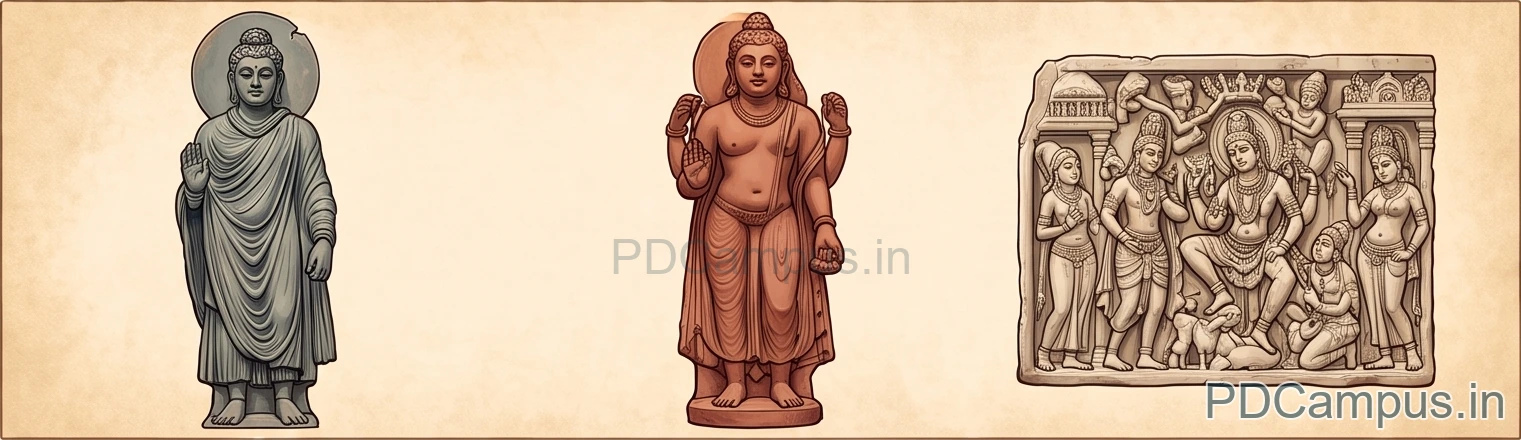
Cultural exchange worked like a turning wheelसांस्कृतिक आदान-प्रदान की प्रक्रिया
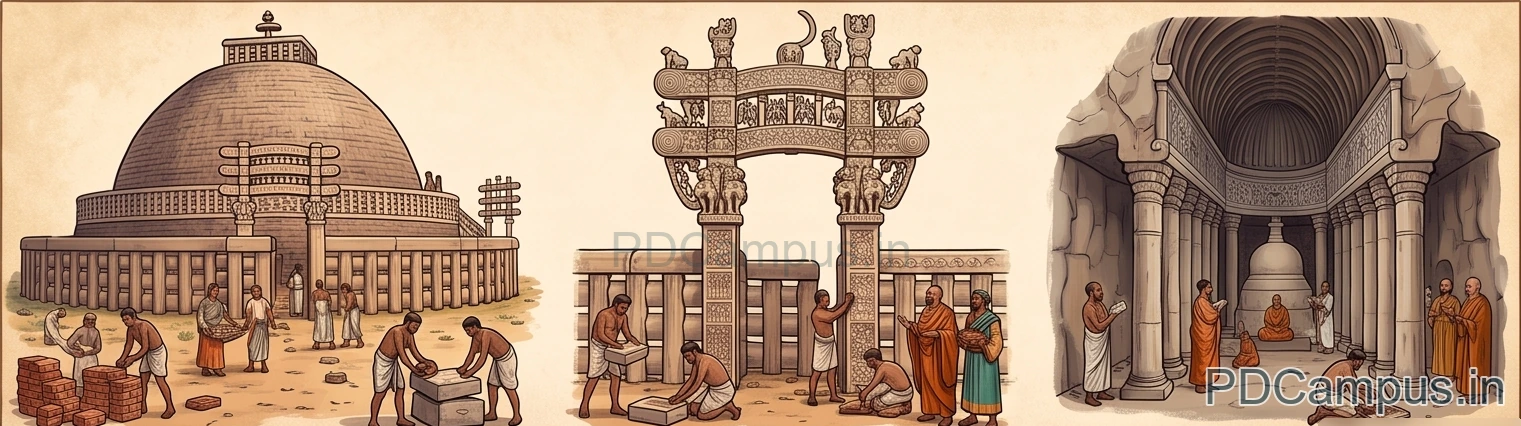
Sanchi as a layer cake of patronageसाँची में संरक्षण के कई ऐतिहासिक चरण
Sanchi’s Great Stupa has an Ashokan brick core and a Mauryan pillar nearby. Later enlargement, stone facing and railings are commonly associated with the Shunga period. Gateway carving and donations belong to later phases, including the Satavahana-era setting. A gateway inscription names a donor connected with King Satakarni. Period labels are not proof that one dynasty paid for every part; individual donors and craftspeople mattered.साँची के महान स्तूप में अशोककालीन ईंटों का मूल भाग और पास में मौर्य स्तंभ है। बाद का विस्तार, पत्थर का आवरण और वेदिकाएँ सामान्यतः शुंग काल से जोड़े जाते हैं। तोरणों की नक्काशी और दान बाद के चरणों में, सातवाहनकालीन परिवेश में भी हुए। एक तोरण अभिलेख में राजा सातकर्णि से जुड़े दाता का नाम है। काल का नाम यह सिद्ध नहीं करता कि हर भाग का खर्च उसी राजवंश ने दिया; व्यक्तिगत दाता और शिल्पी भी महत्वपूर्ण थे।
Bharhutभरहुत
Stupa railings and gateways in central India carry labels, Jataka scenes, yakshas, donors and symbolic Buddha imagery. Much surviving sculpture is associated with the Shunga-age artistic world.मध्य भारत के इस स्तूप की वेदिकाओं और तोरणों पर नाम-लेख, जातक दृश्य, यक्ष, दाता और बुद्ध के प्रतीकात्मक रूप हैं। उपलब्ध मूर्तिकला का बड़ा हिस्सा शुंगकालीन कलात्मक परिवेश से जोड़ा जाता है।
Karle chaityaकार्ले का चैत्यगृह
Karle has a large rock-cut chaitya, or worship hall, on a western Deccan route. Inscriptions record donors including merchants and Yavanas. The architecture follows timber-building forms; wooden ribs also survive in the great hall. It is misleading to describe all its roof ribs simply as stone imitations.पश्चिमी दक्कन के एक मार्ग पर कार्ले का बड़ा शैलकृत चैत्य, यानी चट्टान काटकर बना उपासना-गृह, है। अभिलेखों में व्यापारियों और यवनों सहित दाता दर्ज हैं। इसकी वास्तुकला लकड़ी की इमारतों के रूप अपनाती है; बड़े सभागृह में लकड़ी की छत-पट्टियाँ भी बची हैं। इसलिए सभी छत-पट्टियों को केवल पत्थर की नकल कहना भ्रामक है।
Amaravati stupaअमरावती का स्तूप
Amaravati’s stupa was built and enlarged across centuries, including major work during the Satavahana period. This does not make every donation a royal Satavahana commission. Limestone railing and drum slabs depict Buddhist narratives, showing the lower Krishna valley’s active religious and trading setting.अमरावती का स्तूप कई सदियों में बना और बढ़ा; सातवाहन काल में भी महत्वपूर्ण काम हुआ। इससे हर दान राजकीय सातवाहन निर्माण नहीं बन जाता। चूना पत्थर की वेदिका और स्तूप के गोल आधार के पट्ट बौद्ध कथाएँ दिखाते हैं और निचली कृष्णा घाटी के सक्रिय धार्मिक-व्यापारिक परिवेश की झलक देते हैं।
Monuments accumulated patronageस्मारकों में कई कालों का संरक्षण
5. Rapid Revision Data - Dynasties, Routes and Art in One View5. त्वरित पुनरावृत्ति: राजवंश, मार्ग और कला
Say the chapter in one breath: After the Mauryas, Shungas and Kanvas ruled a Ganga-central core, Indo-Greeks, Shakas, Pahlavas and Kushanas reshaped the north-west, Satavahanas joined Deccan markets and ports, and coins, trade and art turned contact into lasting culture.अध्याय का सार: मौर्यों के बाद शुंग और कण्व गंगा-मध्य भारत के मुख्य क्षेत्र में रहे; हिंद-यूनानी, शक, पहलव और कुषाणों ने उत्तर-पश्चिम को बदला; सातवाहनों ने दक्कन के बाजारों और बंदरगाहों को जोड़ा; सिक्कों, व्यापार और कला ने संपर्कों को स्थायी सांस्कृतिक रूप दिए।
Ganga-centreगंगा और मध्य भारत
- Pushyamitra: Shungaपुष्यमित्र: शुंग
- Agnimitra: Vidisha linkअग्निमित्र: विदिशा से संबंध
- Heliodorus: Bhagabhadra ageहेलियोडोरस: भागभद्र का काल
- Vasudeva: first Kanvaवासुदेव: पहला कण्व
North-westउत्तर-पश्चिम
- Menander: Milindaमिनांडर: मिलिंद
- Maues-Azes: Shakaमोग-अज़ेस: शक
- Gondophares: Pahlavaगोंडोफर्नीज: पहलव
- Kanishka: Kushanaकनिष्क: कुषाण
Deccanदक्कन
- Capital: Pratishthanaराजधानी: प्रतिष्ठान
- Gautamiputra: Nahapanaगौतमीपुत्र: नहपान से संघर्ष
- Pulumavi: eastward reachपुलुमावि: पूर्व की ओर विस्तार
- Yajna Sri: ship coinsयज्ञश्री: जहाज वाले सिक्के
Art stoneकला की सामग्री
- Gandhara: grey schistगांधार: धूसर शिस्ट
- Mathura: red sandstoneमथुरा: लाल बलुआ पत्थर
- Amaravati: pale limestoneअमरावती: हल्का चूना पत्थर
- Sanchi: layered patronageसाँची: कई चरणों का संरक्षण
| If you see...यह नाम दिखे तो... | Connect it to...इससे जोड़ें... | Do not mix it with...यह अंतर याद रखें... |
|---|---|---|
| Pushyamitraपुष्यमित्र | Founder of Shunga dynasty; Ashvamedha references.शुंग वंश का संस्थापक; अश्वमेध के उल्लेख। | Pushyagupta was a Mauryan governor linked with Sudarshana lake.पुष्यगुप्त सुदर्शन झील से जुड़ा मौर्य राज्यपाल था। |
| Malavikagnimitramमालविकाग्निमित्रम् | Kalidasa's later play about Agnimitra.अग्निमित्र पर कालिदास का बाद का नाटक। | Not a contemporary Shunga chronicle.शुंग काल का समकालीन इतिहास नहीं। |
| Heliodorus pillarहेलियोडोरस स्तंभ | Greek ambassador of Antialcidas; Bhagavata of Vasudeva at Besnagar.एंटियाल्किडास का यूनानी राजदूत; बेसनगर में वासुदेव का भागवत। | Not an Ashokan pillar edict.अशोक का स्तंभलेख नहीं। |
| Milinda / Nagasenaमिलिंद / नागसेन | Menander and Buddhist dialogue in Milindapanho.मिनांडर और मिलिंदपञ्हो का बौद्ध संवाद। | Literary dialogue, not verbatim minutes.साहित्यिक संवाद, शब्दशः कार्यवाही नहीं। |
| Bilingual portrait coinsचित्र वाले द्विभाषी सिक्के | Indo-Greeks; often Greek and Prakrit in Kharosthi, with exceptions.हिंद-यूनानी; अक्सर यूनानी और खरोष्ठी में प्राकृत, लेकिन अपवाद भी हैं। | Kushan issues later use Bactrian in Greek script.बाद के कुषाण सिक्कों में यूनानी लिपि की बैक्ट्रियाई भी है। |
| Kshatrapa / Mahakshatrapaक्षत्रप / महाक्षत्रप | Shaka satrap / great satrap.शक प्रांतीय शासक / महान क्षत्रप। | Satakarni is a Satavahana royal name/title.सातकर्णि सातवाहन राजकीय नाम या उपाधि है। |
| Junagadh c. 150 CEजूनागढ़ लगभग 150 ईस्वी | Rudradaman I; Sanskrit; Sudarshana repair.रुद्रदामन प्रथम; संस्कृत; सुदर्शन की मरम्मत। | Ashoka's Girnar edicts are earlier Prakrit records at the same broad site.उसी व्यापक स्थल पर अशोक के गिरनार शिलालेख पहले के प्राकृत अभिलेख हैं। |
| Gondopharesगोंडोफर्नीज | Indo-Parthian/Pahlava ruler.हिंद-पार्थियन या पहलव शासक। | Thomas association is later tradition, not confirmed meeting.थॉमस से संबंध बाद की परंपरा है, प्रमाणित मुलाकात नहीं। |
| Rabatakरबातक | Kanishka's genealogy and era; Bactrian in Greek script.कनिष्क की वंशावली और संवत; यूनानी लिपि में बैक्ट्रियाई। | Not the source of the 78 CE Shaka era.78 ईस्वी के शक संवत का स्रोत नहीं। |
| c. 127/128 CEलगभग 127/128 ईस्वी | Modern placement of Kanishka I's year one.कनिष्क प्रथम के पहले वर्ष की आधुनिक स्थापना। | 78 CE attribution is an older disputed theory.78 ईस्वी वाला मत पुराना और विवादित है। |
| Devaputraदेवपुत्र | Kushan royal title, "Son of God".कुषाण राजकीय उपाधि, ‘देवता का पुत्र’। | Dhamma-mahamatra is a Mauryan office.धम्म-महामात्र मौर्य पद था। |
| Gautamiputra Satakarniगौतमीपुत्र सातकर्णि | Defeated Nahapana; Nasik praise; overstruck coins.नहपान की पराजय; नासिक प्रशस्ति; पुनरंकित सिक्के। | Maternal name does not prove matriarchal succession.माता से बना नाम मातृसत्तात्मक उत्तराधिकार सिद्ध नहीं करता। |
| Pratishthana / Tagaraप्रतिष्ठान / तगर | Paithan capital / Ter inland market.पैठण राजधानी / तेर भीतरी बाजार। | Purushapura was a Kushan centre.पुरुषपुर कुषाण केंद्र था। |
| Karle-Nasik-Junnarकार्ले-नासिक-जुन्नर | Western Deccan caves and trade routes.पश्चिमी दक्कन की गुफाएँ और व्यापारिक मार्ग। | Amaravati belongs to lower Krishna Buddhist art.अमरावती निचली कृष्णा घाटी की बौद्ध कला से जुड़ा है। |
| Grey-red-pale stoneधूसर-लाल-हल्का पत्थर | Gandhara-Mathura-Amaravati.गांधार-मथुरा-अमरावती। | Style is more than material; themes and figure treatment matter.शैली केवल सामग्री नहीं; विषय और आकृति बनाने का ढंग भी महत्वपूर्ण हैं। |
| Periplusपेरिप्लस | First-century CE guide to Red Sea and Indian Ocean trade.पहली शताब्दी ईस्वी का लाल सागर और हिंद महासागर व्यापार-विवरण। | It is a merchant's external account, not an Indian royal inscription.यह व्यापारी का बाहरी वृत्तांत है, भारतीय राजकीय अभिलेख नहीं। |
Foreign sequenceउत्तर-पश्चिम का व्यापक क्रम
Greek - Shaka - Pahlava - Kushana.यूनानी — शक — पहलव — कुषाण।
Movement was complex, but this is the useful broad north-western order.आवागमन जटिल था, लेकिन उत्तर-पश्चिम के व्यापक क्रम को याद करने में यह उपयोगी है।
Art coloursकला के रंग
Grey - Red - Pale.धूसर — लाल — हल्का।
Gandhara grey, Mathura red, Amaravati pale limestone.गांधार का धूसर पत्थर, मथुरा का लाल पत्थर, अमरावती का हल्का चूना पत्थर।
Trade triangleव्यापार के तीन जुड़े केंद्र
Road - Port - Monastery.मार्ग — बंदरगाह — मठ।
Goods moved, towns grew, donors supported religious centres.सामान का आवागमन हुआ, नगर बढ़े और दाताओं ने धार्मिक केंद्रों को सहायता दी।
Final checks: dynasty dates overlap; Shunga policy cannot be reduced to universal Buddhist persecution; Milindapanho is a literary dialogue; coins are central to Indo-Greek history; Shaka peoples and the era beginning in 78 CE are different questions; Kanishka’s year one is commonly placed around 127/128 CE; Thomas–Gondophares is a later tradition; matronymics do not prove matriarchy; Roman objects do not prove colonies; and both Gandhara and Mathura shaped early Buddha imagery.अंतिम पुनरावृत्ति: राजवंशों की अवधियाँ एक-दूसरे से मिलती हैं; शुंग नीति को सर्वत्र बौद्ध उत्पीड़न नहीं कहा जा सकता; मिलिंदपञ्हो साहित्यिक संवाद है; हिंद-यूनानी इतिहास में सिक्के केंद्रीय हैं; शक जनसमूह और 78 ईस्वी से आरंभ संवत अलग प्रश्न हैं; कनिष्क का पहला वर्ष सामान्यतः लगभग 127/128 ईस्वी है; थॉमस–गोंडोफर्नीज बाद की परंपरा है; मातृनाम मातृसत्ता सिद्ध नहीं करते; रोमन वस्तुएँ रोमन बस्ती सिद्ध नहीं करतीं; और गांधार तथा मथुरा दोनों ने शुरुआती बुद्ध प्रतिमाओं को आकार दिया।
This age teaches a simple truth: a border can be a meeting place. When people, goods and ideas move, history creates something new on both sides.सीमाएँ संपर्क-स्थल भी बन सकती हैं। इस काल में लोगों, सामान और विचारों के आवागमन से दोनों ओर नए सांस्कृतिक रूप उभरे।