Sangam Age and Early South Indiaसंगम युग और आरंभिक दक्षिण भारत
General Knowledge · Visual study guide with full explanationsसामान्य ज्ञान · चित्रों और पूरे विवरण के साथ अध्ययन मार्गदर्शिका
Poems, landscapes, crowned chiefs and sea routes in the early Tamil worldआरंभिक तमिल संसार की कविताएँ, भूदृश्य, मुकुटधारी सरदार और समुद्री मार्ग
1. The Big Picture - A World Remembered in Poems and Objects1. बड़ी तस्वीर: कविताओं और वस्तुओं में बचा संसार
Imagine a poem about a pearl diver, then compare it with excavated shells, beads and trading objects. The poem reveals values and experiences; the objects help test material life. The Sangam world becomes clearer when we study poems, inscriptions, coins, graves, pottery and ports together. Surviving manuscript copies are much later than the poems they transmit.मोती गोताखोर पर एक कविता की कल्पना करें, फिर उसकी तुलना उत्खनन में मिले शंखों, मनकों और व्यापारिक वस्तुओं से करें। कविता मूल्य और अनुभव बताती है; वस्तुएँ भौतिक जीवन की पड़ताल में मदद करती हैं। कविताओं, अभिलेखों, सिक्कों, कब्रों, बर्तनों और बंदरगाहों को साथ पढ़ने पर संगम संसार अधिक स्पष्ट होता है। आज बची पांडुलिपि-प्रतियाँ उन कविताओं से बहुत बाद की हैं जिन्हें वे हम तक पहुँचाती हैं।
What is Tamilakam?तमिलकम क्या है?
The ancient Tamil cultural region. It covered much of present-day Tamil Nadu and Kerala and touched adjoining areas. Its boundaries were not modern state borders.यह प्राचीन तमिल सांस्कृतिक क्षेत्र था। इसमें आज के तमिलनाडु और केरल के बड़े हिस्से तथा आसपास के कुछ क्षेत्र आते थे। इसकी सीमाएँ आज के राज्यों जैसी नहीं थीं।
What does “Sangam” mean?“संगम” का क्या अर्थ है?
It means an assembly or academy. Later tradition speaks of three great Sangams. Historians use “Sangam literature” for the early Tamil poetic corpus, but the three-academy story is not independently proved as a contemporary institution.इसका अर्थ सभा या अकादमी है। बाद की परंपरा तीन महान संगमों का वर्णन करती है। इतिहासकार आरंभिक तमिल काव्य-समूह के लिए “संगम साहित्य” शब्द इस्तेमाल करते हैं, लेकिन तीन अकादमियों की कथा समकालीन संस्थाओं के रूप में स्वतंत्र साक्ष्यों से सिद्ध नहीं है।
A corpus is a body of related works; an anthology is a collection of selected poems. Poetry can preserve historical names without making every speech or victory a literal report. An inscription is writing on a durable surface; epigraphy studies such records. Tamil is a language. Tamil-Brahmi is an early writing system adapted to record Tamil; language and script are different things. Seals carry an identifying mark or design and may also carry writing; they are another kind of material evidence.रचना-समूह में संबंधित ग्रंथ या कविताएँ आती हैं; काव्य-संकलन चुनी हुई कविताओं का संग्रह है। कविता ऐतिहासिक नाम बचा सकती है, पर उसका हर संवाद या विजय-वर्णन शाब्दिक घटनाक्रम नहीं होता। टिकाऊ सतह पर लिखे लेख को अभिलेख कहते हैं; अभिलेखविद्या उनका अध्ययन करती है। तमिल एक भाषा है। तमिल-ब्राह्मी तमिल लिखने के लिए अनुकूलित एक आरंभिक लिपि है; भाषा और लिपि अलग बातें हैं। मुहरों पर पहचान का चिह्न या आकृति होती है और लेखन भी हो सकता है; वे एक अन्य प्रकार का भौतिक साक्ष्य हैं।
When was this age?यह युग कब था?
Use a broad frame: roughly the last centuries BCE to the early centuries CE. Poems were composed, remembered, collected and edited over time, so one exact start-and-finish year would be misleading.व्यापक रूपरेखा रखें: ईसा-पूर्व की अंतिम सदियों से शुरुआती ईस्वी सदियों तक। कविताएँ समय के साथ रची गईं, याद रखी गईं, संकलित और संपादित हुईं। इसलिए शुरुआत और अंत का एकदम निश्चित वर्ष देना भ्रामक होगा।
Evidence desk - every source answers a different questionसाक्ष्य पढ़ें: हर स्रोत अलग प्रश्न का उत्तर देता है
| Source familyस्रोत का प्रकार | What it gives usइससे क्या मिलता है | Read it with careपढ़ते समय सावधानी |
|---|---|---|
| Core anthologiesमुख्य काव्य-संकलन | Ettuttokai and Pattuppattu: rulers, poets, love, war, landscapes, towns, exchange and values.एत्तुत्तोकै और पत्तुप्पाट्टु: शासक, कवि, प्रेम, युद्ध, भूदृश्य, नगर, विनिमय और मूल्य। | A praise poem may enlarge a patron's victory or generosity.प्रशस्ति-कविता आश्रयदाता की विजय या उदारता बढ़ाकर बता सकती है। |
| Grammar and poeticsव्याकरण और काव्यशास्त्र | Tolkappiyam explains language, poetic conventions, landscapes and social categories.तोल्काप्पियम भाषा, काव्य-परंपराएँ, भूदृश्य और सामाजिक श्रेणियाँ समझाता है। | Its authorship, layers and date are debated.इसके रचनाकार, विभिन्न स्तर और काल पर बहस है। |
| Later classicsबाद के उत्कृष्ट ग्रंथ | Silappadikaram and Manimekalai preserve cities, beliefs, trade and cultural memories.शिलप्पदिकारम और मणिमेकलै में नगर, मान्यताएँ, व्यापार और सांस्कृतिक स्मृतियाँ हैं। | They are later than much core Sangam poetry; do not use every episode as an eyewitness report.ये मुख्य संगम कविता के बड़े हिस्से से बाद के हैं; हर प्रसंग को प्रत्यक्षदर्शी विवरण न मानें। |
| Tamil-Brahmiतमिल-ब्राह्मी | Short records of names, donors, monks, chiefs and writing on caves and pottery.गुफाओं और बर्तनों पर नामों, दाताओं, साधुओं, सरदारों तथा लेखन के छोटे अभिलेख। | A name similar to a poem's king is useful evidence, but not always a perfect identification.कविता के राजा जैसा नाम उपयोगी साक्ष्य है, लेकिन हमेशा उसी व्यक्ति की निश्चित पहचान नहीं। |
| Excavated materialउत्खनित सामग्री | Black-and-red ware, graves, iron, beads, ring wells, wharf remains, coins and imported pottery.काला-लाल मृद्भांड, कब्रें, लोहा, मनके, वलय-कूप, घाट के अवशेष, सिक्के और आयातित बर्तन। | Objects have archaeological dates; poems have literary histories. The two do not always line up exactly.वस्तुओं की पुरातात्त्विक तारीखें और कविताओं का साहित्यिक इतिहास हमेशा ठीक एक-दूसरे से नहीं मिलते। |
| Greco-Roman textsयूनानी-रोमन ग्रंथ | Ports, routes, commodities and western merchant knowledge of Indian Ocean exchange.बंदरगाह, मार्ग, वस्तुएँ और हिंद महासागर व्यापार के बारे में पश्चिमी व्यापारियों की जानकारी। | Names are foreign spellings, locations can be uncertain, and writers saw the world through merchant interests.नाम विदेशी वर्तनी में हैं, स्थान अनिश्चित हो सकते हैं और लेखकों की दृष्टि व्यापारिक हितों से प्रभावित थी। |
Poems and excavated thingsकविताएँ और उत्खनित वस्तुएँ
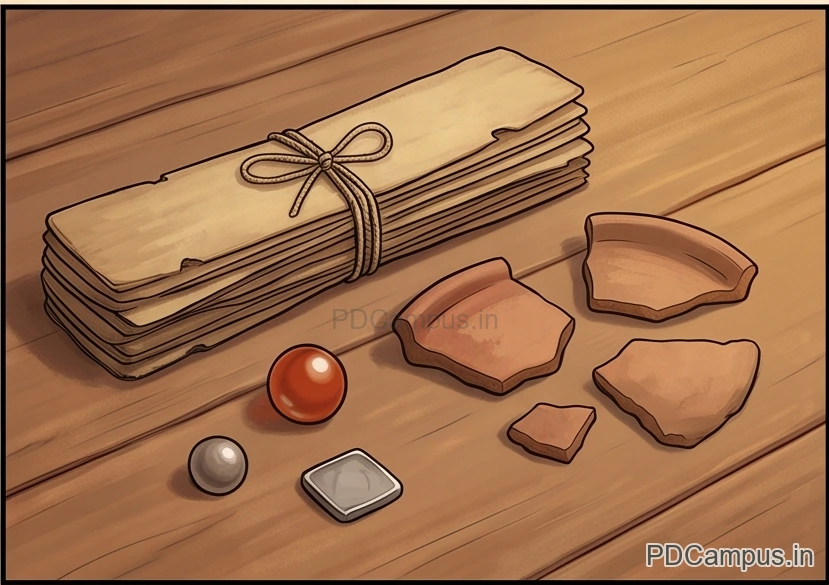
Ashoka’s third-century BCE edicts name southern powers outside his directly ruled territory. The Periplus is a first-century CE trading account; Pliny’s Natural History belongs to that century, and Ptolemy’s Geography to the second century CE. They supply different kinds of outside evidence. A foreign spelling of a port name requires comparison with local texts, geography and archaeology.अशोक के तीसरी शताब्दी ईसा-पूर्व के अभिलेख उनके सीधे शासन से बाहर की दक्षिणी शक्तियों का उल्लेख करते हैं। पेरिप्लस पहली शताब्दी ईस्वी का व्यापार-विवरण है; प्लिनी की नैचुरल हिस्ट्री उसी शताब्दी और टॉलेमी की ज्योग्राफी दूसरी शताब्दी ईस्वी की है। ये अलग प्रकार के बाहरी साक्ष्य देते हैं। किसी बंदरगाह की विदेशी वर्तनी पहचानने के लिए स्थानीय ग्रंथों, भूगोल और पुरातत्त्व से तुलना चाहिए।
A broad chronology - useful, but not a rigid ruler calendarव्यापक कालक्रम: उपयोगी रूपरेखा, निश्चित शासनकालों की सूची नहीं
Date honesty: “Sangam Age” is a convenient historical label, not a stopwatch. Different poems, inscriptions, sites and later compilations belong to different moments. Learn the broad sequence and the evidence, not invented exact reigns.तारीखों की सावधानी: “संगम युग” सुविधाजनक ऐतिहासिक नाम है, समय मापने की घड़ी नहीं। अलग कविताएँ, अभिलेख, स्थल और बाद के संकलन अलग समय के हैं। व्यापक क्रम और साक्ष्य सीखें, गढ़े हुए निश्चित शासनकाल नहीं।
BCE means Before Common Era and CE means Common Era; they use the same year numbering as BC and AD. A common teaching frame is approximately 300 BCE–300 CE. Earlier Iron Age and megalithic remains form part of the background; Ashoka’s references belong to the third century BCE; early Tamil poems and Tamil-Brahmi records overlap the following centuries; sea trade is especially visible in first- and second-century CE sources. Collection, editing and later epics continue beyond this frame. These overlapping strands are not a single sequence of securely dated reigns.ईसा-पूर्व और ईस्वी क्रमशः सामान्य युग से पहले और सामान्य युग के वर्ष बताते हैं; इनकी वर्ष-गणना अंग्रेजी के BCE/BC और CE/AD के समान है। पढ़ने के लिए लगभग 300 ईसा-पूर्व–300 ईस्वी की रूपरेखा प्रचलित है। इससे पहले के लौहयुगीन और महापाषाणीय अवशेष पृष्ठभूमि का हिस्सा हैं। अशोक के उल्लेख तीसरी शताब्दी ईसा-पूर्व के हैं; आरंभिक तमिल कविताएँ और तमिल-ब्राह्मी लेख आगे की सदियों में मिलते हैं। पहली और दूसरी शताब्दी ईस्वी के स्रोतों में समुद्री व्यापार विशेष रूप से दिखाई देता है। संकलन, संपादन और बाद के महाकाव्य इस सीमा के आगे भी चलते हैं। ये एक-दूसरे से मिलते साक्ष्य हैं, निश्चित तारीखों वाले शासनकालों की एक सूची नहीं।
2. Learn from Zero - The Three Crowned Ruling Houses2. शुरुआत से सीखें: तीन मुकुटधारी राजघराने
Muvendar means the three crowned rulers: Chera, Chola and Pandya. They were the strongest chiefly houses, but they did not draw neat modern borders or command a uniform bureaucracy. Their power rested on people, fertile zones, tribute, warfare, gifts and trade.मूवेंदर का अर्थ तीन मुकुटधारी शासक है: चेर, चोल और पांड्य। ये सबसे शक्तिशाली सरदार-घराने थे, लेकिन इनकी आधुनिक जैसी स्पष्ट सीमाएँ या एक जैसी नौकरशाही नहीं थी। इनकी शक्ति लोगों, उपजाऊ क्षेत्रों, अधीनता-भेंट, युद्ध, उपहार और व्यापार पर टिकी थी।
| Houseघराना | Core zone and centresमुख्य क्षेत्र और केंद्र | Names in literary memoryसाहित्यिक स्मृति के नाम | Economy and cultural linksअर्थव्यवस्था और सांस्कृतिक संबंध |
|---|---|---|---|
| Chera Emblem: bowचेर; चिह्न: धनुष | Western Tamilakam across hill routes to the Arabian Sea. Vanchi is a royal centre in literature, but its exact identification remains debated. Muchiri/Muziris and Tondi were major port names.पश्चिमी तमिलकम, पहाड़ी मार्गों से अरब सागर तक। साहित्य में वंजी राजकीय केंद्र है, लेकिन उसकी सही पहचान पर बहस है। मुचिरि या मुजिरिस और तोंडि प्रमुख बंदरगाह-नाम थे। | Uthiyan Cheralathan; Nedum Cheralathan; Senguttuvan. Pattirruppattu praises Chera rulers. Pugalur inscriptions preserve an early Chera genealogy.उदियन चेरलातन, नेडुम चेरलातन और शेंगुट्टुवन। पतिर्रुप्पत्तु चेर शासकों की प्रशंसा करता है। पुगलूर अभिलेख आरंभिक चेर वंशावली देते हैं। | Pepper, forest produce, elephants, hill-to-port routes and western ocean trade. Senguttuvan's northern expedition and Pattini link belong mainly to literary/epic tradition.काली मिर्च, वन-उत्पाद, हाथी, पहाड़ से बंदरगाह के मार्ग और पश्चिमी समुद्री व्यापार। शेंगुट्टुवन का उत्तरी अभियान और पत्तिनी संबंध मुख्यतः साहित्यिक तथा महाकाव्य परंपरा के हैं। |
| Chola Emblem: tigerचोल; चिह्न: बाघ | Fertile Kaveri valley. Uraiyur was an inland centre; Kaveripattinam or Puhar stood where the Kaveri met the sea.उपजाऊ कावेरी घाटी। उरैयूर भीतरी केंद्र था; कावेरीपट्टिनम या पुहार कावेरी के समुद्र से मिलने के स्थान पर था। | Karikala is the most famous; Killivalavan, Nalankilli and other Killi names occur. Pattinappalai celebrates Puhar and Karikala.करिकाल सबसे प्रसिद्ध हैं; किल्लिवलवन, नलंकिल्लि और अन्य किल्लि नाम आते हैं। पट्टिनप्पालै पुहार और करिकाल का गुणगान करता है। | Wet-rice farming, irrigation, textiles, river transport and east-coast trade. Karikala's Venni victory is literary; Kallanai is traditionally linked to him, but the structure has a long repair history.सिंचित धान, सिंचाई, वस्त्र, नदी-परिवहन और पूर्वी तटीय व्यापार। करिकाल की वेण्णि विजय साहित्य में है; कल्लणै उनसे परंपरागत रूप से जुड़ा है, लेकिन संरचना की मरम्मत का लंबा इतिहास है। |
| Pandya Emblem: fishपांड्य; चिह्न: मछली | Madurai and the Vaigai zone; Korkai near the pearl-fishing coast.मदुरै और वैगई क्षेत्र; मोती निकालने वाले तट के पास कोर्कै। | Mudukudumi Peruvaludi; several Nedunjeliyans/Nedunchezhiyans. Maduraikkanchi paints a rich picture of Madurai.मुदुकुडुमि पेरुवलुदि और कई नेडुंजेलियन या नेडुंचेझियन। मदुरैक्कांची मदुरै का विस्तृत चित्र देता है। | Pearls, chanks, fisheries, salt, farming and ocean exchange. Mangulam Tamil-Brahmi inscriptions mention a Pandya Nedunchezhiyan, but poem-to-inscription matching still needs caution.मोती, शंख, मछली, नमक, खेती और समुद्री विनिमय। मांगुलम तमिल-ब्राह्मी लेख पांड्य नेडुंचेझियन का नाम देते हैं; फिर भी कविता और अभिलेख के व्यक्ति को मिलाने में सावधानी चाहिए। |
Three ruler stories - remember evidence and caution togetherतीन शासक-कथाएँ: साक्ष्य के साथ सावधानी भी याद रखें
Senguttuvanशेंगुट्टुवन
Connect: Chera, “Red Chera”, Pattirruppattu, later Silappadikaram and Pattini/Kannagi tradition.संबंध: चेर, “लाल चेर”, पतिर्रुप्पत्तु, बाद का शिलप्पदिकारम और पत्तिनी या कण्णगी की परंपरा।
Pattini is a goddess tradition associated with the faithful wife Kannagi of Silappadikaram. The epic’s anklet is central to a story of accusation, injustice and the ruler’s responsibility. A cultural or religious memory can be historically important even when its individual episodes cannot be dated as events.पत्तिनी देवी-परंपरा शिलप्पदिकारम की पतिव्रता पत्नी कण्णगी से जुड़ी है। महाकाव्य की पायल आरोप, अन्याय और शासक की जिम्मेदारी की कथा के केंद्र में है। सांस्कृतिक या धार्मिक स्मृति ऐतिहासिक रूप से महत्वपूर्ण हो सकती है, भले ही उसके अलग प्रसंगों को तारीख वाली घटनाओं की तरह सिद्ध न किया जा सके।
Care: the epic's Himalayan expedition and ritual story are literary memory, not a dated royal inscription.सावधानी: महाकाव्य का हिमालय अभियान और अनुष्ठान की कथा साहित्यिक स्मृति है, तारीख वाला राजकीय अभिलेख नहीं।
Karikalaकरिकाल
Connect: Chola, Venni battle, Puhar, Kaveri prosperity and traditional Kallanai association.संबंध: चोल, वेण्णि युद्ध, पुहार, कावेरी की समृद्धि और कल्लणै से पारंपरिक संबंध।
Care: later legends became larger than the early poetic evidence.सावधानी: बाद की कथाएँ आरंभिक काव्य-साक्ष्यों से कहीं अधिक विस्तृत होती गईं।
Nedunjeliyanनेडुंजेलियन
Connect: Pandya royal name, Madurai, victories in poems, and a similar name at Mangulam.संबंध: पांड्य राजनाम, मदुरै, कविताओं में विजय और मांगुलम का मिलता-जुलता नाम।
Care: more than one Pandya bore this name; do not merge them automatically.सावधानी: एक से अधिक पांड्य शासकों का यह नाम था; उन्हें अपने आप एक व्यक्ति न मानें।
The world was bigger than three crownsसंसार तीन मुकुटों से बड़ा था
Pariपारि
Chief of Parambu; remembered as a great patron. The poet Kapilar became closely linked with his story.परंबु के सरदार, जो बड़े आश्रयदाता के रूप में याद किए जाते हैं। कवि कपिलर उनकी कथा से निकटता से जुड़े।
Adiyamanअदियमान
Atiyaman Neduman Anci ruled at Tagadur. Jambai Tamil-Brahmi links the Atiyaman line with the Satyaputra name in Ashoka’s earlier edicts; it does not identify him as Ashoka’s contemporary. The Sangam poet Avvaiyar is associated with his patronage.अतियमान नेडुमान अंचि तगडूर के शासक थे। जम्बै का तमिल-ब्राह्मी लेख अतियमान वंश और अशोक के अभिलेखों में आए ‘सत्यपुत्र’ नाम के बीच संबंध दिखाता है; इससे अतियमान नेडुमान अंचि अशोक के समकालीन सिद्ध नहीं होते। संगम कवयित्री अव्वैयार उनके आश्रय से जुड़ी हैं।
Ori and Peganओरि और पेगन
Hill chiefs remembered for bravery and extreme generosity in poetic tradition.काव्य-परंपरा में वीरता और अत्यधिक उदारता के लिए याद किए गए पहाड़ी सरदार।
Ay and Nalliआय और नल्लि
Other celebrated chiefs. Their stories show that local hill, valley and route power mattered beside the three great houses.ये अन्य प्रसिद्ध सरदार थे। उनकी कथाएँ बताती हैं कि तीन बड़े घरानों के साथ पहाड़ों, घाटियों और मार्गों की स्थानीय शक्ति भी महत्वपूर्ण थी।
Polity in simple words: these were expanding chiefdoms moving toward stronger states, not mini versions of a later empire. A ruler controlled networks of people and subordinate chiefs; borders, tax offices and ministries were not uniformly fixed.राजव्यवस्था को सरलता से समझें: ये फैलते सरदार-राज्य थे जो अधिक मजबूत राज्यों की ओर बढ़ रहे थे, बाद के साम्राज्यों के छोटे रूप नहीं। शासक लोगों और अधीन सरदारों के संबंधों पर नियंत्रण रखता था; सीमाएँ, कर-कार्यालय और मंत्रालय हर जगह एक जैसे निश्चित नहीं थे।
Vendan (plural Ventar, also written Vendar) means a crowned ruler; Muvendar names the three major houses. Velir were other chiefly lineages. Kizhar or Kilar could be local chiefs or influential household heads, including in farming settlements; these were not uniform ranks in a modern civil service. Kinship means recognised family or descent ties; alliances connected chiefs and followers. A patron supplies support, and a bard performs poetry or song. Gifts could win service and loyalty, while praise spread a chief’s fame.वेंदन का अर्थ मुकुटधारी शासक है; इसका बहुवचन वेंतर या वेंदर भी लिखा जाता है। मूवेंदर तीन बड़े राजघरानों का नाम है। वेलिर अन्य सरदार वंश थे। किझार या किलार स्थानीय सरदार अथवा प्रभावशाली परिवारों के मुखिया हो सकते थे, कृषि-बस्तियों में भी। ये आधुनिक प्रशासन के एक जैसे निश्चित पद नहीं थे। नातेदारी परिवार या वंश के मान्य संबंध हैं; राजनीतिक गठबंधन सरदारों और अनुयायियों को जोड़ते थे। आश्रयदाता आर्थिक या अन्य सहायता देता है; गायक-कवि कविता या गीत प्रस्तुत करता है। उपहारों से सेवा और निष्ठा मिल सकती थी, जबकि प्रशंसा शासक की ख्याति फैलाती थी।
3. Landscape, Power, Society and Daily Life3. भूदृश्य, शासन, समाज और दैनिक जीवन
Sangam poets connected human feeling with ecology, the relationship between people and their surroundings. A hill suggested particular work, food, flowers, deities, seasons, music and situations in love. Tinai is this system of poetic settings and conventions; it is not a census that fixes every person to one occupation.संगम कवियों ने मनुष्य के भावों को पारिस्थितिकी, यानी लोगों और उनके परिवेश के संबंध से जोड़ा। पहाड़ विशेष काम, भोजन, फूल, देवता, ऋतु, संगीत और प्रेम की स्थितियों का संकेत देता था। तिणै काव्य-परिवेशों और परंपराओं की यही व्यवस्था है; यह हर व्यक्ति को एक पेशे में बाँधने वाली जनगणना नहीं है।
The five tinai - one landscape stripपाँच तिणै: भूदृश्य और भाव
| Tinaiतिणै | Nature and peopleप्रकृति और लोग | Main livelihood/foodमुख्य आजीविका और भोजन | Deity and flowerदेवता और फूल | Akam moodअकम का भाव |
|---|---|---|---|---|
| Kurinjiकुरिंजि | Mountains and uplands; kuravar and hunting communities.पहाड़ और ऊँचे क्षेत्र; कुरवर तथा शिकारी समुदाय। | Hunting, gathering honey, hill millet and forest produce.शिकार, शहद-संग्रह, पहाड़ी मोटे अनाज और वन-उत्पाद। | Seyon/Murugan; kurinji flower.सेयोन या मुरुगन; कुरिंजि फूल। | Secret meeting and union of lovers.प्रेमियों की गुप्त भेंट और मिलन। |
| Mullaiमुल्लै | Woodland-pasture; ayar herding groups.वन और चरागाह; आयर पशुपालक समूह। | Cattle, milk products, shifting or mixed subsistence.मवेशी, दुग्ध-उत्पाद और स्थान बदलकर या कई साधनों से आजीविका। | Mayon (later closely linked with Vishnu/Krishna); mullai/jasmine.मायोन, जो बाद में विष्णु और कृष्ण से निकटता से जुड़े; मुल्लै या चमेली। | Patient waiting for the beloved's return.प्रिय के लौटने की धैर्यपूर्वक प्रतीक्षा। |
| Marutamमरुतम | River-fed fertile plains, towns and settled cultivators.नदी से सिंचित उपजाऊ मैदान, नगर और स्थायी कृषक। | Wet paddy, sugarcane, irrigation and surplus grain.सिंचित धान, गन्ना, सिंचाई और अतिरिक्त अनाज। | Ventan/Indra; marutam tree/flower.वेंतन या इंद्र; मरुतम वृक्ष और फूल। | Domestic life, disagreement or unfaithfulness.घरेलू जीवन, मतभेद या बेवफाई। |
| Neitalनेय्तल | Sea coast; paratavar and maritime communities.समुद्र-तट; परतवर और समुद्री समुदाय। | Fishing, salt-making, pearl/chank diving and sailing.मछली पकड़ना, नमक बनाना, मोती और शंख के लिए गोता लगाना तथा नौकायन। | Varunan; water-lily tradition.वरुणन; जल-कुमुदिनी की परंपरा। | Anxious waiting, lament and grief in separation; not restricted to sea travel.बिछोह में चिंतित प्रतीक्षा, विलाप और दुख; केवल समुद्री यात्रा तक सीमित नहीं। |
| Palaiपालै | Parched, dangerous land crossed by travellers and warriors.सूखी, खतरनाक भूमि जिससे यात्री और योद्धा गुजरते हैं। | Raiding, guarding and long-distance movement in scarcity.अभाव में छापामारी, सुरक्षा देना और लंबी दूरी की यात्रा। | Korravai; palai plant association.कोर्रवई; पालै पौधे से संबंध। | Hard separation and dangerous journey.कठिन बिछोह और संकटपूर्ण यात्रा। |
The important correction: Palai was not always a separate permanent desert. In poetic thought, familiar tracts such as kurinji or mullai could become harsh and dry. Ecology could change, and the human mood changed with it.महत्वपूर्ण सुधार: पालै हमेशा अलग स्थायी मरुस्थल नहीं था। काव्य-दृष्टि में कुरिंजि या मुल्लै जैसे परिचित क्षेत्र भी कठोर और सूखे हो सकते थे। परिवेश बदल सकता था और उसके साथ मानवीय भाव भी।
Five poetic landscapesकविता के पाँच भूदृश्य
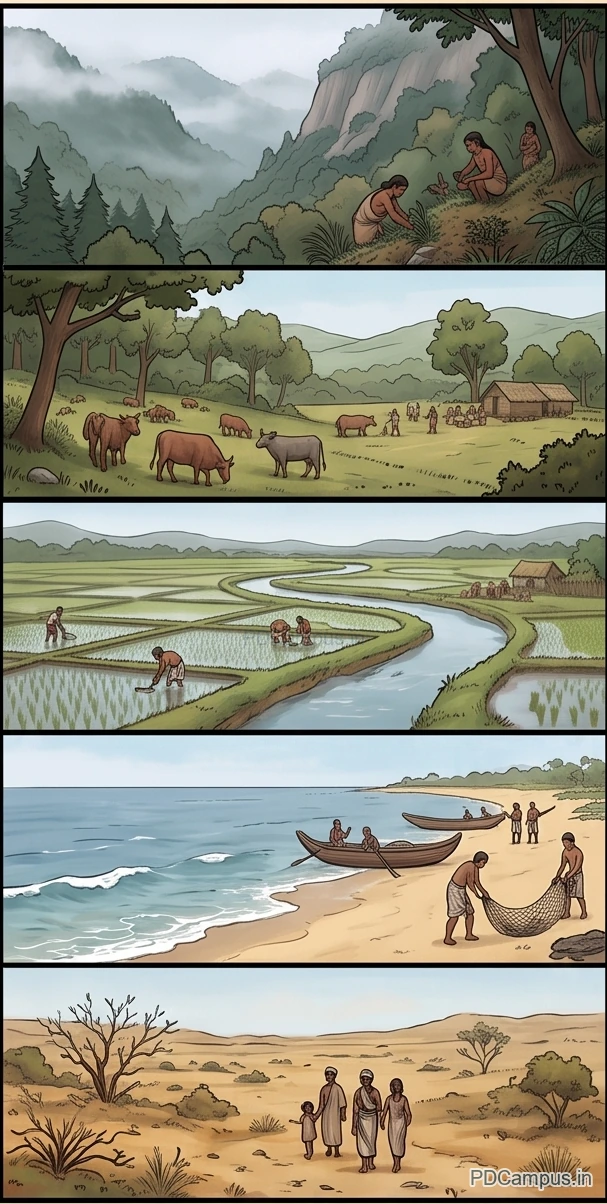
The landscape system joins three layers: mudalporul, the basic setting of land and time; karupporul, associated beings, objects and activities; and uripporul, the human emotional situation. Thus a landscape has meaning beyond scenery. The five familiar landscapes concern mutual love. Tamil poetics also discusses kaikkilai, one-sided love, and peruntinai, love that does not fit the usual conventions. Later grammatical explanations should not be treated as evidence that every early poem follows one unchanged rulebook.भूदृश्य व्यवस्था तीन स्तर जोड़ती है: मुदलपोरुल, अर्थात भूमि और समय का मूल परिवेश; करुप्पोरुल, अर्थात उससे जुड़े जीव, वस्तुएँ और गतिविधियाँ; तथा उरिप्पोरुल, अर्थात मनुष्य की भावनात्मक स्थिति। इसलिए भूदृश्य केवल दृश्य-सज्जा नहीं है। पाँच परिचित भूदृश्य परस्पर प्रेम से जुड़े हैं। तमिल काव्यशास्त्र कैक्किलै, अर्थात एकतरफा प्रेम, और पेरुन्तिणै, अर्थात सामान्य काव्य-परंपराओं में न बैठने वाला प्रेम, पर भी विचार करता है। बाद के व्याकरणों की व्याख्या से यह सिद्ध नहीं होता कि हर पुरानी कविता एक अपरिवर्तित नियम-पुस्तक का पालन करती थी।
Akam and puram - the two great rooms of poetryअकम और पुरम: कविता के दो बड़े विषय-क्षेत्र
Akam asks...अकम के प्रश्न
- How does love feel?प्रेम का अनुभव कैसा है?
- Are the lovers meeting, waiting or separated?प्रेमी मिल रहे हैं, प्रतीक्षा कर रहे हैं या बिछुड़े हैं?
- Which landscape mirrors that feeling?कौन-सा भूदृश्य उस भाव को व्यक्त करता है?
- Names are usually avoided because the emotion is universal.भाव को व्यापक अनुभव बनाने के लिए सामान्यतः नाम नहीं दिए जाते।
Puram asks...पुरम के प्रश्न
- What makes a good ruler or brave warrior?अच्छा शासक या वीर योद्धा किसे माना जाए?
- How should victory, death, honour and generosity be remembered?विजय, मृत्यु, सम्मान और उदारता को कैसे याद किया जाए?
- Who gave gifts to bards?गायक-कवियों को किसने उपहार दिए?
- Named people and public events can appear.इसमें नामित व्यक्ति और सार्वजनिक घटनाएँ आ सकती हैं।
Interior feeling and public actionनिजी भाव और सार्वजनिक जीवन
How power worked: protection, resources and giftsशक्ति कैसे चलती थी: सुरक्षा, संसाधन और उपहार
Revenue and wealthआय और संपत्ति
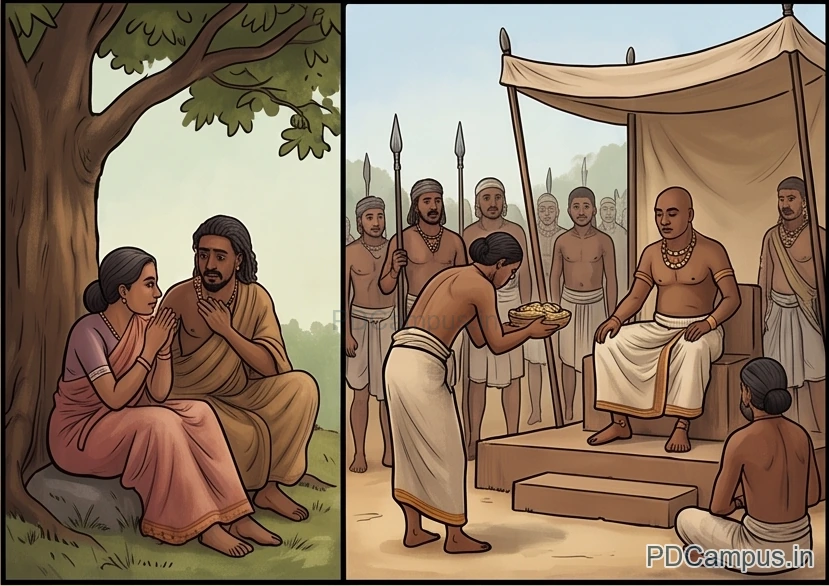
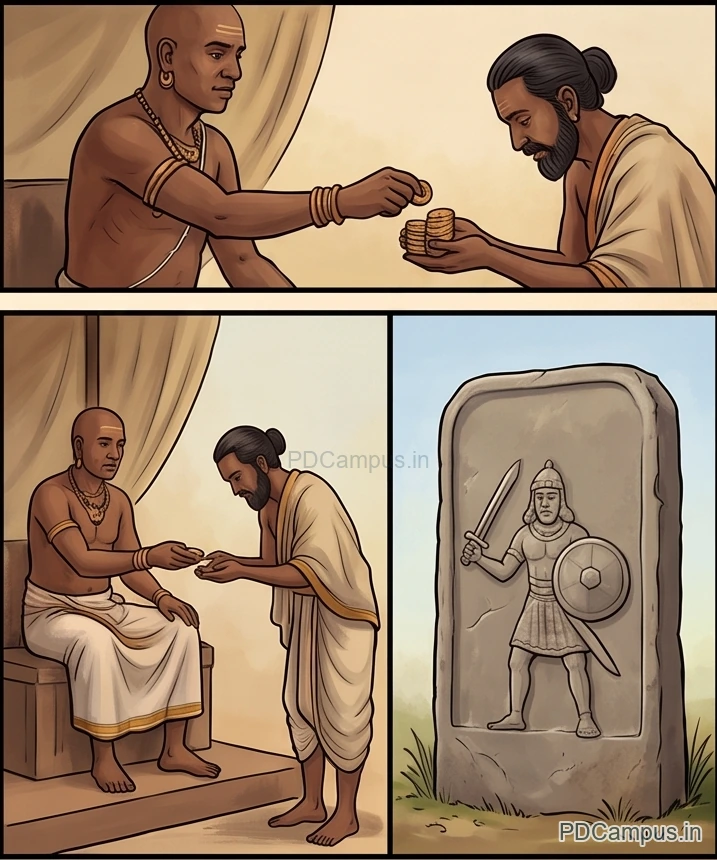
Rulers received tribute from lesser chiefs, shares of produce, tolls at routes and ports, gifts and war booty. The poems celebrate redistribution: a successful chief gave food, gold, ornaments, chariots or land-control to followers and poets.शासकों को छोटे सरदारों से अधीनता-भेंट, उपज का हिस्सा, मार्गों और बंदरगाहों पर शुल्क, उपहार तथा युद्ध की लूट मिलती थी। कविताएँ पुनर्वितरण का गुणगान करती हैं: सफल सरदार अनुयायियों और कवियों को भोजन, सोना, आभूषण, रथ या भूमि पर अधिकार देता था।
Surplus is what remains after immediate needs have been met. Tribute is a payment acknowledging another ruler’s superior power; a toll is a charge on movement or trade. Redistribution means gathering resources and giving them out again. Protection, war leadership and generosity helped chiefs attract supporters, but dependence on gifts could also expose poets and followers to insecurity.अधिशेष वह उपज या धन है जो तत्काल जरूरतों के बाद बचता है। अधीनता-भेंट किसी अधिक शक्तिशाली शासक की श्रेष्ठता स्वीकार करते हुए दी जाती है; मार्ग या व्यापार पर लिया जाने वाला शुल्क चुंगी कहलाता है। पुनर्वितरण में संसाधन इकट्ठे करके दोबारा बाँटे जाते हैं। सुरक्षा, युद्ध-नेतृत्व और उदारता से सरदारों को समर्थक मिलते थे; पर उपहारों पर निर्भर कवियों और अनुयायियों का जीवन असुरक्षित भी हो सकता था।
Warयुद्ध
Infantry, horses, elephants and chariots appear. Cattle raids could begin conflict. Poetic ideals praised courage and sometimes rules of honour, but real war also meant hunger, grief, widows and ruined settlements.पैदल सैनिक, घोड़े, हाथी और रथ वर्णनों में आते हैं। मवेशी छीनने के छापों से संघर्ष शुरू हो सकता था। काव्य-आदर्श साहस और कभी सम्मानपूर्ण आचरण के नियमों की प्रशंसा करते थे; वास्तविक युद्ध का अर्थ भूख, शोक, विधवाएँ और उजड़ी बस्तियाँ भी था।
Nadukalनडुकल
A hero stone commemorated a warrior who died bravely, often in cattle defence or battle. Ritual memory could turn death into lasting social honour. Hero-stone traditions continued long after the Sangam corpus.वीर-शिला उस योद्धा की स्मृति में होती थी जो साहस से लड़ते हुए, अक्सर मवेशियों की रक्षा या युद्ध में, मारा गया हो। अनुष्ठानिक स्मरण मृत्यु को स्थायी सामाजिक सम्मान दे सकता था। वीर-शिला की परंपराएँ संगम काव्य-समूह के बहुत बाद तक चलीं।
Chiefs, gifts and remembranceसरदार, उपहार और स्मृति
Society was varied - not one flat groupसमाज विविध था; सबकी स्थिति समान नहीं थी
| People or groupलोग या समूह | What the evidence showsसाक्ष्य क्या दिखाते हैं | Important nuanceजरूरी बारीकी |
|---|---|---|
| Farmers and landholdersकिसान और भूधारक | Paddy, millet, sugarcane, ploughing, irrigation and storage supported chiefs and towns.धान, मोटे अनाज, गन्ना, जुताई, सिंचाई और भंडारण सरदारों तथा नगरों को सहारा देते थे। | Marutam surplus gave some rulers greater power than poorer ecological zones.मरुतम का अधिशेष कुछ शासकों को कम संसाधनों वाले क्षेत्रों से अधिक शक्ति देता था। |
| Herders, hunters, fishersपशुपालक, शिकारी और मछुआरे | Cattle, forest food, honey, fish, salt, pearls and chanks linked specialised communities to exchange.मवेशी, वन का भोजन, शहद, मछली, नमक, मोती और शंख विशेष काम करने वाले समुदायों को विनिमय से जोड़ते थे। | The tinai model organises poetry; real people moved between zones and occupations.तिणै कविता व्यवस्थित करता है; वास्तविक लोग क्षेत्रों और पेशों के बीच आते-जाते थे। |
| Craftspeople and merchantsशिल्पी और व्यापारी | Ironworkers, carpenters, potters, weavers, bead-makers, salt merchants and maritime traders appear.लुहार, बढ़ई, कुम्हार, बुनकर, मनका-निर्माता, नमक व्यापारी और समुद्री व्यापारी मिलते हैं। | Imported goods often passed through Indian merchants and local networks, not only foreign sailors.आयातित वस्तुएँ अक्सर भारतीय व्यापारियों और स्थानीय संपर्कों से गुजरती थीं, केवल विदेशी नाविकों से नहीं। |
| Poets and performersकवि और कलाकार | Panar bards, viraliyar women performers and poets carried news, praise and memory between courts.पाणर गायक-कवि, विरलियर महिला कलाकार और कवि दरबारों के बीच समाचार, प्रशंसा और स्मृतियाँ ले जाते थे। | Patronage made poetry possible, but also shaped how a ruler was described.आश्रय से काव्य-रचना संभव हुई, पर उसने शासक के चित्रण को भी प्रभावित किया। |
| Womenमहिलाएँ | Women speak powerfully in akam poetry; women poets include Avvaiyar and others. Women worked, performed, loved, grieved and advised.अकम कविता में महिलाओं की सशक्त आवाज है; अव्वैयार और अन्य महिलाएँ कवि थीं। महिलाएँ काम करतीं, कला प्रस्तुत करतीं, प्रेम करतीं, शोक मनातीं और सलाह देती थीं। | Agency did not remove patriarchy, status differences, war widowhood or unequal control over resources.निर्णय लेने की क्षमता होने से पितृसत्ता, हैसियत के अंतर, युद्ध में विधवा होना या संसाधनों पर असमान अधिकार समाप्त नहीं हुए। |
| Antanar and asceticsअंतणर और संन्यासी | Brahmanas, Vedic rites, Jain monks and Buddhist ascetics were part of a plural religious world.ब्राह्मण, वैदिक अनुष्ठान, जैन मुनि और बौद्ध संन्यासी विविध धार्मिक संसार का हिस्सा थे। | Northern varna ideas interacted with local kin and occupation groups; early Tamil society was hierarchical but not a simple copy of one textbook model.उत्तर की वर्ण-संबंधी धारणाएँ स्थानीय नातेदारी और पेशागत समूहों से मिलीं; समाज ऊँच-नीच वाला था, लेकिन किसी एक पाठ्यपुस्तकीय मॉडल की सीधी प्रतिलिपि नहीं। |
| Dependent peopleआश्रित लोग | Servitude, captives, labour dependence and unequal status existed.सेवकाई, बंदी बनाना, श्रम की निर्भरता और असमान स्थिति मौजूद थीं। | Do not romanticise the age as completely equal or free of social exclusion.युग को पूरी तरह समान या सामाजिक बहिष्कार से मुक्त बताकर आदर्श न बनाएँ। |
Uzhavar is a term for cultivators; ayar are associated with herding and paratavar with the coast. Panar were bards and viraliyar women performers. These names help read the poems, but do not prove that all members had identical status. Avvaiyar is a name associated with more than one period of Tamil literature: do not combine the Sangam poet with all later works and legends under that name.उझवर शब्द कृषकों के लिए आता है; आयर पशुपालन और परतवर तटीय जीवन से जुड़े हैं। पाणर गायक-कवि और विरलियर महिला कलाकार थीं। ये नाम कविताएँ समझने में सहायक हैं, पर इनसे हर सदस्य की सामाजिक स्थिति समान सिद्ध नहीं होती। अव्वैयार नाम तमिल साहित्य के एक से अधिक कालों से जुड़ा है; संगम कवयित्री को इस नाम की सभी बाद की रचनाओं और कथाओं के साथ न मिला दें।
In simple words: landscape influenced work; work shaped exchange; surplus strengthened chiefs; chiefs rewarded followers; poets turned deeds into fame. But the poems also let us hear love, worry, hunger and grief from below the throne.सरल शब्दों में: भूदृश्य ने काम को प्रभावित किया, काम ने विनिमय को, अधिशेष ने सरदारों को मजबूत किया, सरदारों ने अनुयायियों को पुरस्कार दिए और कवियों ने कर्मों को ख्याति में बदला। लेकिन कविताएँ सत्ता से नीचे के लोगों का प्रेम, चिंता, भूख और शोक भी सुनाती हैं।
4. Visual Atlas - Literature, Economy, Ports, Belief and Archaeology4. साहित्य, अर्थव्यवस्था, बंदरगाह, मान्यताएँ और पुरातत्त्व
Place each text in its literary period. Then follow pepper or pearls from producers to markets and ports. Finally compare these descriptions with the different layers of an excavated site.हर ग्रंथ को उसके साहित्यिक काल में रखें। फिर काली मिर्च या मोती की यात्रा उत्पादक से बाजार और बंदरगाह तक समझें। अंत में इन विवरणों की तुलना किसी उत्खनित स्थल की अलग-अलग परतों से करें।
The literature shelf - core, post-Sangam and epic layersसाहित्य का क्रम: मुख्य संगम रचनाएँ, संगमोत्तर ग्रंथ और महाकाव्य
Ettuttokai - Eight Anthologiesएत्तुत्तोकै: आठ काव्य-संकलन
Natrinai, Kuruntokai, Ainkurunuru, Pattirruppattu, Paripatal, Kalittokai, Akananuru and Purananuru.नत्रिणै, कुरुंतोकै, ऐंकुरुनूरु, पतिर्रुप्पत्तु, परिपाटल, कलित्तोकै, अकनानूरु और पुरनानूरु।
Akananuru is mainly akam; Purananuru is the great public-world collection. Pattirruppattu is especially valuable for Chera rulers.अकनानूरु मुख्यतः अकम का संग्रह है; पुरनानूरु सार्वजनिक जीवन का प्रमुख संकलन है। पतिर्रुप्पत्तु चेर शासकों के लिए विशेष उपयोगी है।
Pattuppattu - Ten Idyllsपत्तुप्पाट्टु: दस लंबे काव्य
Tirumurukarruppatai, Porunararruppatai, Cirupanarruppatai, Perumpanarruppatai, Mullaippattu, Maturaikkanchi, Nedunalvadai, Kurinjippattu, Pattinappalai and Malaipadukadam.तिरुमुरुगार्रुप्पडै, पोरुनरार्रुप्पडै, सिरुपाणार्रुप्पडै, पेरुम्पाणार्रुप्पडै, मुल्लैप्पाट्टु, मदुरैक्कांची, नेडुनल्वाडै, कुरिंजिप्पाट्टु, पट्टिनप्पालै और मलैपडुकडाम।
The long poems guide us through patrons, cities, roads, landscapes and religious worlds.ये लंबे काव्य आश्रयदाताओं, नगरों, सड़कों, भूदृश्यों और धार्मिक संसारों से परिचित कराते हैं।
| Textग्रंथ | Best connectionमुख्य संबंध | Do not confuseभ्रम से बचें |
|---|---|---|
| Tolkappiyamतोल्काप्पियम | Old Tamil grammar and poetics; sounds, words, meaning, akam/puram and tinai conventions.प्राचीन तमिल व्याकरण और काव्यशास्त्र; ध्वनि, शब्द, अर्थ, अकम-पुरम और तिणै की परंपराएँ। | Not a simple political chronicle, and not securely datable to one ruler.यह सीधा राजनीतिक इतिहास नहीं है और इसे निश्चित रूप से किसी एक शासक के समय में नहीं रखा जा सकता। |
| Purananuruपुरनानूरु | War, chiefs, death, ethics, generosity and public memory.युद्ध, सरदार, मृत्यु, नैतिकता, उदारता और सार्वजनिक स्मृति। | “Puram” is public/exterior theme, not the Puranas.“पुरम” सार्वजनिक या बाहरी विषय है, पुराण नहीं। |
| Akananuruअकनानूरु | Love poetry organised through inner worlds and landscape conventions.निजी भावों और भूदृश्य-परंपराओं में व्यवस्थित प्रेम-काव्य। | Akam poems usually avoid naming lovers even when the social setting feels real.सामाजिक परिवेश वास्तविक लगने पर भी अकम कविता सामान्यतः प्रेमियों के नाम नहीं देती। |
| Pattirruppattuपतिर्रुप्पत्तु | “Ten Tens”; surviving poems praise Chera rulers.“दस दशक”; बची कविताएँ चेर शासकों की प्रशंसा करती हैं। | Not the same collection as Pattuppattu, the “Ten Idylls”.यह दस लंबे काव्यों के संग्रह पत्तुप्पाट्टु से अलग है। |
| Pattinappalaiपट्टिनप्पालै | Puhar/Kaveripattinam, Chola Karikala, port-city life and trade.पुहार या कावेरीपट्टिनम, चोल करिकाल, बंदरगाह-नगर का जीवन और व्यापार। | A poetic city portrait is not a municipal survey.नगर का काव्य-चित्र नगरपालिका का सर्वेक्षण नहीं है। |
| Maduraikkanchiमदुरैक्कांची | Madurai, Pandya court, markets, streets and city society.मदुरै, पांड्य दरबार, बाजार, सड़कें और नगरीय समाज। | It belongs to Pattuppattu, not the Eight Anthologies.यह पत्तुप्पाट्टु का भाग है, आठ काव्य-संकलनों का नहीं। |
| Tirukkuralतिरुक्कुरल | Aram (virtue), porul (wealth/polity) and inbam (love); usually placed in the post-Sangam Eighteen Minor Works.अरम अर्थात सदाचार, पोरुल अर्थात धन और राजव्यवस्था, तथा इनबम अर्थात प्रेम; सामान्यतः संगमोत्तर अठारह लघु ग्रंथों में रखा जाता है। | Not one of the core Eight Anthologies.यह मुख्य आठ काव्य-संकलनों में से एक नहीं है। |
| Silappadikaramशिलप्पदिकारम | Kannagi, Kovalan, Puhar, Madurai, Vanchi and the anklet; tradition attributes it to Ilango Adigal.कण्णगी, कोवलन, पुहार, मदुरै, वंजी और पायल; परंपरा इसके रचनाकार इलंगो अडिगल को मानती है। | A later epic, not a core Sangam anthology or courtroom transcript.यह बाद का महाकाव्य है, मुख्य संगम संकलन या अदालत की कार्यवाही का लेखा नहीं। |
| Manimekalaiमणिमेकलै | Buddhist epic, Manimekalai, cities, charity and philosophical debate; linked by tradition to Sattanar.बौद्ध महाकाव्य, मणिमेकलै, नगर, दान और दार्शनिक बहस; परंपरा इसे सत्तनार से जोड़ती है। | Not a biography written at the moment of the earliest poems.यह सबसे पुरानी कविताओं के समय ही लिखी गई जीवनी नहीं है। |
Pathinenkilkanakku means the Eighteen Minor Works, a later grouping that includes Tirukkural. “Minor” describes the collection’s classification, not the importance of its ideas. Civaka Cintamani is another Tamil epic, associated with the Jain poet Tirutthakka Tevar and the hero Civakan. It is medieval, many centuries later than core Sangam poetry; the Tamil Virtual Academy places it around the ninth century CE while noting uncertainty about its date. Keep it on the later literature shelf, not among early Sangam eyewitness sources.पतिनेनकीलकनक्कु का अर्थ अठारह लघु ग्रंथ है; यह बाद का समूह है जिसमें तिरुक्कुरल शामिल है। “लघु” संग्रह का वर्गीकरण है, उसके विचारों का महत्व कम बताने वाला शब्द नहीं। जीवक चिंतामणि एक अन्य तमिल महाकाव्य है, जो जैन कवि तिरुत्तक्क तेवर और नायक जीवकन से जुड़ा है। यह मध्यकालीन है, मुख्य संगम कविता से कई सदियाँ बाद का। तमिल वर्चुअल अकादमी तारीख की अनिश्चितता बताते हुए इसे लगभग नौवीं शताब्दी ईस्वी में रखती है। इसे बाद के साहित्य के साथ पढ़ें, आरंभिक संगम काल के प्रत्यक्षदर्शी स्रोत की तरह नहीं।
From landscape to market - the economic webउत्पादन से बाजार तक: अर्थव्यवस्था के संबंध
Landscape to marketउत्पादन से बाजार तक
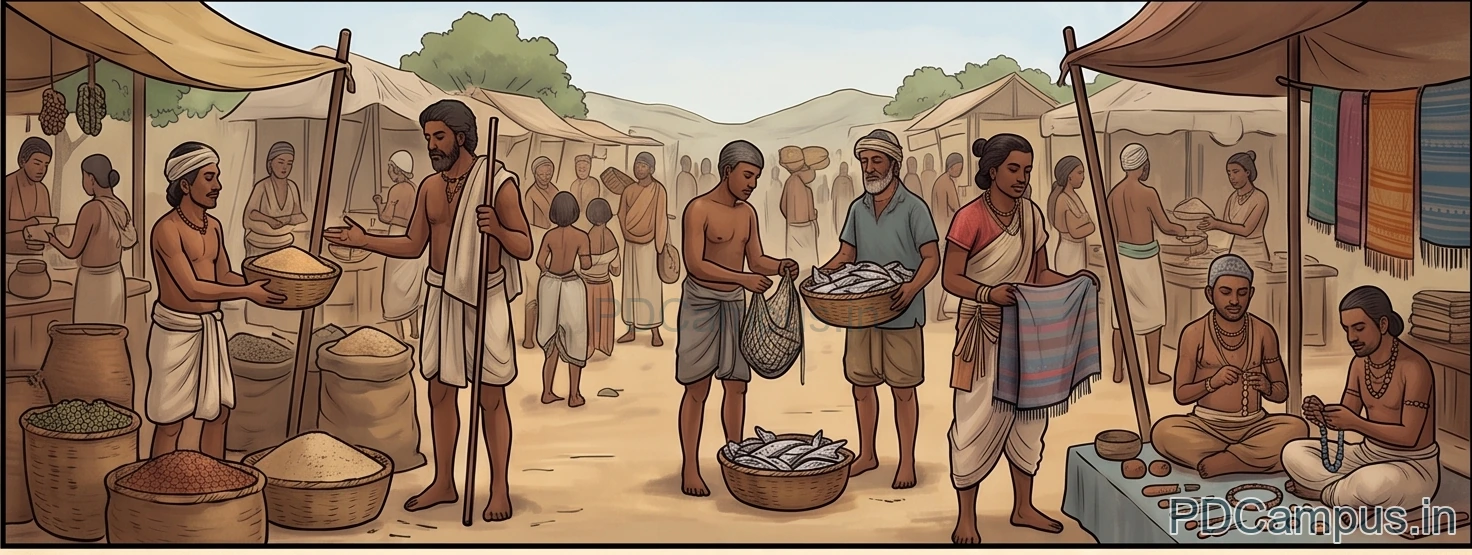
Food and raw materials reached markets from several zones: rice, millet, pulses, cotton and fruit from cultivated areas; pepper, honey, timber, ivory, gems and elephants from hill and forest networks; fish, salt, pearls and chank shells from the coast. Workshops made iron goods, beads, pots, cloth and ornaments. Carts, pack animals and boats connected producers, storage places and buyers. Credit allowed some transactions before final payment. Protection and toll collection linked trade with chiefly power. Not every listed product came from every region.कई क्षेत्रों से भोजन और कच्चा माल बाजार पहुँचता था: खेती वाले क्षेत्रों से चावल, बाजरा जैसे मोटे अनाज, दालें, कपास और फल; पहाड़ी तथा वन-संपर्कों से काली मिर्च, शहद, लकड़ी, हाथीदाँत, रत्न और हाथी; तट से मछली, नमक, मोती और शंख। कार्यशालाएँ लोहे का सामान, मनके, बर्तन, कपड़ा और आभूषण बनाती थीं। गाड़ियाँ, बोझ ढोने वाले पशु और नावें उत्पादकों, भंडारों तथा खरीदारों को जोड़ती थीं। उधार से कुछ सौदे अंतिम भुगतान से पहले संभव होते थे। सुरक्षा और चुंगी-संग्रह व्यापार को सरदारों की शक्ति से जोड़ते थे। सूची की हर वस्तु हर क्षेत्र से नहीं आती थी।
The port-trade flow - a pepper berry meets a gold coinबंदरगाह का व्यापार: काली मिर्च से सोने के सिक्के तक
Exports through Indian Ocean networks included pepper and other spices, pearls, chanks, ivory, tortoise shell, gems, beads, cotton cloth and aromatics. Iron and steel also occur in wider Indian export accounts; that does not establish steel exports at every Tamil port. Imports included gold and silver, wine in transport jars, coral, glass, fine ceramics, metal goods and other luxuries. Seasonal monsoon winds helped ships cross the sea. Ports and warehouses connected Indian producers with the Red Sea and Mediterranean as well as other Indian Ocean markets; goods and routes varied by port and period.हिंद महासागर के व्यापारिक संपर्कों से काली मिर्च और अन्य मसाले, मोती, शंख, हाथीदाँत, कछुए का कवच, रत्न, मनके, सूती कपड़ा और सुगंधित पदार्थ बाहर जाते थे। भारत के व्यापक निर्यात-विवरणों में लोहा और इस्पात भी आते हैं; इससे हर तमिल बंदरगाह से इस्पात का निर्यात सिद्ध नहीं होता। आयात में सोना-चाँदी, ढुलाई के मर्तबानों में मदिरा, मूँगा, काँच, महीन मृद्भांड, धातु का सामान और अन्य विलास-वस्तुएँ थीं। मौसमी मानसूनी पवनें समुद्र पार करने में सहायक थीं। बंदरगाह और गोदाम भारतीय उत्पादकों को लाल सागर, भूमध्यसागर और हिंद महासागर के दूसरे बाजारों से जोड़ते थे; वस्तुएँ और मार्ग बंदरगाह तथा काल के अनुसार बदलते थे।
| Placeस्थान | Why it mattersमहत्व | Evidence cautionसाक्ष्य की सावधानी |
|---|---|---|
| Muchiri / Muzirisमुचिरि या मुजिरिस | West-coast port celebrated for Yavana ships, pepper and gold; named in classical trade accounts.यवन जहाजों, काली मिर्च और सोने के लिए प्रसिद्ध पश्चिमी बंदरगाह; प्राचीन व्यापार-विवरणों में नाम मिलता है। | Pattanam is a major candidate, but the identification is still debated.पत्तनम प्रमुख संभावित पहचान है, लेकिन इस पहचान पर अभी बहस है। |
| Tondiतोंडि | Port name linked with the Chera/western coast in poetry and trade geography.कविता और व्यापारिक भूगोल में चेर तथा पश्चिमी तट से जुड़ा बंदरगाह-नाम। | Ancient names can refer to or be confused across more than one coastal location.प्राचीन नाम एक से अधिक तटीय स्थानों के लिए आ सकते हैं या उनमें भ्रम हो सकता है। |
| Puhar / Kaveripattinamपुहार या कावेरीपट्टिनम | Chola port at the Kaveri mouth; Pattinappalai and epics describe cosmopolitan city life.कावेरी के मुहाने पर चोल बंदरगाह; पट्टिनप्पालै और महाकाव्य विविध समुदायों वाले नगर का वर्णन करते हैं। | Excavated wharf remains include later centuries too; submergence stories combine geology, archaeology and literature.उत्खनित घाट में बाद की सदियों के अवशेष भी हैं; डूबने की कथाओं में भूगर्भ, पुरातत्त्व और साहित्य के प्रश्न जुड़े हैं। |
| Korkaiकोर्कै | Pandya-linked pearl and chank centre near the Tamraparni coast.ताम्रपर्णी तट के निकट पांड्यों से जुड़ा मोती और शंख का केंद्र। | Shorelines and river mouths changed, so the ancient port is now inland from the modern sea edge.तटरेखा और नदी के मुहाने बदले, इसलिए पुराना बंदरगाह आज समुद्र से अंदर है। |
| Arikamedu, often associated with Podukeअरिकमेडु, जिसे अक्सर पोडुके से जोड़ा जाता है | Near Puducherry; amphorae, terra sigillata/Arretine ware, rouletted ware, beads and craft production show long exchange.पुडुचेरी के पास; एम्फोरा, टेरा सिजिलाटा या अरेटाइन बर्तन, रूलेटेड मृद्भांड, मनके और शिल्प-उत्पादन लंबे विनिमय-संबंध दिखाते हैं। | It was an Indian settlement and craft/trade centre connected abroad, not securely a “Roman colony”.यह विदेश से जुड़ी भारतीय बस्ती तथा शिल्प-व्यापार का केंद्र था; इसे निश्चित “रोमन उपनिवेश” नहीं कह सकते। |
| Alagankulamअलगनकुलम | East/south-east coast site with imported and local ceramics, inscriptions and maritime links.पूर्वी या दक्षिण-पूर्वी तटीय स्थल; आयातित और स्थानीय बर्तन, अभिलेख तथा समुद्री संपर्क। | A foreign-style object may be locally used or imitated; origin must be tested, not guessed.विदेशी शैली की वस्तु स्थानीय उपयोग या नकल भी हो सकती है; उत्पत्ति की जाँच चाहिए, अनुमान नहीं। |
| Kodumanalकोडुमनल | Inland craft and route centre: iron, carnelian beads, pottery, inscriptions and megalithic/early historic layers.भीतरी क्षेत्र का शिल्प और मार्ग-केंद्र: लोहा, कार्नेलियन मनके, बर्तन, अभिलेख तथा महापाषाणीय और आरंभिक ऐतिहासिक परतें। | Its workshops and inland location show why ports must be studied together with production centres and routes.इसकी कार्यशालाएँ और भीतरी स्थिति बताती हैं कि बंदरगाहों को उत्पादन-केंद्रों तथा मार्गों के साथ क्यों पढ़ना चाहिए। |
Pepper, jars and maritime exchangeकाली मिर्च, मर्तबान और समुद्री व्यापार
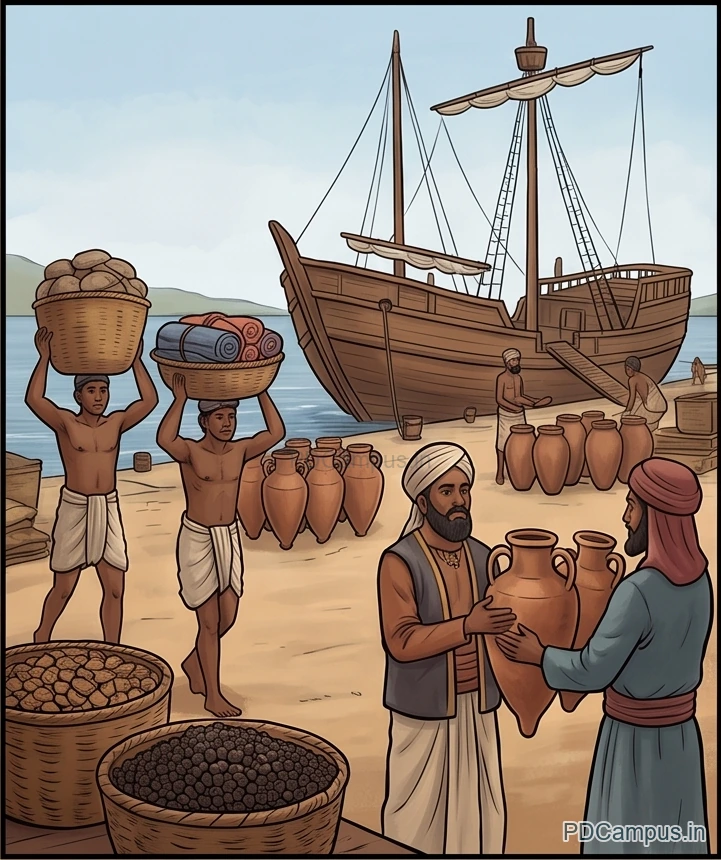
The Arabian Sea lies west of the peninsula and the Bay of Bengal east. An amphora is a large transport jar, commonly with two handles. Terra sigillata or Arretine ware is fine red tableware associated with Mediterranean production; “rouletted” describes a repeated impressed decoration and does not by itself mean a Roman import. Carnelian is a reddish stone used for beads. A wharf is a landing or loading structure, and a ring well is lined with stacked terracotta rings. Find context and manufacture matter more than a familiar-looking shape. A chank is a large marine shell used, among other purposes, for ornaments and ritual objects.प्रायद्वीप के पश्चिम में अरब सागर और पूर्व में बंगाल की खाड़ी है। एम्फोरा ढुलाई का बड़ा मर्तबान होता है, प्रायः दो हत्थों वाला। टेरा सिजिलाटा या अरेटाइन मृद्भांड भूमध्यसागरीय उत्पादन से जुड़े महीन लाल भोजन-पात्र हैं। “रूलेटेड” शब्द बार-बार छापकर बनाए गए अलंकरण को बताता है; इससे अपने आप रोमन आयात सिद्ध नहीं होता। कार्नेलियन लालिमा वाला पत्थर है जिससे मनके बनते थे। घाट नावों से उतरने या माल चढ़ाने की संरचना है; वलय-कूप में पकी मिट्टी के छल्ले एक के ऊपर एक लगाए जाते हैं। परिचित आकृति से अधिक महत्वपूर्ण वस्तु का निर्माण और मिलने का संदर्भ है। शंख बड़ा समुद्री खोल है जिसका उपयोग अन्य कामों के साथ आभूषण और अनुष्ठानिक वस्तुएँ बनाने में होता था।
Who were Yavanas?यवन कौन थे?
Originally a word linked with Ionians/Greeks. In early Indian texts it could refer to Greeks and, depending on context, western foreigners. Sangam poems place Yavanas in port, trade and guard-related settings.यह शब्द मूलतः आयोनियनों या यूनानियों से जुड़ा था। आरंभिक भारतीय ग्रंथों में संदर्भ के अनुसार इसका अर्थ यूनानी और पश्चिमी विदेशी भी हो सकता था। संगम कविताओं में यवन बंदरगाह, व्यापार और पहरेदारी से जुड़े प्रसंगों में आते हैं।
Were Roman coins money?क्या रोमन सिक्के मुद्रा थे?
Roman coins could be used in exchange, as bullion (metal valued by weight), as prestigious possessions or as ornaments. Their function must be investigated in each context. A hoard, meaning coins deposited together, does not prove that every village used Roman currency for daily purchases.रोमन सिक्के विनिमय में, वजन के अनुसार मूल्य वाली धातु के रूप में, प्रतिष्ठा की वस्तु या आभूषण के रूप में इस्तेमाल हो सकते थे। हर संदर्भ में उनका काम अलग जाँचना चाहिए। एक साथ जमा मिले सिक्कों का भंडार यह सिद्ध नहीं करता कि हर गाँव रोजमर्रा की खरीदारी में रोमन मुद्रा चलाता था।
Did Rome “create” Tamil prosperity?क्या रोम ने तमिल समृद्धि पैदा की?
No. Overseas demand enlarged exchange, but farmers, divers, craftspeople, inland traders, ports and rulers already formed a local economy. External trade joined this system; it did not invent it.नहीं। विदेशी माँग ने विनिमय बढ़ाया, लेकिन किसान, गोताखोर, शिल्पी, भीतरी क्षेत्रों के व्यापारी, बंदरगाह और शासक पहले से स्थानीय अर्थव्यवस्था बनाते थे। बाहरी व्यापार इस व्यवस्था से जुड़ा; उसने इसे जन्म नहीं दिया।
Belief was a meeting groundमान्यताओं का साझा संसार
Landscape deitiesभूदृश्य से जुड़े देवता
Seyon/Murugan, Mayon, Korravai, Ventan and Varunan were tied to ecological-poetic worlds. Over time these figures interacted with wider Brahmanical traditions; identities changed rather than remaining frozen.सेयोन या मुरुगन, मायोन, कोर्रवई, वेंतन और वरुणन पारिस्थितिक तथा काव्यात्मक संसारों से जुड़े थे। समय के साथ इनका व्यापक ब्राह्मणीय परंपराओं से संपर्क हुआ; इनकी पहचान एक जैसी स्थिर रहने के बजाय बदलती रही।
Poetic associations include Murugan with the hill and spear, Mayon as a dark-hued pastoral deity, and Korravai as a fierce mother goddess associated with victory. These help explain literary imagery; they are not proof of one fixed temple icon at every site. Local worship, ancestors, hero remembrance, sacrifices and ascetic communities could coexist, with relationships changing over time.काव्य-संबंधों में मुरुगन पहाड़ और भाले से, मायोन श्यामवर्णी पशुपालक देवता के रूप में, और कोर्रवई विजय से जुड़ी उग्र मातृदेवी के रूप में जुड़ते हैं। ये संबंध साहित्यिक बिंब समझाते हैं; हर स्थल पर एक निश्चित मंदिर-प्रतिमा का प्रमाण नहीं हैं। स्थानीय उपासना, पूर्वजों का सम्मान, वीर-स्मृति, यज्ञ और संन्यासी समुदाय साथ रह सकते थे; उनके संबंध समय के साथ बदलते थे।
Ritual and hero memoryअनुष्ठान और वीर-स्मृति
People honoured ancestors, nature forces and warriors. Hero stones kept a brave death present in community space. Chiefs also performed Vedic sacrifices to express rank and legitimacy.लोग पूर्वजों, प्रकृति की शक्तियों और योद्धाओं का सम्मान करते थे। वीर-शिलाएँ समुदाय के बीच वीर मृत्यु की स्मृति जीवित रखती थीं। सरदार प्रतिष्ठा और शासन की मान्यता जताने के लिए वैदिक यज्ञ भी करते थे।
Jain and Buddhist presenceजैन और बौद्ध उपस्थिति
Cave beds, donor inscriptions, monks, nuns and later epics show Jain and Buddhist communities. Their ethical and monastic worlds shared roads and towns with local and Brahmanical worship.गुफाओं की शैयाएँ, दाताओं के अभिलेख, साधु-साध्वियाँ और बाद के महाकाव्य जैन तथा बौद्ध समुदायों के साक्ष्य देते हैं। उनकी नैतिक और मठीय दुनिया स्थानीय तथा ब्राह्मणीय उपासना के साथ उन्हीं मार्गों और नगरों में मौजूद थी।
Archaeology - dig through the layersपुरातत्त्व: परतों को अलग-अलग पढ़ें
A megalith is a monument using large stones, often associated here with burials. A cist is a stone-slab burial chamber; a cairn is a mound or heap of stones, sometimes enclosed by a stone circle. An urn burial uses a large pottery vessel, and grave goods are objects placed with the dead. Black-and-red ware names a pottery appearance. Iron tools, beads and graffiti can occur in burial and settlement contexts. Habitation layers may contain bricks, ring wells, craft waste, pots and coins. Different layers and sites need their own dates: one type of grave does not identify a named dynasty or the language of every person buried there.महापाषाण बड़े पत्थरों से बना स्मारक है; यहाँ ऐसे अनेक स्मारक दफनाने की परंपराओं से जुड़े हैं। सिस्ट पत्थर की पट्टियों का बना शव-कक्ष है। केर्न पत्थरों का ढेर या टीला है, जिसके चारों ओर कभी पत्थरों का वृत्त होता है। कलश-समाधि में मिट्टी का बड़ा पात्र इस्तेमाल होता है; मृतक के साथ रखी वस्तुएँ समाधि-सामग्री कहलाती हैं। काला-लाल मृद्भांड बर्तन के रंग-रूप का नाम है। लोहे के औजार, मनके और चिह्न समाधियों तथा बस्तियों दोनों में मिल सकते हैं। आवास-परतों में ईंटें, वलय-कूप, शिल्प का कचरा, बर्तन और सिक्के मिल सकते हैं। हर परत और स्थल का अलग कालनिर्धारण चाहिए: एक प्रकार की समाधि से किसी नामित राजवंश या उसमें दफन हर व्यक्ति की भाषा नहीं पहचानी जा सकती।
Jambaiजम्बै
The Tamil-Brahmi record at Jambai identifies Atiyan Netuman Anci as Satiyaputo and records his gift of a dwelling for ascetics. It connects the Atiyaman line with the Satyaputra name in Ashoka’s much earlier edicts. It does not make this individual chief a contemporary of Ashoka.जम्बै का तमिल-ब्राह्मी लेख अतियन नेडुमान अंचि को सतियपुतो कहता है और संन्यासियों के लिए निवास के दान को दर्ज करता है। यह अतियमान वंश और अशोक के अभिलेखों में आए ‘सत्यपुत्र’ नाम के बीच संबंध दिखाता है; अशोक के अभिलेख जम्बै लेख से बहुत पहले के हैं। इसलिए यह विशेष सरदार अशोक का समकालीन सिद्ध नहीं होता।
Mangulamमांगुलम
Cave inscriptions mention workers/officials linked with a Pandya Nedunchezhiyan and gifts to Jain ascetics.गुफा-अभिलेखों में पांड्य नेडुंचेझियन से जुड़े कर्मचारियों या अधिकारियों द्वारा जैन संन्यासियों को दिए दानों का उल्लेख है।
Pugalurपुगलूर
Tamil-Brahmi inscription preserves three generations of an early Chera line and a gift associated with ascetics.तमिल-ब्राह्मी अभिलेख एक आरंभिक चेर वंश की तीन पीढ़ियों और संन्यासियों से जुड़े दान को दर्ज करता है।
Keeladiकीलड़ी
Early historic urban settlement evidence: brick structures, craft activity, ring wells, pottery, graffiti and Tamil-Brahmi. Excavation dates do not date the entire Sangam corpus.यहाँ आरंभिक ऐतिहासिक नगरीय बसावट के साक्ष्य हैं: ईंट की संरचनाएँ, शिल्प-गतिविधियाँ, वलय-कूप, बर्तन, चिह्न और तमिल-ब्राह्मी। उत्खनन की तारीखें पूरे संगम काव्य-समूह की तारीख नहीं बन जातीं।
Graffiti caution: marks on pottery are real and important, but most are undeciphered. A proposed link between these signs and the Indus script is a research claim, not a proven readable chain. Tamil-Brahmi is writing; an isolated graffiti sign is not automatically a word.चिह्नों की सावधानी: बर्तनों पर बने चिह्न वास्तविक और महत्वपूर्ण हैं, लेकिन अधिकतर पढ़े नहीं गए हैं। इन्हें सिंधु लिपि से जोड़ने का प्रस्ताव शोध-दावा है, सिद्ध और पढ़ी जा सकने वाली निरंतर कड़ी नहीं। तमिल-ब्राह्मी लेखन है; अकेला बना कोई चिह्न अपने आप शब्द नहीं होता।
5. Rapid Revision - The Early Tamil World in One View5. त्वरित पुनरावृत्ति: आरंभिक तमिल संसार
Tamilakam’s Chera, Chola and Pandya houses drew strength from fertile zones, tribute, warfare, gifts and ports. Poets organised experience through akam, puram and tinai. Inland producers and coastal traders joined Indian Ocean networks. Inscriptions and archaeology provide independent evidence with which to compare the poems.तमिलकम के चेर, चोल और पांड्य घरानों को उपजाऊ क्षेत्रों, अधीनता-भेंट, युद्ध, उपहार और बंदरगाहों से शक्ति मिली। कवियों ने अनुभव को अकम, पुरम और तिणै में व्यवस्थित किया। भीतरी उत्पादक और तटीय व्यापारी हिंद महासागर के संपर्कों से जुड़े। अभिलेख और पुरातत्त्व स्वतंत्र साक्ष्य देते हैं जिनसे कविताओं की तुलना की जा सकती है।
Three crownsतीन मुकुट
- Chera: bow, westचेर: धनुष, पश्चिम
- Chola: tiger, Kaveriचोल: बाघ, कावेरी
- Pandya: fish, Maduraiपांड्य: मछली, मदुरै
- Together: Muvendarसामूहिक नाम: मूवेंदर
Five tinaiपाँच तिणै
- Kurinji: hillकुरिंजि: पहाड़
- Mullai: pastureमुल्लै: चरागाह
- Marutam: fieldमरुतम: खेत
- Neital: coastनेय्तल: तट
- Palai: dry journeyपालै: सूखे क्षेत्र की यात्रा
Two poem worldsकविता के दो संसार
- Akam: inner/loveअकम: निजी भाव और प्रेम
- Puram: public/warपुरम: सार्वजनिक जीवन और युद्ध
- Tolkappiyam: poeticsतोल्काप्पियम: काव्यशास्त्र
- Purananuru: public verseपुरनानूरु: सार्वजनिक जीवन की कविता
Trade anchorsव्यापार के मुख्य स्थान
- Muchiri: westमुचिरि: पश्चिम
- Puhar: Chola eastपुहार: चोलों का पूर्वी तट
- Korkai: pearlsकोर्कै: मोती
- Arikamedu: exchangeअरिकमेडु: विनिमय
| If you see...यदि यह दिखे | Connect it to...इससे जोड़ें | Do not mix it with...इससे न मिलाएँ |
|---|---|---|
| Muvendarमूवेंदर | Three crowned rulers: Chera, Chola, Pandya.तीन मुकुटधारी शासक: चेर, चोल और पांड्य। | Not the only chiefs in Tamilakam; Velir and smaller chiefs mattered.तमिलकम में केवल यही सरदार नहीं थे; वेलिर और छोटे सरदार भी महत्वपूर्ण थे। |
| Bow - tiger - fishधनुष, बाघ, मछली | Chera - Chola - Pandya emblems.चेर, चोल और पांड्य के चिह्न। | Do not swap Chola tiger with Chera bow.चोल के बाघ और चेर के धनुष को न बदलें। |
| Vanchi - Uraiyur - Maduraiवंजी, उरैयूर, मदुरै | Chera - Chola - Pandya centres.चेर, चोल और पांड्य के केंद्र। | Vanchi's exact modern identification is debated.वंजी की सही आधुनिक पहचान पर बहस है। |
| Muchiri - Puhar - Korkaiमुचिरि, पुहार, कोर्कै | Chera-linked west port - Chola port - Pandya pearl port.चेर-संबंधित पश्चिमी बंदरगाह, चोल बंदरगाह और पांड्य मोती-बंदरगाह। | Arikamedu was an exchange/craft site, not a royal capital.अरिकमेडु विनिमय और शिल्प का स्थल था, राजकीय राजधानी नहीं। |
| Senguttuvanशेंगुट्टुवन | Chera literary memory; Pattirruppattu; later Pattini tradition.चेर साहित्यिक स्मृति; पतिर्रुप्पत्तु; बाद की पत्तिनी परंपरा। | Epic expedition details are not securely dated inscriptional facts.महाकाव्य की यात्राओं का विवरण निश्चित तारीखों वाले अभिलेखीय तथ्य नहीं हैं। |
| Karikalaकरिकाल | Chola; Venni; Puhar; Kaveri and traditional Kallanai association.चोल, वेण्णि, पुहार, कावेरी और कल्लणै से पारंपरिक संबंध। | Do not treat every later Karikala legend as contemporary evidence.करिकाल की हर बाद की कथा को समकालीन साक्ष्य न मानें। |
| Nedunjeliyanनेडुंजेलियन | Pandya royal name; Madurai; Mangulam link.पांड्य राजनाम, मदुरै और मांगुलम से संबंध। | More than one ruler bore the name.एक से अधिक शासकों ने यह नाम धारण किया था। |
| Akam / Puramअकम और पुरम | Inner love world / public war-fame-ethics world.निजी प्रेम-संसार तथा सार्वजनिक युद्ध, ख्याति और नैतिकता का संसार। | Puram is not “Purana”.पुरम का अर्थ पुराण नहीं है। |
| Kurinji / Mullaiकुरिंजि और मुल्लै | Mountain-union-Murugan / pasture-waiting-Mayon.पहाड़, मिलन, मुरुगन तथा चरागाह, प्रतीक्षा, मायोन। | Palai is a dry condition, not simply India's permanent desert zone.पालै सूखी स्थिति है, केवल भारत का स्थायी मरुस्थलीय क्षेत्र नहीं। |
| Marutam / Neitalमरुतम और नेय्तल | Wet field-paddy / coast-fish-salt-pearl.सिंचित खेत और धान तथा तट, मछली, नमक और मोती। | Ecology is also a poetic code for love situations.पारिस्थितिकी प्रेम की स्थितियों को व्यक्त करने की काव्य-व्यवस्था भी है। |
| Ettuttokai / Pattuppattuएत्तुत्तोकै और पत्तुप्पाट्टु | Eight Anthologies / Ten Idylls.आठ काव्य-संकलन तथा दस लंबे काव्य। | Pattirruppattu is one of the Eight; its similar name is a common confusion.पतिर्रुप्पत्तु आठ में से एक है; मिलते-जुलते नामों से भ्रम होता है। |
| Tirukkuralतिरुक्कुरल | Aram, porul, inbam; post-Sangam Eighteen Minor Works.अरम, पोरुल और इनबम; संगमोत्तर अठारह लघु ग्रंथ। | Not one of the Eight Anthologies.यह आठ काव्य-संकलनों में से एक नहीं है। |
| Silappadikaram / Manimekalaiशिलप्पदिकारम और मणिमेकलै | Later early Tamil epics; Jain-associated / Buddhist-associated traditions.बाद के आरंभिक तमिल महाकाव्य; क्रमशः जैन-संबंधित और बौद्ध-संबंधित परंपराएँ। | Not the core Sangam anthology corpus.ये मुख्य संगम काव्य-संकलन समूह नहीं हैं। |
| Jambaiजम्बै | Atiyaman Neduman Anci and Satyaputra link.अतियमान नेडुमान अंचि और सत्यपुत्र का संबंध। | Mangulam is the important Pandya-linked cave inscription site.मांगुलम पांड्यों से जुड़ा महत्वपूर्ण गुफा-अभिलेख स्थल है। |
| Amphora + rouletted wareएम्फोरा और रूलेटेड मृद्भांड | Indian Ocean exchange; Arikamedu and other ports.हिंद महासागर का विनिमय; अरिकमेडु और अन्य बंदरगाह। | Foreign goods do not prove a Roman colony.विदेशी वस्तुओं से रोमन उपनिवेश सिद्ध नहीं होता। |
| Roman coinsरोमन सिक्के | Overseas trade, gold/silver flows, bullion and prestige.विदेशी व्यापार, सोना-चाँदी का प्रवाह, वजन से मूल्य वाली धातु और प्रतिष्ठा। | Not proof that all local purchases used Roman currency.यह प्रमाण नहीं कि हर स्थानीय खरीद रोमन मुद्रा में होती थी। |
| Nadukalनडुकल | Hero stone and warrior memory.वीर-शिला और योद्धा की स्मृति। | Not a Buddhist stupa or megalithic cist.यह बौद्ध स्तूप या महापाषाणीय सिस्ट नहीं है। |
Crown memoryराजचिह्न याद रखें
Bow west, tiger river, fish south.पश्चिम का धनुष, नदी का बाघ, दक्षिण की मछली।
Chera bow; Chola tiger in Kaveri land; Pandya fish near pearl waters.चेर का धनुष; कावेरी क्षेत्र में चोल का बाघ; मोती वाले समुद्री क्षेत्र के पास पांड्य की मछली।
Landscape walkभूदृश्यों का क्रम याद रखें
Hill → herd → harvest → harbour → hard road.पहाड़ → पशु → पैदावार → पत्तन → पथ की कठिनाई।
Kurinji → Mullai → Marutam → Neital → Palai.कुरिंजि → मुल्लै → मरुतम → नेय्तल → पालै।
Source ruleस्रोत पढ़ने का नियम
Poem tells; pot tests.कविता बताए, पुरावशेष जाँच में मदद करें।
Literature gives meaning. Archaeology and inscriptions test time, place and material life.साहित्य अर्थ और अनुभव देता है। पुरातत्त्व तथा अभिलेख समय, स्थान और भौतिक जीवन की पड़ताल करते हैं।
Final accuracy strip: the three Sangams are later tradition; chronology is broad and debated; Muvendar were powerful chiefly houses, not uniform bureaucratic empires; Vanchi and Muziris identifications are debated; several rulers shared names; Palai is a dry ecological-poetic condition; early Tamil society was varied but unequal; imported objects show exchange, not colonies; Roman coins were not always daily currency; later epics preserve memory but are not core anthology eyewitness records; and archaeology must be dated independently from poetry.आखिरी सावधानियाँ: तीन संगमों की कथा बाद की परंपरा है; कालक्रम व्यापक और विवादित है; मूवेंदर शक्तिशाली सरदार-घराने थे, एक जैसी नौकरशाही वाले साम्राज्य नहीं। वंजी और मुजिरिस की पहचान पर बहस है; कई शासकों के नाम समान थे। पालै सूखी पारिस्थितिक और काव्यात्मक स्थिति है; आरंभिक तमिल समाज विविध, लेकिन असमान था। आयातित वस्तुएँ विनिमय दिखाती हैं, उपनिवेश नहीं; रोमन सिक्के हमेशा दैनिक मुद्रा नहीं थे। बाद के महाकाव्य स्मृतियाँ बचाते हैं, लेकिन मुख्य संकलनों के प्रत्यक्षदर्शी विवरण नहीं हैं। पुरातत्त्व का कालनिर्धारण कविता से स्वतंत्र रूप से होना चाहिए।
Read the poems for people’s experiences, and the objects for evidence of their material world. Together they help explain how landscapes, work, power and exchange shaped early Tamil society.लोगों के अनुभव जानने के लिए कविताएँ और उनके भौतिक संसार के प्रमाण समझने के लिए वस्तुएँ पढ़ें। दोनों मिलकर बताते हैं कि भूदृश्य, काम, शक्ति और विनिमय ने आरंभिक तमिल समाज को कैसे आकार दिया।