Harsha and Post-Gupta Regional Kingdomsहर्ष और गुप्तोत्तर क्षेत्रीय राज्य
General Knowledge · Visual study guide with full explanationsसामान्य ज्ञान · चित्रों और पूरे विवरण के साथ अध्ययन मार्गदर्शिका
As Gupta power weakened, regional kingdoms grew and Kanauj became an important political centre in northern India.गुप्त शक्ति कमजोर होने पर क्षेत्रीय राज्य उभरे और कन्नौज उत्तरी भारत का महत्वपूर्ण राजनीतिक केंद्र बना।
1. A changing political map1. बदलता राजनीतिक मानचित्र
Think of a large banyan losing one heavy branch. New branches do not leave the land empty. After Gupta power shrank, Maukharis, Pushyabhutis, Maitrakas, Gauda, Kamarupa and other houses built regional kingdoms. Harsha joined Thanesar and Kanauj, but he never turned all India into one centrally ruled empire.एक बड़े बरगद की कोई भारी शाखा कमजोर हो जाए, तो उसके आसपास की दुनिया खाली नहीं हो जाती। गुप्त शक्ति घटने के बाद मौखरि, पुष्यभूति, मैत्रक, गौड़, कामरूप और दूसरे राज्यों का महत्व बढ़ा। हर्ष ने थानेसर और कन्नौज को जोड़ा, लेकिन पूरे भारत को एक समान केंद्रीय शासन के अधीन नहीं किया।
Start with the map and dates. This lesson mainly covers c. 500–650 CE, while Harsha’s conventional reign is 606–647 CE. Thanesar, also called Sthanesvara, is in present-day Haryana; Kanauj, also called Kanyakubja, is in present-day Uttar Pradesh. Modern state names help locate places; they are not ancient political borders.पहले मानचित्र और समय समझें। पाठ का मुख्य दायरा लगभग 500–650 ईस्वी है; हर्ष का सामान्यतः स्वीकृत शासनकाल 606–647 ईस्वी है। थानेसर या स्थानेश्वर आज के हरियाणा में और कन्नौज या कान्यकुब्ज आज के उत्तर प्रदेश में है। वर्तमान राज्यों के नाम स्थान पहचानने में मदद करते हैं; वे प्राचीन राजनीतिक सीमाएँ नहीं हैं।
- A dynasty is a ruling family whose members claim succession. A capital is a major seat of government; a travelling ruler can use other camps and courts too.राजवंश शासक परिवार होता है जिसके सदस्य उत्तराधिकार का दावा करते हैं। राजधानी शासन का प्रमुख केंद्र होती है; यात्रा करने वाला राजा अन्य शिविरों और दरबारों का भी उपयोग कर सकता है।
- An alliance is cooperation between rulers. Suzerainty means that one ruler claims superiority while another retains some local authority. Neither necessarily means direct annexation.गठबंधन शासकों का सहयोग है। अधिराज्य में एक राजा श्रेष्ठता का दावा करता है, जबकि दूसरे के कुछ स्थानीय अधिकार बने रहते हैं। दोनों में से किसी का अर्थ अपने-आप सीधा विलय नहीं होता।
- A genealogy lists ancestors and relationships. A prashasti praises a patron. A charter records a grant or legal right; an inscription is writing on a durable surface such as stone or copper. A seal carries an identifying mark or legend and can help authenticate a document; its design must be read in context.वंशावली पूर्वजों और संबंधों की सूची देती है। प्रशस्ति संरक्षक की प्रशंसा करती है। अनुदानपत्र दान या कानूनी अधिकार दर्ज करता है; पत्थर या ताँबे जैसी टिकाऊ सतह पर लिखे लेख को अभिलेख कहते हैं। मुहर पर पहचान का चिह्न या लेख होता है और वह दस्तावेज के प्रमाणीकरण में सहायक हो सकती है; उसकी आकृति को संदर्भ के साथ पढ़ना चाहिए।
What regionalisation meansक्षेत्रीयकरण का अर्थ
Political and economic power gathered around several regions. A kingdom built its own capital, genealogy, grants, temples and alliances, while still sharing Sanskrit political language and long-distance routes.राजनीतिक और आर्थिक शक्ति कई क्षेत्रों में केंद्रित होने लगी। राज्य अपनी राजधानी, वंशावली, अनुदान, मंदिर और गठबंधन विकसित करता था। फिर भी संस्कृत की राजकीय भाषा और दूर तक जाने वाले मार्ग इन क्षेत्रों को जोड़ते थे।
Why Kanauj became importantकन्नौज का महत्व क्यों बढ़ा
Kanauj stood near the Ganga, connected to fertile Ganga-Yamuna plains and northern routes. The Maukharis made it powerful; Harsha joined it to his Thanesar base. Its importance therefore outlasted a single ruler.कन्नौज गंगा के निकट, गंगा-यमुना के उपजाऊ मैदानों और उत्तरी भारत के मार्गों से जुड़ा था। मौखरियों ने इसे शक्तिशाली बनाया; हर्ष ने इसे अपने थानेसर के आधार से जोड़ा। इसलिए कन्नौज का महत्व केवल एक राजा के जीवन तक सीमित नहीं रहा।
Different kinds of controlनियंत्रण के अलग-अलग रूप
He directly ruled a northern core and influenced allies or subordinates elsewhere. His reach changed over forty years. “Lord of all the north” was a royal claim, not a modern border survey.हर्ष का कुछ उत्तरी क्षेत्रों पर सीधा शासन था; दूसरे क्षेत्रों में मित्र राजा या अधीन शासक थे। लगभग चार दशकों में उसकी पहुँच बदलती रही। पूरे उत्तर का स्वामी होने जैसा राजकीय दावा आधुनिक सर्वेक्षण से बनी निश्चित सीमा नहीं बताता।
Imagine three neighbouring areas. In one, the king’s officers assess revenue. In another, a local chief keeps his position but sends troops. A third king joins a campaign because both fear the same enemy. These are direct rule, subordination and alliance respectively. Colouring all three identically on a map would hide an important difference. This is a teaching example, not a reconstructed administrative map.तीन पड़ोसी क्षेत्रों की कल्पना करें। पहले में राजा के अधिकारी राजस्व तय करते हैं। दूसरे में स्थानीय सरदार पद पर बना रहता है, लेकिन सैनिक भेजता है। तीसरा राजा साझा शत्रु के कारण अभियान में साथ आता है। ये क्रमशः सीधा शासन, अधीनता और गठबंधन हैं। मानचित्र पर तीनों को एक ही रंग में दिखाने से महत्वपूर्ण अंतर छिप जाएगा। यह समझाने का उदाहरण है, पुनर्निर्मित प्रशासनिक मानचित्र नहीं।
Read the witnesses togetherस्रोतों को साथ रखकर पढ़ें
| Sourceस्रोत | Best useमुख्य उपयोग | Read with careसावधानी |
|---|---|---|
| Harshacharitaहर्षचरित | Banabhatta's Sanskrit account of Harsha's lineage, childhood, court and early crisis.बाणभट्ट का संस्कृत विवरण: हर्ष की वंशावली, बचपन, दरबार और आरंभिक संकट। | Ornate court biography focused on early events, not a neutral diary of the whole reign.अलंकारपूर्ण दरबारी जीवनी; पूरे शासनकाल का तटस्थ दैनिक विवरण नहीं। |
| Xuanzang's accountह्वेनसांग का विवरण | Places, monasteries, learning, rulers, roads, religious practice and Harsha's assemblies.स्थान, मठ, शिक्षा, शासक, मार्ग, धार्मिक व्यवहार और हर्ष की सभाएँ। | Pilgrim priorities, remembered conversations and large conventional numbers need checking.तीर्थयात्री की प्राथमिकताओं, सुनी बातों और विशाल संख्याओं की जाँच करें। |
| Banskhera/Madhuban grantsबाँसखेड़ा और मधुबन के अनुदान | Harsha-era villages, land donation, genealogy, officials, taxes and royal authentication.गाँव, भूमि-दान, वंशावली, अधिकारी, कर और राजकीय प्रमाणीकरण। | Charter formulas describe legal claims, not every daily interaction.कानूनी सूत्र अधिकारों का दावा बताते हैं, हर दिन का वास्तविक व्यवहार नहीं। |
| Aihole inscriptionऐहोल अभिलेख | Ravikirti’s record for Chalukya Pulakeshin II, celebrating Harsha’s military setback.चालुक्य पुलकेशिन द्वितीय के लिए रविकीर्ति का अभिलेख, जो हर्ष की सैन्य असफलता का गुणगान करता है। | It is also a victory prashasti and celebrates Pulakeshin.यह भी विजेता की प्रशस्ति है और पुलकेशिन की प्रशंसा करती है। |
| Regional inscriptionsक्षेत्रीय अभिलेख | Gauda, Maitraka, Maukhari, Later Gupta and Kamarupa rulers in their own landscapes.गौड़, मैत्रक, मौखरि, उत्तरवर्ती गुप्त और कामरूप शासकों की स्थानीय स्थिति। | No single genealogy covers all regional branches without gaps.एक वंशावली बिना अंतराल के सभी शाखाओं का इतिहास नहीं बताती। |
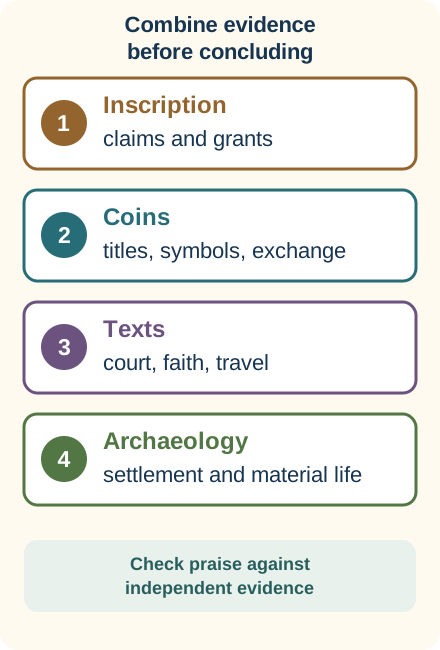
Use a source for what it can show. Bana helps reconstruct courtly ideals and the family crisis. A village grant is better for a named boundary or office. A rival inscription tests a victory claim. Xuanzang adds information about study and religious life. Agreement between independent kinds of evidence strengthens a conclusion; disagreement tells us where caution is needed.स्रोत का उपयोग उसकी क्षमता के अनुसार करें। बाण दरबारी आदर्श और पारिवारिक संकट समझने में मदद करता है। किसी नामित सीमा या पद के लिए गाँव का अनुदानपत्र अधिक उपयोगी हो सकता है। प्रतिद्वंद्वी का अभिलेख विजय-दावे की जाँच करता है। ह्वेनसांग शिक्षा और धार्मिक जीवन की जानकारी जोड़ता है। अलग प्रकार के स्वतंत्र साक्ष्यों का मेल निष्कर्ष को मजबूत करता है; मतभेद सावधानी की जगह बताते हैं।
Sources with different viewpointsअलग दृष्टिकोण वाले स्रोत
How new regional powers grewनई क्षेत्रीय शक्तियाँ कैसे उभरीं
Do not call the age empty or dark. One empire weakened, but Valabhi, Kanauj, Gauda, Kamarupa and many other centres grew. Political fragmentation can exist beside active learning, trade, art and religious institutions.इस काल को खाली या अंधकारमय कहना भ्रामक होगा। एक साम्राज्य कमजोर हुआ, लेकिन वलभी, कन्नौज, गौड़ और कामरूप जैसे केंद्र सक्रिय रहे। राजनीतिक विभाजन के साथ शिक्षा, व्यापार, कला और धार्मिक संस्थाओं का विकास भी हो सकता है।
2. Harsha: family crisis, accession and expansion2. हर्ष: पारिवारिक संकट, राज्यारोहण और विस्तार
Harsha inherited a crisis rather than a peaceful, united empire. A marriage alliance was caught in murder, imprisonment and war. Traditional accounts place him at about sixteen on accession. He took charge at Thanesar, rescued his sister and used the connection with Maukhari Kanauj to build a wider political order.हर्ष को शांत और अखंड साम्राज्य विरासत में नहीं मिला। एक विवाह-संबंध हत्या, कारावास और युद्ध के संकट में फँस गया। परंपरागत विवरण उसे राज्यारोहण के समय लगभग सोलह वर्ष का बताते हैं। उसने थानेसर का शासन सँभाला, अपनी बहन को बचाया और मौखरियों के कन्नौज से जुड़कर व्यापक राजनीतिक व्यवस्था बनाई।
Follow the family relationshipsपारिवारिक संबंधों को समझें
- Prabhakaravardhana ruled Thanesar. Rajyavardhana was his elder son; Harsha was the younger son. Their sister Rajyashri married Grahavarman, a Maukhari king of Kanauj.प्रभाकरवर्धन थानेसर का शासक था। राज्यवर्धन उसका बड़ा और हर्ष छोटा पुत्र था। उनकी बहन राज्यश्री का विवाह कन्नौज के मौखरि राजा ग्रहवर्मन से हुआ था।
- The Malwa ruler called Devagupta is associated with the attack and Grahavarman’s death in the usual reconstruction. Shashanka of Gauda is implicated in Rajyavardhana’s death by the hostile narrative tradition. Exact responsibility and sequence should not be presented like a surviving court verdict.सामान्य पुनर्निर्माण में देवगुप्त नामक मालव शासक को आक्रमण और ग्रहवर्मन की मृत्यु से जोड़ा जाता है। विरोधी वृत्तांत राज्यवर्धन की मृत्यु में गौड़ के शशांक को जिम्मेदार ठहराते हैं। सटीक दोष और घटनाक्रम को सुरक्षित न्यायिक फैसले जैसा न बताएँ।
- Bana’s account places Rajyashri’s rescue in the Vindhyan forest setting. A dramatic rescue scene expresses the biography’s emotional purpose as well as a political connection; every spoken word in the narrative is not independently recoverable.बाण राज्यश्री के बचाव को विंध्य के वन-परिवेश में रखता है। नाटकीय बचाव का वर्णन राजनीतिक संबंध के साथ जीवनी का भावनात्मक उद्देश्य भी दिखाता है; हर संवाद का स्वतंत्र प्रमाण नहीं मिलता।
Grahavarman was killed and Kanauj fell into crisis. Rajyavardhana acted against the Malwa side and defeated it. Rajyavardhana was then killed; accounts sympathetic to Harsha blame the Gauda ruler. Rajyashri escaped imprisonment and Harsha rescued her. Thanesar and Kanauj subsequently came together under Harsha’s leadership.ग्रहवर्मन की हत्या हुई और कन्नौज संकट में पड़ा। राज्यवर्धन ने मालव पक्ष के विरुद्ध कार्रवाई की और उसे हराया। फिर राज्यवर्धन मारा गया; हर्ष-पक्ष के वृत्तांत गौड़ के शासक को दोष देते हैं। राज्यश्री कारावास से निकली और हर्ष ने उसे बचाया। इस संकट के बाद थानेसर और कन्नौज हर्ष के नेतृत्व में जुड़े।
The sequence of eventsघटनाओं का क्रम
| Timeसमय | Eventघटना | How firmly to remember itकैसे याद रखें |
|---|---|---|
| 606 CE606 ईस्वी | Harsha’s accession amid the family crisis.पारिवारिक संकट के बीच हर्ष का राज्यारोहण। | Conventional starting point of the reign and Harsha era.शासन और हर्ष संवत् का सामान्य प्रारंभ-बिंदु। |
| Early reign, including the 610sआरंभिक शासन, जिसमें 610 का दशक भी | Consolidation around Kanauj and campaigns.कन्नौज के आसपास शक्ति-सुदृढ़ीकरण और अभियान। | A process over years, not one instant all-India conquest.कई वर्षों की प्रक्रिया, एक क्षण में पूरे भारत की विजय नहीं। |
| Often c. 618–619 CE; date debatedअक्सर लगभग 618–619 ईस्वी; तारीख विवादित | Conflict with Pulakeshin II and the southern check.पुलकेशिन द्वितीय से संघर्ष और दक्षिणी विस्तार पर रोक। | The event is clearer than the precise year; the Aihole inscription is dated 634–635 CE.सटीक वर्ष से अधिक निश्चित घटना है; ऐहोल अभिलेख 634–635 ईस्वी का है। |
| 629–645 CE629–645 ईस्वी | Xuanzang’s journey away from China and return.ह्वेनसांग का चीन से प्रस्थान, व्यापक यात्रा और वापसी। | These dates cover the larger journey, not sixteen uninterrupted years in one Indian place.ये पूरी यात्रा की तिथियाँ हैं, भारत के एक स्थान पर लगातार सोलह वर्ष रहने की नहीं। |
| Around 643 CEलगभग 643 ईस्वी | Great assemblies at Kanauj and Prayaga in the late-reign setting.शासन के अंतिम दौर में कन्नौज और प्रयाग की बड़ी सभाएँ। | Distinguish doctrinal assembly from the recurring gift gathering.धार्मिक विचार-विमर्श की सभा और बार-बार होने वाले दान-समारोह में अंतर करें। |
| 647 CE, conventional date647 ईस्वी, सामान्य तिथि | Harsha’s death and a succession crisis.हर्ष की मृत्यु और उत्तराधिकार का संकट। | No secure successor maintained his wide political order.कोई सुनिश्चित उत्तराधिकारी उसकी व्यापक राजनीतिक व्यवस्था कायम नहीं रख सका। |
The reach and limits of Harsha’s powerहर्ष की शक्ति का विस्तार और सीमाएँ
East: Shashanka and Gaudaपूर्व: शशांक और गौड़
Harsha cooperated with Bhaskaravarman of Kamarupa against Gauda. Shashanka remained a strong rival for many years, with influence extending into Magadha and Gaya. His death is commonly placed around 637 CE, but the exact endpoint and sequence of territorial control are uncertain. Harsha’s eastern success should therefore not be described as immediate, complete conquest.हर्ष ने गौड़ के विरुद्ध कामरूप के भास्करवर्मन से सहयोग किया। शशांक लंबे समय तक शक्तिशाली प्रतिद्वंद्वी रहा और उसका प्रभाव मगध तथा गया तक था। उसकी मृत्यु सामान्यतः लगभग 637 ईस्वी मानी जाती है, लेकिन सटीक अंतिम तिथि और नियंत्रण का क्रम निश्चित नहीं है। इसलिए हर्ष की पूर्वी सफलता को तत्काल और पूर्ण विजय नहीं कहना चाहिए।
West: Valabhi and diplomacyपश्चिम: वलभी और कूटनीति
Conflict with the Maitrakas was followed by marriage and diplomacy. In the usual historical reconstruction, Dhruvasena II became Harsha’s son-in-law and attended the Prayaga assembly. Valabhi retained its dynasty and local government; it should not be treated as an ordinary district of Harsha’s realm.मैत्रकों के साथ संघर्ष के बाद विवाह और कूटनीति से संबंध बने। सामान्य ऐतिहासिक पुनर्निर्माण में ध्रुवसेन द्वितीय हर्ष का दामाद बना और प्रयाग की सभा में आया। वलभी का अपना राजवंश और स्थानीय शासन बना रहा; मैत्रक राज्य को हर्ष का साधारण जिला मानना गलत होगा।
South: Pulakeshin II and the Narmadaदक्षिण: पुलकेशिन द्वितीय और नर्मदा
Pulakeshin II, the Chalukya ruler of Badami, checked Harsha’s southward expansion. Ravikirti’s Aihole prashasti celebrates Harsha’s military setback and separately describes the Vindhya–Reva region; Reva is another name for the Narmada. Historians connect the conflict with this broad region, but the inscription does not give an exact battlefield or narrate a river crossing. Harsha did not become ruler of the Deccan.बादामी के चालुक्य शासक पुलकेशिन द्वितीय ने हर्ष का दक्षिण की ओर विस्तार रोका। रविकीर्ति की ऐहोल प्रशस्ति हर्ष की सैन्य असफलता का गुणगान करती है और अलग पद्य में विंध्य-रेवा क्षेत्र का वर्णन करती है; रेवा नर्मदा का दूसरा नाम है। इतिहासकार संघर्ष को इस व्यापक क्षेत्र से जोड़ते हैं, लेकिन अभिलेख सटीक युद्धस्थल या नदी पार करने का घटनाक्रम नहीं बताता। हर्ष दक्कन का शासक नहीं बना।
How a travelling court governedचलता-फिरता दरबार शासन कैसे करता था
| Termशब्द | Simple meaningसरल अर्थ | Limitसीमा |
|---|---|---|
| Mahasandhivigrahikaमहासंधिविग्रहिक | A high official associated with peace, war and diplomacy.संधि, युद्ध और कूटनीति से जुड़ा उच्च अधिकारी। | Do not identify it exactly with a modern foreign ministry.इसे आधुनिक विदेश मंत्रालय के बिल्कुल बराबर न रखें। |
| Kumaramatyaकुमारामात्य | A high official title inherited from earlier administrative usage.पहले की प्रशासनिक परंपरा से चला उच्च अधिकारी का पदनाम। | The word does not mean every holder was a royal prince.नाम का अर्थ यह नहीं कि हर पदधारी राजकुमार था। |
| Samanta / mahasamantaसामंत / महासामंत | A subordinate chief / a powerful subordinate chief.अधीन सरदार / शक्तिशाली अधीन सरदार। | A political relationship, not one uniform job description.यह राजनीतिक संबंध है, हर जगह समान नौकरी नहीं। |
| Bhukti / vishayaभुक्ति / विषय | Broadly province / district in administrative terminology.प्रशासनिक शब्दावली में मोटे तौर पर प्रांत / जिला। | Boundaries and actual powers varied.सीमाएँ और वास्तविक अधिकार बदल सकते थे। |
| Grantee or doneeअनुदानग्राही | The person or institution receiving a grant.दान या अनुदान पाने वाला व्यक्ति या संस्थान। | Read which revenues, exemptions or other rights the document actually gives.देखें कि दस्तावेज में कौन-सा राजस्व, छूट या अन्य अधिकार दिया गया है। |
| Featureपहलू | What it meantउसका अर्थ | Evidence cautionसाक्ष्य की सीमा |
|---|---|---|
| Moving royal campचलता राजकीय शिविर | Harsha toured, heard petitioners, issued orders and gave rewards; his camp required supplies and service.हर्ष दौरे करता, प्रार्थियों को सुनता, आदेश देता और पुरस्कार बाँटता था; शिविर को सामान और सेवा चाहिए थी। | Court movement connected regions but could burden villages.दौरे क्षेत्रों को जोड़ते थे, लेकिन गाँवों पर बोझ डाल सकते थे। |
| Officialsअधिकारी | Central, provincial and district titles continued from earlier practice; one officer might hold several roles.केंद्रीय, प्रांतीय और जिला-स्तरीय पद पहले की परंपराओं से चलते रहे; एक व्यक्ति कई पद रख सकता था। | Same title could change function by region.एक पदनाम का काम अलग क्षेत्रों में बदल सकता था। |
| Samantasसामंत | Subordinate chiefs supplied troops/tribute and governed locally.अधीन सरदार सेना और भेंट देते तथा स्थानीय शासन करते थे। | Their own power meant Harsha's authority was layered.उनकी अपनी शक्ति से हर्ष का अधिकार कई स्तरों पर निर्भर रहता था। |
| Land grantsभूमि-अनुदान | Villages and revenue rights granted to Brahmanas or institutions; boundaries and taxes written down.ब्राह्मणों या संस्थाओं को गाँव अथवा राजस्व-अधिकार दिए जाते; सीमाएँ और कर दर्ज होते। | Not every grant transferred every judicial or labour right.हर अनुदान में सभी न्यायिक या श्रम-संबंधी अधिकार नहीं दिए जाते थे। |
| Revenueराजस्व | Produce share, cash, supplies, tolls and labour supported court, army and officials.उपज का हिस्सा, नकद, आपूर्ति, चुंगी और श्रम से दरबार, सेना तथा अधिकारियों का निर्वाह होता था। | Xuanzang's neat fractions are useful ideals, not a verified rate for every field.ह्वेनसांग के बताए अंश हर खेत की सत्यापित दर नहीं हैं। |
| Armyसेना | Elephants, cavalry and infantry; contingents from subordinate rulers could also be included.हाथी, घुड़सवार और पैदल सेना; अधीन शासकों की टुकड़ियाँ भी शामिल हो सकती थीं। | Literary troop totals may contain conventional exaggeration.साहित्यिक सैन्य संख्याओं में अतिशयोक्ति हो सकती है। |
Suppose a charter directs villagers to pay a specified share to a monastery instead of the royal treasury. Cultivation continues, but the recipient of revenue changes. It does not follow automatically that the recipient owns every field, may demand unlimited labour or can try every criminal case. Historians examine boundaries, exemptions and rights clause by clause. This hypothetical example explains how to read a grant.मान लें कि अनुदानपत्र गाँव वालों को कोई निश्चित हिस्सा राजकोष के बजाय मठ को देने को कहता है। खेती चलती रहती है, लेकिन राजस्व पाने वाला बदल जाता है। इससे अपने-आप यह सिद्ध नहीं होता कि प्राप्तकर्ता हर खेत का पूर्ण मालिक है, असीमित श्रम ले सकता है या हर अपराध का फैसला कर सकता है। इतिहासकार सीमाएँ, छूट और अधिकार एक-एक शर्त पढ़कर समझते हैं। यह अनुदान पढ़ने का काल्पनिक उदाहरण है।
Banskhera and Madhuban are surviving records of grants to Brahmanas. Xuanzang also says that some officials received support through land grants, but surviving evidence does not permit us to assign the same arrangement to every official. Likewise, a reported produce fraction such as one-sixth is an observation to evaluate, not a universal measured tax rate.बाँसखेड़ा और मधुबन ब्राह्मणों को दिए गए अनुदानों के सुरक्षित अभिलेख हैं। ह्वेनसांग कुछ अधिकारियों के निर्वाह के लिए भूमि-अनुदान का भी उल्लेख करता है, लेकिन उपलब्ध साक्ष्य से हर अधिकारी पर वही व्यवस्था लागू नहीं की जा सकती। इसी तरह उपज के छठे हिस्से जैसी बताई गई दर जाँचने योग्य सूचना है, सभी स्थानों की मापी हुई समान कर-दर नहीं।
A travelling court needs suppliesयात्रा करने वाले दरबार को आपूर्ति चाहिए
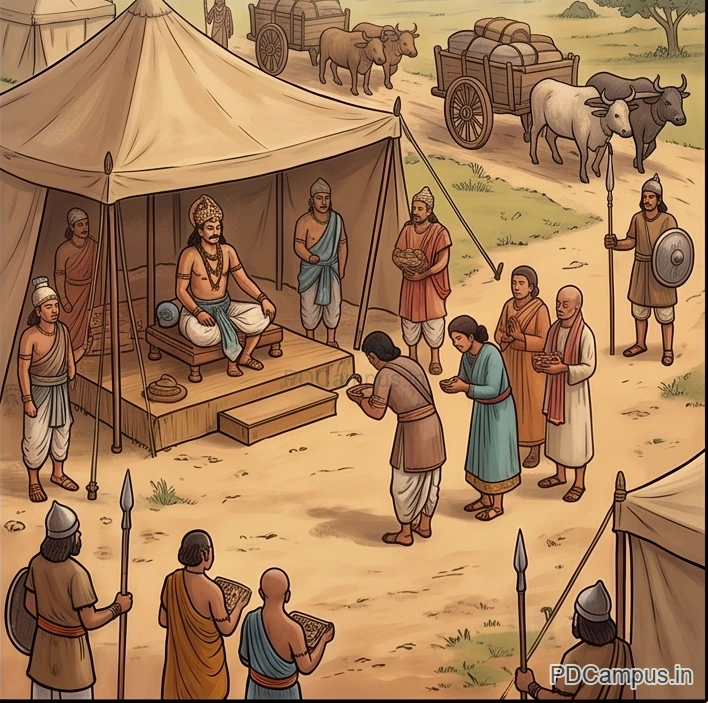
Harsha was the leading ruler of much of northern India. Even so, directly administered districts, allied kings, subordinate chiefs and temporary campaign success were different kinds of power. His realm was not a uniformly administered all-India state. In making comparisons, do not assume that Mauryan administration had been identical everywhere either.हर्ष उत्तरी भारत के बड़े भाग का प्रमुख शासक था। फिर भी सीधे प्रशासित जिलों, सहयोगी राजाओं, अधीन सरदारों और अस्थायी सैन्य सफलताओं में अंतर था। इस व्यवस्था को पूरे भारत का एकसमान शासन नहीं समझें। तुलना करते समय मौर्य साम्राज्य को भी हर जगह बिल्कुल एक जैसा प्रशासन वाला राज्य न मानें।
3. Regional kingdoms in their own right3. क्षेत्रीय राज्यों का अपना इतिहास
Connect each kingdom with four things: its place, leading rulers, relations with neighbours and lasting importance. This goes beyond memorising names: it explains how warfare, marriage, commerce and learning linked different regions.हर राज्य को चार बातों से जोड़ें: उसका स्थान, प्रमुख शासक, पड़ोसियों से संबंध और दीर्घकालीन महत्व। इससे केवल नाम याद नहीं होते; समझ आता है कि युद्ध, विवाह, व्यापार और शिक्षा अलग क्षेत्रों को कैसे जोड़ते थे।
| Powerशक्ति | Core place and rulersमुख्य क्षेत्र और शासक | Harsha connectionहर्ष से संबंध | Why it mattersमहत्व |
|---|---|---|---|
| Pushyabhutis / Vardhanasपुष्यभूति / वर्धन | Thanesar: inscriptional genealogy starts with Naravardhana; Prabhakaravardhana, Rajyavardhana and Harsha.थानेसर: नरवर्धन से आरंभ अभिलेखीय वंशावली; प्रभाकरवर्धन, राज्यवर्धन, हर्ष। | His own dynasty; Kanauj added through Maukhari family crisis.हर्ष का अपना वंश; मौखरि परिवार के संकट से कन्नौज का संबंध जुड़ा। | Shows a former regional house building a wider but layered north Indian realm.क्षेत्रीय राजवंश ने कई स्तरों वाले व्यापक उत्तरी राज्य का निर्माण किया। |
| Maukharisमौखरि | Kanauj; Harivarman line; Ishanavarman important; Grahavarman married Rajyashri.कन्नौज; हरिवर्मन की परंपरा, ईशानवर्मन प्रमुख; ग्रहवर्मन का राज्यश्री से विवाह। | The main Maukhari royal line at Kanauj broke in the crisis; Harsha established authority there.कन्नौज की मुख्य मौखरि राजसत्ता संकट में टूटी; हर्ष का प्रभाव वहाँ स्थापित हुआ। | Made Kanauj a central political city and competed with Later Guptas and Gauda.कन्नौज का उत्थान; उत्तरवर्ती गुप्तों और गौड़ से प्रतिस्पर्धा। |
| Gaudaगौड़ | Bengal; Shashanka; capital Karnasuvarna.बंगाल; शशांक; राजधानी कर्णसुवर्ण। | Main eastern rival; allied with Malwa power in crisis; resisted Harsha until late.प्रमुख पूर्वी प्रतिद्वंद्वी; संकट में मालव पक्ष से संबंध; लंबे समय तक प्रतिरोध। | A strong independent Bengal kingdom; coins and inscriptions show Shaiva royal identity.बंगाल का महत्वपूर्ण स्वतंत्र राज्य; सिक्कों और अभिलेखों में शैव राजकीय संकेत। |
| Maitrakasमैत्रक | Saurashtra; Bhatarka, Dharasena line, Dhruvasena II; capital Valabhi.सौराष्ट्र; भटार्क, धरसेन परंपरा, ध्रुवसेन द्वितीय; राजधानी वलभी। | Conflict changed into marriage/diplomatic relationship; Valabhi stayed autonomous.संघर्ष के बाद विवाह और कूटनीति; स्थानीय राजसत्ता बनी रही। | Port trade, copper-plate grants and a major centre of learning; dynasty lasted into eighth century.समुद्री व्यापार-संबंध, ताम्रपत्र और शिक्षा; वंश आठवीं सदी तक चला। |
| Kamarupaकामरूप | Brahmaputra valley; Varman dynasty; Bhaskaravarman.ब्रह्मपुत्र घाटी; वर्मन वंश; भास्करवर्मन। | Strong ally against common rival Shashanka; received Xuanzang before Kanauj.शशांक के विरुद्ध सहयोगी; कन्नौज से पहले ह्वेनसांग का मेजबान। | An eastern regional court actively joined northern diplomacy and Sanskrit culture.पूर्वी क्षेत्र का दरबार उत्तरी कूटनीति और संस्कृत संस्कृति से जुड़ा। |
| Later Guptasउत्तरवर्ती गुप्त | Magadha and sometimes Malwa; Krishnagupta line, Mahasenagupta, later Adityasena.मगध और कुछ समय मालवा; कृष्णगुप्त की परंपरा, महासेनगुप्त, बाद में आदित्यसेन। | Maukhari rivals and complex marriage/political links with Pushyabhutis.मौखरियों से प्रतिद्वंद्विता और पुष्यभूतियों से जटिल वैवाहिक-राजनीतिक संबंध। | Not simply the same empire continuing; genealogy and relationship to imperial Guptas remain debated.साम्राज्यवादी गुप्तों से सीधा वंश-संबंध निश्चित नहीं; केवल नाम से निरंतरता न मानें। |
| Hunasहूण | North-west and central Indian zones; Toramana and Mihirakula.उत्तर-पश्चिम और मध्य भारत के कुछ क्षेत्र; तोरमाण और मिहिरकुल। | Earlier pressure helped reshape the world inherited by Pushyabhutis.उनका पहले का दबाव हर्ष से पहले की राजनीतिक दुनिया को बदलने में सहायक रहा। | Their power was checked by Indian rulers but groups became part of changing regional society.स्थानीय शासकों ने शक्ति रोकी; बाद में कुछ समूह क्षेत्रीय समाज में बस गए। |
Keep the directions distinct. Gauda centred on Bengal and Karnasuvarna; Kamarupa belonged to the Brahmaputra valley; Valabhi was in Saurashtra in the west. Malwa lay in central-western India, while the Chalukya heartland of Badami lay in the Deccan. An alliance with Kamarupa does not make Bhaskaravarman a governor of Bengal, and a marriage with Valabhi does not make Harsha ruler of the entire western coast.दिशाओं में अंतर रखें। गौड़ बंगाल और कर्णसुवर्ण से, कामरूप ब्रह्मपुत्र घाटी से तथा वलभी पश्चिम के सौराष्ट्र से जुड़ा था। मालवा मध्य-पश्चिमी भारत में था, जबकि बादामी के चालुक्यों का मुख्य क्षेत्र दक्कन में था। कामरूप से गठबंधन भास्करवर्मन को बंगाल का राज्यपाल नहीं बनाता; वलभी से विवाह-संबंध हर्ष को पूरे पश्चिमी तट का शासक भी नहीं बनाता।
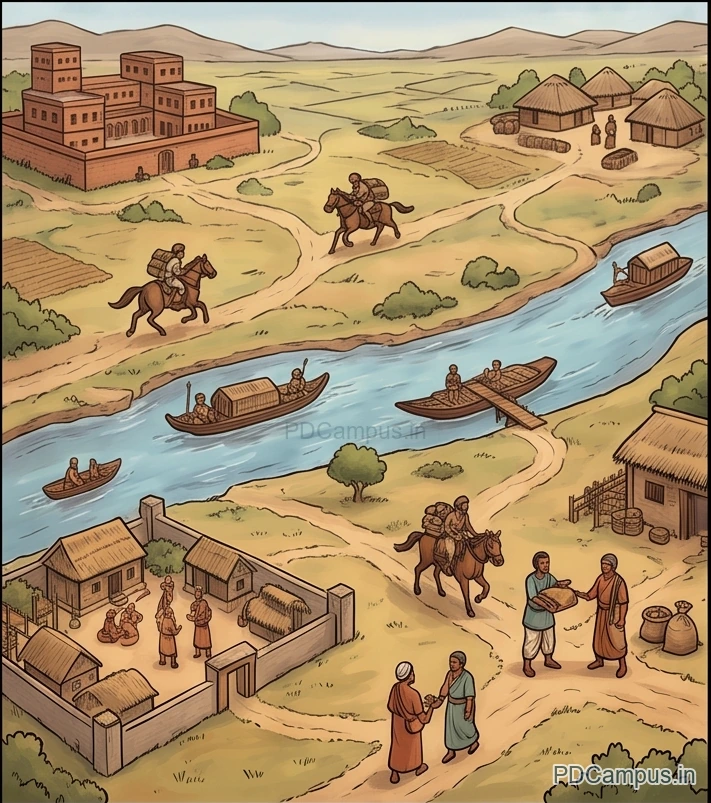
Regions remained connectedक्षेत्र एक-दूसरे से जुड़े रहे
Bana names Pushyabhuti in the dynasty’s origin story, whereas the inscriptional genealogy starts with Naravardhana. The Later Guptas are identified through a different genealogical tradition beginning with Krishnagupta; their exact relationship to the imperial Guptas is debated. Similar names cannot establish descent by themselves. Adityasena belongs to the later development of this regional history, not Harsha’s immediate family.बाण राजवंश की उत्पत्ति-कथा में पुष्यभूति का नाम देता है, जबकि अभिलेखीय वंशावली नरवर्धन से शुरू होती है। उत्तरवर्ती गुप्तों की अलग वंश-परंपरा कृष्णगुप्त से जुड़ती है; साम्राज्यवादी गुप्तों से उनका सटीक संबंध विवादित है। केवल समान नाम वंश-संबंध सिद्ध नहीं करते। आदित्यसेन इस क्षेत्रीय इतिहास के बाद के विकास से जुड़ा है, हर्ष के निकट परिवार से नहीं।
The Hunas: entry, rule, defeats and settlementहूण: प्रवेश, शासन, पराजय और बसावट
- Alchon Huna power entered from the north-west in the late fifth-century setting and reached central India under Toramana.पाँचवीं सदी के अंतिम दौर में अल्खोन हूण शक्ति उत्तर-पश्चिम से आई और तोरमाण के अधीन मध्य भारत तक पहुँची।
- Mihirakula succeeded Toramana. Yashodharman’s inscriptions provide an important account of resistance; Buddhist tradition also tells of Baladitya defeating or capturing Mihirakula. The sequence and identification in that tradition require caution.मिहिरकुल तोरमाण का उत्तराधिकारी था। यशोधर्मन के अभिलेख प्रतिरोध का महत्वपूर्ण विवरण देते हैं; बौद्ध परंपरा बालादित्य द्वारा मिहिरकुल को हराने या पकड़ने की कथा भी सुनाती है। उस कथा की पहचान और क्रम में सावधानी चाहिए।
- Defeat of a royal power did not mean every associated population vanished. Some groups settled and entered regional society. “Foreign” and “Indian” should not be treated as fixed, permanent walls across centuries.राजकीय शक्ति की पराजय का अर्थ उससे जुड़े हर समुदाय का गायब हो जाना नहीं था। कुछ समूह क्षेत्रीय समाज में बस गए। कई सदियों के इतिहास में विदेशी और भारतीय को स्थायी, अभेद्य दीवारें न मानें।
Toramanaतोरमाण
Toramana’s coins and inscriptions show power extending into central India around the late fifth and early sixth centuries. The inscription on the Eran boar places his rule in a local setting. It establishes a claim to authority at a particular place, not uniform rule over the entire subcontinent.तोरमाण के सिक्के और अभिलेख बताते हैं कि पाँचवीं सदी के अंत और छठी सदी के आरंभ के आसपास उसकी शक्ति मध्य भारत तक पहुँची। एरण के वराह पर उत्कीर्ण अभिलेख उसके शासन का स्थानीय साक्ष्य है। इससे किसी विशेष स्थान पर राजकीय अधिकार का दावा पता चलता है, पूरे उपमहाद्वीप पर एकसमान नियंत्रण नहीं।
Mihirakulaमिहिरकुल
Mihirakula was Toramana’s son. The Gwalior inscription dated in his reign records a Sun temple commissioned by Matricheta. It is evidence for his rule and the religious setting, not by itself a simple proof of his personal faith. Other sources associate him with Shiva devotion, though particular passages are damaged or disputed. Buddhist narratives describe severe persecution, but their purposes and other evidence must be compared.मिहिरकुल तोरमाण का पुत्र था। उसके शासनकाल के ग्वालियर अभिलेख में मातृचेत द्वारा सूर्य-मंदिर बनवाने का उल्लेख है। यह उसके शासन और उस समय के धार्मिक जीवन का प्रमाण है; केवल इससे उसकी निजी आस्था का सरल निष्कर्ष नहीं निकालना चाहिए। अन्य स्रोत उसे शिव-भक्ति से जोड़ते हैं, लेकिन कुछ संबंधित अंश क्षतिग्रस्त या विवादित हैं। बौद्ध कथाएँ गंभीर धार्मिक उत्पीड़न का वर्णन करती हैं, लेकिन उनके उद्देश्य और अन्य साक्ष्यों की तुलना जरूरी है।
Yashodharmanयशोधर्मन
Yashodharman was an Aulikara ruler of Malwa. The Sondhni pillar inscriptions near Mandsaur celebrate his success over Mihirakula and claim very extensive supremacy. They are placed around the context of 532 CE; the explicitly dated Mandsaur inscription of 532 CE is a separate well inscription. Praise should not become a literal border map. His wide supremacy did not develop into a lasting empire.यशोधर्मन मालवा का औलिकर शासक था। मंदसौर के निकट सोंधनी के स्तंभ-लेख मिहिरकुल पर उसकी सफलता और बहुत व्यापक प्रभुत्व का दावा करते हैं। इन्हें लगभग 532 ईस्वी के संदर्भ में रखा जाता है; स्पष्ट रूप से 532 ईस्वी का तिथि-अंकित मंदसौर लेख अलग कुएँ का अभिलेख है। प्रशंसा की भाषा को हूबहू सीमा-मानचित्र न बनाएँ। उसका व्यापक प्रभुत्व लंबे समय तक टिकने वाला साम्राज्य नहीं बना।
Valabhi: agriculture, commerce and learningवलभी: खेती, व्यापार और शिक्षा
Valabhi’s strength rested on several connections: Saurashtra’s agricultural resources, routes towards the Arabian Sea, Maitraka patronage and institutions of learning. Copper-plate grants illuminate villages, officials and donated rights. Buddhist learning existed alongside Brahmanical traditions. A port-linked setting helps explain exchange; it does not make every building in the city a harbour or every student a Buddhist monk.वलभी की शक्ति के कई आधार थे: सौराष्ट्र की खेती, अरब सागर की ओर जाने वाले मार्ग, मैत्रक संरक्षण और शिक्षा-संस्थाएँ। ताम्रपत्र गाँवों, अधिकारियों और दान में मिले अधिकारों की जानकारी देते हैं। बौद्ध अध्ययन के साथ ब्राह्मणीय परंपराएँ भी थीं। समुद्री व्यापार से जुड़ा परिवेश विनिमय समझाता है; इससे नगर की हर इमारत बंदरगाह या हर विद्यार्थी बौद्ध भिक्षु नहीं हो जाता।
The people and resources behind a kingdomराज्य के पीछे लोग और संसाधन
Cultivators produced grain, while craft and merchant groups helped organise exchange. A guild was an association of people engaged in an occupation or trade. Village and town elders could also matter in local affairs; their powers were not identical everywhere. Markets, tolls, temples, viharas and chiefs joined this local network. Regional courts shared Sanskrit forms of praise while developing their own cultural settings.किसान अनाज पैदा करते थे और शिल्पी तथा व्यापारी समूह विनिमय की व्यवस्था में सहायक होते थे। श्रेणी या संघ किसी व्यवसाय या व्यापार से जुड़े लोगों का संगठन था। गाँव और नगर के बुजुर्ग या प्रमुख भी स्थानीय मामलों में भूमिका निभा सकते थे; उनके अधिकार हर जगह समान नहीं थे। बाजार, चुंगी, मंदिर, विहार और सरदार इस स्थानीय व्यवस्था से जुड़े थे। क्षेत्रीय दरबार संस्कृत की प्रशस्ति-परंपराएँ साझा करते हुए अपने सांस्कृतिक परिवेश भी विकसित करते थे।
Agrarian expansion and land grantsखेती का विस्तार और भूमि-अनुदान
Land charters could concern existing villages or cultivable land. They could help extend cultivation and alter local rights. Brahmanas, temples and monasteries could become recipients of land or revenue, religious centres and local intermediaries. The rights in each grant must be read from its terms.भूमि-अनुदान बसे हुए गाँवों या खेती योग्य भूमि से जुड़े हो सकते थे। इनसे नई जगहों में खेती बढ़ने और स्थानीय अधिकार बदलने की संभावना बनती थी। ब्राह्मण, मंदिर और मठ भूमि या राजस्व के प्राप्तकर्ता, धार्मिक केंद्र और स्थानीय मध्यस्थ बन सकते थे। हर अनुदान के अधिकार उसकी शर्तों से समझने होंगे।
Trade and townsव्यापार और नगर
Kanauj, Prayaga, Nalanda and Valabhi were connected to routes and exchange. Valabhi’s position in Saurashtra, linked with maritime commerce, mattered economically. Regional kingdoms do not by themselves prove that markets vanished. Towns and routes experienced different conditions.कन्नौज, प्रयाग, नालंदा और वलभी मार्गों तथा विनिमय से जुड़े थे। वलभी की सौराष्ट्र और समुद्री व्यापार-क्षेत्र से निकटता आर्थिक दृष्टि से महत्वपूर्ण थी। क्षेत्रीय राज्यों का उदय बाजारों के मिट जाने का प्रमाण नहीं है। अलग नगरों और मार्गों की स्थिति अलग थी।
Hierarchy and the costs of powerसामाजिक पदानुक्रम और सत्ता का बोझ
Varna-jati hierarchy, untouchability and service obligations existed in society. Compulsory labour was also demanded in some settings. Grants could change claims to revenue or services from cultivators. Royal charity therefore needs to be read alongside the burdens carried by farmers, workers and excluded communities.वर्ण-जाति आधारित ऊँच-नीच, अस्पृश्यता और सेवा संबंध समाज में मौजूद थे। कुछ संदर्भों में अनिवार्य श्रम भी लिया जाता था। अनुदान से किसानों पर राजस्व या सेवा के दावे बदल सकते थे। इसलिए दरबार के दान की प्रशंसा पढ़ते समय किसानों, श्रमिकों और वंचित समुदायों के बोझ को भी देखें।
A royal gift could support teaching and worship while the same economy depended on cultivators’ produce and workers’ services. Both facts can be true. To explain an institution, ask who supplied its resources, who received them and which groups were excluded from its benefits. This avoids judging an entire society only through the king’s generosity.राजकीय दान शिक्षा और पूजा का सहारा बन सकता था, जबकि उसी अर्थव्यवस्था का आधार किसानों की उपज और श्रमिकों की सेवाएँ थीं। दोनों बातें एक साथ सही हो सकती हैं। किसी संस्था को समझने के लिए देखें कि संसाधन कौन देता था, कौन पाता था और कौन लाभ से बाहर रहता था। इससे पूरे समाज को केवल राजा की उदारता से आँकने की गलती नहीं होती।
The Buddhist tradition associated with Xuanzang accuses Shashanka of cutting the Bodhi tree. Other evidence supports his Shaiva royal imagery and political strength, but the destruction story should not become a complete account of his reign. It is a report shaped by religious opposition, not an independently verified contemporary eyewitness inspection.ह्वेनसांग से जुड़ी बौद्ध परंपरा शशांक पर बोधिवृक्ष काटने का आरोप लगाती है। उसके शैव राजकीय संकेत और राजनीतिक शक्ति के लिए दूसरे साक्ष्य हैं, लेकिन वृक्ष-विनाश की कथा को उसके पूरे शासन का एकमात्र परिचय न बनाएँ। यह धार्मिक विरोध की दृष्टि से आया विवरण है, स्वतंत्र रूप से सत्यापित समकालीन निरीक्षण नहीं।
4. Xuanzang, learning, religion and literature4. ह्वेनसांग, शिक्षा, धर्म और साहित्य
Xuanzang crossed deserts and mountains to pursue Buddhist learning. He studied at Nalanda, visited sacred places and royal courts, carried manuscripts to China and undertook translation work. His journey connects local institutions with long routes across Asia.ह्वेनसांग बौद्ध अध्ययन के उद्देश्य से रेगिस्तान और पहाड़ पार कर आया था। उसने नालंदा में अध्ययन किया, धार्मिक स्थलों और राजदरबारों का दौरा किया, पांडुलिपियाँ चीन ले गया और अनुवाद कार्य किया। उसकी यात्रा बताती है कि शिक्षा स्थानीय संस्थाओं के साथ एशिया के दूरस्थ मार्गों से भी जुड़ी थी।
Xuanzang’s journey, 629–645 CEह्वेनसांग की यात्रा, 629–645 ईस्वी
- Departure from Chang’an in 629; desert and oasis routes, including the Turfan region, formed part of the wider Central Asian journey. The source’s “Gobi” label is a broad desert mnemonic, not a surveyed path.629 में चांगआन से प्रस्थान; तुरफान क्षेत्र सहित मरुस्थलीय और मरूद्यान मार्ग व्यापक मध्य एशियाई यात्रा का हिस्सा थे। स्रोत का गोबी संकेत रेगिस्तान याद रखने का सामान्य संकेत है, सर्वेक्षण से तय रास्ता नहीं।
- Samarkand and Bactria, then places such as Bamiyan and Gandhara, connect the Central Asian part to the north-western approaches. Kashmir and Punjab belong to the northern travel setting.समरकंद और बैक्ट्रिया, फिर बामियान और गांधार जैसे स्थान मध्य एशिया को उत्तर-पश्चिमी प्रवेश-मार्गों से जोड़ते हैं। कश्मीर और पंजाब उत्तरी यात्रा-परिवेश से संबंधित हैं।
- Kanauj, Prayaga, Varanasi, Bodh Gaya and Nalanda connect courts, pilgrimage and study. Bengal and Kamarupa belong to other stages; they are not proof of one uninterrupted straight-line route.कन्नौज, प्रयाग, वाराणसी, बोधगया और नालंदा दरबार, तीर्थ और अध्ययन को जोड़ते हैं। बंगाल और कामरूप दूसरे चरणों में आते हैं; सूची एक लगातार सीधी यात्रा का प्रमाण नहीं है।
- The return used western and Central Asian routes and ended at Chang’an in 645. This selected place list is not an exhaustive itinerary and does not imply that he visited each place only once.वापसी पश्चिमी और मध्य एशियाई मार्गों से हुई और 645 में चांगआन पहुँची। यह चुने हुए स्थानों की सूची है, पूरा यात्रा-वृत्त नहीं; इससे हर जगह केवल एक बार जाने का निष्कर्ष भी नहीं निकलता।
Journey and studyयात्रा और अध्ययन
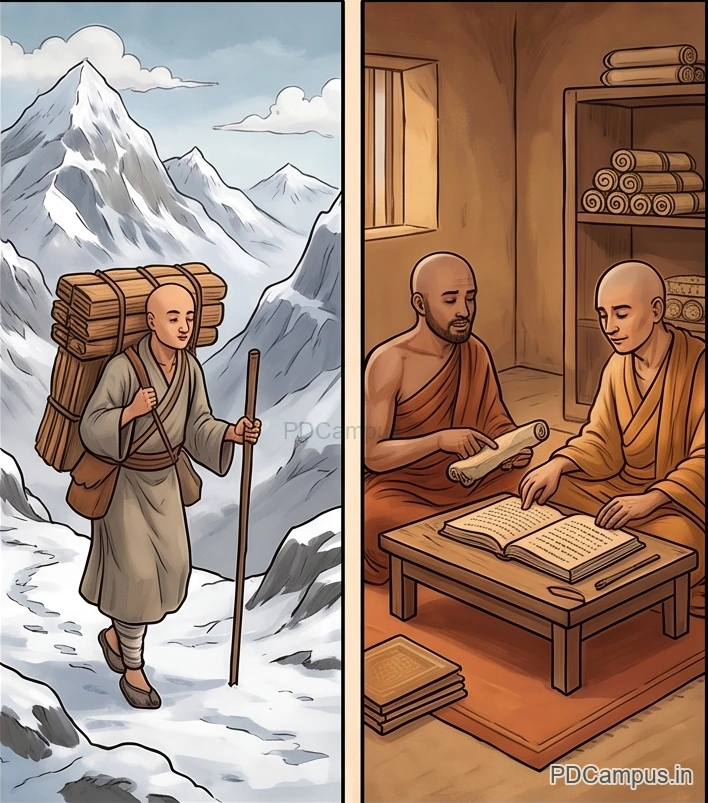
Why he travelledवह यात्रा पर क्यों निकला
Chinese Buddhist schools disagreed about texts and doctrine. Xuanzang sought fuller Sanskrit sources and expert teaching, especially Yogachara philosophy.चीन में बौद्ध ग्रंथों और सिद्धांतों की व्याख्या को लेकर मतभेद थे। ह्वेनसांग अधिक पूर्ण संस्कृत स्रोत और विशेषज्ञ शिक्षकों का मार्गदर्शन चाहता था, विशेष रूप से योगाचार दर्शन के अध्ययन के लिए।
Study at Nalandaनालंदा में अध्ययन
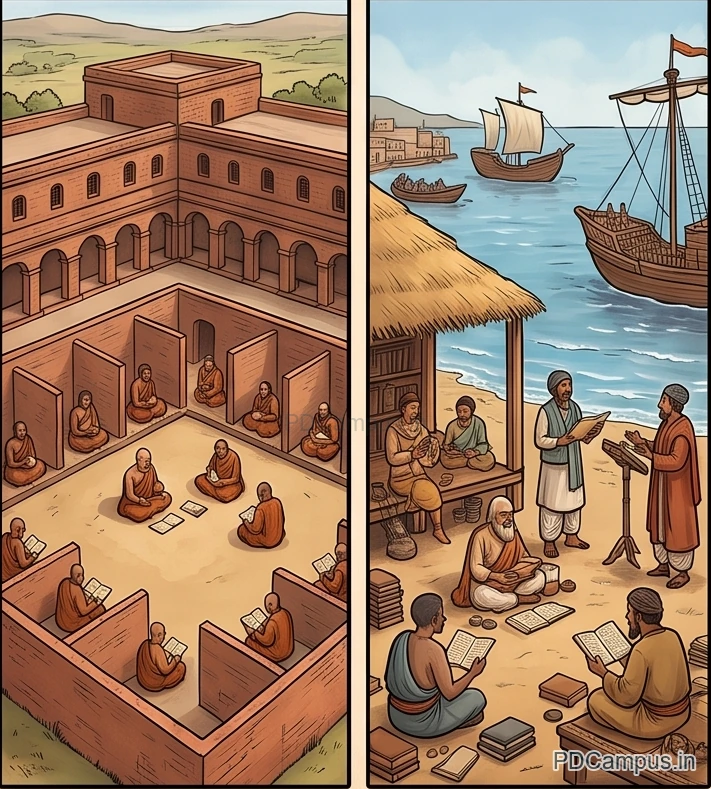
Xuanzang studied with Shilabhadra and participated in scholarly debate. Nalanda was a major residential centre of monasteries and learning, with teachers, students, shrines and manuscript collections. Learners came from distant regions. Comparison with a modern university can help, but its curriculum, government and religious basis were not identical to those of a modern institution.ह्वेनसांग ने शीलभद्र से अध्ययन किया और विद्वत्-विवाद में भाग लिया। नालंदा आवासीय मठों और अध्ययन का बड़ा केंद्र था, जहाँ शिक्षक, विद्यार्थी, धार्मिक स्थल और ग्रंथ-संग्रह थे। दूर के क्षेत्रों से भी विद्यार्थी आते थे। आज के विश्वविद्यालय से तुलना उपयोगी है, लेकिन उसके पाठ्यक्रम, शासन और धार्मिक आधार को आधुनिक संस्थान के बिल्कुल समान न मानें।
Manuscripts and translationपांडुलिपियाँ और अनुवाद
Tradition credits Xuanzang with bringing back 657 Buddhist works or manuscripts, along with images and relics. The figure refers to works brought back; it does not mean that he personally translated every one in full. Translation work under his leadership influenced Buddhist thought in East Asia.परंपरा के अनुसार ह्वेनसांग 657 बौद्ध ग्रंथ या पांडुलिपियाँ, प्रतिमाएँ और अवशेष लेकर लौटा। यह लाई गई रचनाओं का परंपरागत आँकड़ा है; इसका अर्थ यह नहीं कि उसने हर रचना का स्वयं पूरा अनुवाद किया। चीन में उसके नेतृत्व में हुए अनुवादों ने पूर्वी एशिया की बौद्ध विचार-परंपराओं को प्रभावित किया।
Different places, different forms of learningअलग स्थान, शिक्षा के अलग रूप
- Nalanda: residential mahavihara, Buddhist philosophy and a range of other fields of study. Mahavihara means a large monastic establishment, not simply a classroom.नालंदा: आवासीय महाविहार, बौद्ध दर्शन और अन्य कई अध्ययन-विषय। महाविहार बड़ा मठीय संस्थान है, केवल कक्षा का कमरा नहीं।
- Valabhi: an important western centre associated with Buddhist and wider practical or secular learning; its history and patrons differed from Nalanda’s.वलभी: पश्चिम का महत्वपूर्ण केंद्र, जहाँ बौद्ध और व्यापक व्यावहारिक या लौकिक अध्ययन की परंपराएँ थीं; उसका इतिहास और संरक्षण नालंदा से अलग था।
- Kanauj’s court: poets, diplomats and large assemblies, where learning also displayed royal prestige.कन्नौज का दरबार: कवि, राजदूत और बड़ी सभाएँ; ज्ञान राजकीय प्रतिष्ठा का प्रदर्शन भी करता था।
- Local temples, viharas and teachers’ homes: oral explanation, recitation and manuscript-based study could coexist.स्थानीय मंदिर, विहार और शिक्षकों के घर: मौखिक व्याख्या, पाठ और पांडुलिपि-आधारित अध्ययन साथ चल सकते थे।
Two learning settingsशिक्षा के दो परिवेश
Harsha’s religious patronageहर्ष का धार्मिक संरक्षण
Patronage means providing resources, protection or prestige to people and institutions. A ruler might support a Buddhist monastery, grant land to Brahmanas and use Shaiva imagery without those actions fitting a single modern membership category. This does not prove that religious conflict never occurred; it tells us to examine specific acts and sources.संरक्षण का अर्थ व्यक्तियों और संस्थाओं को संसाधन, सुरक्षा या प्रतिष्ठा देना है। राजा बौद्ध मठ को सहायता, ब्राह्मणों को भूमि और शैव प्रतीकों को राजकीय स्थान दे सकता था; इन कार्यों को एक आधुनिक सदस्यता-खाने में नहीं रखा जा सकता। इससे धार्मिक संघर्ष कभी न होने का निष्कर्ष नहीं निकलता; विशेष कार्य और स्रोत अलग-अलग जाँचने चाहिए।
Shaiva means connected with Shiva worship. Mahayana refers to Buddhist traditions that emphasise the bodhisattva ideal of seeking awakening for the benefit of others. Yogachara is a Buddhist philosophical tradition concerned with cognition and experience; it is not simply physical yoga exercises. These labels help explain texts and patronage, but do not tell us everything about an individual’s practices.शैव का संबंध शिव-उपासना से है। महायान उन बौद्ध परंपराओं को कहा जाता है जो दूसरों के हित के लिए बोधि पाने के बोधिसत्त्व आदर्श पर बल देती हैं। योगाचार ज्ञान और अनुभव से संबंधित बौद्ध दार्शनिक परंपरा है; इसका अर्थ केवल शारीरिक योगाभ्यास नहीं है। ये शब्द ग्रंथ और संरक्षण समझने में मदद करते हैं, लेकिन किसी व्यक्ति के सभी व्यवहार नहीं बताते।
The Kanauj assemblyकन्नौज की सभा
Xuanzang describes a major assembly at Kanauj around 643 CE, where Harsha honoured an image of the Buddha and supported Mahayana discussion. Such an assembly combined religious devotion with royal prestige and the display of influence before other rulers.ह्वेनसांग लगभग 643 ईस्वी में कन्नौज की बड़ी सभा का वर्णन करता है। इसमें हर्ष ने बुद्ध-प्रतिमा का सम्मान किया और महायान से जुड़े धार्मिक विचार-विमर्श को संरक्षण दिया। श्रद्धा के साथ राजकीय प्रतिष्ठा और दूसरे शासकों के सामने प्रभाव दिखाना भी ऐसी सभा का हिस्सा था।
The Prayaga assemblyप्रयाग की सभा
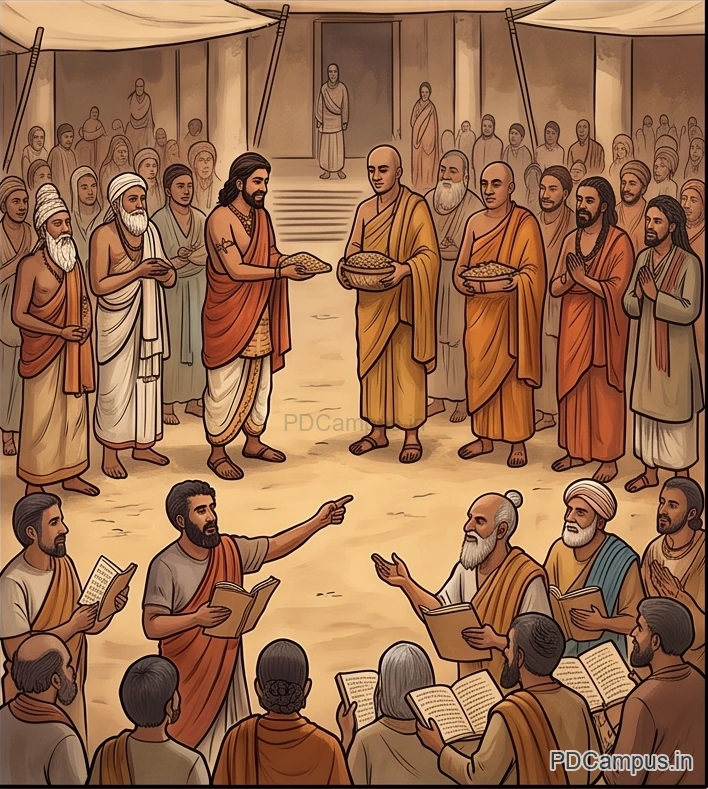
Accounts describe Prayaga’s great-gift assembly as quinquennial: held at five-year intervals. Buddhist, Brahmanical and other recipients received gifts. The very large totals also express royal generosity; they should not be accepted uncritically as figures from a modern budget.प्रयाग की महादान सभा का आयोजन विवरणों में हर पाँच वर्ष पर बताया गया है। यहाँ बौद्ध, ब्राह्मण और अन्य प्राप्तकर्ताओं को दान दिया जाता था। पंचवर्षीय का अर्थ पाँच वर्ष के अंतराल वाला है। दान की विशाल संख्याएँ उदारता का संदेश भी देती हैं; इन्हें बिना जाँच के आधुनिक बजट के आँकड़े न मानें।
Several religious commitments could coexistकई धार्मिक आस्थाएँ साथ रह सकती थीं
A gold coin attributed to Harsha depicts Uma-Maheshvara, while inscriptions connect him with Shiva devotion. Later Buddhist patronage coexisted with land grants to Brahmanas. A simple story of abandoning one religion completely on a definite conversion day is therefore inadequate.हर्ष से संबद्ध एक स्वर्ण सिक्के में उमा-महेश्वर का रूप मिलता है और अभिलेख उसे शिव-भक्ति से जोड़ते हैं। बाद के बौद्ध संरक्षण के साथ ब्राह्मणों को भूमि-अनुदान भी मिलते हैं। इसलिए एक निश्चित दिन में एक धर्म छोड़कर दूसरे में पूरी तरह चले जाने की सरल कहानी पर्याप्त नहीं है।
Patronage and givingसंरक्षण और दान
Authors and worksलेखक और रचनाएँ
| Author or attributionलेखक या परंपरागत श्रेय | Workरचना | What to rememberमुख्य बात |
|---|---|---|
| Banabhattaबाणभट्ट | Harshacharitaहर्षचरित | Sanskrit court biography, valuable especially for the early life and family crisis.संस्कृत दरबारी जीवनी; विशेष रूप से आरंभिक जीवन और पारिवारिक संकट के लिए उपयोगी। |
| Banabhatta; completion by his sonबाणभट्ट; पुत्र द्वारा समापन | Kadambariकादंबरी | An ornate prose romance, not a chronicle of Harsha’s conquests.अलंकारपूर्ण गद्य-कथा, हर्ष की विजयों का क्रमिक इतिहास नहीं। |
| Traditionally Harshaपरंपरागत रूप से हर्ष | Ratnavali and Priyadarshikaरत्नावली और प्रियदर्शिका | Courtly dramatic works associated with love and palace life.प्रेम और राजमहल के जीवन से जुड़े दरबारी नाटक। |
| Traditionally Harshaपरंपरागत रूप से हर्ष | Naganandaनागानंद | A drama combining Buddhist themes of compassion with the intervention of Gauri; literature is not a literal record of one conversion.करुणा के बौद्ध भाव और गौरी के हस्तक्षेप वाला नाटक; साहित्य किसी एक धर्मांतरण का सीधा ऐतिहासिक अभिलेख नहीं। |
| Mayura, Bhartrihari and Subandhu traditionsमयूर, भर्तृहरि और सुबंधु की परंपराएँ | Poetry, literary culture and later associationsकाव्य, साहित्यिक संस्कृति और बाद के संबंध | Their dates and links to Harsha’s court are not equally secure; do not treat all three as firmly documented court appointments.इनकी तिथियाँ और हर्ष के दरबार से संबंध समान रूप से निश्चित नहीं; तीनों को प्रमाणित दरबारी नियुक्तियाँ न मानें। |
Ratnavali, Priyadarshika and Nagananda are traditionally attributed to Harsha. Recognise this association for examinations. At the same time, scholars have discussed textual transmission and authorship: traditional attribution is not the same as proof from an author’s surviving autograph.रत्नावली, प्रियदर्शिका और नागानंद का परंपरागत संबंध हर्ष से है। इस श्रेय को परीक्षा के लिए पहचानना चाहिए। साथ ही, रचनाओं की पांडुलिपि-परंपरा और वास्तविक लेखन पर विद्वानों में चर्चा रही है; परंपरागत श्रेय और लेखक की अपनी लिखावट से सिद्ध प्रमाण अलग बातें हैं।
5. Revision through connections5. संबंध जोड़कर पुनरावृत्ति
Main connections: after Gupta decline, regional houses built new centres; a family crisis joined Thanesar and Kanauj under Harsha; Gauda resisted, Kamarupa allied, Valabhi negotiated and Pulakeshin II stopped southern expansion. Xuanzang linked Nalanda, courts and Asia. Land grants and samantas were important bases of local power.मुख्य क्रम याद रखें: गुप्त शक्ति घटने पर क्षेत्रीय केंद्र उभरे; पारिवारिक संकट ने हर्ष के अधीन थानेसर और कन्नौज को जोड़ा; गौड़ ने प्रतिरोध किया, कामरूप सहयोगी बना, वलभी ने कूटनीति अपनाई और पुलकेशिन द्वितीय ने दक्षिणी विस्तार रोका। ह्वेनसांग ने नालंदा, राजदरबारों और एशिया को जोड़ा। भूमि-अनुदान तथा सामंत स्थानीय शक्ति के महत्वपूर्ण आधार थे।
Harsha’s familyहर्ष का परिवार
- Father: Prabhakaravardhana.पिता: प्रभाकरवर्धन।
- Elder brother: Rajyavardhana.बड़ा भाई: राज्यवर्धन।
- Sister: Rajyashri.बहन: राज्यश्री।
- Brother-in-law: Grahavarman.बहनोई: ग्रहवर्मन।
Regional connectionsक्षेत्रीय संबंध
- Gauda: Shashanka.गौड़: शशांक।
- Kamarupa: Bhaskaravarman.कामरूप: भास्करवर्मन।
- Valabhi: Maitraka dynasty.वलभी: मैत्रक वंश।
- Kanauj: Maukhari power before Harsha.कन्नौज: हर्ष से पहले मौखरि सत्ता।
Limits on royal powerराजकीय शक्ति की सीमाएँ
- East: a long struggle with Gauda.पूर्व: गौड़ से लंबा संघर्ष।
- West: Valabhi retained its dynasty.पश्चिम: वलभी का अपना राजवंश बना रहा।
- South: Chalukya resistance in the Narmada region.दक्षिण: नर्मदा क्षेत्र में चालुक्य प्रतिरोध।
- Government: dependence on samantas too.व्यवस्था: सामंतों पर भी निर्भरता।
Evidence at a glanceएक नज़र में स्रोत
- Banabhatta: court and early life.बाणभट्ट: दरबार और आरंभिक जीवन।
- Xuanzang: travel and Buddhist study.ह्वेनसांग: यात्रा और बौद्ध अध्ययन।
- Banskhera: land grant.बाँसखेड़ा: भूमि-अनुदान।
- Aihole: a rival court’s perspective.ऐहोल: प्रतिद्वंद्वी दरबार का दृष्टिकोण।
| If you see...नाम या संकेत | Connect it to...मुख्य संबंध | Do not mix it with...अंतर समझें |
|---|---|---|
| Thanesar → Kanaujथानेसर से कन्नौज | Pushyabhuti origin → combined Maukhari political centre under Harsha.पुष्यभूति आधार और हर्ष के अधीन मौखरि राजनीतिक केंद्र का जुड़ाव। | Pataliputra was the earlier Maurya/Gupta centre.पाटलिपुत्र पहले मौर्य और गुप्त सत्ता का महत्वपूर्ण केंद्र था। |
| Rajyashriराज्यश्री | Harsha's sister; Maukhari queen; rescue central to Harshacharita.हर्ष की बहन और मौखरि रानी; हर्षचरित में उसका बचाव महत्वपूर्ण। | Prabhavatigupta was the earlier Gupta-Vakataka regent.प्रभावतीगुप्त इससे पहले की गुप्त-वाकाटक संरक्षिका थी। |
| Grahavarmanग्रहवर्मन | Maukhari king of Kanauj; husband of Rajyashri; killed in crisis.कन्नौज का मौखरि राजा, राज्यश्री का पति, संकट में मारा गया। | Grahavarman is not Harsha's brother.वह हर्ष का भाई नहीं, बहनोई था। |
| Shashankaशशांक | Gauda ruler; Karnasuvarna; Harsha's eastern rival.गौड़, कर्णसुवर्ण और हर्ष का पूर्वी प्रतिद्वंद्वी। | Buddhist destruction stories require source caution.धार्मिक विनाश की कथाओं में स्रोत की दृष्टि जाँचें। |
| Bhaskaravarmanभास्करवर्मन | Kamarupa king; Harsha's ally against Gauda; Xuanzang host.कामरूप का राजा, गौड़-विरोधी सहयोगी और ह्वेनसांग का मेजबान। | Bhaskaravarman was not a Harsha-appointed governor.हर्ष का नियुक्त प्रांतीय राज्यपाल नहीं। |
| Dhruvasena IIध्रुवसेन द्वितीय | Maitraka ruler of Valabhi; marriage/diplomatic tie to Harsha.वलभी का मैत्रक शासक; हर्ष से वैवाहिक और कूटनीतिक संबंध। | Valabhi remained strong, not directly absorbed.वलभी की स्थानीय राजसत्ता बनी रही। |
| Pulakeshin II / Aiholeपुलकेशिन द्वितीय और ऐहोल | Chalukya ruler and inscription that mark Harsha's southern check.चालुक्य शासक तथा हर्ष की दक्षिणी असफलता बताने वाली प्रशस्ति। | Harsha did not rule the Deccan.हर्ष दक्कन का राजा नहीं बना। |
| Toramana → Mihirakulaतोरमाण और मिहिरकुल | Major Huna rulers in India.भारत में प्रमुख हूण शासक। | Yashodharman was an Aulikara ruler whose prashasti celebrates victory over Mihirakula.यशोधर्मन औलिकर शासक था, जिसकी प्रशस्ति मिहिरकुल पर विजय बताती है। |
| Banskhera / Madhubanबाँसखेड़ा और मधुबन | Harsha's copper-plate grants and administration.हर्ष के ताम्रपत्र और प्रशासन। | Aihole is Pulakeshin II's Chalukya prashasti.ऐहोल पुलकेशिन द्वितीय की चालुक्य प्रशस्ति है। |
| Harshacharita / Kadambariहर्षचरित और कादंबरी | Banabhatta; the final part of Kadambari was completed by his son.बाणभट्ट; कादंबरी का अंतिम भाग उसके पुत्र ने पूरा किया। | Ratnavali, Priyadarshika, Nagananda are traditionally linked to Harsha.रत्नावली, प्रियदर्शिका और नागानंद का परंपरागत संबंध हर्ष से है। |
| Xuanzangह्वेनसांग | 629-645 journey; Nalanda, Shilabhadra, Harsha's court.629–645 की यात्रा, नालंदा, शीलभद्र और हर्ष का दरबार। | Faxian came in the Gupta age, about two centuries earlier.फाह्यान लगभग दो सदियाँ पहले गुप्त काल में आया। |
| Kanauj assemblyकन्नौज की सभा | Mahayana-centred royal religious assembly.महायान-केंद्रित राजकीय धार्मिक सभा। | Prayaga assembly was the quinquennial great-gift gathering.प्रयाग में पाँच वर्ष के अंतराल पर महादान का आयोजन। |
| Nalanda / Valabhiनालंदा और वलभी | Major eastern / western centres of learning.पूर्वी और पश्चिमी भारत के प्रमुख अध्ययन केंद्र। | They were not identical institutions or controlled by one dynasty.अलग संस्थागत इतिहास; एक ही स्थल या एक ही वंश के समान संस्थान नहीं। |
| Mahasamantaमहासामंत | Powerful subordinate ruler/feudatory.शक्तिशाली अधीन शासक या सरदार। | His local autonomy limits the idea of a uniform empire.उसके स्थानीय अधिकार केंद्रीय शासन की सीमाएँ भी दिखाते हैं। |
After Harsha’s deathहर्ष की मृत्यु के बाद
Harsha’s death is conventionally dated to 647 CE. No securely established successor preserved his wide network of power, and regional rulers reasserted themselves. A succession crisis means competition over who should rule; it does not mean farming, trade, monasteries or literary life stopped. Kanauj remained valuable. The later contest involving the Palas, Gurjara-Pratiharas and Rashtrakutas belongs to later centuries, not to Harsha’s own reign.हर्ष की मृत्यु सामान्यतः 647 ईस्वी मानी जाती है। कोई सुनिश्चित उत्तराधिकारी उसकी व्यापक शक्ति-व्यवस्था बनाए नहीं रख सका और क्षेत्रीय शासकों का प्रभाव फिर बढ़ा। उत्तराधिकार का संकट शासन के दावेदारों की प्रतिस्पर्धा है; इसका अर्थ खेती, व्यापार, मठ और साहित्य का रुक जाना नहीं। कन्नौज महत्वपूर्ण बना रहा। पाल, गुर्जर-प्रतिहार और राष्ट्रकूटों का बाद का संघर्ष बाद की सदियों में आता है, हर्ष के अपने शासनकाल में नहीं।
Remember the family connectionपारिवारिक संबंध याद रखें
Marriage alliance, crisis, Rajyashri’s rescue and the political joining of Thanesar and Kanauj.विवाह-संबंध, संकट, राज्यश्री का बचाव और फिर थानेसर-कन्नौज का राजनीतिक जुड़ाव।
Rajyashri's Maukhari marriage leads to Harsha's Kanauj connection.राज्यश्री का मौखरि विवाह समझाता है कि हर्ष का कन्नौज से पारिवारिक और राजनीतिक संबंध कैसे बना।
Remember the regional relationshipsक्षेत्रीय संबंध याद रखें
Gauda as rival, Kamarupa as ally, agreement with Valabhi and Chalukya resistance in the Deccan. This is a memory aid for relationships, not a permanent boundary map.गौड़ प्रतिद्वंद्वी, कामरूप सहयोगी, वलभी से समझौता और दक्कन में चालुक्य प्रतिरोध। यह संबंधों को याद रखने का तरीका है, स्थायी सीमा-मानचित्र नहीं।
How to use a traveller’s accountयात्री के विवरण का उपयोग कैसे करें
Xuanzang’s account presents a world seen from a particular viewpoint, not a modern population census.ह्वेनसांग का विवरण एक विशेष दृष्टिकोण से देखी गई दुनिया है, आधुनिक जनगणना नहीं।
Use his rich observations and check his purpose and numbers.उसकी मूल्यवान टिप्पणियों का उपयोग करें, लेकिन हर सूचना के उद्देश्य, स्रोत और संख्या की जाँच भी करें।
Final cautions: the founder Pushyabhuti comes from Bana’s narrative; Harsha’s inscriptions provide a different genealogical starting point. The precise murder sequence, Shashanka’s endpoint and the Narmada campaign’s date are not fully certain. Harsha did not rule all India, and Valabhi survived. Xuanzang’s religious purpose shapes his account. Large army and gift totals need checking. Harsha’s religious identity was layered. The three plays have traditional attribution; reports of Huna religious violence require comparison. The Later Guptas are not automatically the imperial Gupta line. Regionalisation was political and social change, not the end of organised life.अंतिम सावधानियाँ: पुष्यभूति नामक संस्थापक का विवरण बाण से मिलता है; हर्ष के अभिलेखों की वंशावली अलग आधार देती है। हत्या का सटीक क्रम, शशांक की अंतिम तिथि और नर्मदा अभियान की तारीख पूरी तरह निश्चित नहीं हैं। हर्ष ने पूरे भारत पर शासन नहीं किया; वलभी बना रहा। ह्वेनसांग का धार्मिक उद्देश्य उसकी दृष्टि को प्रभावित करता है। सेना और दान के बड़े आँकड़ों को जाँचना चाहिए। हर्ष की धार्मिक पहचान बहुस्तरीय थी। तीन नाटकों का श्रेय परंपरागत है; हूणों के धार्मिक अत्याचार की कथाओं की तुलना जरूरी है। उत्तरवर्ती गुप्तों को सीधे साम्राज्यवादी गुप्तों की ही शाखा न मानें। क्षेत्रीयकरण राजनीतिक और सामाजिक परिवर्तन था, जीवन का अंत नहीं।
Understand this chapter by following several regions alongside one ruler: people continued to cultivate land, goods and ideas travelled along routes, and new centres of power developed in different capitals.इस अध्याय को समझने के लिए एक राजा के साथ कई क्षेत्रों को देखें: लोग खेती करते रहे, मार्गों से वस्तुएँ और विचार चलते रहे, और अलग राजधानियों में शक्ति के नए केंद्र बनते रहे।