Pallavas, Chalukyas and Rashtrakutasपल्लव, चालुक्य और राष्ट्रकूट
General Knowledge · Visual study guide with full explanationsसामान्य ज्ञान · चित्रों और पूरे विवरण के साथ अध्ययन मार्गदर्शिका
Three dynasties, two coasts and one stone-built story of peninsular Indiaतीन राजवंश, दो समुद्री तट और पत्थरों में दर्ज प्रायद्वीपीय भारत का इतिहास
1. The Big Picture: The Peninsula Connected Regions1. व्यापक तस्वीर: प्रायद्वीप संपर्कों का महत्त्वपूर्ण क्षेत्र था
Think of the Deccan plateau as a region of contact between north and south. Routes from the Narmada region towards the Tamil plains linked river valleys, passes and ports. Rulers who controlled them could move armies, collect agricultural revenue and connect Arabian Sea trade with Bay of Bengal trade. This helps explain the importance of Kanchi, Vatapi and Manyakheta.दक्कन के पठार को उत्तर और दक्षिण के बीच संपर्क-क्षेत्र की तरह समझें। नर्मदा क्षेत्र से तमिल मैदानों तक जाने वाले मार्ग नदी-घाटियों, दर्रों और बंदरगाहों से जुड़ते थे। इन्हें नियंत्रित करने वाले शासक सेनाएँ चला सकते थे, कृषि राजस्व प्राप्त कर सकते थे और अरब सागर के व्यापार को बंगाल की खाड़ी के व्यापार से जोड़ सकते थे। इसी संदर्भ में कांची, वातापी और मान्यखेट महत्त्वपूर्ण थे।
- A dynasty is a ruling family. Its capital is the main seat of court and government, not necessarily the only important city. The Pallavas, Badami Chalukyas and Rashtrakutas did not follow one another as rulers of all India; their territories and periods overlapped.राजवंश शासन करने वाला परिवार है। राजधानी दरबार और शासन का मुख्य स्थान है, जरूरी नहीं कि वही एकमात्र महत्त्वपूर्ण नगर हो। पल्लव, बादामी चालुक्य और राष्ट्रकूट पूरे भारत पर एक के बाद एक शासन करने वाले तीन राजवंश नहीं थे; उनके क्षेत्र और समय एक-दूसरे से मिलते थे।
- A feudatory is a subordinate ruler who keeps some local authority while owing service, tribute or troops to a more powerful king. A powerful subordinate could become independent. This helps explain the rise of Dantidurga and, later, Tailapa II.सामंत या अधीनस्थ शासक कुछ स्थानीय अधिकार बनाए रखकर बड़े राजा को सेवा, कर या सैनिक देता था। शक्तिशाली अधीनस्थ स्वतंत्र भी हो सकता था। इससे दंतिदुर्ग और बाद में तैलप द्वितीय का उत्थान समझ आता है।
- A prashasti praises a ruler or patron. A grant records a gift or transfer of specified rights. Patronage means supporting a person, institution or work with resources. These sources help us study power, but they must be compared rather than taken literally in every detail.प्रशस्ति किसी शासक या संरक्षक की प्रशंसा करती है। दानपत्र उपहार या निर्धारित अधिकारों का हस्तांतरण दर्ज करता है। संरक्षण का अर्थ किसी व्यक्ति, संस्था या रचना को संसाधन देना है। ये स्रोत सत्ता समझाते हैं, लेकिन उनकी तुलना करनी चाहिए; हर बात अक्षरशः मानना ठीक नहीं।
Pallavas of Kanchiकांची के पल्लव
Core: northern Tamil country and southern Andhra. Their capital Kanchi was a political, learning and temple centre. Mamallapuram connected royal art with the Coromandel coast.मुख्य क्षेत्र: उत्तरी तमिल देश और दक्षिणी आंध्र। राजधानी कांची राजनीति, शिक्षा और मंदिरों का केंद्र थी। मामल्लपुरम राजकीय कला को कोरोमंडल तट से जोड़ता था।
Chalukyas of Vatapiवातापी के चालुक्य
Core: western Deccan, especially the Malaprabha valley. They balanced northern and southern forces and experimented boldly at Aihole, Badami and Pattadakal.मुख्य क्षेत्र: पश्चिमी दक्कन, विशेषकर मलप्रभा घाटी। वे उत्तर और दक्षिण की शक्तियों के बीच अपनी स्थिति बनाते रहे। ऐहोल, बादामी और पट्टदकल में मंदिर-रूपों के कई प्रयोग हुए।
Rashtrakutasराष्ट्रकूट
Core: the Deccan, later centred on Manyakheta. Former Chalukya subordinates became imperial rulers whose armies reached Gujarat, Malwa, Kanauj and the far south.मुख्य क्षेत्र: दक्कन, जिसका केंद्र बाद में मान्यखेट बना। पहले चालुक्यों के अधीन रहने वाला राजवंश साम्राज्यिक शक्ति बना; उसकी सेनाएँ गुजरात, मालवा, कन्नौज और सुदूर दक्षिण तक पहुँचीं।
Place memory: Pallava = Kanchi and the eastern coast; Chalukya = Badami rocks; Rashtrakuta = the wider Manyakheta network. Kanchi itself is inland, not directly on the seashore.स्थान याद रखें: पल्लव = कांची और पूर्वी तट; चालुक्य = बादामी की चट्टानें; राष्ट्रकूट = मान्यखेट से जुड़ा व्यापक राजनीतिक जाल। कांची समुद्र के ठीक किनारे नहीं, भीतर की ओर स्थित है।
- Locate three rivers first: Narmada towards the northern Deccan frontier, Krishna across the Deccan, and Kaveri farther south in the Tamil region. They are orientation points, not permanent borders shared by all three dynasties.पहले तीन नदियाँ पहचानें: दक्कन के उत्तरी सीमांत की ओर नर्मदा, दक्कन में कृष्णा और दक्षिण में तमिल क्षेत्र की कावेरी। ये दिशा समझने के संकेत हैं, तीनों राजवंशों की स्थायी साझा सीमाएँ नहीं।
- Vatapi is modern Badami in Karnataka. Manyakheta is modern Malkhed in Karnataka. Kanchi is Kanchipuram in Tamil Nadu; coastal Mamallapuram is also called Mahabalipuram. Kanchi and Mamallapuram are separate places.वातापी आज का कर्नाटक स्थित बादामी है। मान्यखेट आज कर्नाटक का मलखेड़ है। कांची तमिलनाडु का कांचीपुरम है; तटीय मामल्लपुरम को महाबलीपुरम भी कहते हैं। कांची और मामल्लपुरम अलग स्थान हैं।
- The Arabian Sea lies west and the Bay of Bengal east. Western routes connected ports, horse traders and inland merchants; eastern routes linked the Tamil coast with Southeast Asia. A schematic map explains these directions, not exact ancient distances or roads.पश्चिम में अरब सागर और पूर्व में बंगाल की खाड़ी है। पश्चिमी मार्ग बंदरगाह, घोड़ा-व्यापारी और भीतरी व्यापारी जोड़ते थे; पूर्वी मार्ग तमिल तट को दक्षिण-पूर्व एशिया से जोड़ते थे। सांकेतिक मानचित्र दिशाएँ समझाता है, प्राचीन दूरियाँ या सड़कें हूबहू नहीं।
Evidence desk - how do we know?इतिहास के प्रमाण: हमें कैसे पता चलता है?
| Witnessप्रमाण | What it tells usउससे क्या पता चलता है | What it cannot prove aloneअकेले उससे क्या सिद्ध नहीं होता |
|---|---|---|
| Aihole inscription, 634 CEऐहोल अभिलेख, 634 ईस्वी | Ravikirti's Sanskrit praise of Pulakeshin II: Chalukya genealogy, conquests and the clash with Harsha.पुलकेशिन द्वितीय की रविकीर्ति रचित संस्कृत प्रशस्ति: चालुक्य वंशावली, विजय और हर्ष से संघर्ष। | A praise inscription magnifies its patron. A victory claim needs geography and rival evidence.प्रशस्ति अपने संरक्षक को महान बनाकर प्रस्तुत करती है। विजय के दावे को भूगोल और दूसरे पक्ष के प्रमाण से भी जाँचें। |
| Copper-plate grantsताम्रपत्र दान | Village names, boundaries, taxes, donees, royal titles, genealogies and local officers.गाँव, सीमाएँ, कर, प्राप्तकर्ता, राजकीय उपाधियाँ, वंशावलियाँ और स्थानीय अधिकारी। | The legal formula of one grant is not automatically the daily rule everywhere.एक दान की कानूनी शर्तें हर जगह का दैनिक नियम नहीं होतीं। |
| Temples and cavesमंदिर और गुफाएँ | Material, building skill, sacred imagery, patron names and changing plans.सामग्री, निर्माण-कौशल, धार्मिक आकृतियाँ, संरक्षकों के नाम और बदलती योजनाएँ। | A monument's modern style label does not always equal the builder's own word.स्मारक के लिए आज प्रयुक्त शैली-नाम जरूरी नहीं कि निर्माता का अपना शब्द हो। |
| Court and devotional textsदरबारी और भक्तिपरक ग्रंथ | Languages, ideas, humour, faith, ethics and learned communities.भाषाएँ, विचार, हास्य, धर्म, नैतिकता और विद्वान समुदाय। | Poetry is not a census and saints' lives mix memory, devotion and miracle.कविता जनगणना नहीं; संत-जीवनियों में स्मृति, भक्ति और चमत्कार मिल सकते हैं। |
Ask what each source can actually answer. A temple wall can preserve a donor’s name; its material and plan reveal craft and ritual. Sanskrit court poetry, Tamil devotion and Kannada poetics have different purposes. Coins and seals add royal symbols and exchange evidence. Chinese travellers and Arab accounts offer outside viewpoints, but their routes, interests and reporting dates limit what they saw or knew.देखें कि कौन-सा स्रोत किस प्रश्न का उत्तर दे सकता है। मंदिर की दीवार दानदाता का नाम रख सकती है; सामग्री और योजना शिल्प तथा अनुष्ठान दिखाती हैं। संस्कृत दरबारी काव्य, तमिल भक्ति और कन्नड़ काव्यशास्त्र के उद्देश्य अलग हैं। सिक्के और मुहरें राजकीय प्रतीक तथा विनिमय का प्रमाण जोड़ते हैं। चीनी यात्रियों और अरब विवरणों से बाहरी दृष्टि मिलती है, लेकिन मार्ग, रुचि और लिखने का समय उनकी जानकारी की सीमा तय करते हैं।
Read stone and copper togetherपत्थर और ताम्रपत्र साथ पढ़ें
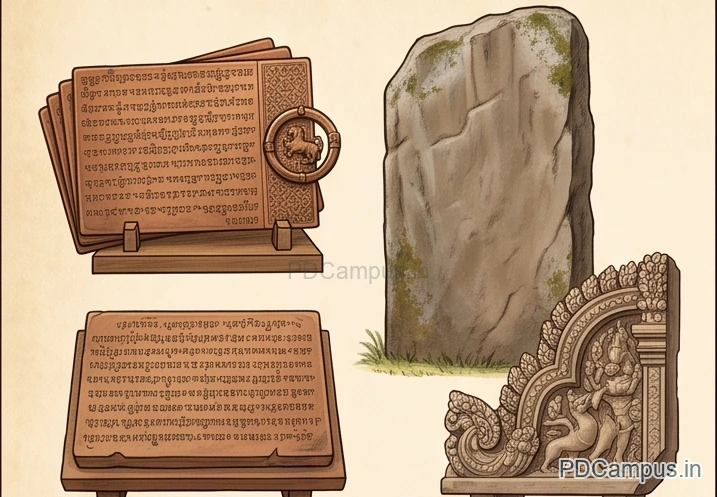
Three-dynasty parallel railतीनों राजवंशों का समानांतर कालक्रम
Dates are guides, not fence posts. Early medieval reign dates often differ slightly across reconstructions. Remember the secure order and major events before memorising every boundary year.तिथियाँ मार्गदर्शक हैं, कठोर सीमाएँ नहीं। प्रारंभिक मध्यकाल के शासनकाल अलग पुनर्निर्माणों में कुछ बदलते हैं। हर आरंभ-अंत वर्ष रटने से पहले मुख्य क्रम और बड़ी घटनाएँ समझें।
| Teaching frameअध्ययन का कालखंड | Pallavasपल्लव | Badami Chalukyas / Rashtrakutasबादामी चालुक्य / राष्ट्रकूट |
|---|---|---|
| Around 550 onwardलगभग 550 के बाद | Simhavishnu’s later-sixth-century rise precedes Mahendravarman I.छठी शताब्दी के उत्तरार्ध में सिंहविष्णु का उत्थान, फिर महेंद्रवर्मन प्रथम। | Pulakeshin I establishes Vatapi power; Pulakeshin II later expands it.पुलकेशिन प्रथम वातापी की शक्ति स्थापित करते हैं; बाद में पुलकेशिन द्वितीय उसका विस्तार करते हैं। |
| Seventh centuryसातवीं शताब्दी | Mahendravarman I, Mamalla and Paramesvaravarman I belong to continuing conflict and building.महेंद्रवर्मन प्रथम, मामल्ल और परमेश्वरवर्मन प्रथम के समय संघर्ष तथा निर्माण जारी रहते हैं। | Pulakeshin II’s wars and Vikramaditya I’s recovery show changing fortunes.पुलकेशिन द्वितीय के युद्ध और विक्रमादित्य प्रथम की पुनर्स्थापना बदलती स्थिति दिखाते हैं। |
| Eighth centuryआठवीं शताब्दी | Rajasimha and Nandivarman II belong to later Pallava history.राजसिंह और नंदिवर्मन द्वितीय बाद के पल्लव इतिहास से जुड़े हैं। | Vikramaditya II’s campaigns precede the Rashtrakuta breakthrough around 753; Dantidurga and Krishna I consolidate a new power.विक्रमादित्य द्वितीय के अभियानों के बाद लगभग 753 में राष्ट्रकूट उभरते हैं; दंतिदुर्ग और कृष्ण प्रथम नई शक्ति मजबूत करते हैं। |
| Ninth to tenth century, towards 1000 CEनौवीं से दसवीं शताब्दी, 1000 ईस्वी की ओर | The Pallavas lose remaining independent power to the Cholas in the late ninth century.नौवीं शताब्दी के अंत में चोल शेष स्वतंत्र पल्लव सत्ता हटा देते हैं। | Govinda III, Amoghavarsha I and Krishna III are major names; Tailapa II replaces Rashtrakuta imperial power in 973.गोविंद तृतीय, अमोघवर्ष प्रथम और कृष्ण तृतीय प्रमुख नाम हैं; 973 में तैलप द्वितीय राष्ट्रकूट साम्राज्यिक सत्ता हटाते हैं। |
2. The Dynasties - Rulers, Capitals and the Wars That Connected Them2. राजवंश: शासक, राजधानियाँ और उन्हें जोड़ने वाले युद्ध
Learn each royal house like a family story. First see who made the kingdom strong. Then see who fought, who rebuilt and what each reign left behind.हर राजवंश को परिवार की कहानी की तरह पढ़ें। पहले देखें कि राज्य किसने मजबूत किया। फिर समझें कि किसने युद्ध किया, किसने सत्ता फिर सँभाली और हर शासनकाल से क्या बचा।
A. Pallavas - from Kanchi to the seaक. पल्लव: कांची से समुद्र तक
Simhavishnuसिंहविष्णु
c. late sixth century. Restored Pallava strength, extended influence into the Tamil country and prepared the clear historical line of the later Pallavas.लगभग छठी शताब्दी का उत्तरार्ध। उन्होंने पल्लव शक्ति को फिर मजबूत किया, तमिल क्षेत्र में प्रभाव बढ़ाया और बाद के पल्लव शासकों की अधिक स्पष्ट ऐतिहासिक परंपरा का आधार बनाया।
Mahendravarman Iमहेंद्रवर्मन प्रथम
c. 600-630. Scholar, artist and cave-temple patron. Wrote the comic Sanskrit play Mattavilasa Prahasana. Pulakeshin II pressed into his northern lands.लगभग 600–630। विद्वान, कलाकार और गुफा-मंदिरों के संरक्षक। उन्होंने संस्कृत का हास्य नाटक मत्तविलास प्रहसन लिखा। पुलकेशिन द्वितीय ने उनके उत्तरी क्षेत्रों पर दबाव डाला।
Narasimhavarman Iनरसिंहवर्मन प्रथम
c. 630-668. Called Mamalla, “great wrestler.” Reversed the war, captured Vatapi around 642 and earned the title Vatapikonda.लगभग 630–668। मामल्ल, अर्थात महान पहलवान, कहलाए। उन्होंने युद्ध की दिशा बदली, लगभग 642 में वातापी पर अधिकार किया और वातापीकोंड की उपाधि पाई।
Paramesvaravarman Iपरमेश्वरवर्मन प्रथम
Faced renewed Chalukya attack under Vikramaditya I. Pallava-Chalukya war continued because neither frontier stayed permanently settled.उन्होंने विक्रमादित्य प्रथम के नेतृत्व में नए चालुक्य आक्रमण का सामना किया। सीमांत स्थायी रूप से तय नहीं हुआ, इसलिए पल्लव–चालुक्य संघर्ष जारी रहा।
Narasimhavarman IIनरसिंहवर्मन द्वितीय
Known as Rajasimha. His age is linked with mature structural temples: Kanchi Kailasanatha and the Shore Temple complex at Mamallapuram.राजसिंह के नाम से प्रसिद्ध। उनका समय परिपक्व संरचनात्मक मंदिरों से जुड़ा है: कांची का कैलासनाथ और मामल्लपुरम का तट मंदिर परिसर।
Nandivarman IIनंदिवर्मन द्वितीय
Called Pallavamalla. Chosen from a collateral line in a succession crisis. Long reign; Vaikuntha Perumal temple preserves a visual royal genealogy.पल्लवमल्ल कहलाए। उत्तराधिकार संकट में राजवंश की दूसरी शाखा से चुने गए। उनका शासन लंबा था; वैकुंठ पेरुमाल मंदिर में चित्रात्मक राजवंशावली सुरक्षित है।
A useful Pallava memory sequence is Mahendravarman’s cave halls, Mamalla’s rathas and reliefs, and Rajasimha’s structural temples. It summarises important associations, not three sealed stages in which an earlier method vanished. The Mandagapattu inscription, carved in a rock-cut shrine, celebrates a temple made without brick, timber, metal or mortar. It marks Mahendravarman's rock-cut patronage; it does not prove that earlier temples in other materials never existed.पल्लवों का उपयोगी स्मृति-क्रम है: महेंद्रवर्मन के गुफा-मंडप, मामल्ल के रथ और उत्कीर्णन, राजसिंह के संरचनात्मक मंदिर। ये मुख्य संबंध हैं, तीन बंद चरण नहीं जिनमें पिछली विधि गायब हो गई हो। शैलकृत देवालय में उत्कीर्ण मंडगपट्टु अभिलेख ईंट, लकड़ी, धातु और गारे के बिना बने मंदिर की प्रशंसा करता है। यह महेंद्रवर्मन के शैलकृत संरक्षण का प्रमाण है; इससे यह सिद्ध नहीं होता कि पहले अन्य सामग्री के मंदिर थे ही नहीं।
B. Badami Chalukyas - the western Deccan powerख. बादामी चालुक्य: पश्चिमी दक्कन की शक्ति
Pulakeshin Iपुलकेशिन प्रथम
c. 543-566. Made Vatapi a fortified capital and established independent Chalukya power. Later records celebrate his royal sacrifices.लगभग 543–566। उन्होंने वातापी को किलेबंद राजधानी बनाया और स्वतंत्र चालुक्य शक्ति स्थापित की। बाद के अभिलेख उनके राजकीय यज्ञों की प्रशंसा करते हैं।
Kirtivarman Iकीर्तिवर्मन प्रथम
Expanded against neighbouring Kadambas, Mauryas of Konkan and Nalas. His brother Mangalesha later ruled before a succession struggle.उन्होंने पड़ोसी कदंबों, कोंकण के मौर्यों और नलों के विरुद्ध विस्तार किया। बाद में उनके भाई मंगलेश ने शासन किया, जिसके बाद उत्तराधिकार का संघर्ष हुआ।
Pulakeshin IIपुलकेशिन द्वितीय
c. 610–642. The best-known Chalukya ruler. Ravikirti's Aihole prashasti celebrates his success against Harsha. Historians associate the confrontation with the Narmada–Vindhya region, but the inscription does not identify an exact battlefield. He established his brother Vishnuvardhana in Vengi and fought the Pallavas.लगभग 610–642। सबसे प्रसिद्ध चालुक्य शासक। रविकीर्ति की ऐहोल प्रशस्ति हर्ष के विरुद्ध उनकी सफलता का गुणगान करती है। इतिहासकार इस संघर्ष को नर्मदा–विंध्य क्षेत्र से जोड़ते हैं, लेकिन अभिलेख सटीक युद्धस्थल नहीं बताता। उन्होंने भाई विष्णुवर्धन को वेंगी में स्थापित किया और पल्लवों से युद्ध किया।
Vikramaditya Iविक्रमादित्य प्रथम
Recovered Vatapi after Pallava occupation and restored Chalukya strength. His reign shows why a captured capital did not always mean a dead dynasty.पल्लव अधिकार के बाद उन्होंने वातापी वापस प्राप्त किया और चालुक्य शक्ति फिर मजबूत की। राजधानी का कब्जे में जाना हमेशा राजवंश का स्थायी अंत नहीं होता था।
Vikramaditya IIविक्रमादित्य द्वितीय
Successfully campaigned at Kanchi. Records praise restraint toward its temples. Queens Lokamahadevi and Trailokyamahadevi patronised great Pattadakal temples.उन्होंने कांची में सफल अभियान किए। अभिलेख वहाँ के मंदिरों के प्रति उनके संयम की प्रशंसा करते हैं। रानियों लोकमहादेवी और त्रैलोक्यमहादेवी ने पट्टदकल के बड़े मंदिरों को संरक्षण दिया।
Kirtivarman IIकीर्तिवर्मन द्वितीय
The last Badami Chalukya ruler. Dantidurga broke Chalukya supremacy around 753. The transfer was not completed in a single day; Rashtrakuta control was further consolidated under Krishna I.बादामी चालुक्यों के अंतिम शासक। लगभग 753 में दंतिदुर्ग ने चालुक्य सर्वोच्चता तोड़ी। सत्ता का हस्तांतरण एक ही दिन में पूरा नहीं हुआ; कृष्ण प्रथम के समय राष्ट्रकूट नियंत्रण और मजबूत हुआ।
Do not mix the branches: Badami/Vatapi Chalukyas are the sixth-eighth-century house here. Pulakeshin II's brother Vishnuvardhana founded the Eastern Chalukyas of Vengi. Much later, the Western Chalukyas of Kalyani rose after the Rashtrakutas.शाखाओं में भ्रम न करें: यहाँ बादामी या वातापी चालुक्य छठी–आठवीं शताब्दी का राजवंश है। पुलकेशिन द्वितीय के भाई विष्णुवर्धन ने वेंगी के पूर्वी चालुक्यों का आधार रखा। बहुत बाद में राष्ट्रकूटों के बाद पश्चिमी चालुक्य उभरे, जिन्हें कल्याणी चालुक्य भी कहा जाता है।
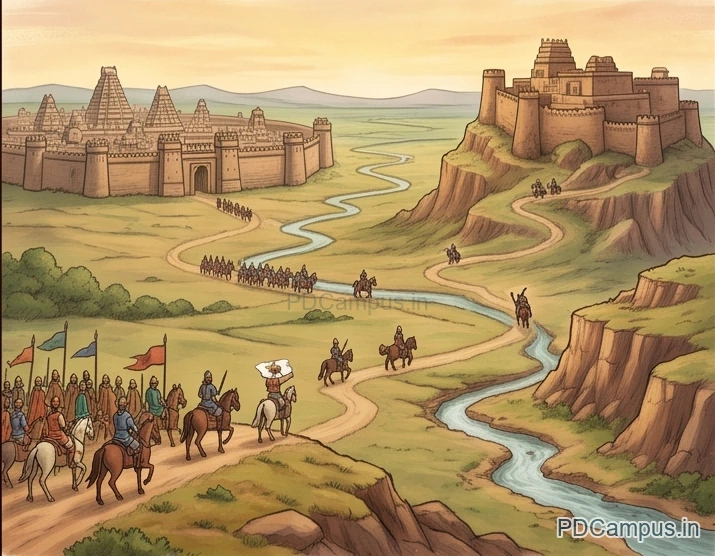
The Kanchi-Vatapi war like a pendulumकांची–वातापी संघर्ष: बार-बार बदलता पलड़ा
- First movement: Pulakeshin II pressed into Pallava territory during Mahendravarman I’s reign. The Pallavas resisted; accounts differ in emphasis, so a simple “advance stopped” arrow should not erase Chalukya gains.पहला चरण: महेंद्रवर्मन प्रथम के शासन में पुलकेशिन द्वितीय ने पल्लव क्षेत्र में प्रवेश किया। पल्लवों ने प्रतिरोध किया; विवरण अलग बातों पर जोर देते हैं। इसलिए किसी चित्र में केवल ‘आक्रमण रुक गया’ दिखाना चालुक्य बढ़त को छिपा देगा।
- Reversal: Narasimhavarman I, Mamalla, captured Vatapi around 642. The title Vatapikonda means conqueror of Vatapi. This connects a ruler, an event and a title without confusing him with Rajasimha, Narasimhavarman II.पलटाव: मामल्ल नरसिंहवर्मन प्रथम ने लगभग 642 में वातापी पर अधिकार किया। वातापीकोंड का अर्थ वातापी का विजेता है। इससे शासक, घटना और उपाधि जुड़ते हैं; उन्हें राजसिंह नरसिंहवर्मन द्वितीय से न मिलाएँ।
- Recovery: Vikramaditya I restored Chalukya power; later Chalukya campaigns reached Kanchi again, notably under Vikramaditya II. The same capitals appear repeatedly because a temporary occupation was not always permanent annexation.पुनर्स्थापना: विक्रमादित्य प्रथम ने चालुक्य शक्ति लौटाई; बाद के चालुक्य अभियान, विशेषकर विक्रमादित्य द्वितीय के, फिर कांची पहुँचे। वही राजधानियाँ बार-बार आती हैं क्योंकि अस्थायी कब्जा हमेशा स्थायी विलय नहीं था।
Capitals, movement and conflictराजधानियाँ, आवागमन और संघर्ष
C. Rashtrakutas - feudatories become emperorsग. राष्ट्रकूट: अधीनस्थ शासकों से सम्राट तक
Dantidurgaदंतिदुर्ग
Active around 735–756, Dantidurga is regarded as the effective founder of imperial Rashtrakuta power. He broke Chalukya supremacy and extended influence through Malwa and parts of the Deccan. Do not treat this entire period as equally established independent imperial rule.लगभग 735–756 के सक्रिय काल वाले दंतिदुर्ग साम्राज्यिक राष्ट्रकूट सत्ता के वास्तविक संस्थापक माने जाते हैं। उन्होंने चालुक्य सर्वोच्चता तोड़ी और मालवा तथा दक्कन के कुछ भागों में प्रभाव बढ़ाया। इस पूरे समय को स्वतंत्र साम्राज्य का समान रूप से स्थापित शासनकाल न मानें।
Krishna Iकृष्ण प्रथम
c. 756-774. Consolidated the new empire. Closely associated with Ellora's monumental Kailasa temple, Cave 16.लगभग 756–774। उन्होंने नए साम्राज्य को मजबूत किया। एलोरा के विशाल कैलास मंदिर, गुफा 16, से उनका घनिष्ठ संबंध है।
Dhruvaध्रुव
Carried warfare north, defeating major Pala and Gurjara-Pratihara rivals. The Deccan power became an actor in the struggle around Kanauj.उन्होंने युद्धों का विस्तार उत्तर की ओर किया और प्रमुख पाल तथा गुर्जर-प्रतिहार प्रतिद्वंद्वियों को पराजित किया। दक्कन की शक्ति कन्नौज के आसपास के संघर्ष में भागीदार बनी।
Govinda IIIगोविंद तृतीय
Extended Rashtrakuta prestige from the north to the southern peninsula. Wide campaign claims describe influence, not one equally administered block.उन्होंने उत्तर से दक्षिणी प्रायद्वीप तक राष्ट्रकूट प्रतिष्ठा बढ़ाई। व्यापक अभियानों के दावे प्रभाव बताते हैं, हर जगह समान प्रत्यक्ष प्रशासन नहीं।
Amoghavarsha Iअमोघवर्ष प्रथम
c. 814-878. Long reign, Manyakheta capital, diplomacy, Jain patronage and Kannada learning. Linked with Kavirajamarga.लगभग 814–878। लंबा शासन, राजधानी मान्यखेट, कूटनीति, जैन संरक्षण और कन्नड़ साहित्य उनके साथ जुड़े हैं। कविराजमार्ग से भी उनका संबंध है।
Indra III & Krishna IIIइंद्र तृतीय और कृष्ण तृतीय
Indra III attacked Kanauj; Krishna III campaigned deeply in the south. After Krishna III, succession strain and strong subordinates weakened the centre.इंद्र तृतीय ने कन्नौज पर आक्रमण किया; कृष्ण तृतीय ने दक्षिण में दूर तक अभियान किए। कृष्ण तृतीय के बाद उत्तराधिकार के तनाव और शक्तिशाली अधीनस्थों ने केंद्र को कमजोर किया।
The struggle over Kanauj involved the Gurjara-Pratiharas, Palas and Rashtrakutas. It was a series of changing contests, not one battle fought by three armies on one day. For a Deccan ruler, a northern victory could bring prestige and submission without permanent administration of the entire route. After the Rashtrakutas, Tailapa II established the Later Western Chalukya dynasty. Calling it “of Kalyani” is a dynastic label; it does not mean Kalyani was already his capital in 973.कन्नौज के संघर्ष में गुर्जर-प्रतिहार, पाल और राष्ट्रकूट शामिल थे। यह बदलते संघर्षों की श्रृंखला थी, एक दिन तीन सेनाओं का एक युद्ध नहीं। दक्कन के शासक को उत्तर की विजय से प्रतिष्ठा और अधीनता मिल सकती थी, बिना पूरे मार्ग पर स्थायी प्रशासन के। राष्ट्रकूटों के बाद तैलप द्वितीय ने उत्तरवर्ती पश्चिमी चालुक्य वंश स्थापित किया। कल्याणी चालुक्य राजवंश का नाम है; इससे यह अर्थ नहीं कि 973 में तैलप की राजधानी पहले ही कल्याणी थी।
- Dantidurga rises from Chalukya subordinate to imperial founder.दंतिदुर्ग चालुक्य अधीनस्थ से साम्राज्य के संस्थापक बने।
- Krishna I consolidates the Deccan core.कृष्ण प्रथम ने दक्कन के मुख्य क्षेत्र को मजबूत किया।
- Dhruva and Govinda III campaign north.ध्रुव और गोविंद तृतीय ने उत्तर में अभियान किए।
- Amoghavarsha I is associated with Manyakheta and learning.अमोघवर्ष प्रथम मान्यखेट और विद्या से जुड़े हैं।
- Tailapa II replaces Rashtrakuta power in 973; the Later Western Chalukyas rise.973 में तैलप द्वितीय ने राष्ट्रकूट सत्ता हटाई; उत्तरवर्ती पश्चिमी चालुक्य उभरे।
- Campaign is not annexation. A ruler could defeat a rival, take gifts or secure submission and return home. Separate a raid, a tributary relationship and directly governed territory.अभियान का अर्थ विलय नहीं। राजा प्रतिद्वंद्वी को हराकर, उपहार या अधीनता स्वीकार कराकर लौट सकता था। छापा, कर देने का संबंध और प्रत्यक्ष शासित क्षेत्र अलग रखें।
3. How Rule Reached Daily Life - Land, Officers, Villages and Routes3. शासन से दैनिक जीवन तक: भूमि, अधिकारी, गाँव और मार्ग
A king did not personally manage every field. Royal power moved through governors, military chiefs, landholders, assemblies, temples, merchants and village officers. The exact name changed by region, but the layered pattern is easy to see.राजा हर खेत स्वयं नहीं संभालता था। राज्यपाल, सैन्य प्रमुख, भूधारक, सभाएँ, मंदिर, व्यापारी और ग्राम-अधिकारी राजसत्ता को स्थानीय जीवन से जोड़ते थे। नाम क्षेत्रानुसार बदलते थे, लेकिन शासन के कई स्तर थे।
| Layerस्तर | Pallava settingपल्लव संदर्भ | Chalukya settingचालुक्य संदर्भ | Rashtrakuta settingराष्ट्रकूट संदर्भ |
|---|---|---|---|
| Royal centreराजकीय केंद्र | Kanchi; king, court, princes, ministers, military commanders and grant-making authority.कांची; राजा, दरबार, राजकुमार, मंत्री, सेनापति और दान देने का अधिकार। | Vatapi; royal family, court officials, feudatory chiefs and mobile campaigning power.वातापी; राजपरिवार, दरबारी अधिकारी, अधीनस्थ प्रमुख और अभियान चलाने वाली सत्ता। | Manyakheta in the mature phase; king, ministers, army and a wide feudatory network.परिपक्व चरण में मान्यखेट; राजा, मंत्री, सेना और व्यापक अधीनस्थ जाल। |
| Large unitबड़ी इकाई | Mandalam, with subdivisions such as kottam and nadu; names vary across time and region.मंडलम् तथा कोट्टम और नाडु जैसी इकाइयाँ; समय और क्षेत्र के अनुसार नाम बदलते हैं। | Vishaya or larger territorial divisions appear with governors and powerful local lineages.विषय और बड़ी क्षेत्रीय इकाइयाँ; राज्यपाल तथा शक्तिशाली स्थानीय वंश। | Rashtra headed by a rashtrapati, combining revenue, civil and military work.राष्ट्र, जिसका प्रमुख राष्ट्रपति राजस्व, नागरिक और सैन्य कार्य देख सकता था। |
| Smaller unitछोटी इकाई | Kottam, nadu and village. Brahmadeya settlements developed assemblies of Brahmana landholders.कोट्टम, नाडु और गाँव। ब्रह्मदेय बस्तियों में ब्राह्मण भूधारकों की सभाएँ विकसित हुईं। | District, nadu and village institutions worked with chiefs, elders and revenue staff.जिला, नाडु और गाँव की संस्थाएँ प्रमुखों, बुजुर्गों तथा राजस्व कर्मचारियों से जुड़ी थीं। | Vishaya under a vishayapati; records also mention smaller units such as bhukti and village; mahattaras assisted locally.विषयपति के अधीन विषय; अभिलेखों में भुक्ति और गाँव जैसी छोटी इकाइयाँ भी; महत्तर स्थानीय सहायता देते थे। |
| Local societyस्थानीय समाज | Ur for ordinary settlement; sabha in Brahmadeya context; irrigation and temple affairs linked local elites.सामान्य बस्ती के लिए ऊर; ब्रह्मदेय के संदर्भ में सभा; सिंचाई और मंदिर के कार्य स्थानीय प्रभावशाली लोगों को जोड़ते थे। | Village headmen, cultivators, artisans, merchants, temple bodies and feudatories shared practical work.ग्राम-प्रमुख, किसान, शिल्पी, व्यापारी, मंदिर संस्थाएँ और अधीनस्थ शासक व्यावहारिक काम साझा करते थे। | Headman, accountant and elders; some local bodies could handle tanks, roads, learning and temple affairs.मुखिया, लेखाकार और बुजुर्ग; कुछ स्थानीय संस्थाएँ तालाब, सड़क, शिक्षा और मंदिरों से जुड़े काम देख सकती थीं। |
Read these offices by context. Rashtra, vishaya, bhukti, mandalam, kottam and nadu are territorial terms whose size and rank can vary; they are not a single all-India ladder. Rashtrapati here means a head of a territorial rashtra, not the modern elected President. Mahattaras are local elders or notable men. Ur and sabha refer to different local assembly settings, and the surviving evidence mainly describes influential landholders rather than equal participation by every resident.इन पदों को संदर्भ में पढ़ें। राष्ट्र, विषय, भुक्ति, मंडलम्, कोट्टम और नाडु क्षेत्रीय शब्द हैं; आकार और स्तर बदल सकते हैं। ये पूरे भारत की एक समान सीढ़ी नहीं हैं। यहाँ राष्ट्रपति का अर्थ राष्ट्र नामक क्षेत्र का प्रमुख है, आधुनिक निर्वाचित राष्ट्रपति नहीं। महत्तर स्थानीय बुजुर्ग या प्रतिष्ठित व्यक्ति थे। ऊर और सभा स्थानीय संस्थाओं के अलग संदर्भ हैं; उपलब्ध प्रमाण मुख्यतः प्रभावशाली भूधारकों को बताते हैं, हर निवासी की समान भागीदारी को नहीं।
Land grant: what really moves?भूमिदान में वास्तव में क्या बदलता था?
Why rulers granted landशासक भूमिदान क्यों देते थे?
To reward service, support religion and learning, extend cultivation, settle loyal groups and place authority in newly integrated areas.सेवा का पुरस्कार देना, धर्म और शिक्षा को संरक्षण देना, खेती बढ़ाना, समर्थक समूह बसाना और नए जुड़े क्षेत्रों में अधिकार स्थापित करना।
Follow a grant from the charter to the field. The ruler or authorised donor specifies land, boundaries and benefits; a Brahmana or temple receives the stated rights; village residents now meet the listed obligations. A brahmadeya is a grant or settlement for Brahmanas. Revenue exemptions, labour demands and judicial rights are separate questions. A grant does not automatically transfer every possible power or prove that all cultivators owned their fields on equal terms.दान को दानपत्र से खेत तक समझें। राजा या अधिकृत दाता भूमि, सीमाएँ और लाभ तय करता है; ब्राह्मण या मंदिर को बताए गए अधिकार मिलते हैं; गाँव के निवासी सूचीबद्ध दायित्व निभाते हैं। ब्रह्मदेय ब्राह्मणों के लिए अनुदान या बस्ती है। राजस्व-छूट, श्रम की माँग और न्यायिक अधिकार अलग प्रश्न हैं। हर दान से हर प्रकार की शक्ति अपने-आप नहीं मिलती, न उससे सभी किसानों का भूमि पर समान स्वामित्व सिद्ध होता है।
Land, temple and labourभूमि, मंदिर और श्रम
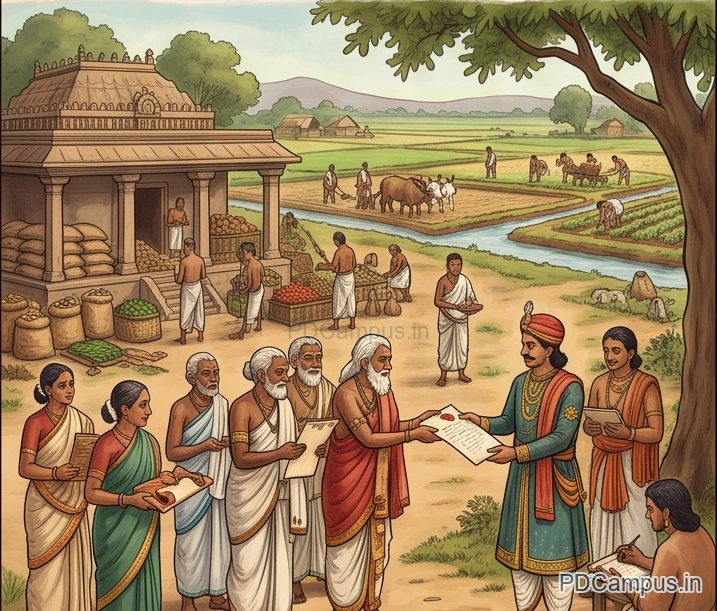
What temples didमंदिरों की भूमिका
Temples were sacred homes, but could also be employers, landholders, craft patrons, record keepers, festival centres and meeting points for local exchange.वे धार्मिक स्थल होने के साथ रोजगार देने वाले, भूधारक, शिल्प-संरक्षक, अभिलेख रखने वाले, उत्सव-केंद्र और स्थानीय विनिमय के स्थान भी हो सकते थे।
Who carried the loadबोझ किस पर पड़ता था?
Cultivators produced the main surplus. Taxes, dues, irrigation work and sometimes compulsory service shaped village life. Benefits and burdens were unequal.मुख्य अतिरिक्त उपज किसान पैदा करते थे। कर, देय, सिंचाई का श्रम और कभी अनिवार्य सेवा गाँव के जीवन को प्रभावित करते थे। लाभ और बोझ समान रूप से नहीं बँटते थे।
Routes made kingdoms wealthyमार्ग और राज्यों की आय
Simple economic picture: rain-fed and irrigated farms created revenue; land grants organised new agrarian zones; temples concentrated resources; towns and ports connected craft and overseas trade. No single word—“feudal” or “commercial”—fully describes every region and century.अर्थव्यवस्था को ऐसे समझें: वर्षा-आधारित और सिंचित खेती से राजस्व मिला; भूमिदानों से नए कृषि क्षेत्र संगठित हुए; मंदिरों में संसाधन केंद्रित हुए; नगर और बंदरगाह शिल्प तथा समुद्री व्यापार को जोड़ते थे। ‘सामंती’ या ‘व्यापारिक’ जैसा एक शब्द हर क्षेत्र और शताब्दी का पूरा वर्णन नहीं करता।
Picture a chain from a western port through Vatapi and a Deccan market towards Kanchi and an eastern port. Cotton, spices, craft goods, horses, metals and grain moved through different sections of such networks. Merchants also travelled with ideas and met pilgrims; religious and commercial journeys could overlap. The drawing is a teaching connection, not proof of one continuous royal highway or that every item travelled the whole distance.एक संबंध-श्रृंखला समझें: पश्चिमी बंदरगाह से वातापी और दक्कन के बाजार होते हुए कांची तथा पूर्वी बंदरगाह की ओर। ऐसे जाल के अलग हिस्सों में कपास, मसाले, शिल्प-वस्तुएँ, घोड़े, धातुएँ और अनाज जाते थे। व्यापारियों के साथ विचार भी चलते थे और यात्रियों से संपर्क होता था; धार्मिक तथा व्यापारिक यात्राएँ मिल सकती थीं। यह संबंध समझाने वाला आरेख है, एक लगातार राजमार्ग या हर वस्तु के पूरी दूरी तय करने का प्रमाण नहीं।
Faith and language - many streams at onceधर्म और भाषा: अनेक धाराएँ साथ-साथ
Pallava worldपल्लव क्षेत्र
Shaiva and Vaishnava temples grew with Tamil Nayanar and Alvar devotion. Jain and Buddhist communities also existed. Mahendravarman's change of faith is preserved mainly through later devotional tradition.तमिल नायनार और आलवार भक्ति के साथ शैव तथा वैष्णव मंदिरों का विस्तार हुआ। जैन और बौद्ध समुदाय भी मौजूद थे। महेंद्रवर्मन के धर्म-परिवर्तन की कथा मुख्यतः बाद की भक्तिपरक परंपरा में सुरक्षित है।
Chalukya worldचालुक्य क्षेत्र
Shaiva, Vaishnava and Jain shrines stood in the same architectural landscape. Sanskrit praise poetry and growing regional-language records show a multilingual court world.शैव, वैष्णव और जैन मंदिर एक ही वास्तु-परिवेश में थे। संस्कृत प्रशस्तियाँ और बढ़ते क्षेत्रीय भाषा-अभिलेख बहुभाषी राजदरबार दिखाते हैं।
Rashtrakuta worldराष्ट्रकूट क्षेत्र
Rulers supported Hindu and Jain establishments; Buddhist centres also continued in some regions, although the amount of evidence varies by area. Amoghavarsha’s Jain ties coexisted with worship of Hindu deities. Muslim merchants were present in western ports.शासकों ने हिंदू और जैन संस्थाओं को संरक्षण दिया; कुछ क्षेत्रों में बौद्ध केंद्र भी जारी रहे, हालांकि प्रमाणों की मात्रा क्षेत्रानुसार बदलती है। अमोघवर्ष के जैन संबंधों के साथ हिंदू देवी-देवताओं की उपासना भी थी। पश्चिमी बंदरगाहों में मुस्लिम व्यापारी मौजूद थे।
| Text or authorग्रंथ या लेखक | Language / settingभाषा / संदर्भ | Why remember itक्यों याद रखें |
|---|---|---|
| Mattavilasa Prahasanaमत्तविलास प्रहसन | Sanskrit comic play by Pallava Mahendravarman I.पल्लव महेंद्रवर्मन प्रथम का संस्कृत हास्य नाटक। | Shows a ruler as author and jokes about competing religious groups in urban life.राजा की लेखक-भूमिका और नगरीय जीवन के प्रतिस्पर्धी धार्मिक समूहों पर व्यंग्य। |
| Ravikirti's Aihole Prashastiरविकीर्ति की ऐहोल प्रशस्ति | Sanskrit inscription, 634 CE, at the Jain Meguti temple.जैन मेगुति मंदिर में 634 ईस्वी का संस्कृत अभिलेख। | Key Chalukya political source; Ravikirti compares his poetry with Kalidasa and Bharavi.प्रमुख चालुक्य राजनीतिक स्रोत; रविकीर्ति अपने काव्य की तुलना कालिदास और भारवि से करते हैं। |
| Alvar and Nayanar hymnsआलवार और नायनार स्तुतियाँ | Tamil devotional poetry for Vishnu and Shiva.विष्णु और शिव की तमिल भक्ति-कविताएँ। | Made devotion emotional, local and singable; later collections preserved a wider movement.भक्ति को भावपूर्ण, स्थानीय और गाने योग्य बनाया; बाद के संकलनों ने व्यापक आंदोलन की रचनाएँ सुरक्षित रखीं। |
| Kavirajamargaकविराजमार्ग | Earliest surviving Kannada work on poetics; linked to Amoghavarsha I and poet Srivijaya.काव्यशास्त्र पर सबसे पुरानी उपलब्ध कन्नड़ रचना; अमोघवर्ष प्रथम और कवि श्रीविजय से संबद्ध। | Shows a mature Kannada literary region, not the first moment anyone spoke Kannada.विकसित कन्नड़ साहित्यिक क्षेत्र का प्रमाण; इससे पहले कन्नड़ बोली ही नहीं जाती थी, ऐसा अर्थ नहीं। |
| Jinasena and Gunabhadraजिनसेन और गुणभद्र | Sanskrit Jain scholarship; Adipurana/Mahapurana tradition.संस्कृत जैन विद्वत्ता; आदिपुराण और महापुराण परंपरा। | Rashtrakuta courts and monasteries supported major religious-literary production.राष्ट्रकूट दरबारों और मठों ने बड़े धार्मिक-साहित्यिक कार्यों को संरक्षण दिया। |
| Mahaviracharyaमहावीराचार्य | Sanskrit mathematics; Ganita Sara Sangraha.संस्कृत गणित; गणितसारसंग्रह। | A reminder that learning included mathematics, grammar and logic, not only praise poems.विद्या में गणित, व्याकरण और तर्क भी थे, केवल प्रशस्तियाँ नहीं। |
Bhakti means devotion: the Tamil hymns addressed a deity through songs associated with places and communities. Their later collection is different from the dates when individual poets lived. Likewise, an early surviving book does not mark the birth of a spoken language. Kavirajamarga shows an established Kannada literary world; its link to Amoghavarsha’s court should not become an unsupported claim that he alone wrote every line. Mahaviracharya is the mathematical author here, not Mahavira the Jain teacher of a much earlier age.भक्ति का अर्थ अनुरागपूर्ण उपासना है: तमिल स्तुतियों में स्थानों और समुदायों से जुड़े गीतों द्वारा देवता को संबोधित किया गया। बाद में संकलन होने का समय हर कवि के जीवनकाल से अलग है। इसी तरह सबसे पुरानी बची पुस्तक किसी बोली के जन्म का दिन नहीं बताती। कविराजमार्ग विकसित कन्नड़ साहित्यिक संसार दिखाता है; अमोघवर्ष के दरबार से संबंध होने का अर्थ यह नहीं कि हर पंक्ति उन्होंने अकेले लिखी। यहाँ महावीराचार्य गणित के लेखक हैं, बहुत पहले के जैन तीर्थंकर महावीर नहीं।
4. Architecture: Cutting Caves, Carving Monoliths and Building Temples4. वास्तुकला: चट्टान में गुफा, एक शिला से रथ और पत्थरों से मंदिर
Architecture is easiest to understand through the way it is made. A cave is cut inward into a natural hill. A monolith is carved from one rock mass. A structural temple is assembled from separate stones. All three methods occur in the wider architectural world of these dynasties.निर्माण की विधि से वास्तु समझना आसान है। गुफा प्राकृतिक पहाड़ी को भीतर की ओर काटकर बनती है। एकाश्म रचना एक ही शिला से तराशी जाती है। संरचनात्मक मंदिर अलग-अलग पत्थर जोड़कर बनता है। इन राजवंशों के व्यापक वास्तु-संसार में तीनों विधियाँ मिलती हैं।
| Methodविधि | What the worker doesशिल्पी क्या करता है | How to recognise the resultपरिणाम कैसे पहचानें |
|---|---|---|
| Rock-cut caveशैलकृत गुफा | Removes rock inward into a hill or cliff.पहाड़ी या चट्टान को भीतर की ओर काटता है। | Interior space remains connected to the parent rock; a sculpted façade can resemble built architecture.भीतरी स्थान मूल शिला से जुड़ा रहता है; तराशा हुआ मुखभाग बनी हुई इमारत जैसा हो सकता है। |
| Monolithएकाश्म रचना | Leaves and shapes a mass by removing surrounding rock.आसपास की चट्टान हटाकर बचे शिलाखंड को आकार देता है। | The major form comes from one rock mass, as in a ratha or Kailasa’s main complex.मुख्य रूप एक शिला से निकलता है, जैसे रथ या कैलास का मुख्य परिसर। |
| Structural templeसंरचनात्मक मंदिर | Quarries, dresses and assembles separate pieces.अलग टुकड़े निकालकर, गढ़कर और जोड़कर बनाता है। | Masonry joints and stacked courses form a built structure; this is not the same method as excavating a monolith.जोड़ और परतें मिलकर इमारत बनाते हैं; यह एकाश्म रचना काटकर निकालने की विधि से अलग है। |
- Garbhagriha: the small inner sanctum housing the principal sacred image or symbol.गर्भगृह: मुख्य पवित्र प्रतिमा या प्रतीक वाला छोटा भीतरी स्थान।
- Mandapa: a hall, often with pillars.मंडप: सभा या अनुष्ठान का स्थान, प्रायः स्तंभों वाला।
- Vimana: in this context, the southern temple superstructure over the sanctum.विमान: यहाँ गर्भगृह के ऊपर की दक्षिण भारतीय मंदिर-अधिरचना।
- Shikhara: a tower or crowning term whose precise use depends on architectural context.शिखर: ऊँची अधिरचना या शीर्षभाग के लिए प्रयुक्त शब्द; सटीक अर्थ वास्तु-संदर्भ पर निर्भर करता है।
- Pradakshina: ritual circumambulation; a pradakshina path allows movement around the sacred focus.प्रदक्षिणा: धार्मिक परिक्रमा; प्रदक्षिणा-पथ पवित्र केंद्र के चारों ओर चलने की जगह देता है।
Pallava gallery - Mamallapuram and Kanchiपल्लव कला: मामल्लपुरम और कांची
Five visual families at Mamallapuramमामल्लपुरम के पाँच प्रमुख दृश्य-रूप
- Mandapas: cave sanctuaries with pillars and sculpted panels.मंडप: स्तंभों और मूर्तिपट्टों वाले गुफा-उपासना स्थल।
- Rathas: monolithic temple models, traditionally named after Pandavas but not built by them.रथ: एकाश्म मंदिर-रूप, जिन्हें परंपरा से पांडवों के नाम दिए गए; पांडवों ने उन्हें नहीं बनाया।
- Open-air relief: the great panel read as “Descent of the Ganges” or “Arjuna's Penance.”खुले स्थान का उत्कीर्णन: बड़ा दृश्य-पट्ट, जिसकी व्याख्या गंगा के अवतरण या अर्जुन की तपस्या के रूप में की जाती है।
- Structural temples: Shore Temple complex belongs to the later Pallava phase.संरचनात्मक मंदिर: तट मंदिर परिसर पल्लवों के बाद के चरण से जुड़ा है।
- Water and landscape: natural rock, coast and carved space work together.जल और भू-दृश्य: प्राकृतिक चट्टान, समुद्र-तट और तराशे गए स्थान साथ काम करते हैं।
A relief keeps carved figures attached to a background surface; it differs from a freestanding sculpture. Mamallapuram’s great open-air panel is commonly called either the Descent of the Ganges or Arjuna’s Penance because its narrative identification is debated. A ratha is a monolithic architectural form here, not a vehicle. These names describe later interpretations or appearances, not proof that epic heroes commissioned the monuments.उत्कीर्णन में आकृतियाँ पृष्ठभूमि की सतह से जुड़ी रहती हैं; यह स्वतंत्र खड़ी प्रतिमा से अलग है। मामल्लपुरम के बड़े खुले शिलापट्ट को गंगा का अवतरण या अर्जुन की तपस्या कहा जाता है, क्योंकि कथा की पहचान पर मतभेद हैं। यहाँ रथ एकाश्म वास्तु-रूप है, वाहन नहीं। नाम बाद की व्याख्या या रूप-समानता बताते हैं; महाकाव्य के नायकों द्वारा निर्माण का प्रमाण नहीं।
Rock-cut and built formsकाटकर और जोड़कर बने रूप
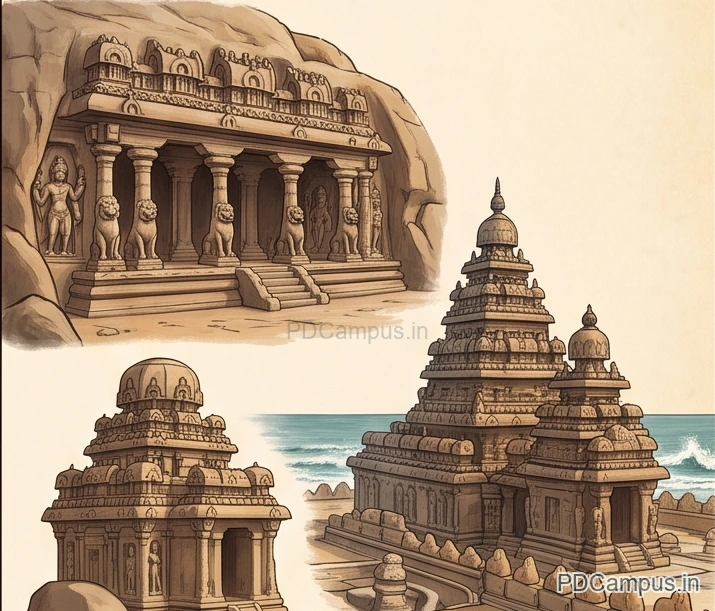
SSC memory trap: the Pancha Rathas are monolithic, not wheeled chariots and not five separate stone-block temples. Their Pandava names are later labels.परीक्षा में ध्यान रखें: पंचरथ एकाश्म रचनाएँ हैं; वे पहियों वाले रथ नहीं और अलग पत्थर जोड़कर बने पाँच मंदिर भी नहीं हैं। उनके पांडव-संबंधी नाम बाद में दिए गए।
Chalukya laboratory - Aihole to Badami to Pattadakalचालुक्य वास्तु: ऐहोल, बादामी और पट्टदकल
Aiholeऐहोल
A large experimental field of temple plans. Lad Khan, Durga temple and Jain Meguti are remembered. “Durga” here comes from a later fort association, not necessarily the original deity.मंदिर योजनाओं में विविध प्रयोगों का बड़ा केंद्र। लाडखान, दुर्ग मंदिर और जैन मेगुति याद रखें। यहाँ दुर्ग नाम का संबंध बाद के किले से माना जाता है; इससे मूल आराध्य देवी दुर्गा होना अपने-आप सिद्ध नहीं होता।
Badamiबादामी
Rock-cut caves for Hindu and Jain worship stand beside structural temples. The red sandstone cliffs made religious space part of the fortified capital's landscape.हिंदू और जैन उपासना की शैलकृत गुफाओं के साथ संरचनात्मक मंदिर भी हैं। लाल बलुआ पत्थर की चट्टानें धार्मिक स्थलों को किलेबंद राजधानी के भू-दृश्य से जोड़ती थीं।
Pattadakalपट्टदकल
Northern and southern tower forms meet. Queen Lokamahadevi built Virupaksha around 740 to celebrate Vikramaditya II's victory; Trailokyamahadevi patronised Mallikarjuna.यहाँ उत्तर और दक्षिण के शिखर-रूप मिलते हैं। रानी लोकमहादेवी ने विक्रमादित्य द्वितीय की विजय की स्मृति में लगभग 740 में विरुपाक्ष मंदिर बनवाया; त्रैलोक्यमहादेवी ने मल्लिकार्जुन को संरक्षण दिया।
Remember the three places: Aihole = experiments → Badami = caves and structural temples → Pattadakal = mature synthesis. This is a memory aid, not an inevitable chronology with no overlapping construction.तीन स्थान याद रखें: ऐहोल = प्रयोग → बादामी = गुफा और संरचनात्मक मंदिर → पट्टदकल = परिपक्व समन्वय। यह स्मृति-सूत्र है, बिना किसी समानांतर निर्माण के चलता अनिवार्य कालक्रम नहीं।
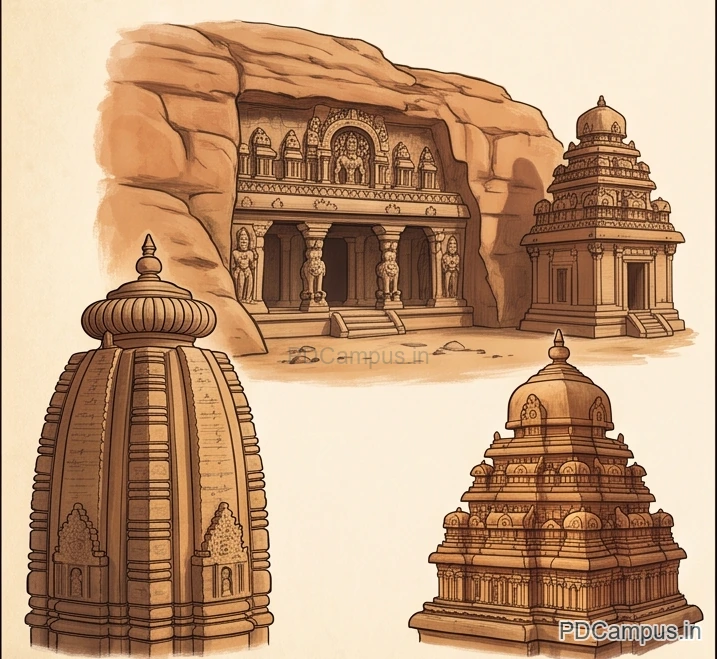
At Aihole, Badami and Pattadakal, compare plans, halls and towers before attaching a style name. A curving northern tower is commonly discussed as Nagara; tiered southern forms as Dravida. A cave façade, a monolith and a built temple can borrow the same visible motifs while using different construction methods. The Pallava, Chalukya and Rashtrakuta traditions exchanged ideas through patrons and artisans; they were not three sealed styles. Remember Lokamahadevi–Virupaksha and Trailokyamahadevi–Mallikarjuna as specific patron links.ऐहोल, बादामी और पट्टदकल में शैली का नाम देने से पहले योजना, मंडप और शिखर देखें। वक्र उत्तरी शिखर को सामान्यतः नागर और क्रमिक स्तरों वाले दक्षिणी रूप को द्रविड़ संदर्भ में समझते हैं। गुफा-मुख, एकाश्म रचना और जोड़े गए मंदिर में एक जैसे दृश्य-रूप हो सकते हैं, जबकि निर्माण-विधियाँ अलग हों। पल्लव, चालुक्य और राष्ट्रकूट परंपराएँ संरक्षकों तथा शिल्पियों के माध्यम से विचार लेती-देती थीं; वे तीन बंद शैलियाँ नहीं थीं। विशिष्ट संबंध याद रखें: लोकमहादेवी–विरुपाक्ष, त्रैलोक्यमहादेवी–मल्लिकार्जुन।
A meeting ground of temple formsमंदिर-रूपों का मिलन
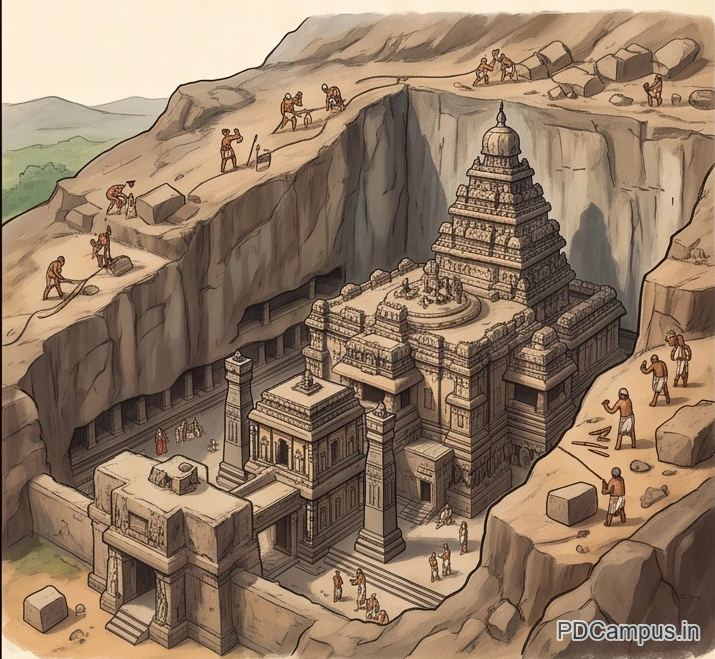
Rashtrakuta engineering - Kailasa at Elloraराष्ट्रकूट अभियांत्रिकी: एलोरा का कैलास
Why Cave 16 is extraordinaryगुफा 16 असाधारण क्यों है?
- A complete temple complex was released from living basalt by removing surrounding rock.आसपास की शिला हटाकर प्राकृतिक बेसाल्ट से पूरा मंदिर परिसर निकाला गया।
- The main mass is commonly explained as being carved from above downward. This required advance planning, but it is a broad construction principle rather than a recovered day-by-day work sequence.मुख्य शिला को सामान्यतः ऊपर से नीचे तराशे जाने के रूप में समझाया जाता है। इसके लिए पहले से योजना जरूरी थी, लेकिन यह निर्माण का व्यापक सिद्धांत है, हर दिन के काम का सुरक्षित विवरण नहीं।
- Courtyard, gateways, halls, sculpted walls and a towering sanctuary imitate structural architecture.प्रांगण, प्रवेशद्वार, मंडप, मूर्तियुक्त दीवारें और ऊँचा गर्भगृह संरचनात्मक वास्तु के रूपों का अनुकरण करते हैं।
- It is closely associated with Rashtrakuta Krishna I, while work and additions continued over time.यह राष्ट्रकूट कृष्ण प्रथम से निकटता से जुड़ा है; काम और नई जोड़-रचनाएँ समय के साथ जारी रहीं।
- Ellora's wider 34-cave landscape includes Buddhist, Brahmanical and Jain monuments from several phases.एलोरा के व्यापक 34-गुफा परिसर में अलग चरणों के बौद्ध, ब्राह्मणपरक और जैन स्मारक हैं।
The essential engineering idea is subtractive construction: rock is removed and the intended temple mass is left. “Top down, then inward” is a useful schematic description, not a day-by-day excavation diary. Kailasa’s main commission is associated with Krishna I, but carving and additions extended over time. The illustration must not establish exact workers, work duration or a complete construction sequence. Nor should the entire Buddhist, Brahmanical and Jain Ellora complex be assigned to one Rashtrakuta king.अभियांत्रिकी का मुख्य विचार घटाकर निर्माण है: चट्टान हटती है और इच्छित मंदिर-भाग बचता है। ऊपर से नीचे, फिर भीतर की ओर उपयोगी सांकेतिक वर्णन है, रोज की खुदाई का अभिलेख नहीं। कैलास के मुख्य निर्माण का संबंध कृष्ण प्रथम से है, लेकिन तराशने और जोड़ने का काम समय के साथ चला। चित्र से सटीक श्रमिक-संख्या, अवधि या पूरा निर्माण-क्रम सिद्ध नहीं करें। एलोरा के पूरे बौद्ध, ब्राह्मणपरक और जैन परिसर को भी एक राष्ट्रकूट राजा का कार्य न मानें।
Leaving a temple within the rockचट्टान हटाकर बचा मंदिर
Use “Vesara” carefully. Textbooks often use it for a Deccan blend of Nagara and Dravida features. Historians also note that style names are later analytical tools and real monuments do not always fit one neat box.वेसर शब्द सावधानी से प्रयोग करें। पाठ्यपुस्तकें प्रायः इसे दक्कन में नागर और द्रविड़ रूपों के मेल के लिए उपयोग करती हैं। शैली के नाम बाद के विश्लेषण के औजार भी हैं; वास्तविक स्मारक हमेशा किसी एक साफ खाँचे में नहीं बैठते।
5. Revision: Connect the Whole Story5. पुनरावृत्ति: पूरी कहानी को जोड़ें
First recall the capital. Then attach the ruler, war, text and monument. This five-hook method turns a long chapter into a connected picture.पहले राजधानी याद करें। फिर उससे शासक, युद्ध, ग्रंथ और स्मारक जोड़ें। ये पाँच आधार लंबे अध्याय को समझने योग्य संबंधों में बदल देते हैं।
| Hookयाद रखने का आधार | Pallavaपल्लव | Badami Chalukyaबादामी चालुक्य | Rashtrakutaराष्ट्रकूट |
|---|---|---|---|
| Capital / coreराजधानी / मुख्य क्षेत्र | Kanchi; northern Tamil region; Mamallapuram coastकांची; उत्तरी तमिल क्षेत्र; मामल्लपुरम का तट। | Vatapi/Badami; western Deccan; Malaprabha valleyवातापी या बादामी; पश्चिमी दक्कन; मलप्रभा घाटी। | Manyakheta in mature phase; wide Deccan networkपरिपक्व चरण में मान्यखेट; व्यापक दक्कनी जाल। |
| Rise markerउत्थान का संकेत | Simhavishnu and Mahendravarman Iसिंहविष्णु और महेंद्रवर्मन प्रथम। | Pulakeshin I establishes Vatapi powerपुलकेशिन प्रथम ने वातापी की शक्ति स्थापित की। | Dantidurga breaks Chalukya supremacy around 753.लगभग 753 में दंतिदुर्ग ने चालुक्य सर्वोच्चता तोड़ी। |
| Star rulerप्रमुख शासक | Narasimhavarman I, Mamalla, Vatapikondaनरसिंहवर्मन प्रथम, मामल्ल, वातापीकोंड। | Pulakeshin II; Harsha checked, Pallava warपुलकेशिन द्वितीय; हर्ष का विस्तार रोका, पल्लवों से युद्ध। | Amoghavarsha I for long rule and learningलंबे शासन और विद्या के लिए अमोघवर्ष प्रथम। |
| Textग्रंथ | Mattavilasa Prahasana; Tamil bhakti milieuमत्तविलास प्रहसन; तमिल भक्ति-परिवेश। | Ravikirti's Aihole inscriptionरविकीर्ति का ऐहोल अभिलेख। | Kavirajamarga; Jain and mathematical worksकविराजमार्ग; जैन और गणितीय रचनाएँ। |
| Architectureवास्तुकला | Mamallapuram rathas/reliefs; Shore and Kailasanatha templesमामल्लपुरम के रथ और उत्कीर्णन; तट मंदिर तथा कैलासनाथ। | Aihole, Badami, Pattadakal; Virupakshaऐहोल, बादामी, पट्टदकल; विरुपाक्ष। | Ellora Kailasa, Cave 16; wider multi-faith cave landscapeएलोरा कैलास, गुफा 16; व्यापक बहुधार्मिक गुफा-परिसर। |
| End / transitionअंत / संक्रमण | Chola Aditya I removes remaining Pallava power in the late ninth century; source gives c. 897, but exact dating varies.चोल आदित्य प्रथम ने नौवीं शताब्दी के अंत में शेष पल्लव सत्ता हटाई; स्रोत में लगभग 897 दिया है, सटीक तिथि अलग मानी जाती है। | Dantidurga breaks Kirtivarman II’s supremacy c. 753; Rashtrakuta consolidation continues.लगभग 753 में दंतिदुर्ग ने कीर्तिवर्मन द्वितीय की सर्वोच्चता तोड़ी; राष्ट्रकूट सुदृढ़ीकरण आगे चला। | Karka II displaced by Tailapa II in 973; Later Western Chalukyas rise.973 में तैलप द्वितीय ने कर्क द्वितीय को हटाया; उत्तरवर्ती पश्चिमी चालुक्य उभरे। |
People and places snap-boardव्यक्ति और स्थान साथ याद करें
Mamallaमामल्ल
Narasimhavarman I; “great wrestler”; captured Vatapi; Mamallapuram.नरसिंहवर्मन प्रथम; महान पहलवान; वातापी पर अधिकार; मामल्लपुरम।
Rajasimhaराजसिंह
Narasimhavarman II; Shore Temple and Kanchi Kailasanatha phase.नरसिंहवर्मन द्वितीय; तट मंदिर और कांची कैलासनाथ के निर्माण का चरण।
Ravikirtiरविकीर्ति
Poet of Pulakeshin II's Sanskrit Aihole inscription, 634 CE.पुलकेशिन द्वितीय की संस्कृत ऐहोल प्रशस्ति के कवि; 634 ईस्वी।
Lokamahadeviलोकमहादेवी
Queen who patronised Virupaksha temple at Pattadakal, c. 740.पट्टदकल में लगभग 740 में विरुपाक्ष मंदिर को संरक्षण देने वाली रानी।
Dantidurgaदंतिदुर्ग
Rashtrakuta founder who ended Badami Chalukya supremacy.बादामी चालुक्य सर्वोच्चता समाप्त करने वाले राष्ट्रकूट संस्थापक।
Krishna Iकृष्ण प्रथम
Rashtrakuta ruler associated with Ellora's Kailasa temple.एलोरा के कैलास मंदिर से जुड़े राष्ट्रकूट शासक।
Amoghavarsha Iअमोघवर्ष प्रथम
Manyakheta, long reign, Jain patronage, Kannada Kavirajamarga.मान्यखेट, लंबा शासन, जैन संरक्षण और कन्नड़ कविराजमार्ग।
Tailapa IIतैलप द्वितीय
Ended Rashtrakuta rule in 973 and founded Later Western Chalukya power.उन्होंने 973 में राष्ट्रकूट सत्ता हटाकर उत्तरवर्ती पश्चिमी चालुक्य शक्ति स्थापित की।
Final spoken recall: “Kanchi's Pallavas carved coast-rock; Vatapi's Chalukyas built the A-B-P ladder; Manyakheta's Rashtrakutas raised Deccan power and cut Kailasa from a mountain.” Keep the transitions clean: Pallava ≠ Chola. Badami Chalukya ≠ Eastern Chalukya ≠ Kalyani Chalukya. Rashtrakuta power begins as Chalukya feudatory power but becomes a separate imperial dynasty.अंतिम स्मृति-सूत्र: कांची के पल्लवों ने तटीय चट्टानों को तराशा; वातापी के चालुक्यों को ऐहोल–बादामी–पट्टदकल से जोड़ें; मान्यखेट के राष्ट्रकूटों ने दक्कन की शक्ति बढ़ाई और कैलास को शिला से तराशा। भेद स्पष्ट रखें: पल्लव और चोल अलग हैं। बादामी, पूर्वी और कल्याणी चालुक्य अलग शाखाएँ या राजवंशीय चरण हैं। राष्ट्रकूट चालुक्यों के अधीनस्थों के रूप में उभरे, लेकिन अलग साम्राज्यिक राजवंश बने।
Rulers fought across frontiers; craftsmen, merchants, poems and religious ideas also crossed them.राजा सीमाओं के पार युद्ध करते थे; शिल्पी, व्यापारी, कविताएँ और धार्मिक विचार भी उन सीमाओं को पार करते रहे।